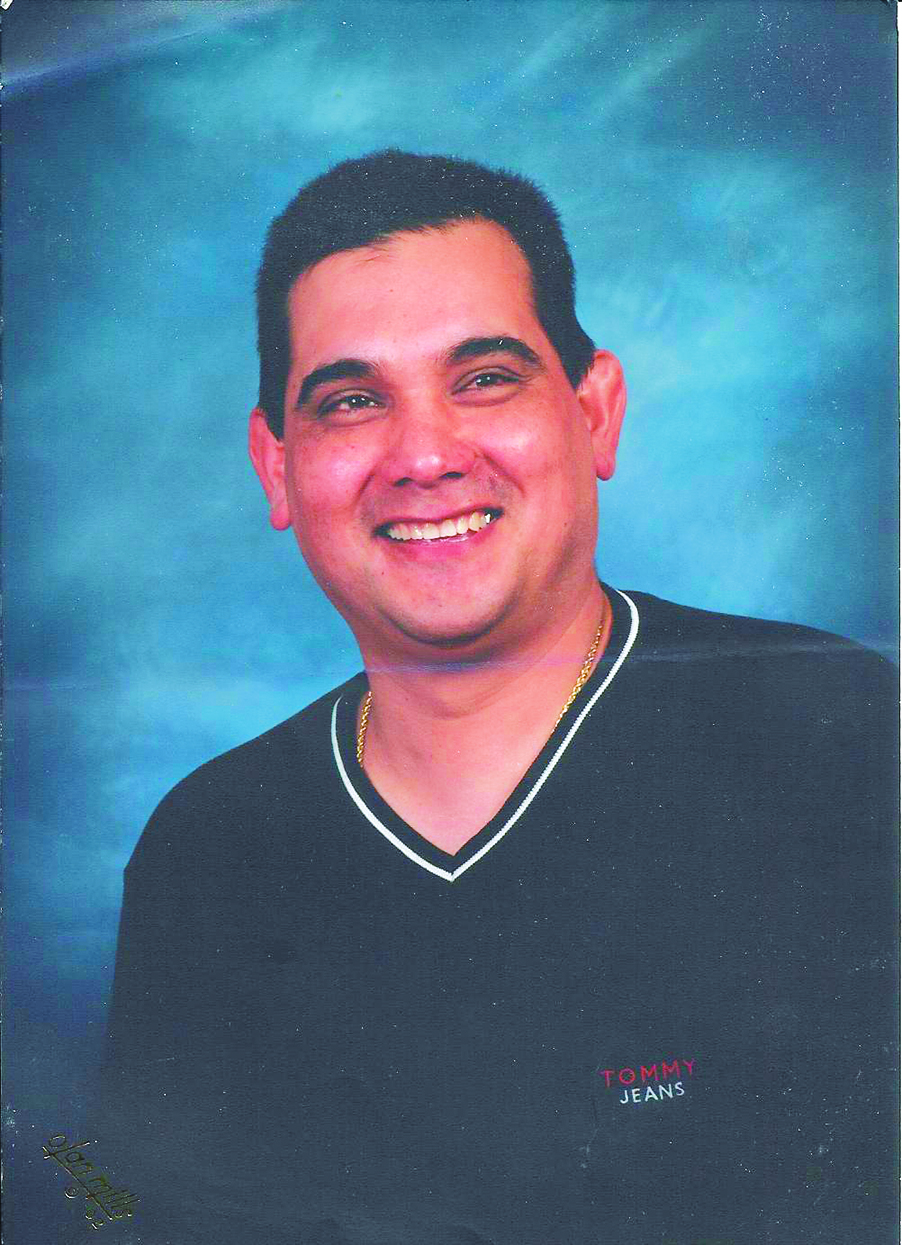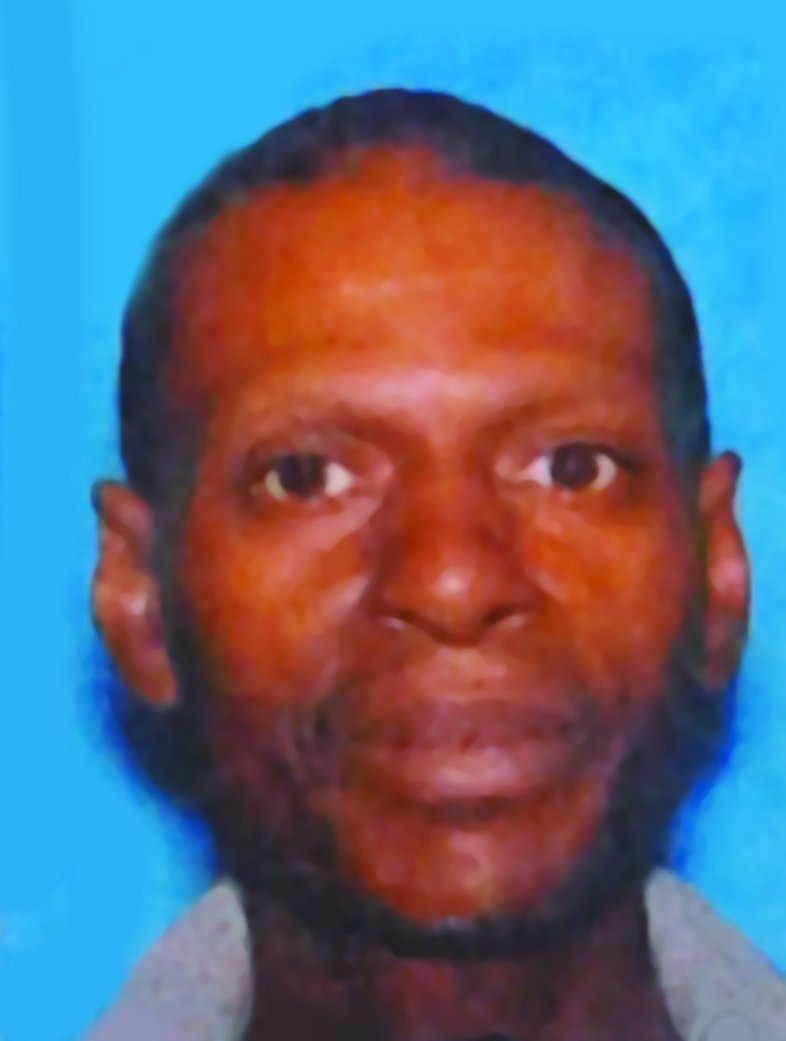
When Barry Massey was first incarcerated, he was scared of the dark. He was 13, but a psychologist who examined him prior to sentencing assessed his mental age at 9.9 years. “Passive and naive,” and the kind of kid who worried about tests and getting called on by the teacher, according to the psychologist. He couldn’t sort by color or shape, a skill most children have by 7 or 8.
Yet Massey had participated in a murder. On Jan. 10, 1987, he and a friend two years older had embarked on a petty robbery at a store along the Steilacoom marina. Before they left the store, owner Paul Wang had been shot and stabbed seven times.
Whether Massey or his friend did the actual killing is a matter of contention. Yet, as with many criminal charges, an accomplice can be convicted of aggravated first-degree murder, and Massey was. Tried as an adult, he received the harshest sentence ever imposed in this country on someone so young: life without possibility of parole.
Just shy of 20 years later, his appeals exhausted, Massey addressed the one body that might offer him a shot at mercy: the Washington State Clemency and Pardons Board. Its five members advise the governor on exercising her absolute power to commute sentences or pardon people who’ve been convicted.
“What I took away from the children of Mr. Wang is very clear,” Massey said last September, speaking to the board by phone from the Monroe Correctional Complex. “If I could express my remorse in a better way….” His voice was trembling, and he stopped short several times. “I believe I can help save other troubled kids.
“I’m 33 years old now. My outlook on life has changed dramatically.”
In prison, Massey had obtained his GED, worked diligently at various prison jobs, and become active in numerous programs, particularly a panel of carefully chosen inmates that gives talks to at-risk kids who visit the prison. He also developed an interest in exercise that had him teaching a fitness class inside the prison three days a week.
Unusually, two of Massey’s onetime guards came to the board’s Olympia meeting room to testify on his behalf. Even more sent letters. Officer Shane Zey wrote that he was a “white male right-wing Republican” whose first reaction upon hearing of the Massey case many years ago was that the state should “put him to death like he did his victim.” Now, he wrote: “If Barry Massey were to be granted clemency and moved in next door to me, I would greet him with open arms.”
The Pierce County Prosecutor’s Office and the family of Massey’s victim had a different view.
“I lost my childhood too,” wrote Paul Wang’s daughter, Elissa, in a letter read aloud at Massey’s hearing. “So did my brother. And we didn’t kill anyone. What Barry has paid so far, we paid too. So how is it that Barry has paid enough?”
Questioning Massey’s remorse, widow Shirley Wang told the board, “The only way for Massey to show he accepts responsibility for brutally taking away my husband’s life is for Massey to accept the punishment that society has determined appropriate for his crime: life in prison without parole.”
A month later, the clemency board made its decision. By a 4-1 vote, it recommended that the governor let Massey out of prison—in five years, provided he commits no infractions.
Robert Winsor, then the board chair, cited Massey’s “remarkable record” at Monroe and said: “The main problem I have is that a decision made by a 13-year-old could defeat his ability to ever get out of prison.”
The board typically votes to let people out of prison at most a handful of times a year. In the past year, the board received 133 petitions for relief. Most of those cases involved people who had already served their sentence and were seeking either pardons or restoration of their civil rights (the board can grant the latter on its own, without the governor’s approval). The board recommended or granted relief in just 14 cases in the past year.
The decision on the nationally known Massey case pleased those in the legal community who objected to his life sentence. “There’s an international treaty signed by every country in the world but us that you can’t give children life without parole,” says Seattle defense attorney Tim Ford. (There’s actually one more country that hasn’t signed the Convention of the Rights of the Child: chaotic, war-ravaged Somalia.)
Adds Neil Fox, another local defense attorney, “To me, it’s an outrage to punish children as adults, especially now there is clear evidence that juvenile brains are not fully developed,” a point raised by Massey’s attorneys before the clemency board.
In March, Gov. Christine Gregoire weighed in. In a two-paragraph letter to Massey’s lawyers that offered no explanation, she rejected the clemency board’s advice. “The Governor carefully considered Mr. Massey’s petition and the Board’s recommendation, but arrived at a different conclusion,” the letter from the governor’s general counsel said. She invited Massey to reapply in three years.
Since taking office in January 2005, Gov. Gregoire has rejected the board’s recommendation for clemency seven times, according to a Seattle Weekly review of clemency records. That’s out of 19 board recommendations on which she’s taken action. By contrast, her predecessor, Gary Locke, spurned the board’s advice just nine times over the course of eight years in office, during which he acted on more than 70 board recommendations.
In four of the cases that Gregoire turned down, the board had voted unanimously for clemency. Locke only rejected one unanimous board finding.
“Gov. Locke and Gov. [Mike] Lowry usually accepted our recommendations,” says Winsor, a former King County Superior Court and state Court of Appeals judge who just completed 12 years on the board. “‘Almost always’ might be the right word. I do think that Gov. Gregoire thus far has not followed our recommendations that often.”
“I think Gov. Gregoire is applying a more stringent test,” says Kurt Bennett, a lawyer who specializes in helping ex-convicts who have turned their lives around. The governor has turned down two of Bennett’s clients upon whom the board had looked favorably, the first time Bennett has experienced this rejection. He had previously won pardons for three clients under Locke and one under Gregoire.
A pardon is a kind of clemency that often does not involve the commutation of a sentence; rather, it eliminates legal consequences of a crime, such as housing and employment restrictions, for someone who has already served their sentence. It, in effect, wipes the slate clean. White House aide Scooter Libby had his sentence commuted this week before he even served a day, and President Bush hasn’t ruled out the possibility of granting him a full pardon as well.
One of Bennett’s rejected clients is Tarra Lewis, who sought a pardon on an assault conviction.
“I was shocked,” Lewis says of Gregoire’s decision.
The 29-year-old Kitsap County resident completed an eight-month sentence five years ago. But, without a pardon, she’s prohibited by state regulations from using her R.N. degree to work as a nurse in a hospital. She currently has a well-paying job as an insurance company consultant, advising members with health problems. Yet she says, “I feel like I’m wasting my skills and my talent just helping people on the phone all day.”
Lewis has an earnest, Midwestern look about her, with blue eyes and long curly hair pulled back from her face. You’d never guess the twists and turns her life has taken, which she recalls on her lunch hour at a food court near her job in downtown Seattle. According to both her account and the voluminous case file she presented to the clemency board, she was molested by a stepbrother when she was 11. She ran away a couple of years later and, at 14, had a child. Going on welfare, she pulled herself together to a remarkable degree, eventually graduating cum laude from Pacific Lutheran University’s nursing program.
Her love life was a mess, however, and it didn’t get any better when she met a sailor stationed at Bremerton. After some casual dating, the two repaired one night to Lewis’ house. She says the sailor then raped her, triggering trauma lingering from her childhood abuse. Kitsap County prosecutors believed the sailor, however, when he adamantly denied that charge as officials were looking into another criminal matter: Lewis’ revenge. Five days after their sexual encounter, Lewis asked the sailor to come to her house, whereupon a wayward kid she had taken in and a couple of his buddies stripped the fellow down to his underwear, spat on him, and beat him with bats and a beer bottle, leaving him with a gashed head and broken hands.
Prosecutors charged Lewis, who didn’t participate in the beating, with conspiracy to commit second-degree assault. The odd thing, and a linchpin of her argument to the clemency board, is that she ended up pleading guilty not to conspiracy but to second-degree assault, which is a higher charge.
“That’s pretty wacky,” says Kitsap County Prosecutor Russ Hauge, who was in office at the time but doesn’t recall this part of the case. According to a transcript of Lewis’ court proceedings, Lewis’ lawyer explained to the judge that the prosecutor would only accept a plea to the lesser charge if she agreed to a certain sentence. Lewis thought she would be better off pleading guilty to the higher charge and asking the judge for an exceptionally low sentence.
It was a miscalculation. The judge failed to give Lewis a break. Worse yet, she didn’t know that if she had pleaded guilty to the lesser charge, she would be eligible for a legal process that “vacates” a conviction, erasing it from public view. Violent crimes, including second-degree assault, cannot be vacated. With that on her record, Lewis’ only hope of working as a hands-on nurse is a pardon.
“There is a core concept of this being the last stop,” says Margaret Love, who was the U.S. pardon attorney in the Justice Department for much of the ’90s. A pardon, she says, “ought to be available to everybody; it shouldn’t be some sort of jackpot for politically connected people like Libby.”
The Washington clemency board voted 3-1 to grant Tarra Lewis’ request in December of 2005. She then waited a year and three months before a terse letter arrived from the governor’s counsel. As in the Massey letter, sent the same month, it said that the governor had “arrived at a different conclusion” than the clemency board.
Gregoire has not elaborated in any other forum on her approach toward clemency or individual cases, and a spokesperson said she was unavailable to be interviewed for this story.
“The governor can do what she thinks best,” shrugs Bennett, Lewis’ attorney. “That little blurb is actually quite short,” he says, referring to a passage in the state constitution that vests the governor with pardoning power. “In essence,” says Bennett, “the governor has unlimited discretion to grant or deny clemency for virtually any reason—or no reason at all.” It’s a similar situation in most states, though some have boards to advise the governor and some do not.
“As long as it’s a considered kind of judgment, not a knee-jerk one, then that’s fair,” says Daniel Kobil, a leading national scholar on clemency who teaches at Capital University Law School in Columbus, Ohio. He thinks, however, that the public should be able to see that such decisions are well-considered. “I’ve urged governors to really talk about their clemency decisions and the philosophy they follow,” he says. Especially in wrenching cases like the Massey one, he says, and where a board has voted unanimously for clemency. “[When] a young man is sentenced to life at 13, I think the governor has an obligation to talk about why this individual, after 20 years in jail, doesn’t merit any relief.” He says the public is entitled to know: “Why are you spending our money locking this person up forever?”
Nevertheless, he concedes, many governors “duck these questions.” In fact, they try to duck their clemency powers altogether. “This is the one power they don’t want to have,” he says. “They’re afraid of it.”
Remember Willie Horton? Most governors surely do. He did not receive clemency from his life sentence. But in the 1980s, then–Massachusetts Gov. Michael Dukakis supported a weekend-furlough program that the convicted murderer participated in, during which time he raped a woman and stabbed her fiancé. Thanks to the work of the George H.W. Bush campaign, Horton haunted Dukakis’ presidential bid and haunts the notion of clemency as well.
Gregoire won the governorship on a second recount in the closest race the state has ever had, and is widely expected to run again. She may be understandably cautious about being seen as soft on convicts.
Late last year, three Seattle and King County police officers died in run-ins with convicted felons who’d been released on parole, leading Gregoire to call for stricter state supervision of former inmates.
Even so, and despite her willingness to disregard the advice of the clemency board, Gregoire has provided relief 12 times. That’s more than Locke did in his first two and a half years in office, when he granted clemency in only seven cases. (Governors tend to be more inclined to mercy as they leave office.) Gregoire has received more recommendations for clemency than Locke did in that period as well. In general, the number of clemencies granted in our state has trended up in the last 40 years. That may be because the need for clemency has become greater as sentencing laws have responded to increasingly tough attitudes on crime.
“When the Sentencing Reform Act was enacted, a lot of sentences became pretty harsh,” says local defense attorney Sheryl Gordon McCloud. That 1981 state act did away with indeterminate sentences—say, 20 years to life—which could be reviewed periodically by a parole board. In their place are fixed sentences, often very long.
The Sentencing Reform Act created the clemency board as a way of helping the governor sort through what the act’s authors expected would be increased applications for relief. McCloud says that since then, sentences have gotten harsher “by the day.” The Legislature has repeatedly amended the act to add years to prison terms for violent crimes, sex offenses, and crimes with firearms. Then there was the initiative campaign that created “three strikes, you’re out,” relegating a three-time offender to life without parole.
“The clemency board has to become more and more important,” McCloud says. “There’s got to be some kind of safety valve on the other side for exceptional guys who reform in prison. Otherwise, it’s all stick and no carrot.”
Nationally, clemency advocates are trying to revivify the process, in part by suggesting that there ought to be guidelines for its application. Kobil, the Capital University professor, believes that boards should look at criteria such as whether there was disparity in punishment between co-defendants, or whether the location of the trial may have played a role in the sentence. Unlike other counties in Ohio, he says, “Hamilton County gives everyone the death penalty.” What about clemency for someone who seems transformed? “That’s a fascinating question,” he says. He mentions Karla Faye Tucker, the death row prisoner who became a devoted Christian. Despite pleas for mercy by Jerry Falwell and other religious leaders, George W. Bush, then governor of Texas, saw her executed.
“In an era in which we share fewer values like forgiveness or mercy, pardoning based on that kind of change of a person’s fundamental self becomes controversial,” Kobil says. “Yet I think we give up a lot “if we say you never can change, you never can become more than your worst moment.”
In his Belltown flat overlooking Puget Sound, former clemency board chair Winsor considers what constitutes an “extraordinary” case worthy of clemency. That term is the minimal guidance provided by state statute to the clemency board for rendering its advice to the governor.
“The system tries to be a place where people can change. We assume that.” It takes a good deal more” than a person’s transformation to merit clemency, he asserts. But what? “That’s an extraordinarily difficult and interesting question,” he says. It’s one that sits on the far end of a system in which his role used to be sentencing prisoners, not freeing them. Seventy-nine years old, dressed for the mostly retired lifestyle in jeans, layered cotton shirts, and Birkenstocks over socks, he tilts his head back and speaks carefully. “I just end up with a feeling—this just is not right. It simply isn’t right to do nothing.”
Since the time of sentencing, he elaborates, compelling circumstances may arise. “A person in prison might say his mother died, and his father now needs full-time care. [The prisoner] only has two years left in his sentence, and no one else is available to do it.
“And, of course, there are people who seek a pardon or clemency on the basis of what they have accomplished in prison.”
Terrence Gardner, 39, stands in front of a Puyallup car lot where he works as a salesman. He’s wearing a shiny, creaseless blue shirt, black pants, and a tie. “You’re late,” he tells me in the manner of a chastising teacher, before leading me back to his desk beside a window overlooking the cars.
The phone rings while a maid comes in to vacuum. Gesturing to the maid that he has already vacuumed the enclosed area himself, he takes the call. His face turns somber. The call carries news from the network of people he knows from the place where he used to spend his days: the Monroe Correctional Complex. Someone Gardner had done time with, a man who had served 31 years in prison, died after spending just two years in freedom.
“It’s tough,” Gardner murmurs after putting down the phone, staring out the window.
Gardner has been luckier. In 2003, he was about halfway through a 24-year sentence on a murder conviction when the clemency board, and Gov. Locke, judged he deserved to be released.
Gardner’s attorney, Sheryl Gordon McCloud, had never done a clemency case before, and when he suggested they give it a go, McCloud recalls, “I told him he was nuts. No one ever gets that.”
But Gardner had what she now sees was a “golden combination.” There were grounds to argue that he had limited culpability in the 1992 fatal stabbing of a Kitsap County man named Michael Osborne, who on the evening of his death had sold Gardner and cohort Gerald “Sonny” Belgard what they believed was bad crack cocaine. Belgard, after a plea deal, testified that Gardner was the stabber. Gardner said he was not even in Osborne’s apartment when the murder occurred, but was waiting outside. The jury acquitted Gardner of premeditated murder, but found him guilty of a lesser charge known as felony murder that does not imply intent.
Secondly, Kitsap County Prosecutor Hauge wrote a letter supporting Gardner’s plea for clemency. Hauge says he did so not as prosecutor but as a private attorney. Before his current job, Hauge had been a defense attorney who represented Gardner’s co-defendant. His client, Hauge says, had an “extensive record,” whereas Gardner had been a Navy officer never before mixed up in that kind of trouble. “It looked to me that Mr. Gardner was accurately representing his role.”
What’s more, Hauge says he saw that Gardner “had done everything he could to make the best of his opportunities” in prison.
“I was always in a class somewhere,” Gardner recalls. Public-speaking classes, math classes, Bible classes, offered variously through community colleges and a Christian school. Most significantly, he got a welding certificate that qualified him, eventually, for a job paying $11 an hour working for a private company that built boat lifts inside the prison. (Such high-paying private industry jobs are no longer available in prison after a state Supreme Court ruling that said companies operating in prisons represented unfair competition.) Even when he was earning a fraction of that, however, he paid child support for the daughter who was 3 years old when he went away. His payments to her in prison totaled $13,000.
“I came in with a printout of the payments,” McCloud says. “I had the chairman of the board [Winsor] saying, ‘Guys on the outside aren’t doing this.'”
Now that he’s out, Gardner says he usually spends early mornings taking long walks by the waterfront in Tacoma, where he lives. Often he will then see his 2-year-old son before heading to work at the car lot.
“I haven’t made any bad choices,” he says of the four years he has spent a free man. “But not every choice has been the best.”
He’s not talking about any criminal activity. State records show none since his conviction, and he says he won’t even drive a car without putting his seat belt on. Rather, he says, “I probably could have taken my time in the romance department.” A handsome African American, with a shaved head and broad smile that he bestows sparingly, he had a son a couple of years after his release with a woman he met in prison while she was volunteering. As with most prison pairings, he says, the relationship ultimately failed to survive life on the outside. He has since married another woman.
Otherwise, he says his struggles are the normal kind, like trying to make ends meet despite sluggish sales. “I’m real comfortable out here,” he says, although occasional glimpses of uneasiness emerge.
“We going to go back into that?” he objects when I ask him about his crime. “I feel like I’m always on trial,” he says by way of explaining why he’d rather not. “When I went up for clemency, they retried the whole case.” Gardner says he thinks the clemency board should look at “who an individual is now,” not what happened one night many years ago. But after attending two other clemency board hearings besides his, including that of Barry Massey, he has concluded that board members see it differently. “They retry everything.”
“Why did you confess?” clemency board member John Turner, then Marysville’s interim chief of police, now with the Snohomish Police Department, asked Massey at his September hearing.
“At 13, I was scared,” Massey replied, his voice still uneven as he talked by phone from the Monroe prison. “I was scared of Mike a little bit.” Mike Harris was the 15-year-old with whom Massey entered Paul Wang’s Steilacoom store. “He was my friend. I took the blame, not really understanding the consequences.”
“I’m going to ask you again specifically,” said Turner, “did you shoot the gun or do the stabbing?”
“No, I did not,” Massey said.
And so it went, questions flying from not only Turner but fellow board members Raul Almeida, captain of a private patrol that monitors the Hanford nuclear waste site; onetime defense attorney Margaret Smith; and Cheryl Terry, wife of a slain police officer. They asked why he didn’t stop Harris, what was going through his head when the killing occurred, what he did immediately afterward, and after that. Massey described feeling shock as he heard gunfire; staying put until Harris told him to start grabbing stuff; running up a hill through the mud; Harris telling him not to say anything because the older boy had been in trouble before; getting caught; and asking futilely for his mother.
Deputy Prosecutor Gerald Costello expressed his irritation plainly. “We’re not here to retry this case today,” he said. The jury had rendered its verdict. Going back over the details of the crime was a specious attempt to downplay Massey’s role, he argued, and “outside the scope of what the board should consider.”
His boss, Pierce County Prosecutor Gerald Horne, elaborated on this objection in a letter to the governor after the board voted to recommend clemency. “The Board’s mistake is understandable,” he wrote. “There was no standard in place governing their decision making. Not a single rule or guideline existed.” Nonetheless, he opined, “Procedurally, it is disastrous in any case for the Board to consider evidence designed to show that a jury returned the wrong verdict. There is no opportunity for cross examination of testifying ‘witnesses.’ There is no standard of proof. No witness lists are delivered. No evidence rules exist to govern reliability of the evidence submitted.”
Currently, the board is putting the final touches on a set of policies that will address procedural questions such as this. However, they are not expected to change the board’s open-ended mode of operation. “Basically what they say is that the board does not intend to retry facts but [board members] do not limit themselves,” says Kate McLachlan, a state assistant attorney general who is counsel to the board. “We have an obligation to consider everything that somebody wants us to hear,” says board member Turner.
“It’s almost a macabre joke among lawyers that the worst defense is actual innocence,” notes David Boerner, a Seattle University law professor who helped write the state’s Sentencing Reform Act. “Courts won’t review that,” he says, at least not past certain deadlines for reviewing new evidence. So the clemency process can be a person’s only forum.
Law professor Kobil says also that jurors can vote for guilt without realizing the consequences for the defendant, something that might have changed their minds.
Board member Smith, in fact, asked the deputy prosecutor whether jurors knew that the teenage Massey would be imprisoned for life should they find him guilty. “I’m fairly certain not,” Costello said.
For him and his boss, the important fact is that aggravated first-degree murder carries a clear penalty set by the Legislature. “The public’s will,” he kept calling Massey’s life sentence. Yet the existence of clemency forces the board and governor, at least in individual cases, to think anew about a difficult question: How much time in prison is enough?
The Monroe Correctional Complex occupies the top of a hill, surrounded by a broad, sloping lawn. Recessed Ionic columns line the long, rectangular building that sits in front, so that it seems more like a courthouse or perhaps a library than a prison, but in fact among the four facilities located here is one of the most closely guarded in the state: the Washington State Reformatory. The cells inside are stacked four tiers high, and roughly half of the 875 inmates—who sleep with their feet to the bars and their heads toward the toilet for safety’s sake—are convicted murderers.
One day last winter, a hulking, shaven-headed prisoner named Darrell Massey sits at one of the small square tables that fill the visiting room, a fairly pleasant space decorated with inmate art. He is playing chess and other games with his 11-year-old daughter, Reneeka, a reserved girl who eventually erupts into lively chatter, and his bouncy, 7-year-old son, Darrell. Their mother, whom Massey had married in prison, died a couple of years ago due to a toxic combination of pain pills she took following a car accident, and the children live with different relatives. Massey’s sister has brought them here today.
Darrell Massey, 37, is Barry’s uncle. In 1989, he came to Tacoma for an extended family visit and got into trouble. He was cruising with some gang members when a 17-year-old girl in another car waved, thinking she recognized a friend. Occupants of Darrell’s car (he says he wasn’t one of them) thought it was a gang sign and opened fire. The young girl died.
The judge who presided over the trial announced he was sending a message to gang members. He sentenced Massey and a co-defendant to 41 years, more than either state sentencing guidelines or the prosecutor had called for. With time off for good behavior, Massey would serve 27 years.
His first years in prison were rocky as he continued his gang allegiance behind bars and got into fights.
Having children, conceived during trailer visits, “changed my life,” he says. “For the first time since coming to prison, I was scared—that they’d end up following me to prison, that I wasn’t going to be a good parent.”
But it also seems that simple time in prison, the accumulation of years spent with a lot of time to think, had a big effect. “I really do believe that coming to prison saved my life,” he says. “You get to know yourself real well. First, I realized I made a big mistake. Second, I learned to love myself.”
He says it took him almost 10 years to transform. That’s about typical for the minority of inmates who turn themselves around, he and other prisoners say. Short-termers, they say, don’t have time to reform. “I don’t know why it takes that long, but it does,” Massey says.
Once someone has rehabilitated, though, he contends that continued punishment is no longer useful. “You’re just wasting another life,” he says. “For that person, he says, “you should let him get out and honor the victim’s memory. I feel that’s where I’m at.”
Following his nephew, he intends to ask for clemency in a couple of years. At that point, he will have served 20 years, which, it has been suggested to him, is the minimum time someone with a murder conviction should have behind him before making a plea for mercy.
In late May, some 15 high-school kids sit in the Monroe reformatory’s visiting room listening to Darrell Massey and three other inmates talk to them about “choices and consequences,” the name of the program that has brought them here. It’s the same program that Barry Massey once participated in, but no longer does. (Several days after his September clemency hearing, he wrote an affectionate letter to a guard that suggested mutual feelings. He was transferred to the Washington State Penitentiary at Walla Walla pending an investigation into a possible inappropriate relationship.)
The kids are eager to hear about the details of the men’s crimes, and when Darrell Massey talks about his, he names his victim— Brenda J. Harris—something he says he tries to do often to remember her. He and the others then proceed to grill the kids. “Why you smokin’ pot?” Massey asks one boy. “How are your grades?” he asks another.
Would Brenda J. Harris, or her family, feel that such activity in her honor merits clemency? Another inmate there that day, Tony Wheat, spoke about an experience that reveals the complex nature of forgiveness. Now a bespectacled, quiet-spoken man in his 60s, Wheat killed three people and spent seven years on death row before a 1972 U.S. Supreme Court ruling commuted his death sentence and hundreds more across the country. About a decade ago, he met with the mother of one of his victims, at her request. “The woman said something I was not ready for. She looked across the table and told me she forgave me.”
“I asked myself if I could do the same,” Wheat says. “Not long after, my oldest son was killed. They found him [lying] on the sidewalk shot 17 times.” Wheat says a note later came to his son’s wife that read, “Sorry, wrong person.”
“Then I heard the guy who killed my son was being transferred here from Walla Walla.” It never happened, and Wheat escaped the test of whether forgiveness was in his reach.
Clemency board member Turner considered the feelings of the Wang family and their supporters as he cast the lone “no” vote on Barry Massey’s petition. “There hasn’t been enough healing in the Taiwanese community,” he said. “There hasn’t been enough healing by members of the family. I want Mr. Massey to have some hope in his future. But I can’t at this time vote for clemency.”
The rest of the board disagreed but struggled over how much more time in prison, if any, they should recommend to the governor before ultimately deciding on five years.
“How much time is enough?” member Smith asked at one point. “I guess the governor is going to have to decide that.”
In the end, of course, she didn’t exactly. Or rather, she decided she wouldn’t consider it for three more years.