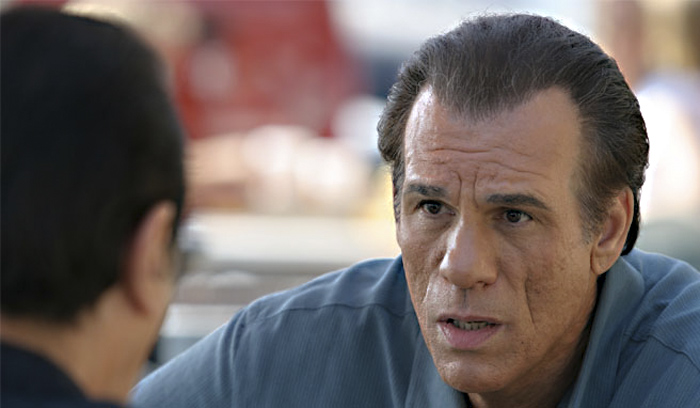
Even if you don’t know the name, you’ll recognize Robert Davi’s slightly corroded handsomeness and shiny, bottomless eyes. The ubiquitous Astoria, N.Y.–born character actor directs himself as the frontman of a group of golden-oldie doo-woppers, men who’ve seen better paychecks, shopping for work in the L.A. nostalgia circuit. Peter Bogdanovich is the group’s manager, his full-body sag betraying a yellowed Rolodex. On a shoestring, the Dukes attempt to handle ex-wives, diabetes, and dentists’ bills, while collectively trying to ignore a smarting sense of middle-aged disappointment. Davi, who’s done more journeyman jobs than most, opines: “Hollywood is limbo—you wait there and then your soul goes to Santa Monica.” Getting some lithe sequence shots out of his camera crew, this first-time director shows a knack for bending scenes off in the middle and twisting them into pleasingly unexpected shapes. The Dukes complains a bit under its heavy freight of low-payoff exposition, and brings business back for unnecessary encores (sideman Chazz Palminteri’s chubby-chasing worked in whenever). How, though, to resent a work of such deliberate inconsequence? Even the boys’ desperate foray into amateur breaking-and-entering isn’t written toward a big heist climax, but merely another soft tapering-off, a stoic “That’s life” shrug, better luck tomorrow, moving on.
The Dukes: An Old Tune, Professionally Sung