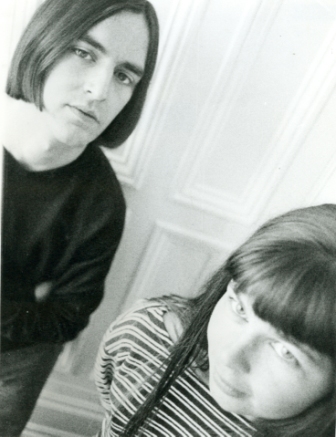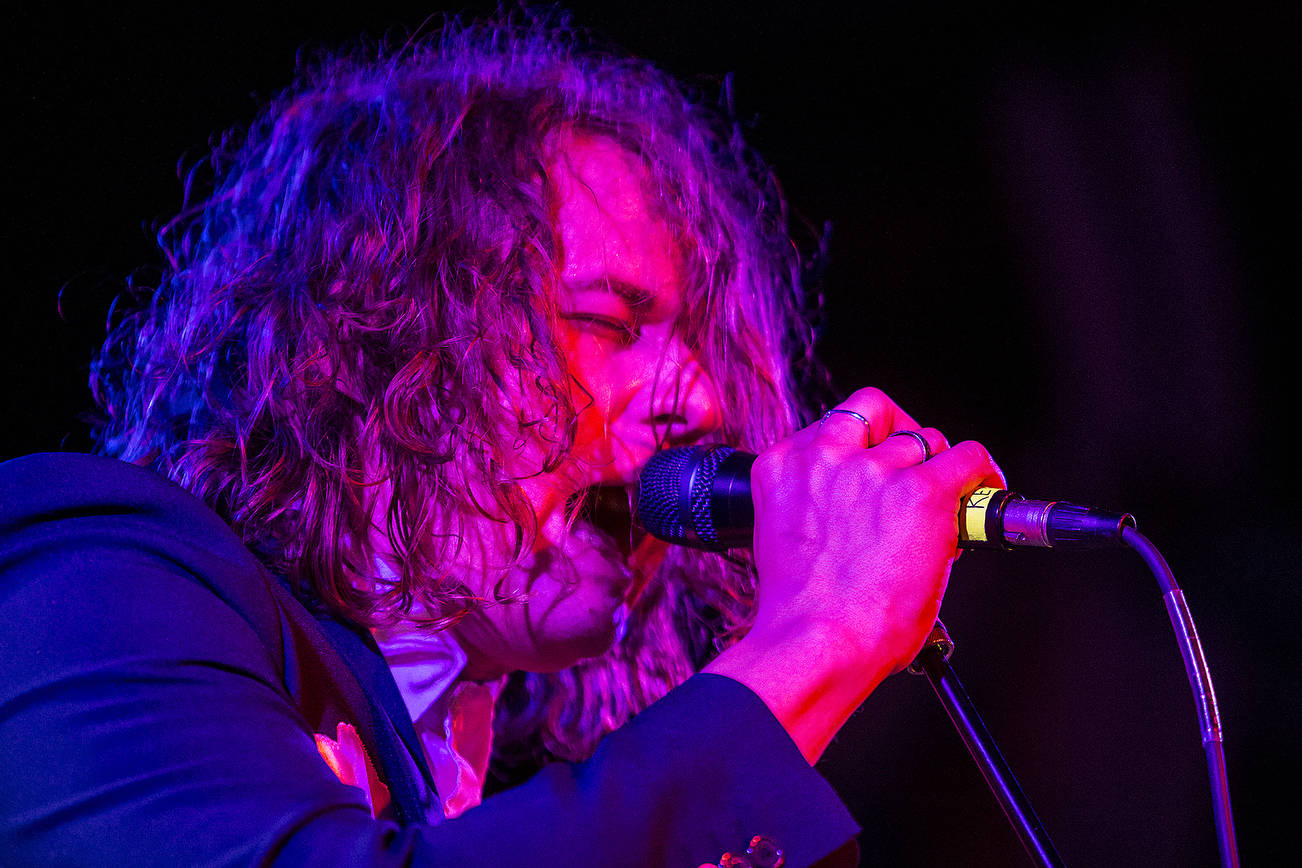
Stephen McBean, the lead guitarist and chief songwriter of two Vancouver-based, Cascade-inspired outfits, Black Mountain and Pink Mountaintops, is on the phone. The reception to his cell is cutting out, garbling everything he says as the van he’s touring in darts into a secluded, mountainous stretch of I-5 south of Eugene, Ore.
“Hello?”
(Dial tone)
Talk about ironically bad timing. I should’ve known that whether you are in the mountains or not, a CB radio, a walkie-talkie, heck, even smoke signals are a better means of communication than a cell phone. Having traveled the I-5 corridor between Eugene and Northern California countless times, I knew how long it would take McBean, currently traveling as Pink Mountaintops with a full band (including members of Destroyer, Jackie O Motherfucker, and Ashley Webber, the twin sister of his Black Mountain bandmate Amber), to reach civilization where he’d get decent reception. Two hours later, I could hear McBean on the other end loud and clear—well, as clear as he could be after a full day of travel. He seemed scattered and relaxed, speaking in his slightly mumbling Canadian drawl.
“Hello!”
At the base of Pink Mountaintops, McBean is every bit the mountain man he appears to be (long flowing hair and long scraggly beard). Of course, it seems totally natural that his slightly rugged, gently worn physical appearance comes after more than two decades of playing music. Now in his mid-30s, McBean has experienced a lot since he began his climb, and has been through all the ups and downs that life throws at an aspiring but struggling musician. He started playing guitar when he was 13 and spent his adolescent years absorbed in the crusty punk-rock scene. By the mid-’90s, he had done time in a handful of hardcore punk bands, including Gus, a three-piece outfit that released a 7-inch on the DIY-minded Florida punk label No Idea.
After Gus’ dissolution, McBean’s involvement in the Vancouver scene grew. He was knee-deep in various band and solo projects, including Ex Dead Teenager, One Easy Skag, and perhaps most importantly, Jerk With a Bomb, which would eventually become Black Mountain. “I kind of go crazy if I try to relax,” he says.
Black Mountain, as we know, is McBean’s pinnacle of success. Their stoner-fuzz-rock debut record for Jagjaguwar was considered by many publications to be one of the best albums of 2005. It was so well received that Coldplay asked the band to open their summer 2005 North American tour. But before Black Mountain received their praise and got to play and party with Martin and Co., McBean and his bandmates had established themselves on the same label with the release of the self-titled Pink Mountaintops record, a nasty little gem brimming with sexual appetite and swaggering seduction.
Contrarily, Axis of Evol, the sophomore Pink Mountaintops album released earlier this year, found McBean in a darker, lonely place.
“I wasn’t planning to make a record,” he says. “A lot of my friends were away, so I just locked myself in a basement for a month, playing whatever instrument was available. The last song [“How Can We Get Free”] was recorded [with] a ukulele under the covers in my bedroom. I liked the solitary side of it all.”
McBean isn’t the type to discuss the meaning behind his mysterious lyrics on Axis of Evol. “I don’t even know what they mean for, like, a year and a half, until we’re on the road or something, a line will hit me, and it’ll be about that,” he says. “It just comes with a feeling. The mystery builds some romance to the art.”
Certainly, the bulk of the record is steeped in spirituality and war—words that are open to interpretation and will keep you wondering if he’s talking about God or the devil or a holy war of epic proportions that is pulling each of McBean’s arms. Take, for example, the opening track, “Comas,” which closes with: “No, I’m not heading down a highway to hell/I’m through with you devils/My spirits have sung/Take what you want/What you want is for free/Free to take you and for you to take me.”
“Lord, Let Us Shine” and “Plastic Man, You’re the Devil” state the obvious religious topics in their song titles, though “Cold Criminals” and “How Can We Get Free” still manage to raise questions that can only be answered by a divine power, like, “Jesus, what do you believe/Sweet Jesus, is this hell that you see?”
Good thing heaven gets great reception.