Rincon Park and Cupid’s Span in the Embarcadero. Photographer: Dewet. Used under GNU Free Documentation License. Art Agnos (no relation) was mayor of San Francisco when the 1989 earthquake hit and badly damaged the city’s waterfront Embarcadero Freeway. Over opposition from state and federal governments–and enough of his constituents that he lost his re-election bid in 1991–Agnos tore down the freeway, which has been replaced by a waterfront boulevard, public spaces, and a transit tunnel. The decision is now widely hailed as a success; the waterfront even features a plaque honoring Agnos.As many have pointed out, there are a lot of similarities between the situations involving the Embarcadero Freeway and Alaskan Way Viaduct. (There are also some key differences–the Embarcadero was more of an off-ramp, while the viaduct is used as a through highway.) I spoke with Agnos yesterday about his thoughts on the cities’ decisions.”About a year-and-a-half before I was elected, Mayor [Diane] Feinstein wanted to take the freeway down, but the people voted to in a referendum to keep it up,” he recalls. After it was damaged in the ’89 quake, “My initial instincts–because the city was struggling, economically and psychologically–were to get it back on its feet as soon as we can. The feds were saying ‘We can get this thing back and ready for commerce and traffic in six months.”But as Agnos asked engineers more questions about a retrofit’s ability to withstand future earthquakes “I got more non-answers…they couldn’t guarantee it would be safe. I said, ‘Let’s look into alternatives.” Even though a ground level surface expressway was penciling out to be “twice as expensive and [requiring] a lot more time” he decided that was the way to go. “I understood the aesthetic issues involved in this monstrous double decker freeway walling off city waterfront.””I had a revolt on my hands. Chinatown–a very strong economic part of our city, very important part of our city historically, and big supporters of mine–got very upset. For the first time in history of Chinatown, they closed their shops. And they marched on city hall to protest.” Agnos went from winning a solid majority of Chinatown votes in ’87 to losing them in ’91, costing him the election.The state and federal governments weren’t hot on Agnos’ idea either. “They never met a freeway they didn’t love,” he says of the state. But in the end, the surface measure passed the Board of Supervisors (SF’s city council) 6-5.Agnos’ advice to Seattle: “You can’t make the decision on [worries about car capacity]. Traffic is kind of like water with a leak–it finds its own way…You can never satiate the transportation monster. If you make 6 lanes, traffic will fill it up. If you make 8 lanes, traffic will fill it up…We have to make our decisions based on what’s important with the human part of the city. “In my experience, it boils down to, ‘Do you have the political courage do what you know is right for the people?’ It’s never easy and there’s short term risk, and I paid it. But I’d do it again in a heartbeat, because it left the city better than we found it. I think the same thing can happen in Seattle if the will of the public figures will make it happen. I think it will make a dramatic difference to your folks up there.”
More Stories From This Author


Transit riders will be able to pay fares with credit, debit cards
A new Tap to Pay feature by One Regional Card for All (ORCA) will allow transit riders to use credit…
By
Steve Hunter • February 19, 2026 1:57 pm
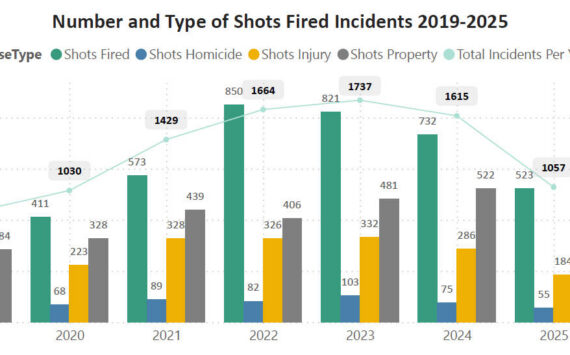
King County reports fewest shootings since before the pandemic
The county saw a decrease in shootings and a change in the demographics.
By
Joshua Solorzano • February 19, 2026 9:00 am
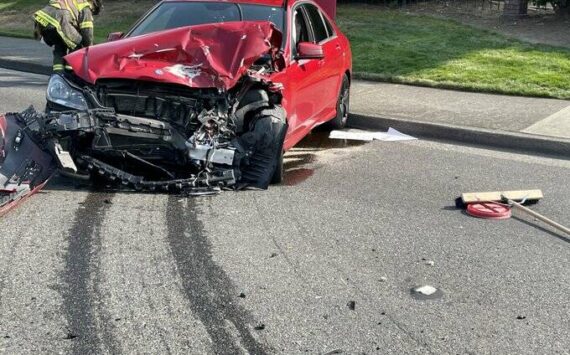
Study shows top crash-prone intersections in King County
King County is home to 11 of the 30 most crash-prone intersections in the state, according to a study by…
By
Drew Dotson • February 18, 2026 2:52 pm