A lot of attention has been paid to sommeliers in the past few years. Given the complexity of the wine industry, it’s no surprise that many diners and drinkers prefer to turn over authority to a trained professional; there are centuries of cultural precedent. But a relatively new organization is hoping to offer a similar degree of service for beer drinkers, yet it remains to be seen if they’ll garner anywhere near the same level of fame.
Modeled after the now-famous Court of Master Sommeliers exams, the three levels of the Cicerone Certification Program, begun in 2008, are designed to test a candidate’s knowledge (of brewing, proper pouring techniques, and the correct way to change a variety of kegs) and ability to understand and identify a wide range of styles of beer. At the first level, the exam is written, while the higher two levels incorporate tasting and service along with additional writing prompts.
As a certified sommelier, I was interested to find out the differences between the two exams. Unsurprisingly, most of them reflect the differences between making beer and wine. “Beer is a process,” says Cody Morris, owner and brewmaster at Seattle’s Epic Ales. “The focus on the product is there, but large breweries are running 24/7.”
While certain beer styles are more seasonally driven than others, beer in general isn’t a slave to the calendar like wine is. Plus, beer can be made just about anywhere: Even if hops or barley don’t grow well locally, they’re much easier to ship (and less fragile) than grapes. That means you can make English, German, or Belgian-style beers just about anywhere, while aping Old World winemaking techniques is much trickier.
Storage and technology are other areas where the exams diverge. Wine technology has remained largely unchanged over centuries: You put bottles somewhere dark and cool, then open them gently. While the rules for beer bottles are basically the same, kegs and casks use myriad different closures and tap technologies, many of which can be bewildering.
Learning how to attach, clean, and repair all those taps can be hard without an exam as motivation, so it’s a skill most bartenders never acquire. More than once at a bar I’ve been told that they’re out of a given beer not because they don’t have a backup keg, but because the bartender doesn’t know how to change it.
That skill may make a certified cicerone an attractive candidate for a job at a beer bar, but explaining the specifics of different pressure systems or how to properly clean a faucet isn’t exactly compelling over-the-bar conversation. While the exams do involve a tasting component, it’s more focused on recognizing common faults in beer than on identifying what makes a given beer unique.
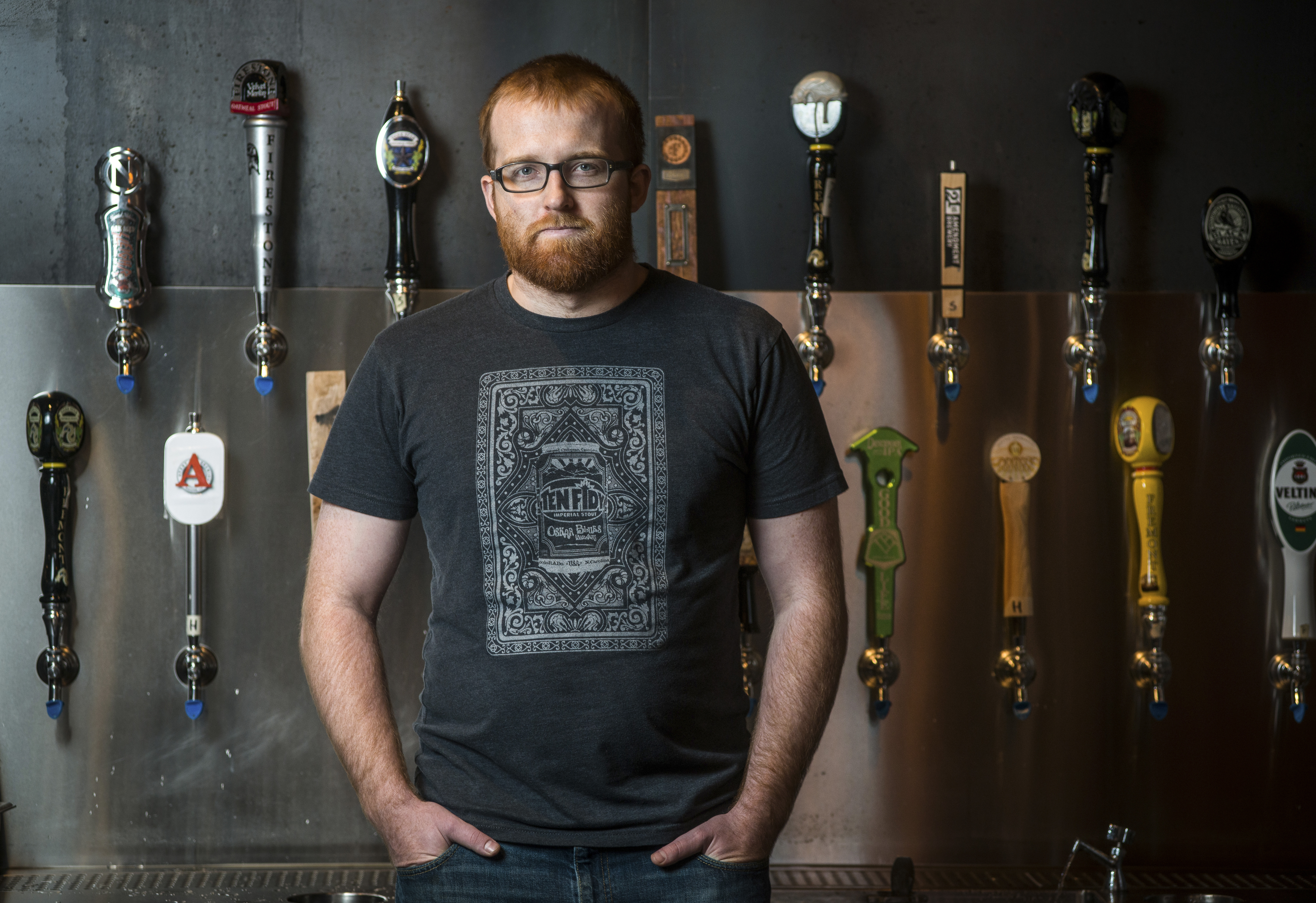
Steve Little is one
of the 20 or so certified cicerones in the Seattle area, but the only one who actually runs a beer bar, Tangletown’s The Burgundian. (Most cicerones work for breweries.) While he appreciates the technical grounding the program gave him, it’s the chance to taste a vast array of styles that helps him daily. “Through the cicerone program I was forced to try just about everything, like a northern English brown ale,” Little explains. “Doing so gives you a really good idea what that style tastes like . . . and I don’t like it. Yet having that understanding helps me when a guest wants that kind of beer, because then I can give them something they’ve never had before and will love.”
The rise of the craft-brewing industry has widely expanded beer drinkers’ options, but there’s also been a lot of experimentation without much practical knowledge. While that can sometimes yield delicious results, it can also be a challenge for people like Little who run beer bars.
“When you’re trying new beers, you have to know how the stuff is made to really get inside that bottle,” he explains. “Part of the problem is that the level of knowledge within the industry is being outpaced by the amount of beer on the scene. Recently I tried a beer that was obviously flawed, and the brewer didn’t even know something was wrong. We’re putting lots of stuff out there, but not everyone knows what they’re drinking or making.”
The vocabulary for beer tasting is still in its infancy too, much like the cicerone program in general. While wine has a rich (and perhaps comical) lexicon, beer terminology doesn’t go much beyond basics like “malty,” hoppy,” “crisp,” or “floral.” The Siebel Institute of Technology’s Brewing School in Chicago is striving to change that, but part of the challenge might be that most beers still taste like, well, beer. Since many drinkers tend to lock onto a style or two they like, they end up unaware of the vast diversity out there, even as new styles are being invented seemingly daily.
Little, naturally, proposes the growth of the cicerone program as a way to address some of that ignorance. “Certainly it’s not gonna solve everything, but as the industry, and drinkers, grow and mature, that increased knowledge is something we need. Studying for my exams forced me to get a very good basic understanding of beer. Yet now that I have that, there’s still way more to learn.”
Is that heightened knowledge enough to change long-held assumptions about the differences between beer and wine? It very well could be; there’s no doubt that beer drinkers are more discerning than ever, and more willing to spend money on quality beer. But the verdict is still out on whether they’ll want and need cicerones to guide them.
food@seattleweekly.com