PComputer Chess
Runs Fri., July 26–Thurs., Aug. 1 at Varsity. Not rated. 92 minutes.
Andrew Bujalski filmed Computer Chess on the same antiquated video gear that news crews used in 1980, when his film is set. The retro technology is crucial to this charming, subtle, and unexpectedly entertaining feature. Shot with modern cameras, a story about programmers wheeling their bulky computers into a hotel conference room for a computer-chess tournament would seem like hindsight, tending toward irony or parody. Rendered in black-and-white analog video, acted with true conviction, Computer Chess is so deeply immersed in its milieu that it feels like a documentary. And like a great doc, it is at times tense and uncomfortable to watch.
The stakes are high for the programmers. The winner of the competition receives $7,500—20 grand in today’s money!—and a match against Pat Henderson (Gerald Peary), a braggart chess master who hosts the annual tournament. But much more’s at stake. As the programmers talk about their work, the possibility of artificial intelligence and the very meaning of life are discussed—as are the implications of their work for the military-industrial complex. Not that it’s all serious. Bujalski’s programmers are nerds, after all, and their idiosyncrasies are delightful.
As the chess weekend wears on, a winner is crowned, but that seems beside the point. Things get weird, and the film takes a Lynchian turn that might test your patience. Even so, it still feels too real to ignore. Mark Baumgarten
Crystal Fairy
Opens Fri., July 26 at Varsity. Not rated. 98 minutes.
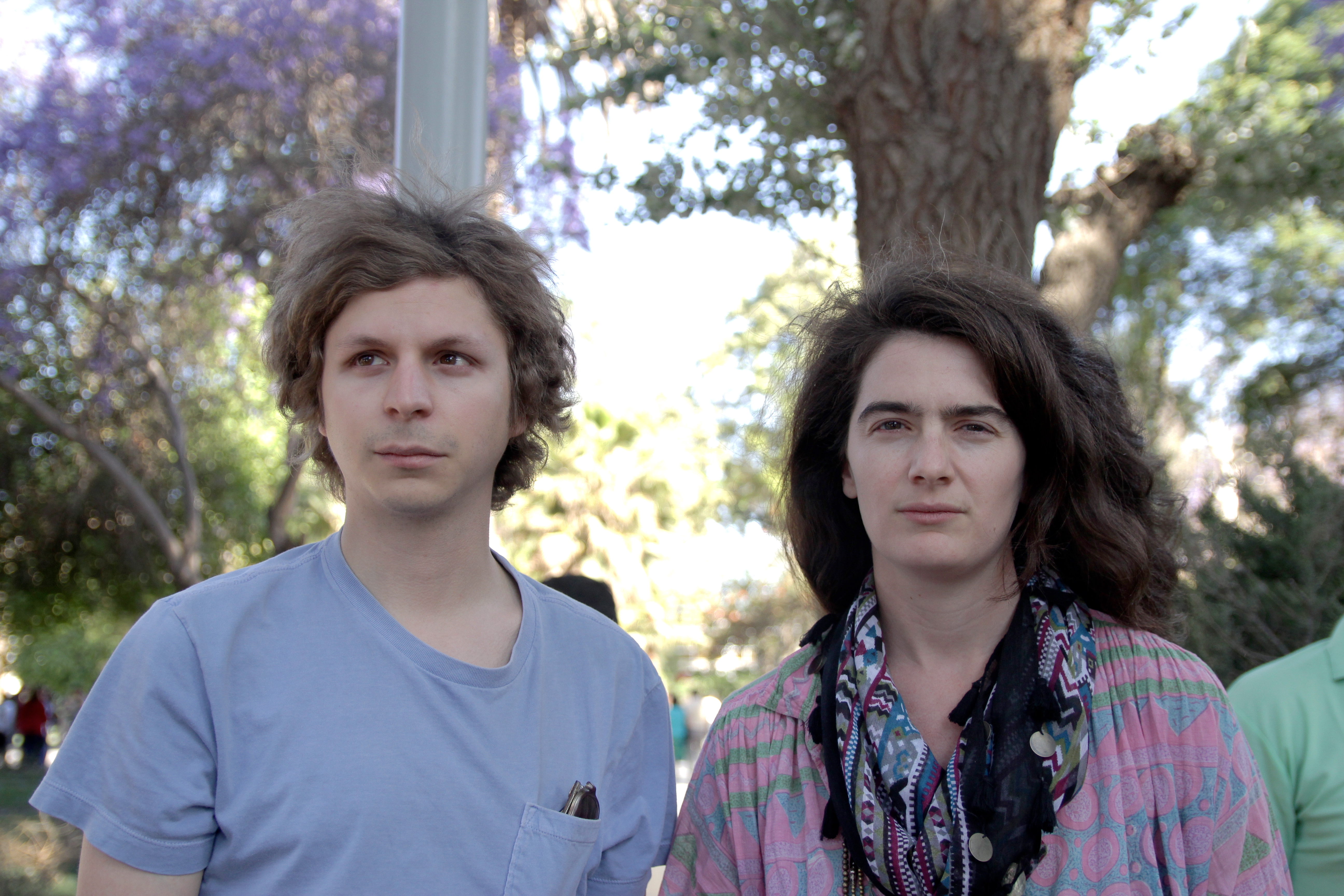
With Arrested Development back on the small screen, the selling point to Sebastian Silva’s Chilean road-trip movie is Michael Cera as the ugly doppelganger of George Michael Bluth. His Jamie is a selfish, obnoxious visitor to a country he barely cares to understand. He’s only there for fun and drugs, with a particular obsession for the hallucinogenic San Pedro cactus he and three Chilean brothers hope to use after a long desert drive to a remote beach. En route, the brothers—played by Silva’s younger brothers—soon tire of their garrulous fellow traveler, though they’re too polite to complain.
The bigger problem seems to be fifth-wheel hippie chick Crystal Fairy, as she calls herself, whom Jamie cruelly invites along so he can piss contempt on his gringa countrywoman and feel superior. To call Gaby Hoffmann’s performance here brave doesn’t go far enough. The former child actress (Uncle Buck, etc.) and daughter of Warhol starlet Viva, she creates an aura of unhinged New Age lunacy—like a musk you can smell in the theater. She’s an earnest, naive seeker who both embarrasses the guys with her proudly unshaven nudity and lectures them, mommy-style, about eating better and doing yoga. Still, just as cracks of decency show through Jamie’s truculent facade, Crystal Fairy lets slip certain clues that she’s also putting on an act. Forbidding the boys to buy junk food, she asks, “Do you know what’s going on with this sugar epidemic in America?” Later, in a covert moment, she guzzles Coke for breakfast.
Silva directed my favorite movie of 2009, The Maid, and he again shows a gift for the awkward comedy of silent resentments. The three brothers try to reserve judgment on the two chatty Yankees, though their sympathies—and ours—eventually slide toward Crystal Fairy. She may be nuts, but she has better manners than Jamie. (Again after This Is the End, Cera is too strenuously playing against Bluthian type; his Jamie annoys the audience as much as he does the brothers.) The Maid was a more focused work, all its pressures and class conflicts contained within a single household. Crystal Fairy is more of a ramble, with a tacked-on campfire catharsis. Still, its tone of squirming conflict is entirely genuine. Brian Miller
Free the Mind
Runs Fri., July 26–Thurs., Aug. 1 at Northwest Film Forum. Not rated. 80 minutes.
This pseudo-scientific documentary aims to explore the potential healing power of meditation. It credulously follows Dr. Richard Davidson, whom we’re told is a leading brain researcher, as he treats three subjects suffering anxiety and trauma. Two are combat veterans with PTSD, identified as Steve and Rich; the third is a kindergartner with ADHD, named Will. Directed by Phie Ambo, herself a meditation fan, Free the Mind is strongest in capturing the details of the three subjects’ everyday lives and their touching interactions with Davidson’s researchers. However sympathetic Ambo’s approach, it tips her doc’s balance away from hard science.
After establishing that our brains are complicated and mysterious (no surprise), Free the Mind tracks the seven-day meditation program intended to help Steve, Rich, and Will. Ambo uses computer graphics to help with the neuroanatomy lessons. And her handsomely shot film does draw you in: Watching the meditation and breathing exercises, I couldn’t help imitating them. And it actually feels really good.
But the meditation sessions seem too short, since most of the film is about the three participants’ mental-health conditions. For instance, one of the vets often complains about his depression and anger issues, and we genuinely care about his treatment. But the seven days fly by, and all three participants in the study turn out better. I couldn’t help asking, “That’s it?” The healing process seems a little abrupt in Ambo’s editing scheme.
Three people do not a scientific study make. Free the Mind instead raises awareness about the influence our thoughts can have on our bodies. It does more showing than explaining. Scientists will scoff, but viewers may learn a few breathing tricks to help during traffic jams or college quizzes. Ning Liu
PFruitvale Station
Opens Fri., July 26 at Guild 45th, Meridian, and other theaters. Rated R. 90 minutes.
By an accident of timing, if not craft, Ryan Coogler has made one of the most important movies of the year. He couldn’t have known, in dramatizing a 2009 police shooting in Oakland, that a Florida teen would be slain in a similar 2012 encounter. Then came this month’s not-guilty verdict, and his film will forever be associated with the case of Trayvon Martin.
Try to put that out of your mind. It’s impossible, but Fruitvale Station is about another dead black youth, Oscar Grant. Less covered by the national media, in part because Grant had a criminal record, his killing was actually witnessed and filmed on cellphones by New Year’s revelers on the same BART train from which he was dragged by overzealous transit cops. Fruitvale Station leads up to that incident with a day-in-the-life format. It’s overly sentimental and possibly too soft on its protagonist (played by Michael B. Jordan), who goes out of his way to do favors for everyone he encounters during the final 24 hours of his life. He’s respectful of his mother (The Help’s Oscar-winning Octavia Spencer), kind to dogs, loving to his girlfriend (Melonie Diaz) and 5-year-old daughter. Fired from his grocery-store job, trying to leave the thug life behind, he dumps a K of weed in the harbor for maximum remorseful effect. There are flashes of temper, but Oscar is depicted as a man determined to turn over a new leaf—just when the economy is at its worst. (We see an Obama campaign sticker, but hope hasn’t yet come to Oakland.)
In his first feature, Coogler takes a quieter, more domestic approach than the last major American film about race and police brutality, Spike Lee’s Do the Right Thing. Though the Grant family’s constant “Love you”s portend disaster, what really sticks is Oscar’s sheer normalcy of routine—buying crab for his mom’s birthday party, helping a white female shopper prepare for a barbecue, racing his daughter back to the car after day-care. Yes, it is possible in America to be a petty drug dealer and an upstanding family man. After showing us the actual cellphone video before the credits, Coogler spends a relaxed hour humanizing the 22-year-old Oscar; then comes the grim rush of docudrama that loops us back to the fateful railway platform.
Because of the cellphone videos and court transcripts, the cycle of white police escalation and minority defiance seems terribly familiar. Oscar and his boisterous friends protest they were doing nothing wrong, and they’re humiliated by sitting on the concrete in full view of the celebratory train riders. (In a fictional grace note, Coogler makes the BART a joyous and integrated rolling house party—society as we’d like it to be, not as it is.) Tempers flare, heated words are spoken, and a cop reaches for his Taser during the scuffle. His trial is covered in a postscript that also extends forward to the present year and context. And about all those cellphone videos. Part of Fruitvale Station’s horrible power comes from the fact that, yes, we’ve seen this movie before. Brian Miller
Post Tenebras Lux
Runs Fri., July 26–Thurs., Aug. 1 at Northwest Film Forum. Not rated. 115 minutes.
During the past decade, Mexican director Carlos Reygadas has stormed the art house with his dreamy and sexually explicit films Japon, Battle in Heaven, and Silent Light. His scrambled, melancholy fourth feature, its title translated as After the Light, again intertwines the carnal and the philosophical. Russian novelists are name-checked at a posh dinner party. Teenage boys grapple and grunt in a rugby match at an English boarding school. The devil—animated and glowing like a red stove top—enters periodically to survey the scene. An adorably babbling 2-year-old girl, Rut, wanders through a muddy field at sunset, cows rutting around her, dogs running and barking as if on the verge of attack. And a bored married couple—the parents of Rut, it emerges—nervously venture into a sex club with chambers named for Hegel and Duchamp. (She partakes; he merely watches the sweaty, slapping flesh.)
None of these scenes are presented in order. Juan and Natalia (Adolfo Jimenez Castro and Nathalia Acevedo) also have a little boy, Eleazar. The family lives in an expensive country home—Dwell meets Bunuel, surrounded by jungle and envious peasants. One is known only by his nickname, El Siete (Willebaldo Torres), whom Juan meets at a 12-step meeting. El Siete’s problems are poverty, booze, and crime. Juan confesses to a cyberporn addiction. His is probably the only household in the area with computers, TVs, and modern conveniences, and that affluence makes him a target.
If his kids are awed and enchanted by the natural world’s fecundity, Juan’s marriage is sexually dried up. The sex-club visit may be before or after children; the rugby game may reflect Juan’s past or Eleazar’s future experience. Time is a muddle here, and Reygadas further distorts his story with a bizarre, beveled lens choice that surrounds every shot with a fuzzy halo. Only the iris is clear; the edges are a monocular blur, creating a first-person POV effect. Every time the camera moves, it gives you a headache.
One senses that these vignettes are autobiographical, since Reygadas—a former lawyer and diplomat—was born into such privilege. His kids play Juan and Natalia’s kids at a young age, the country house is his house, the dogs are his dogs, the English boarding school . . . and so on. “All I had to do was exist,” Juan sadly muses of his distant, happy childhood. Maybe Reygadas intends this confounding film to be a Proustian reclamation of lost time and innocence, but he fails to include the viewer on that interior journey. Brian Miller
The To Do List
Opens Fri., July 26 at Sundance Cinemas and other theaters. Rated R. 104 minutes.
On the one hand, Aubrey Plaza seems too good, too smart for a summer raunch-com. From Parks and Recreation to Safety Not Guaranteed, her intelligence can read as caution or even diffidence: Here is a young woman who knows better than to expose awkwardness and vulnerability—often what sex is about. On the other hand, Aubrey Plaza is exactly what this summer raunch-com needs to set it apart from, and above, a genre that runs from Losin’ It to American Pie. It also helps that this teenager’s quest to get laid, a timeless theme at the movies, is related from the perspective of writer/director Maggie Carey, who grounds Plaza’s character, Brandy, in her own Boise adolescence.
Graduating from high school in 1993, valedictorian Brandy is a nerdy “mathlete” mocked for her virginity, with cleavage-heaving older sister Amber (Rachel Bilson) her chief tormentor. Before college, Brandy vows, she will change all that. As if studying for an AP exam, she methodically writes down a list of half-understood sexual skills that will lead to punching her shameful V-card. Abetted by her more savvy pals (Sarah Steele and Alia Shawkat), she sets her sights on a hunky lifeguard (Scott Porter), meanwhile overlooking the dork who’s crushing on her (Johnny Simmons). Barely providing adult supervision over these horny teens is pool manager Willy (Bill Hader, the director’s husband). His slacker sage gives The To Do List a surprising overlap with The Way, Way Back—its protagonist also finding liberation among the pool-rats—only it’s way, way better. Sex here is a fumbling reality, not a dreamy abstraction.
Plaza is surprisingly game for the slapstick required—pratfalls, lost bikini tops, green vomit, and other inconvenient bodily fluids. Carey treats all her characters with good-natured forbearance, even Brandy’s hovering parents (Connie Britton and Clark Gregg). She understands that a decent teen comedy must include eeew!-inducing gross-outs, otherwise it’s got no credibility with the audience. Embarrassment defines those years; it’s the cement that locks everything else into memory—and provides a foundation for adulthood. And Carey isn’t above obvious jokes, as when Brandy bestows her first hand job at a screening of—get ready for it—The Firm. Brian Miller
E
film@seattleweekly.com