Toke Stoking
Published 7:00 am Tuesday, May 25, 2010
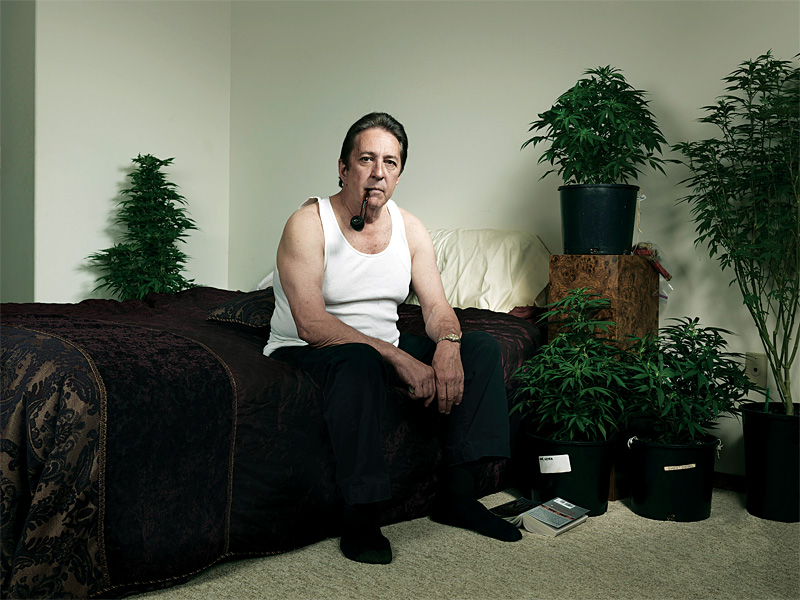
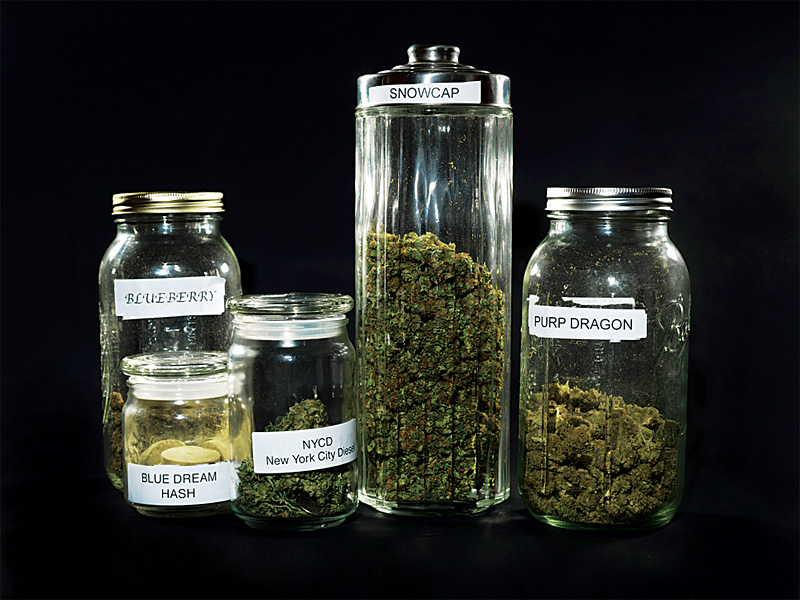


In a Kirkland ranch house surrounded by towering evergreens, Steve Sarich is pacing his living room, smoking a pipe, and talking a blue streak into his cell phone.
Thumping music comes from the basement, where the 59-year-old onetime Penthouse photographer and serial entrepreneur runs a medical-marijuana distribution outlet called Private Island Treats. Some half-dozen employees, “volunteers,” and friends in their 20s and 30s are coming and going. They include Chelsea Fennell, a 20-year-old aspiring model who became Sarich’s girlfriend—and a medical-marijuana patient—after coming to his house for help with her portfolio. Sarich’s two pit bulls and one Pomeranian are barking. And the TV, tuned to Fox News, is running silently.
Through it all, Sarich maintains a steady focus on his conversation, which is—to say the least—heated. At the other end of the line is a deputy with the King County Sheriff’s Office who has been charged with investigating the attempted robbery-turned-shootout that took place at Sarich’s home a month prior. What’s got Sarich worked up is the fact that the sheriff’s office is simultaneously investigating his medical-marijuana operation. State law allows patients with qualifying conditions to ingest marijuana, but it does not, in most people’s interpretation, sanction operations like Sarich’s, called dispensaries, which distribute large volumes of marijuana to many different patients and take money in exchange.
Sarich, who during the robbery attempt shot one intruder in the leg and chest with a .22 caliber pistol he keeps in his bedroom, is not most people. He argues that the law doesn’t explicitly outlaw dispensaries—although it does say that someone who provides pot can do so for only one person at a time, a problem Sarich gets around by saying he does just that, every 15 minutes.
On the phone, he rages over the county’s raid of his house shortly after the shootout. “You’re trying to get cooperation from me at the same time that you’re trying to prosecute me!” he exclaims to the deputy. “I guess Dan”—King County Prosecutor Dan Satterberg—”can decide which of his cases is more important.”
Sarich isn’t waiting around for a decision. Although deputies seized nearly 400 plants, his dispensary is back up. In a small room downstairs, a man Sarich calls the “gardener” prunes and waters dozens of marijuana plants labeled by strain: Sweet Willy, Mango, Train Wreck, Jesus, Chocolope, Headband (plus one called Alloway, named for a particularly disliked drug cop).
A room down the hall is stocked with so-called “edibles.” Shelves brim with snacks like brownies, sugar cookies, and Goldfish crackers coated with pot-infused butter. A freezer holds chocolate cheesecake and single-sized microwaveable meals, including pasta primavera, chicken alfredo, and macaroni and cheese.
By the end of the week, Sarich will have to pack up his plants, pot, and edibles. The Kirkland house, which he rents, is being foreclosed on. Now, however, he’s got a more audacious plan—to open what you might call a full-service dispensary, with Internet access, massage, and a cafe. The intended location: “within a mile of Dan Satterberg’s office,” he says.
Sarich is nothing if not a provocateur. He says law enforcement has made him a test case, but he seems to be doing everything he can to make sure they do. “Prove that I’m doing something illegal,” he says. “Give it your best shot.”
His challenge comes at a critical moment for the medical-marijuana movement. U.S. Attorney General Eric Holder Jr. announced in October that his office would not prosecute medical-marijuana cases, fueling an explosion of dispensaries both locally and nationally. Whereas a year ago there were maybe a dozen in the Seattle area, now there are anywhere from 25 to 100, according to estimates by local medical-marijuana leaders. Nevertheless, as the Sarich case shows, these dispensaries—and, for that matter, patients who run afoul of state restrictions on how much pot any one person can have—are still vulnerable to busts by local law enforcement.
A proposed initiative to fully legalize marijuana (medical or otherwise) in Washington, called Initiative 1068, might make the legal issues around dispensaries moot, should it get on the ballot and pass in November. But if not, the Sarich saga may force the state legislature, as well as law enforcement, to take some kind of action. “It’s really highlighted something a lot of people are not aware of,” says Senator Jeanne Kohl-Welles (D-Seattle), meaning dispensaries and the legal netherworld they fall into. She says she intends to sponsor a bill in the next session that would allow and regulate them.
Yet others are fearful that Sarich—with his guns, his brashness, his entrepreneurial drive, and his circle of followers who look too young and healthy to need pot as medicine—will stir up a backlash against medical marijuana just as it seems to be gaining ever more legitimacy. Consequently, some of the most vehement hostility toward Sarich comes from within the medical-marijuana movement—a movement, not incidentally, in the middle of an identity crisis.
Sarich is 5’8,” with brown hair combed away from his forehead, an intense gaze, and a slight paunch. His normal outfit is jeans and a leather jacket, and little about him seems out of the ordinary. Except his obvious love for a good fight.
His rant at the deputy investigating the robbery isn’t the only time he’s gone off on the Sheriff’s department. A couple of weeks prior, Sarich had exchanged e-mail with the department’s spokesperson, Sgt. John Urquhart.
Sarich was demanding to know why the county had blocked his application to buy a new gun shortly after the robbery. (Before anyone makes a purchase, gun stores are obligated to seek a background check from the purchaser’s local law-enforcement agency.) The Sheriff’s department attributed its decision to federal authorities, which had advised the local agency that a federal law prohibiting drug users from buying guns applied to Sarich.
Sarich, who says he uses pot to alleviate pain from spinal stenosis, degenerative disc disease, and osteoarthritis, questioned whether medical-marijuana users were explicitly banned from buying guns. “Show me the statute!” he said. And he wanted an “expedited” copy of the information on himself that had been obtained by the county from the feds.
“If you can’t provide even that much information, I’ll know that we are down for playing ‘hard ball,'” Sarich wrote. Not without charm, he then added: “The detectives who have been investigating the shooting are some of the most professional law-enforcement officers I’ve ever met.”
Two days later, still agitating for that report, he upped his game. He noted that the department’s “drug goons” lacked the professionalism of the robbery detectives, claiming that they “smeared human excrement behind my bed and nightstand.” He continued, “I have not yet released that information to the press” (emphasis added).
Urquhart—who had conceded that he was “perfectly capable of playing hardball” and even enjoyed it sometimes, as Sarich seemed to—thereupon decided to release the accusation to the press himself. “When allegations like that are made, we don’t sit on them,” Urquhart says in an interview, by way of explanation. The claims were reported in early April by several news outlets, including Seattle Weekly, seattlepi.com, and KIRO radio.
It was such a wild claim that it made Sarich look loony, although Douglas Hiatt, a Seattle attorney who frequently represents medical-marijuana patients who run into legal trouble, says he has seen cops trash sites they’ve raided in similar ways. Sarich, who is sticking by his story, lashed out at Urquhart for disclosing his e-mail.
“John, you are a truly despicable human being in my book,” he wrote. “The gloves will now come off.”
Since then, he has been talking about suing the sheriff’s department for various reasons, including the gun issue.
He’s getting a sympathetic hearing from people in the gun-rights movement—normally not ones to align themselves with pot-smokers of any description. Dave Workman, senior editor of Gun Week, a magazine put out by the Bellevue-based Second Amendment Foundation, says Sarich got a “raw deal.”
Sarich’s combative posturing is nothing new. It was evident from the moment he started logging onto online medical-marijuana sites several years ago.
“He just popped onto the scene,” says Ric Smith, a longtime activist who’s on the board of directors of Dunshee House, an AIDS support organization on Capitol Hill. No one knew who he was. Nevertheless, Smith says: “He had this line, he was going to revolutionize medical marijuana.” The local movement had become “lazy,” Smith remembers Sarich saying.
Joanna McKee, co-founder of the Green Cross Patient Network, the oldest patient advocacy group in Seattle, remembers Sarich saying things like, “We need to chain ourselves to the federal building, march here, march there.”
“Wait a minute,” McKee says she and others responded. “We don’t have to go there.” At one time, maybe; but that was before the state passed the 1998 initiative legalizing medical marijuana, when the War on Drugs was in full force and nobody in power seemed to want to hear about cancer patients who found pot to be the only pain reliever that worked.
But, now, she says, “We have people in the legislature willing to find out what we want.” And for that matter, in law enforcement.
Take Satterberg, for instance. “If marijuana has a medical value, then we should treat it like medicine,” he says. “Patients should be allowed to get it in a safe place.” He notes that, currently, the only legal way for patients to acquire marijuana is to grow their own. “If someone needs pain reliever,” Satterberg observes, “we don’t tell them to grow their own opium-producing poppies.”
As advocates point out, pot plants aren’t easy to grow, either. You need starter plants, fluorescent lights, and expensive fertilizer. People who live in apartments typically don’t have the room. And those who are sick may not be able to tend their own plants. The law allows a “designated provider” to grow pot for you, but that’s a lot for someone to take on.
These days, says Sue Watson, director of the Emerald Cross dispensary in Seattle, authorities generally look the other way, as long as proprietors keep their heads down and “run a clean ship.” She means, for instance, dispensing only to patients who qualify for pot under the law: those with conditions including cancer, AIDS, epilepsy, and “intractable pain.”
“It’s when you make waves and are pushing it,” Watson says, that law enforcement starts taking a harder look. That’s why she would prefer that Sarich back off.
McKee agrees, saying, “It’ll be a lot easier to get what we want if we’re not confrontational.”
Sarich, however, is impatient with this attitude. “They want to keep everything in the shadows,” he says. “The less said, the better.” On the one hand, he says, “Maybe they’re right. I’m the biggest mouth in the community and I’m the one being raided.” On the other hand, he says his own experience has taught him that the status quo is not working.
Six years ago, he moved back to the Seattle area, where he grew up. Due to his illnesses, he had for years loaded up on Vicodin, which made him spacey and caused mood swings. But because medical marijuana was legal here, he says he decided to give pot a try. It helped. Normally, he says, “I can’t find a comfortable position to sleep in. But I can eat a [pot] brownie with a glass of milk and sleep through the night.”
He contacted Green Cross, then a dispensary as well as a patient-advocacy group, looking for advice on how to get started growing marijuana. “It was very secretive, very underground, very unprofessional,” he claims, adding that nobody offered him a cutting—that is, a snippet from a mature plant that he could use to start his own plant.
Sarich says he made up his mind that there needed to be a new enterprise in town, one where patients could get “a friendly voice that wasn’t paranoid and that would provide you with accurate information” about growing and using medical marijuana.
Sarich called his new business CannaCare, which he launched in Everett. John Worthington, a medical-marijuana patient from Renton, met Sarich shortly after. “Back then, he had a class, where you’d donate $120,” Worthington recalls, “and he’d teach you how to grow [marijuana], and you’d get four cuttings.”
Typically, though, Sarich had grander plans. As Worthington remembers, Sarich wanted to be the “Costco” of medical marijuana: a warehouse full of nothing but cuttings.
Business, guns, and women—those are the constants that run through Sarich’s life. He undoubtedly got a taste for the first from his father, Steve Sarich Jr. (the son’s name is officially Steve Sarich III), a local seafood magnate who headed various enterprises, including the Puget Sound Salmon Egg Company, a powerhouse in salmon caviar.
By his account, Sarich started his first business—designing and selling jewelry in Bellevue— as a young college dropout. He soon moved on, and successively launched a number of remarkably varied companies. There was the swimsuit-design business in Hawaii, the software company in Russia, and the digital-imaging firm in Houston. That’s when he wasn’t taking photos of beautiful women, a line of work that he says led him into a long-term affair with one of his Hawaii models: Tia Carrere, later a Hollywood star best known for her part in Wayne’s World. (Carrere could not be reached for comment.)
“When you hear these stories about what he’s supposed to have done, you’d say ‘No way,'” acknowledges his cousin John Sarich, culinary director at the Chateau Ste. Michelle winery. But he says he’s seen pictures of Sarich and Carrere together, admired the jewelry Sarich once designed, and bought bikinis from his swimsuit business to give to former girlfriends.
Sarich had one more career turn, as a salesman and executive for several weapons companies, before returning to his hometown. With an uncle who was a gunsmith, Sarich explains, he learned to shoot when he was a child, and would frequently go “plinking” during high-school summers spent in Alaska working in his father’s cannery.
Once Sarich made up his mind to enter the medical-marijuana business some six years ago, he started stocking up on plants. That put him at risk of both federal and state criminal charges. Washington law allows medical-marijuana patients to have a “60-day” supply of pot on hand. What exactly that meant remained vague at the time, and law enforcement in different counties were coming up with their own definitions—then busting patients whose store of pot exceeded it. In 2008, at the direction of the legislature, the state Department of Health defined a 60-day supply as 15 plants and 24 ounces—unless patients can prove “medical need” for more, a stipulation that keeps the matter vague.
Sarich was well over the so-called “presumptive” limit, and clearly not growing just for his own use. Worthington, who worked with him, began to worry that CannaCare’s patients could also be in jeopardy through a federal conspiracy charge.
But Sarich made clear that he didn’t intend to stop at even 100 plants— the number at which, an attorney advised Worthington, federal charges could kick in. Worthington says he subsequently dropped out of CannaCare.
In January of 2007, a state drug task force raided Sarich, still in Everett at the time, and found more than 1,500 plants. The U.S. Attorney’s Office never pressed charges, though. Spokesperson Emily Langlie says her office doesn’t comment on the reasoning behind such decisions.
Undeterred, Sarich next started a service offering doctor recommendations for marijuana, which he eventually called Sentry Medical Group. Through a help-wanted ad he placed on Craigslist, he connected with Jason Ling, a Navy doctor then serving in San Diego. (Local doctors weren’t easy to find, Sarich explains, in part because those few willing to write marijuana recommendations tend to be in the business for themselves and already have sufficient customers.)
Sentry would hold weekend “clinics” where Ling—and, later, a couple of local doctors Sarich ultimately found—would see one patient after another. Sarich would hold them at Red Lion hotels around the state until he moved to Kirkland, when he started holding them at his home. The clinics typically attracted more than 100 people, each of whom paid $200 for a visit with the doctor (although Sarich says he sometimes reduced the price for those who couldn’t afford it).
Pot-friendly doctors are few and far between in many parts of the state. So organizations far afield contacted Sarich to bring his clinics to them. One was the Olympia Patient Resource Center, a medical-marijuana education and advocacy group in the state capital.
After just a couple of clinics in 2008, however, the organization decided not to ask Sarich back, according to director Jeremy Miller. “It seemed to me like he was trying to stuff in as many people as possible,” Miller recalls. Rather than truly assessing patients’ illnesses to see whether they qualify for medical marijuana, Sentry’s doctor seemed like “a rubber-stamper,” Miller says.
Miller also had qualms when Sarich “brought in all these brownies” and offered them for sale at the clinics. According to state law, doctors are not supposed to be involved in distributing marijuana.
Karen Hamilton, a Bellevue gynecologist who briefly worked for Sentry, echoes these concerns. Sounding like every harried doctor in the age of HMOs, she says she found “there were a lot of patients in my schedule. I didn’t feel I could spend as much time with people as I wanted.” She also didn’t think sale of the edibles was appropriate.
And many of the people who would turn up—not only the patients but Sarich’s employees and volunteers—”were just kids,” Hamilton notes. “I don’t know where he finds them. “It was sort of like a commune,” she says.
She adds that most of the young patients who would come, some of them newly discharged military veterans, had valid reasons for seeking pot. But she wasn’t so sure about everybody else.
“People brought friends with them,” she says, adding that they all smoked together outside the clinics. “I didn’t know who was doing what where.”
Uneasy after seven months of working with Sarich, Hamilton severed ties with him in February 2009, and is no longer involved in the medical-marijuana movement.
Spend any time with Sarich, and it is apparent that he attracts young people. A 21-year-old patient and sometime volunteer for Sarich, who asked not to be named, provides some indication of why. Having developed two herniated discs when he was 17, for reasons that remain mysterious to him, he says he was having a hard time getting through school on the opiates he had been prescribed. At his mother’s suggestion, he wanted to try marijuana. But even though state law does not set an age limit for using medical pot, he says he had a hard time finding anyone who would take him as a patient because he was under 21. Then he found Sentry on the Internet. Sarich says the business has no age limits as long as patients are genuinely sick.
The 21-year-old adds that Sarich also collects young followers because of his generosity. “If you’re out of medicine and your back hurts, he’ll give you whatever you need. If you’re homeless, he’ll help you out.”
In fact, one of the five young men who allegedly attempted to rob Sarich’s house in March, a 19-year-old named Andrew Carrigan, was such a person in need of help, by Sarich’s account. Sarich says he met Carrigan about a year ago at a San Francisco guesthouse run by a medical-marijuana advocate. Carrigan didn’t have a place to live, so Sarich invited the teen to stay with him and help out around the place. After a month, Sarich says, he kicked Carrigan out when he discovered he was using Ecstasy. (Carrigan has pleaded not guilty to charges stemming from the robbery attempt.)
There’s another source of young people in Sarich’s life: photography. Sarich continues to shoot erotic pictures of women, although these days he says it’s a hobby rather than a business. He shows his work and advertises for models on the website modelmayhem.com, which is how he met Fennell.
“I was jobless. He told me he could get me legal, give me a place to live,” says Fennell. By legal, she means become an authorized pot user. She says she has irritable bowel syndrome, a condition that is arguably covered by state law, which allows pot for diseases that cause chronic wasting, cramping, and pain. She soon moved in with Sarich.
Sarich portrays his own businesses in altruistic terms—”All I do is take care of sick people every day”—while he and his devotees view others in the medical-marijuana community as profiteers. Worthington says that before he went to CannaCare, he couldn’t find anyone to get him started growing marijuana. The dispensaries and patient organizations in town “just wanted to sell you pot,” he says.
Jeff Gilmore, a longtime medical-marijuana activist from Thurston County, recalls trying to help a mother and young daughter, both suffering with AIDS, find some pot brownies to help them keep their medicine down. He says he contacted dispensaries in Seattle and was told the brownies would cost $10 each.
“I contacted Steve, who said, ‘Hey, this is ridiculous,'” Gilmore recounts.
That was about a year ago, and Sarich had by then started a third business: his dispensary Private Island Treats, which offers cuttings, pot, and edibles. (CannaCare now focuses on legal advice and patient advocacy, according to Sarich.)
Gilmore and Sarich came up with a scheme to provide free pot and supplies to those most in need. Gilmore would make pot-infused chocolates which Sarich would sell in his dispensary, and the proceeds would be used for donations.
Gilmore now assembles starter kits for cancer patients, in which he includes a small vial of pot, a grinder, and rolling papers. He attends every clinic put on by Sarich, and gives kits to those going into chemotherapy.
Still, many of Sarich’s peers consider him, as Watson of Emerald Cross puts it, “a greedy bastard.” The fact that he supplies both doctor recommendations and pot is not only a legal risk, she says, but a capitalist strategy to lock up business from both ends—a kind of vertical integration, as MBAs would call it.
Watson’s own operation is a nonprofit “club”: A circle of growers—who are also patients—deliver pot to the dispensary and receive a share of the sales proceeds, and only members of the club can buy. Whereas Sarich owns all his own plants, and resells pot that he’s bought himself; any patient can come in off the street and buy from him.
Watson concedes that she doesn’t charge patients any less for pot, but points out that at Sarich’s dispensary, “he’s the one making all the money.”
“Believe me, I am not getting rich,” counters Sarich. “I drive a 1998 minivan. I don’t have a retirement fund, and I don’t have health insurance.”
Whoever is the real profiteer, Sarich has fed into an ongoing debate around the country about what the exploding medical-marijuana industry should look like.
“Even in California, there are different models,” says attorney Hiatt, speaking by phone from Los Angeles. He was there raising money for I-1068, tapping some of the same donors who are supporting a similar legalization measure in California that has already qualified for the November ballot.
Hiatt says San Francisco tends to favor nonprofit and “closed” cooperatives, like Emerald Cross, where patients grow only for each other. L.A., on the other hand, is awash with dispensaries that are open to all patients and charge what the market will bear. The going price in L.A., he says, is $160 per quarter ounce, or about twice Seattle’s rate. Given that some patients consume an ounce in a single day, especially if they eat their pot rather than smoke it, he says “that’s not affordable.” (He does not explain why Seattle’s for-profits don’t charge exorbitantly, although perhaps the presence of nonprofits keeps prices down.)
For that reason, Hiatt opposes the for-profit model. Sarich, in contrast, argues that the nonprofit label is just a smokescreen. Just as the United Way offers top salaries to its executives, he says, “I can call myself a nonprofit and still pay myself $3 million a year.”
Law enforcement seems to have its own opinion in the debate. Although cops generally maintain that all dispensaries are illegal whether they make a profit or not, officers tend to be more interested in an operation when it appears flush. Consequently, most dispensaries don’t even admit to “selling” marijuana; instead, they talk about accepting “donations.” Only a few busts have occurred around the state, including the Sarich raid and one earlier this month of a Tacoma dispensary called North End Club 420 (see “Mickey Mess,” SW, May 19). Each time, cops are sure to mention the money involved.
In a March affidavit supporting its request for a warrant to search Sarich’s Kirkland home, the King County Sheriff’s Office noted that the previous investigation of Sarich, culminating in the 2007 Everett raid, had turned up information revealing him to be “a major marijuana narcotics trafficking [sic] earning great sums of money.”
More recently, the Sheriff’s Office said it had received separate information that Sarich “makes a large cash profit.”
Spokesperson Urquhart cites another reason why his office decided to investigate Sarich: “neighborhood complaints.” Neighbors were upset about the cars, the crowds, the marijuana fumes, the pit bulls, and the gunshots during what Sarich says was a prior robbery attempt in January. No suspects were ever identified, Urquhart says.
“I was scared all the time,” says his former next-door neighbor Heather Meikle, adding that that’s not what she expected living in a $2,300-a-month rental in the well-heeled neighborhood of Juanita, on the shore of Lake Washington.
The March shootout prompted King County deputies to act, Urquhart says. “Things had come to a head. We had a guy shot and almost killed as a result of what Steve Sarich is doing there.” Urquhart is implying that Sarich is somehow to blame for the robbery attempt, and he’s not alone. Some in the medical-marijuana movement blame Sarich too, in part because they see him as keeping too much pot on hand, selling it to questionable characters like Carrigan, and taking no security measures other than stocking up on guns.
The sheriff’s office has yet to finish investigating Sarich’s marijuana business, Urquhart says. But assuming it finds the case worthy of turning over to Satterberg’s office or the U.S. Attorney’s Office, the question then becomes: What will prosecutors do?
Satterberg and the U.S. Attorney’s office both decline to speculate. But Satterberg does say that he considers dispensaries in general to be illegal. And though he recognizes that patients need someplace to get marijuana, he says that a lot of people growing and buying pot in one place presents a problem. Such an enterprise “becomes a target for violence in the neighborhood,” he says, as demonstrated by what happened “over at the Sarich house.” Other dispensaries have become targets too, but Sarich is unusual in locating his in such a quiet, upscale suburban neighborhood. Other dispensaries can be found in commercial or relatively busy urban neighborhoods like SoDo, Georgetown, or Fremont. Satterberg’s favored solution is to make pot available in “state-licensed pharmacies.”
If Satterberg or the U.S. Attorney does press charges, it could have a chilling effect on the burgeoning dispensary industry. True, other dispensaries are trying to distance themselves from Sarich by saying they do things differently. But as Alison Holcomb, drug-policy director of the ACLU of Washington, points out, prosecutors could issue a statement as they press charges that puts all dispensaries on notice. On the other hand, if prosecutors don’t take action, it will likely embolden dispensaries all the more. Says Fennell: “If none of us get arrested, we pretty much made dispensaries legal.”
As the debates swirl around him, Sarich charges on. In late April, he moved his residence to a seven-acre property he is renting from a landlord who was willing to write into the lease, according to Sarich, that marijuana will be grown on the premises. Showing a reporter around the place on the condition that its location be identified only as “east of Issaquah,” he strides across the broad lawn to a fish pond at the far end of the property, and talks about the barbecues he intends to have for patients.
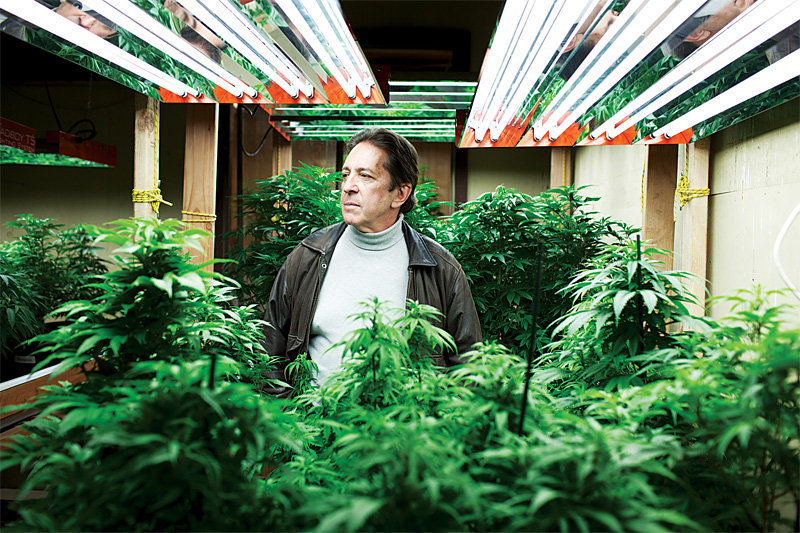
He then walks over to the property’s key amenity: a greenhouse, much bigger than the grow room he had in Kirkland. In that limited space, he grew plants only for cuttings, rather than for harvesting usable pot, which he bought elsewhere (from a source he declines to name). Now, he says, he’ll have the space to produce his own buds.
Sarich also has big plans to reopen his dispensary. He’s found a site in SoDo on First Avenue South. He says he’s working on getting a business license, which he will register to a nonprofit he intends to create. A nonprofit? But what about his disdain for that model? Still true, Sarich says, but he adds that he’s betting that should dispensaries become legal, the state will require them to forego profit.
Is Sarich backing down? Not in the rhetorical department. He produces a copy of an e-mail from an official in the sheriff’s office that he recently got through a public disclosure request. In the e-mail, the official tells an FBI employee that she intends to deny Sarich permission to buy a gun and asks what the FBI thinks—proof, Sarich says, that it was not the feds who were driving the decision, as the Sheriff’s office had claimed, but the local agency.
“We’ll sue the hell out of ’em,” he says.