
For decades, truckers have hauled cargo on the nation’s highways with little regulation on how much pollution their rigs puff into the atmosphere. In December 2000, during Bill Clinton’s final days in the White House, the Environmental Protection Agency decided that needed to change. The EPA created a new rule requiring diesel engines built after Jan. 1, 2010, to have cleaner exhaust. Nitrogen-oxide emissions were to be cut by as much as 95 percent.
The new rule sent engine makers scrambling for a fix. And one Seattle-area company seemed to have it.
Kirkland-based Integrated Fuel Technologies, started by a former real-estate developer named Robert Firebaugh, purportedly had developed an effective new catalytic converter system which broke down nitrogen oxides into separate (and harmless) nitrogen and oxygen molecules.
With the engine industry under the gun, and truckers hoping to avoid an extensive retrofit of their vehicles when they replaced the engines, Firebaugh’s idea was “a bright spot,” says Jay Thompson, president of a consulting firm in Denver called Transportation Business Associates. The journal Science News announced the invention as a big step forward in cleaning up diesel emissions. And Integrated received expressions of interest from Bellevue-based PACCAR, the third-biggest truck manufacturer in the world.
But the converter that could rescue the truckers is now being choked by litigation. Firebaugh’s investors, many of them a close-knit group of Mormons, have accused him of ripping them off. They say he lured them in with half-truths, developed a design that was unworkable, and diverted some of their money to hair-loss treatments, a lakefront house in Medina for his mistress, and trips to Las Vegas.
As they’ve pursued their claims, the investors have discovered that they’re by no means the first to feel duped by Firebaugh. The Seattle entrepreneur has more than a dozen people, including old business partners, landowners, and a former lawyer, after him for more than a million dollars in deals dating back to 2000.
Firebaugh was pushed out of Integrated last year by the company’s board of directors. Engineers and contractors who worked with him say they’ve now successfully built the system that Firebaugh had claimed he could make. But Firebaugh insists he alone owns the rights to the system, called DeNOx. In current litigation over control of the company, he argues that greedy investors are trying to take over his company and steal his invention, while the investors say the system wasn’t fully developed until they got the thieving Firebaugh out of the way. The two sides have launched competing lawsuits in King County Superior Court, but the outcome of the battle already appears to be a lose-lose, as it prevents all parties from capitalizing on a huge opportunity.
Sitting in his attorney’s Lynnwood office, clad in a Disney California Adventure windbreaker, Firebaugh says: “I think it’s a tragedy, or a travesty.” It may well be both.
The Integrated saga starts with an oddity: a real-estate developer suddenly jumping into the diesel business. In 2006, Firebaugh was working on several land deals in and around Kellogg, Idaho—site of the Silver Mountain ski resort, home of the world’s longest single-trip gondola. It was in Idaho that Firebaugh met a fellow Idaho deal-maker named Barry Sadler.
Sadler also happened to own a Texas-based diesel-engine maker called Dr. Performance, which he was looking to unload. One late winter day in 2006, while the two men were discussing their various business ventures, Firebaugh floated the idea of buying the business, Sadler recalls. The two flew to Texas together, where Firebaugh got a crash course in the diesel industry. He learned that making diesel engines run better was a promising business: In addition to the EPA’s new emissions standards, truck owners were looking for better fuel mileage. Sadler says Firebaugh saw the potential. “He sniffs money out like a dog,” he says.
In Texas, Firebaugh started looking for an investor to help him buy Dr. Performance, and came across Kenny Laughlin, a venture capitalist with a pronounced Texas twang. Speaking from Texas, Laughlin says he gave Firebaugh $200,000 to get Integrated off the ground in exchange for a 5 percent stake, assuming the company would buy Dr. Performance as a subsidiary.
Laughlin was named a co-signer on the bank account Firebaugh opened with the money. Not long after he wrote the initial check, Laughlin says, he looked at the bank statements and found expenditures totaling $168,000. Among the expenses was a trip to Las Vegas and a new car, he claims.
Laughlin refused to have any further dealings with Firebaugh. (He also went ahead and bought Dr. Performance himself.) This past August he sued Firebaugh for the $168,000 in King County Superior Court.
Firebaugh denies misspending the money. In his version of the story, he skips over all that. He says that after entertaining the idea of buying the Texas company, his college classes in chemistry and physics kicked in and he started dreaming up his own ideas for reducing emissions. “I started to think this stuff up, as it were,” he explains.
Firebaugh had fastened onto a big market. As the 11 million truck engines now on the road are replaced, they’ll need to reduce to almost zero the amount of invisible, acid-rain-inducing, smog-creating nitrogen-oxide particles they belch into the air.
One of the earliest ideas devised by the industry was to pump urea from a separate tank into the converter system. Urea is a chemical compound found in sources such as animal urine. It breaks down nitrogen oxides into their component molecules.
Mike Millikin, editor of the environmental transportation Web site Green Car Congress (greencarcongress.com), says the problem with the urea system is that it requires you to put another tank on the truck, make stops to fill it, and do a significant engine rebuild. The extra weight also lowers the truck’s miles per gallon. “What they would like to avoid is the trade-off between emissions and fuel economy,” he explains.
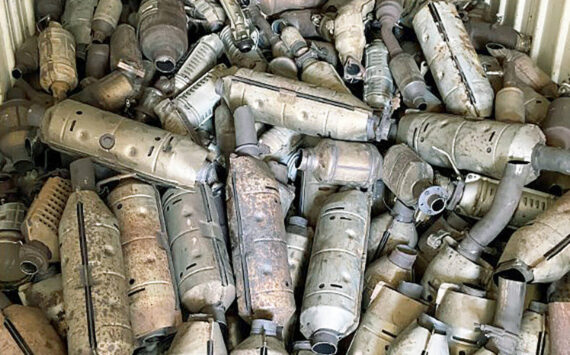
Chris Marshall, a chemist at Argonne National Labs in Illinois, began working on that issue immediately after the EPA regulations went into effect. Argonne is a lab owned by the federal government devoted to researching and developing everything from nuclear energy to an early-detection system for lethal gas in subways. Marshall says that after about a year of testing, he discovered a powder that could react with diesel-fuel emissions to break down nitrogen oxides. Catalytic converters use porous ceramic bricks that filter exhaust as it leaves an engine. Marshall’s plan was to coat the bricks with his powder.
While Marshall was creating his powder, Firebaugh was building his company. In court filings, he claims that much of the early money for the business came from his own pocket. He says he was acting as the company scientist as well. In early 2007 he hired an Oregon-based consulting firm to help him test an idea he had to make diesel fuel last longer by injecting hydrogen into it. The firm introduced him to one of its consultants, an Australian named Mark Dansie, who sought out potential markets for Firebaugh’s ideas.
Dansie suggested to Firebaugh that he switch gears and start looking at ways to help diesel trucks meet the imminent nitrogen-oxide requirements, a more urgent need in the trucking industry than getting more mileage from a tank of fuel. Dansie had come across Marshall’s work at Argonne. And in August 2007, Firebaugh went to Illinois to meet with the researcher.
Like the “technology transfer” wing of a university, Argonne aims to get its inventions into the commercial marketplace. To that end, private companies can license creations like Marshall’s powder to create their own products. Firebaugh says he and Marshall hit it off and Marshall asked him to oversee the entire process for getting the powder into vehicles on the road.
Marshall declines to discuss any of the specifics of his meetings with Firebaugh, saying only that he met with a number of companies to discuss his invention and Integrated was the smallest.
But Firebaugh claims the two of them started working in concert to develop a prototype converter. At one point in early 2008, he says, they were ready to test it, but the lab caught fire, so he had to start over in Spokane.
Throughout this time, Firebaugh claims, he worked almost entirely alone. The only involvement anyone besides Marshall had in his invention were the contractors he hired to build his designs for a catalytic converter. “I was [Integrated],” he says. “I was the guy doing it.”
Firebaugh’s origin story is the basis of his argument that he should have sole control of DeNOx. And it’s at the heart of his dispute with investors and employees who say they contributed both money and expertise from the very beginning.
Robert Yount is a land-planning consultant on Mercer Island who claims in court records that he lent Firebaugh $125,000 to buy property in Idaho. Yount says he never got the money back. But then Firebaugh came to him in the spring of 2007 with an idea for a diesel business.
Sitting in his home overlooking Lake Washington, Yount says he thought Firebaugh’s idea seemed plausible and he might recoup his losses from the real-estate loan. In May 2007, before Firebaugh made his visit to Argonne, Yount says he wrote up a business plan based on the hydrogen idea that Firebaugh could start presenting to potential investors.
Among the investors was Mike Conrad. He sold key chains and novelty license plates at kiosks in local malls, such as Southcenter. One day Conrad got a call from a friend who managed leather stores in the same malls—and who happened to be Firebaugh’s sister-in-law. She said that Firebaugh had a big business opportunity, an investor had pulled out, and he was scrambling to find money. Conrad recalls that he met with Firebaugh at a Starbucks in Ellensburg in April 2007. Conrad says Firebaugh told him that PACCAR was interested to the tune of millions of dollars, and what he needed now was money to get his product in development. “He was very sincere,” Conrad says.
But their conversation wasn’t just about getting hydrogen into fuel and the potential to get rich. Conrad, who is Mormon, says Firebaugh always had a Bible with him. At their Ellensburg meeting, Firebaugh talked about his own faith as much as his business idea. “Literally I walked away thinking this guy is Christ-like,” Conrad says. “I even said that to my wife. I said he’s very humble, he’s very spiritual.”
Conrad took Firebaugh’s proposal to family and friends in his tight-knit Mormon community, including a church in Spokane. In May 2007, Firebaugh traveled to Spokane, presenting the business plan to potential investors recruited by Conrad and his family. People started giving him money. One investor estimates that two-thirds of the approximately 75 people who have put money into Integrated are Mormon.
While new investors were signing on in Spokane, things on this side of the mountains were starting to fall apart. Dansie flew from Australia to Seattle to continue working as a consultant with Firebaugh. Before arriving, he says, he was told he would be staying at a lakeside house in Medina, the ritzy enclave between Bellevue and Lake Washington that Bill Gates calls home. Firebaugh had rented it in Integrated’s name, giving Yount’s home address as the contact information for the company.
But when Dansie arrived, the house wasn’t available. According to Dansie and several other people who were involved with the company at the time, the home was being occupied by Firebaugh’s mistress. Later the house’s owner went to Yount’s home on Mercer Island to collect the unpaid rent.
Suspicious about the house situation, Yount and Dansie began going through Integrated’s books in June 2007, only to find that Firebaugh had blown through $50,000 in a week. In court records, Yount says he confronted Firebaugh over the expenditures, but he refused to say where the money had gone. Later that month he fired both Yount and Dansie, they claim.
Firebaugh says any money he used for personal reasons was below the level of his monthly salary. As for the house in Medina, Firebaugh says it had been leased for company purposes.
Dansie told Conrad about the house, and his suspicions that it was being used for Firebaugh’s mistress. In an e-mail exchange with Conrad on July 9, now part of the court record, Firebaugh attempts to explain himself, saying that he sublet the house and was working on getting out of the lease, but still owed money for it. Conrad responded with an e-mail saying: “All I need to know is that u didn’t lie to me and that’s it!! To be honest, I don’t care about the flippen’ money! I just care that we spend what money we have wisely.”
In his e-mailed response to Conrad, Firebaugh denies ever having had a mistress, though he adds that he wishes he did. He goes on to say: “I am a wretched man. I have sinned more times than not trying to fix it all and do these things on my own power.” He goes on to say that he has failed, that “God is not finished with me yet.” He also asks Conrad’s forgiveness, saying he has lied to him, offended him, and insulted him. Though by the end of the paragraph, Firebaugh claims: “Nothing is a lie. You and your investors will make a lot money [sic] from my work. That I do know. Whether you stay or go, you will profit from all of this.”
When asked about the exchange, Firebaugh, through an e-mail from his attorney, says: “Mike Conrad at the time was assumed to be a trusted friend. I was sharing with him some personal issues not related to IFT. My poetic rhetoric was meant for his ears alone. Obviously, he was not a safe person to confide in.”
Conrad and the investors he’d brought on board had sunk enough money into Integrated that they stuck with it, hoping it would eventually pay off. By the end of 2007, Firebaugh started trying to raise $600,000 that Argonne required for a license to use its powder. He also needed to raise funds to cover $60,000 or so in monthly charges for Argonne’s help in developing the catalytic converter.
So again Firebaugh went looking for investors. One of the people he found was Dan Mitcham, who at the time was managing a large salvage yard in Spokane. One of Mitcham’s close friends was an early investor in Integrated. One day in March 2008, when Mitcham dropped in on his friend’s auto shop, he found him talking to Firebaugh. Soon enough, Firebaugh was pitching Mitcham on his company too.
Seated with other investors in the conference room of their attorneys’ office in the International District recently, Mitcham says that he had never invested in a start-up business before. But he trusted his friend and gave Firebaugh $5,000 in a kind of loan/investment hybrid. According to Mitcham, Firebaugh said the money would be treated as an investment in that it would buy Mitcham 1/20th of a one-percent ownership stake in Integrated. And because the company supposedly had contracts in place with companies like PACCAR, Mitcham was told he’d get that initial $5,000 back at 8 percent interest when the contracts paid out. Mitcham wrote Firebaugh a check.
Firebaugh then hired Mitcham a few months later to oversee the construction of an enormous converter prototype. The first version was to be much larger than the kind a truck would use; instead, it worked with a massive diesel generator, the kind that powers large factories. Mitcham took it to a test site in Wyoming. It ran so hot the ceramic bricks treated with the Argonne powder couldn’t work, he says.
That first version now sits unused on a trailer bed outside Mitcham’s Idaho home. After he realized it didn’t work, Mitcham says, he and engineers hired by Integrated started to radically modify the design. He says there is a current version that Integrated gave to PACCAR to test. He and others at Integrated began looking at options for scaling the system to a wide variety of engines—from trucks on the road to massive diesel-powered ships.
And in July 2008, Integrated secured a two-year worldwide license for the powder developed at Argonne. The two organizations agreed to conduct two more years of collaborative research to see if they could create a commercial product.
But around the time Mitcham says Integrated was starting to succeed, the company was spiraling into a dispute over who ran it.
Nathan Brown, a Spokane man with a Stanford MBA, had come on as chief financial officer not long after Mitcham invested in the company. Brown had learned about the company from his running partner, another Integrated investor and fellow Mormon church member.
Once Brown started his job, he found that tracking the money was extremely difficult. Integrated is actually a collection of smaller companies and subsidiaries, each with different records. When Brown asked Firebaugh for records, what he got was incomplete, he says, and included several items listed as “personal expenditures.” When he started asking questions, he says, he was fired. Firebaugh disputes this, saying he fired Brown for other reasons.
In December 2008, Firebaugh hired another man named Jeff Jani to take over Brown’s duties, but he too started digging into Firebaugh’s accounting and found cause for concern. He traced back some of the expenditures, finding a $12,035 payment in May 2007 to a company called Bosley Medical, best known for its TV infomercials promoting hair replacement. In August 2007, $10,000 had gone to a drug-rehabilitation center, which Jani claims in court filings was for Firebaugh’s mistress. Jani also found Integrated money being shifted into an account at Washington Mutual. And between the two of them, Firebaugh and his wife used over $250,000 from the account between June 2008 and March 2009, Jani claims. He also says Firebaugh told two new investors to put their money, totaling $50,000, directly into the account rather than giving it to Integrated.
Jani took his findings to the investors. This past April, they voted to boot Firebaugh and install Jani in his place as CEO. At first Firebaugh went willingly, but then in July he filed suit against Jani and the investors saying he had rightful control of the company. He also claimed to be the sole inventor and owner of DeNOx and held all rights to it. He claims in court filings to have filed two patents on the design, though his name does not show up in an online database maintained by the United States Patent Office. Firebaugh’s attorney says that is because the patents are still pending.
In addition to making the case that Firebaugh had misused their money, the investors started checking court records and found a litany of suits, Mitcham says. “Everybody started doing a little bit of homework and putting pieces together.”
In August of this year they filed suit. The investors’ complaint in King County Superior Court begins: “Robert M. Firebaugh is a con artist…”
To make their case, Integrated’s investors are dredging up Firebaugh’s real-estate career, during which he amassed a long list of people who accuse him of ripping them off.
One of those people is a retired neonatal nurse from Redmond named Lynn Cooper. Though she has no stake in Integrated, she’s been regularly attending hearings in the suit at the King County Courthouse “just to look him in the eye,” she says.
In 2001, Cooper and her husband, a project manager at Microsoft, were looking to build a home near his job when they came across an undeveloped lot in Redmond, less than a mile from Lake Sammamish. The seller: Robert Firebaugh. According to Cooper, Firebaugh told the couple he had a building permit for the lot. To make it easier to build a house on the lot, they could also hire him as the contractor. Cooper and her husband took out a $592,000 loan.
Cooper claims some of that money was put into a bank account for construction. Firebaugh had access to the account, but was supposed to check with them before withdrawing money from it. She says that in December 2002, without ever consulting them, Firebaugh took $39,310 out of the account—which couldn’t have been for construction, because around that time the Coopers discovered that Firebaugh didn’t actually have a building permit.
In March 2003, Cooper and her husband sued for both the money he withdrew and for the amount of the construction loan, which they had taken out under false pretenses. (They finally sold the land to a developer in 2006 for $377,000—well below the amount of their loan.) Firebaugh never responded—he says he couldn’t afford to—and a judge ruled in their favor, signing an order in the summer of 2004 declaring that Firebaugh’s dealings with them “constitute a fraud and intentional misrepresentation against the plaintiffs.” The judge awarded Cooper and her husband more than $320,000, which has gone unpaid, accruing interest, ever since.
Another person holding an unpaid judgment against Firebaugh is Ken Longley, a Kenmore-based real-estate attorney who has filed a declaration in court supporting the Integrated investors’ action.
Longley well remembers the day a longtime client named Ann Stanley arrived in his office, humiliated. With her husband in the early stages of Alzheimer’s, the Fall City hairdresser had listed on local real-estate sites an empty lot the couple owned near the University of Washington–Bothell campus, but it just wasn’t selling. Then in March 2003, she got a call from Firebaugh with an interesting proposal. He was a developer, he told her, and would buy their land for $200,000, build houses on it, sell them off, and split with them any profits above the $200,000.
It sounded like a great way to receive money now and potentially make more in the future, so the Stanleys sold Firebaugh the property. They also paid him to get construction off the ground, writing checks totaling about $35,000.
Thanks to her husband’s history in construction, Ann Stanley did insist that Firebaugh give her something as collateral in case he defaulted on the sale. So he offered to put up two lots in Sunriver, Oregon. But according to Longley, while the value of the property equaled the $200,000 he owed the Stanleys, other creditors to whom Firebaugh owed money had also put claims on the property, known as liens, making it worthless as far as the Stanleys were concerned.
Longley believes that Firebaugh hoped to make the Sunriver development successful enough that he would indeed be able to pay the Longleys back. “I think Robert always believes in his own heart that the plan is going to succeed,” Longley says. “The problem is, I can believe in my heart that I can build a bridge, but I have no idea how to build a bridge, and it’s going to fail every time.”
After Longley’s clients filed suit, Firebaugh settled by returning the deed to the Stanleys and agreeing to pay them almost $307,000 for the debts he had incurred. But they haven’t seen any of that money. Again, Firebaugh says he didn’t have the money to pay a lawyer to fight the Stanleys in court, which is why they received a judgment against him.
Firebaugh’s manner is not that of a huckster or used-car salesman, Longley says. “I’ve never seen him aggressive. He’s really kind of passive, he has a soft approach—like a teddy bear, kind of.” That may be why so many were taken in. Longley’s clients were just two of the 18 creditors—including banks, the State of Washington Department of Revenue, and five different families—pursuing Firebaugh for nearly $2.4 million when he filed for bankruptcy protection in April 2005.
Cooper opposed the bankruptcy in court, saying that Firebaugh should not be protected from his creditors since, in her case at least, he had committed fraud. According to Firebaugh’s bankruptcy attorney, Jerome Schulkin, Cooper was successful and the bankruptcy didn’t go through.
Ironically, Schulkin says Firebaugh never paid him for representing him in the proceeding. He says Firebaugh owes him at least $50,000. “The guy in my opinion is a fraud,” Schulkin says. “A lot of creditors are going after him and they should go after him.”
After all that, you might expect Firebaugh to hunker down for a time and regroup. But he didn’t even pause for breath between his filing for bankruptcy and what Jim Hebert claims was Firebaugh’s next scam. Hebert’s Bellevue firm, Hebert Research, does a variety of market research for developers and large corporate clients like Costco and Microsoft. In 2006, a Bellevue-based developer and longtime client named Gary Scott came to Hebert asking if he would help plan a mixed retail and residential development called Creekside in Kellogg, Idaho.
The person who was supposed to finance and oversee the project was Robert Firebaugh. Scott knew Firebaugh from Overlake Christian Church, a Redmond mega-church boasting 12 pastors, where both were longtime members. “He came across as an honest chap,” Scott says. “I’d had a number of contacts with him over the years, and they were all very positive.” Firebaugh claimed he had $24 million in assets available to finance Creekside, and asked Scott if he was interested in working as a general contractor on the project. The two started hunting down investors and hiring consultants like Hebert.
Hebert never had money in the project, but when he started billing Firebaugh for his firm’s consulting work, he had trouble getting paid. He says he would contact Scott or Firebaugh about the payment, only to be promised it was on its way. “We kept going, and it was one excuse after another,” Hebert says. “I don’t have a lot of experience with con artists,” he adds, referring to Firebaugh.
When Firebaugh finally did send Hebert a check, it bounced. Firebaugh, whom Hebert describes as extremely charming, got on the phone. “He came across as very apologetic and very embarrassed,” Hebert says. Hebert cut Firebaugh some slack and asked for a new check. Firebaugh sent another, but it too bounced. Finally, Firebaugh wrote a personal check from his wife’s bank account. That one cleared. (Hebert is not party to any lawsuit against Firebaugh.)
Hebert says he was confused by Firebaugh’s apparent financial difficulties not just because of his claims to run an investment company with serious assets, but from getting to know him personally. Firebaugh seemed to be living well at the time, Hebert says, driving around in a sporty yellow Corvette.
Ultimately, the investors in the Creekside project sued Firebaugh, claiming they’d been duped into putting money and time into the project based on Firebaugh’s assertion that he had enough assets to get construction going. They came across his bankruptcy filing, which showed that both Firebaugh and the companies he claimed to own were broke. The project was never built. This past April, a federal judge in Idaho granted a default judgment against Firebaugh in the amount of $386,000.
All these aggrieved parties are now bolstering the claims against Firebaugh in the fight over Integrated. Longley and Cooper have filed declarations in court supporting the investors’ claim that Firebaugh is a fraud who shouldn’t be allowed to touch the company he started.
In attempting to explain his right to the company, Firebaugh uses a whiteboard in his attorney’s office and begins to draw a series of circles, each a separate company under the Integrated umbrella. Then he connects the circles with arrows, saying that licenses and ownership were moving around among the companies. It’s nearly impossible to follow him, but the end result, he says, is that a new company he’s formed is the rightful owner of the invention Integrated claims to possess. He finishes his lengthy explanation, sits, and shakes his head, saying he just wants to tell the truth.
So far, Judge Paris Kallas has been unconvinced. “My head hurts,” she informed the court at an Oct. 2 hearing, after Firebaugh’s attorney, John Tollefson, attempted to explain his client’s case. She signed an order temporarily giving control of the company back to the current Board of Directors and investors, as well as all the rights to any catalytic converter systems developed.
Tollefson believes that Kallas was out of bounds, saying she ruled on the basis of Firebaugh’s allegedly shady past. Even if his client did terrible things previously, Tollefson says, it’s irrelevant to the current court proceeding. He points out that you don’t have the right to steal from someone just because they are convicted of theft.
Meantime, Integrated may be losing out on its potential market. PACCAR, which makes Kenworth and Peterbilt rigs, has now backed away. In a June 19 letter from PACCAR’s director of purchasing, the Bellevue company bowed out of any further work with Integrated until the suits are resolved: “We are not in a position to be the arbiter of this dispute,” it read in part. The license with Argonne, required to make DeNOx work, is also in jeopardy.
The Integrated Board of Directors may be losing other deals as well. According to court records, the Port of Los Angeles had expressed interest in the potential for DeNOx to reduce emissions from ships coming into the port, as had a Norwegian energy company running large diesel generators. Those potential deals are on hold. Meanwhile, the state Department of Financial Institutions is investigating Firebaugh and Integrated for possible securities fraud.
Firebaugh remains defiant. Yes, he has a long court record. Yes, he still has a long list of people who want him to pay them back for real-estate deals that went south. Yet he remains confident that he is in the right here. “I cannot change my past,” Firebaugh says, then corrects himself. “I cannot change the perception of my past.”