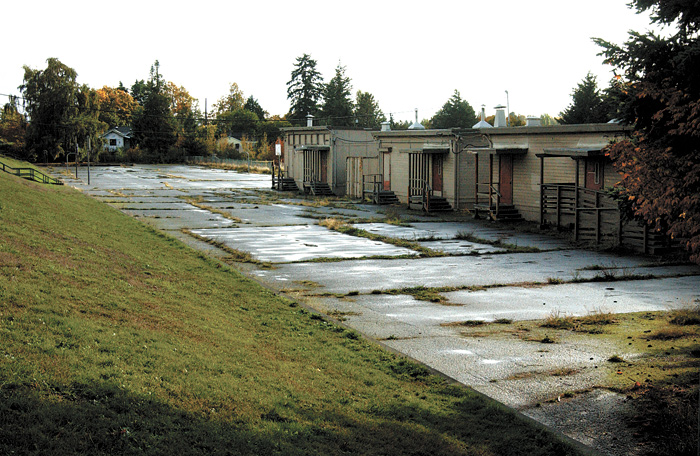
When Lynn Miller heard that her first-grader’s school was slated for closure by Seattle Public Schools several years ago, she did everything she could to stop it. She organized parent rallies in front of the small but tight-knit north-end school, called Viewlands Elementary. She analyzed the school’s test scores and presented a case to the school board arguing that its low-income students outperformed those elsewhere. She helped host media visits at the school.
“I was stunned when the [school board] vote went against us,” says Miller, a librarian at the Seattle Public Library. The district, citing dramatic decreases in enrollment over the past three decades and an urgent need to cut expenses in light of ongoing budget deficits, closed Viewlands and four other schools by the end of 2007. It closed an additional school the following year and five more this past summer.
But now the district says it is facing an uptick in enrollment and needs to reopen five schools—including Viewlands and two other schools closed in the past two years. The reopenings are part of a proposed new assignment plan unveiled earlier this month.
“I guess, frankly, I am stunned again,” Miller says.
Other parents are similarly confounded. “Last year, the sky was falling and enrollment cratering, and this year, it’s exploding?” wonders Meg Diaz, the parent of a child who was moved during the closures from Lowell to Thurgood Marshall elementary schools. (Lowell remained open but had its Accelerated Progress Program split in two to accommodate other changes.)
“Incompetence,” declares Dora Taylor, parent of a Nova High School student and creator of a new blog tracking the district (seattle-ed.blogspot.com).
The district says it’s simply facing an enrollment turnaround it had no way to predict. Back in 2006, when the district launched its first round of closures, the rationale seemed obvious, according to School Board President Michael DeBell. “We had been in steady decline for 25 years,” he says, yet the district hadn’t closed a school in decades. Martin Luther King Elementary, in the Central District, for example, had a capacity of 300 students, but only 120 enrolled. “It didn’t have enough students to fill a classroom in each grade,” he says.
With those kinds of numbers, the district faced a lot of criticism from city officials, state legislators, and the media, DeBell recalls. “There were questions about whether or not we could ever do something that would be unpopular.” Former Superintendent Raj Manhas had already backed away from one closure plan amid a backlash from parents at schools on the chopping block.
Yet in the 2007–08 school year, after the district finally closed some schools, that longtime trend started to reverse. The district gained some 300 students. It gained 430 more this year. Current enrollment stands at nearly 46,000 students. Based on that trend, and on birth information from the state Department of Health, the district forecasts 2,000 more students by 2015. It projects that many of those students will be in the north end, where the district plans to reopen four buildings: Viewlands, Old Hay (closed last year), Sand Point Elementary (closed in 1988), and McDonald Elementary (closed in 1981). The district also plans to reopen Rainier View Elementary in the south end, closed with Viewlands in 2007.
No one knows for sure why this turnaround has occurred, but one factor is surely an influx of students from private schools due to the recession. The state’s 528 private schools have seen a cumulative drop in enrollment of about five percent this year, to 80,000 students, according to Judy Jennings, executive director of the Washington Federation of Independent Schools.
Some parents claim that even while it was closing schools, the district knew—or should have known—that it soon would need more space. Although enrollment was dropping district-wide until recently, north-end communities have been complaining about overcrowding and lack of access for some time. Schools activist and blogger Melissa Westbrook (saveseattleschools.blogspot.com) says she saw documentation to that effect when she sat on a citizens’ committee convened by the school board in 2006 to recommend schools for closure. She says she stifled concerns in the back of her mind and went with the directive to recommend shuttering schools in all parts of the city. “Had I known they were going to be doing this two years later, I would not have voted to close Viewlands,” she says.
Viewlands, at 10525 Third Ave. N.W., was not an overcrowded school; the most populous schools lay in the northeast. In fact, the district considered Viewlands under-enrolled, with at least 100 students fewer than its designated capacity. But former Viewlands parent Frank Sanborn argues that the district should have paid attention to the building boom that was beginning to bring more families into the area around the school.
The district does not track building permits, saying they would be of limited use in predicting how many children and of what age will arrive in a particular neighborhood. DeBell notes the district went to the city during its 2006 decision-making to ask for demographic guidance, but the city could offer none. Tom Hauger, manager of Seattle’s Comprehensive Plan, says that the city does not keep information on how many families live where.
DeBell acknowledges there were “hints” of space needs in the north end several years ago. But he maintains that only in the past two years have all north-end schools begun getting crowded, not just the schools viewed as especially desirable. And he says one of the closures was meant to be temporary: The district closed Old Hay in Queen Anne just this year, in order to move out the bilingual program that was there and get the building ready to accommodate more students.
another factor is driving the new schools, according to district Enrollment Manager Tracy Libros: the new assignment plan. In an effort to direct families back to neighborhood schools and save on transportation costs, the plan guarantees students access to a specific school near where they live. That means schools must be distributed throughout the city proportionally to the population of school-age kids. Under the old system, students were guaranteed a seat only in a large swath of territory known as a “cluster.” The district could move students around within a cluster according to where there was space.
Whatever the reasons, the district’s about-face is going to be costly. Numerous expenses come with closing schools, including hiring a project manager to oversee the process and “team-building” exercises for staff transferred to new schools, according to district spokesperson David Tucker. He could not provide figures for how much it cost to close the schools being reopened, but says that ’07 closures overall racked up approximately $2 million in expenses.
Now the district projects that it will cost $48 million to reopen the five schools—money it hopes to raise from a levy that goes before voters in February. Some of that work, related to structural fixes, would have been done even if the schools had remained open, according to Tucker. Other costs are associated with the fact that they were closed; a facility that reopens has to meet updated building codes, for instance. Money is also due to be spent on furniture, fixtures, and equipment, including $1.5 million at Viewlands, where the district will also need to repair vandalism damage and replace stolen copper wiring. (See “Lost & Not Found” by Rick Anderson, SW, Aug. 19).
At a school-board workshop at the John Stanford Center last week, board members expressed concern about reopening McDonald in the Wallingford/Greenlake area, which has been shuttered the longest and would cost the most (nearly $15 million) . Several board members noted that district projections show that only 54 more student seats are needed in that school’s attendance area, and only for a short period of time. “Fifteen million dollars is a lot of money to open a school if we’re only talking about a three-year stretch,” said board member Sherry Carr.
“Let us go back and look at it,” said Libros, the enrollment manager.