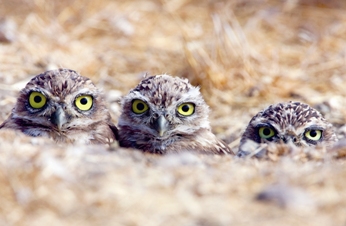
First of all, lets consider the title of this ornithology/photo album: The Owl and the Woodpecker (Mountaineers Books, $24.95). What do the two have in common? Woodpeckers create burrows in trees that some owls later inhabitits arboreal gentrification! Theyre flipping trees to the highest bidder! And owls are like yuppies who swallow mice whole, then cough up little pellets of bone and gristlejust like shopping at Whole Foods. Local photographer Paul Bannick, a refugee from the tech sector, decided to document all 41 species of the two birds, and the results of his three years at the tripod are colorful and impressive. Who doesnt get a thrill when a snowy owl comes down from the Arctic to roost in a local fir? And who wouldnt like a better look at our common, fidgety red-shafted northern flicker? Then theres the beleaguered northern spotted owlits name once synonymous with controversythat still faces extinction if current trends continue. Extra bonus: Theres a companion CD of birdcalls you can use to frighten small children. And a final fun owl fact: The great horned owl, despite its superb eyesight and hearing, has so little sense of smell that itll happily kill and eat skunks. Burke Museum, UW campus, 543-5590, www.washington.edu/burkemuseum. $5. 7 p.m. (Also: Eagle Harbor Books, Thurs., Nov. 13, 7:30 p.m.) BRIAN MILLER
Wed., Nov. 12, 7 p.m., 2008