
I’ve made more failed New Year’s resolutions than Charlie Sheen and Courtney Love combined. Lose a dozen pounds, quit smoking, slow down, speed up, get organized, drink less, exercise more—all abandoned within hours of the drunken promise. But this year, my editors at Seattle Weekly came to me with an offer I couldn’t refuse: Go the opposite of Super Size Me and eat only organic food 24/7 for the month of January—and be paid handsomely for it. No Doritos, Big Macs, Starburnt coffee, brewskies, Red Bull, or Frankenfoods of any kind. And, if by going organic, I help save the planet, all the better.
Clearly, the first stop on this assignment would have to be the notorious PCC.
Since 1953, Puget Consumers Co-op Natural Markets have served as the state’s Birkenstock capital; and, with 40,000 members, it’s the largest natural food co-op in the nation. Once inside, there’s more information alongside items than you’ll get in Mother Jones, a bulk food section that looks like a grain refinery, teaching labs that clearly involve mung beans and re-education, and even an in-store nutritionist.
Perusing the deli case at the West Seattle branch, I begin to fathom the difficulty of my journey: Though soy burgers ($3.99), teriyaki drumettes ($8.99), and Brussels sprouts look nominally appetizing, the majority of the items contain nonorganic ingredients, and thus don’t meet my newfound standards. (To qualify for the USDA Organic seal, at least 95 percent of the ingredients must be organic.)
“If you don’t cook—even something simple—you’re in trouble,” warns PCC’s director of public affairs, Trudy Bialic. Looks like trouble. “Prepared foods are going to have too many ingredients to keep track of, and are also more costly. You’re also going to want to eat in season.”
I have no idea what she’s talking about. Adjusting for her audience, Bialic tries another tack: “Listen, transitional foods are important for people making big changes. You want to enjoy your food, and it’s OK to have a can of Amy’s lentil soup once in a while, or a frozen organic pizza, or even some popcorn. It’s a slow process: None of us can change overnight.”
Really? Where were you two days ago when I decided to change—overnight?
Within 72 hours, I’ve become aware of changes in my body. These results, of course, aren’t scientific: The sight of blood—especially my own—makes me faint; and without health insurance, I can hardly afford to piss in a cup, much less order lab tests. Still, I feel cleaner somehow, less toxic.
While my mind is sharp, my energy level is more sluggish than normal—perhaps due to the loss of artificial colors and preservatives in my diet, which are linked to hyperactivity (in schoolchildren, anyway). Luckily, I’ve got the organic antidote: regular doses of caffeine. Purely by accident, I’ve been drinking organic coffee for years at my favorite espresso shops, Java Bean and Caffe Ladro. I may starve to death this month, but at least I’ll be jacked up.
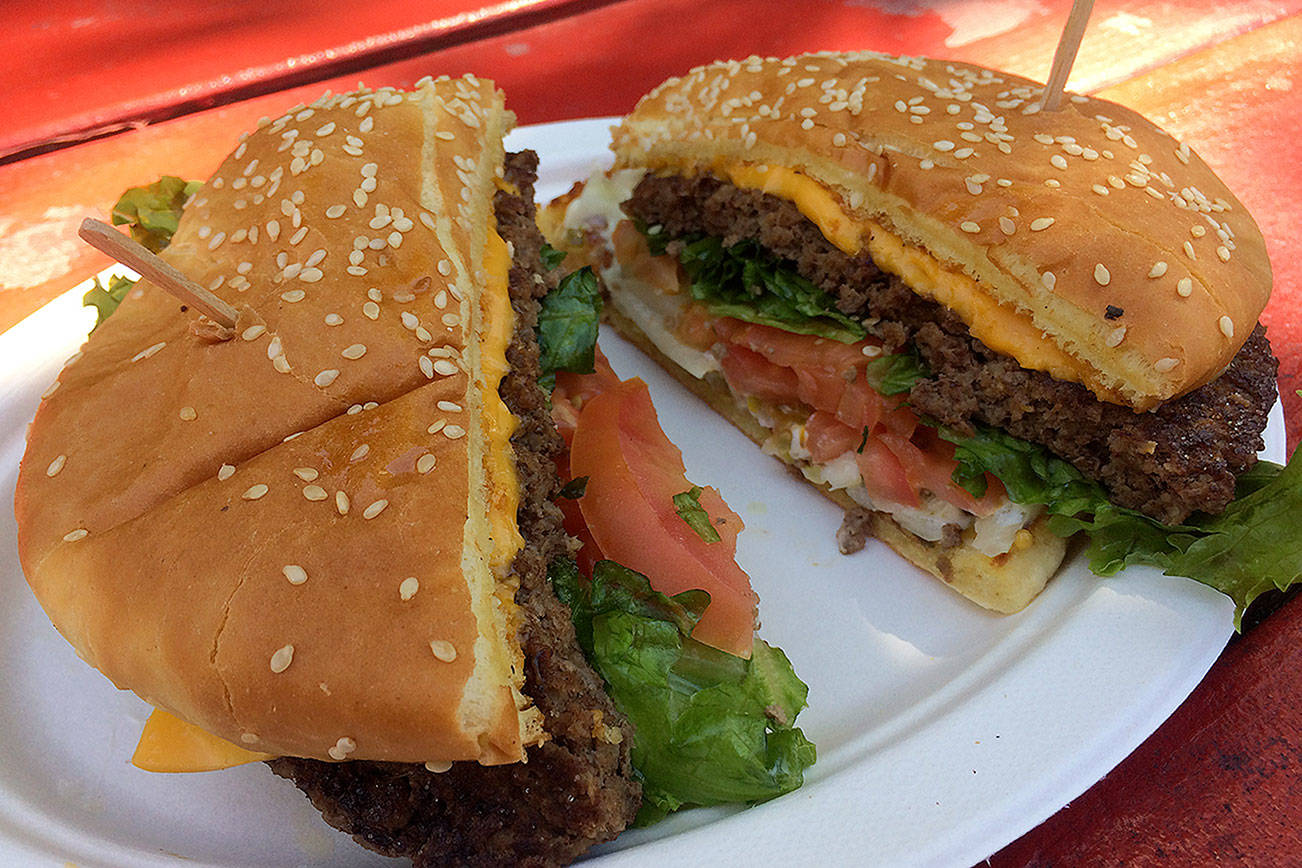
One other medical note: My appetite has increased. Specifically, I’m hungry for a Dick’s burger.
After a decade of debate over what would constitute “organic” food, the U.S. Department of Agriculture laid down its national standards for certification in 2002. (It should be noted that the first set of guidelines was heavily influenced by agribusiness and was significantly more toxic than current standards, until over 325,000 citizens raised hell and had the regulations toughened up.)
For organic food to wear the USDA Organic badge of honor, it must be produced without conventional pesticides, sewage sludge, genetic engineering, fertilizers made from synthetic ingredients, or ionizing radiation. “Natural” foods, on the other hand, while without artificial flavoring or chemical preservatives, may contain ingredients that were grown with pesticides or genetically modified.
Organic meat, eggs, poultry, and other milk products can’t contain antibiotics or growth hormones. Regulations also deal with the introduction of new animals to the herd and even the handling of manure, ensuring runoff doesn’t pollute waterways.
In addition to eliminating nasty toxins from the food chain, certified organic farmers are also required to emphasize renewable resources on the homestead, minimize erosion, and conserve soil and water in their processes. Even the packaging is scrutinized, making it doubtful those eggs will be encased in bubble wrap anytime soon.
Yet certified organic is clearly not a politically correct cure-all. Though the organic industry prides itself on a kinder, gentler process in regard to the environment, the entire system is still not fully regulated. While César Chávez and company may have successfully banned the short-handled hoe in the 1970s, for example, the organic label doesn’t assure consumers that laborers receive health benefits for harvest-related injuries or have rights to organize. In fact, organic farm owners formed the most vocal opposition to a ban on hand weeding—the backbreaking alternative to applying pesticides—presented to the California Occupational Safety and Health Administration in 2004. Hence, a “sweat-free food” campaign is currently making the rounds among grassroots activists and the Organic Consumers Association, adding yet another potential label to your USDA Organic, homegrown, Certified Humane, Fair Trade, sustainable cherries.
Some organic growers are less than thrilled with the current USDA standards, and have created their own seals of approval. Hard-core cultivators use terms like “biodynamic farming,” which prepares homeopathic recipes to enrich the soil, and terroir—French for “the essence of the place”—which tosses a spiritual and cosmic element into the mix. And pioneers such as Eden Foods won’t use the USDA seal even though they’re certified, believing that their practices of small-scale, sustainable, cooperative farming go “beyond organic.”
David Lively of the Organically Grown Company, a Eugene, Ore.–based wholesaler, isn’t so keen on the term. “[The] problem with ‘beyond organic’ is that it gives away the organic part, which was a hard-fought battle. I like ‘organic and beyond,’ because we can do even more. The current standards allow us to talk to the feds about the Farm Bill and try to increase research dollars. It doesn’t go far enough in terms of sustainability and labor, but it’s a great start.”
PCC’s Bialic puts the organic labeling in perspective. “Let’s let the baby grow up a little before we throw him out,” she says. “The organic standards are only four years old; they’re evolving. They may not be perfect, but they’re the best thing we’ve had happen in food since bologna and Wonder Bread.”
Nationwide, organic food is booming. Last year, over two-thirds of Americans purchased an organic product. According to the Organic Trade Association, organics accounted for 2.5 percent of all food and beverage sales nationwide, with 2006 sales increasing to over $15 billion (from less than $4 billion a decade earlier). While the organic market has soared over 15 percent per year since 1990, nonorganic food companies have gained less than 5 percent over the same time period.
“The problem now is really supply versus demand,” notes Barbara Haumann of the Organic Trade Association. With demand increasing, organic farmers (usually with 100 acres or less) have had a hard time keeping up, leading to periodic dairy shortages and producers unable to feed larger stores such as Costco and QFC. “In a recent study of organic food producers,” Haumann adds, “52 percent said that the lack of organic raw materials is limiting what can be made. There’s just not enough organic acreage right now.”
While more than a million acres of certified organic farmland were added over the last four years, bringing the total to 2.5 million acres, that’s chump change when compared to total farmland. Organic is still less than one-half of 1 percent of all cropland. One reason may be that small farms are dropping like flies. In the last decade, over 650,000 family farms have bit the dust.
But here in Washington state, organic agriculture has boomed bigger than ugly condos in Belltown. According to Miles McEnvoy, organic program director at the Washington Department of Agriculture, the organic industry has grown over a hundredfold since 1988. Today, there are 1,000 certified organic operators in the state, 630 farms, and organic sales of $438 million.
Andrew Stout’s Full Circle Farm sits on 260 acres in Carnation. Though he can’t use a crop duster, he sees huge advantages to being organic. “We farm about 75 different fruits, vegetables, and herbs,” says Stout. “With all the [crop] rotation we do, we aren’t putting all our eggs in one basket.”
Still, wouldn’t it be easier to spray the fields with chemicals? “Oh, definitely,” Stout adds. “Herbicides and pesticides are like an insurance program for conventional folks. Thing is, if you abuse the land, you’ll eventually run out of property. It’s Manifest Destiny; it’s why people kept having to move West.”
Going organic is not as easy as putting a bug sprayer away in the barn, though. The transition from conventional fields to organic takes a minimum of three years, allowing soil to be free from pesticides and synthetic fertilizers, and farmers time to learn the trade. Worms eventually come back, too.
Jay Gordon’s family has been dairy farming in the Chehalis Valley for 134 years. He brought home his first organic herd on Sept. 1, 2006. The hardest part of Gordon’s transition wasn’t eliminating the chemicals from his soil, or filling out the copious paperwork for USDA certification, but that he missed seeing his original group of heifers every day.
“Luckily, my older cows are just across the river,” he says. “So I get to go visit them at my neighbors’.”
According to Gordon, who is also executive director of the Washington State Dairy Federation, Seattle has the highest percentage (11 percent) of citizens who purchase organic dairy products in the country. But there’s still room for growth: Two years ago, Washington state had three organic dairies; today there are 52. By the end of 2007, 5 percent of all dairy farms will be organic. (Realizing that planting crunchy granola crops is the fastest-growing field in agriculture, Washington State University has created the nation’s first organic farming degree program.)
Gordon says part of the reason for this growth is the terrain: “We’ve used chicken and cow manure since the early ’80s and always grazed our cows. But it’s just easier to do here than in Kansas or South Dakota. It just fits my farm. If we had to milk 1,000 cows, you’d have to haul in organic feed from somewhere and it may not work.”
Gordon has something else he wants to say about my (albeit temporary) all-organic diet: “I know you have to pay a little more for organic milk, and farmers get a little of that back and we appreciate it. So thank you for switching over.”
“Is this all organic?” I ask my lovely wife, as we sit over a fine-looking meal of pasta puttanesca. “Pretty much,” she replies. “The pasta’s organic whole wheat from Trader Joe’s, the olive oil is definitely organic, along with the basil and olives. But I’m not sure about the red-pepper flakes. I know it’s all natural, but I’m not so sure it’s organic.”
Not sure? We’re not sure if we have sewage sludge or traces of mercury in our meal? Not sure if the children are ingesting endosulfan, a relative of DDT? Not sure if our nervous systems are being compromised? Not sure? “Well, be sure from now on,” I say, pushing my plate to the side and focusing on the organic salad before me. “You know,” I add, “67 million birds are killed each year from pesticides that are sprayed on the fields. I hope you’re OK with that.”
If looks could kill.
Visiting other people’s houses is going to be a problem, too. I’ve always hated nebbishes with “food issues”: lactose-intolerant, vegan, alcoholic, shellfish-sensitive, peanut-allergic pains in the ass. “Is there cheese in that? I can’t do dairy; it gives me gas.” Now I’d be one of them. “Uh, Cheri, I know you slaved for hours over this fantastic jambalaya, but I’m gonna need to see the receipts for all the ingredients. I’m on a bit of a health binge, and I don’t think you care as much about what goes into your body as I do. It’s not you, Cheri. It’s me. Go ahead and enjoy your pesticide-laden feast. I’ll just sit over here with my chickpea yogurt.”
Just call me Organic Superman: While my entire family has been down for the count with some disgusting phlegmy cough, I am healthy as an ox. Could this be a result of organic produce having more antioxidants than conventional fruits and veggies? (This has to do with the plant’s own defense system having to fight off critters, rather than letting pesticides take care of it.) In addition, thanks to pre-ripened picking, longer storage, and more processing, conventional crops typically have far fewer nutrients. So long as there’s no organic kryptonite, it looks like I’m good to go!
Yet quandaries abound. Like a deer in the headlights, I’m frozen in the fresh produce section of Whole Foods (aka Whole Paycheck), with too many choices. In one hand, an organic apple from Brewster, Wash.; in the other, an organic orange from California.
“Buying close to home is always cool,” enthuses David Lively. “Local is happenstance. Organic requires motivation. If you can get it both ways, do it.”
If I were a “locavore” (i.e., health food nuts living on fare grown in “foodsheds” within 100 miles of where they live), this would be a no-brainer. “The issue is, really, ‘What do you know about the food you’re eating?'” explains Goldie Caughlan, PCC’s nutrition education manager. “Support the organic label, and know who grows it.”
But shouldn’t I always buy from local farmers? “For the first 10 years of my life, we only ate what we grew or hunted,” replies Caughlan. “But sometimes you’re in the mood for some citrus.”
Finding organic lunch options has also proven to be problematic. Ninety-five percent of my midday meals prior to the new year involved teriyaki or Taco Time. Now it’s “make your own at home,” which is difficult enough without having to read every damn label.
To compound matters, whereas my bologna that has a first name (it’s O-S-C-A-R) can last in the fridge for several months without turning green or smelling of old tennis shoes, the organic sandwich meat I bought last week has turned rancid—the cost of not being filled with nitrates and preservatives. This part of the organic experiment does not please me or my wallet.
As the weeks wear on, I find myself shoving anything with the word “organic” stamped on it into my mouth. The most convenient choices, unfortunately, are all sweets: Morning Peanut Butter Bars ($3 from the Flying Apron Organic Bakery), Fabe’s Mini-Macaroons ($4.89), Nature’s Path Vanilla Animal Cookies ($3.29), Country Choice Double-Fudge Brownies ($3.69), and Coconut Curry Bars from 3400 Phinney ($3.29). A guy can get plenty fat on an unbalanced organic diet, and I’ve got the new belly to prove it (at this point, I’ve put on 5 pounds). I wonder if an organic fat cell looks any different during liposuction from a nonorganic fat cell?
“We’re not talking about an organic apple that can cure cancer. Instead, it’s about trying to maximize chances that you’re healthy and will remain healthy,” says Dr. Charles Benbrook, chief scientist of the Organic Center. “Americans have the most diverse diet in the world, with the most choices, but two-thirds of our population is dying from food-related diseases or health problems. There was a report by the USDA last year that said it all: We’re overfed and undernourished. People like you, seeking out organic, will get unexpected benefits: a nutrient-dense diet—more bang for their calories.”
Still, even Mormons need a vice to get by: cigars, string cheese, porn—something. Luckily, I discovered an organic vodka called Square One. The production’s as simple as a moonshine-makin’ home distillery: Take pure spring water from the Snake River, add organic North Dakota rye, and distill using natural fermentation techniques. Shake and pour. (Result: hammered. Verrry nice!) Plus, the bottle’s groovy, and can be reused as a vase.
In the U.S., regular produce travels an average of 1,500 miles between the farm and your grocery store. Food miles, they’re called. The farther products travel, the more energy and gas are used to get the stuff to you. Buying local can cut a thousand miles off, but I still had to constantly schlepp to PCC for organic chow, eating up valuable time and precious gas in my Volvo. That’s where companies like New Roots Organics come in.
“Basically, I’m doing organic shopping for 400 people,” explains owner Carolyn Boyle. For $35 every other week, New Roots delivers a bin of 12–15 organic fruits and vegetables to your door. “The majority of my clients are super busy, but want to eat well and don’t always know what to buy,” adds Boyle. “Our service gives them a big variety, and makes sure there’s always quality fruit around.”
To be honest, when the New Roots tub arrives at my house, I have absolutely no idea what to do with a majority of the goods: Parsnips? Gold beets? Yukon potatoes? Celery root? For the cuisine-challenged among us, Boyle tosses suggested recipes into each bin. This week: kale, squash, and pancetta pie; risotto with spinach and herbs; and blue cheese with those odd-looking beets.
There are pros and cons to having the O-Bin delivered. Pro: Fruits and vegetables are good for you; the more they’re around, the more chance you’ll shove an Anjou pear slice into your face instead of a Cheeto. Con: Who the hell can eat a giant container of baby turnips, cauliflower, and countless apples every other week? In our case, leftovers are going to our guinea pig, and gee his coat looks terrific!
Generally speaking, buying organic no longer means getting your produce from a grassroots co-op in Duvall. Mirroring conventional agribusiness, half of all organic sales come from the largest 2 percent of farms. And even though organic represents only 2.5 percent of all food and drink purchases, the U.S. organic industry will do over $16 billion this year in consumer sales, and everyone—even Wal-Mart—is grabbing a piece of the action.
Today, 13 of the top 20 multinational food manufacturers own an organic brand. General Mills bought Cascadian Farm, Hershey’s snatched up Dagoba chocolate, Dean Foods purchased milk-maker Horizon, Coca-Cola took over Odwalla, and even M&M Mars owns Seeds of Change. (For a great chart illustrating how the big fish are buying the little organic ones, go to www.msu.edu/~howardp.)
“It’s possible to gain something from the conventional guys,” notes David Lively. “If they bring their labs and expertise in nutrition or quality control, that’s a good thing. But if they say, ‘OK, hippie, get out of the way,’ it’s a problem. It’s important these megacorporations don’t knock out the visionaries in the company. They need to do more than just follow the law; they need to move the agenda forward. It’s still buyer beware. Consumers can’t let up just because there’s a seal.”
With huge volumes come lower standards, factory farms, and suppliers from anyone but your local grower. According to the Organic Consumer Association, Wal-Mart is currently filling its shelves with organic foods and ingredients from as far away as China and Brazil. Though all imported organic products must still be certified, questions about being able to grow anything “healthy” in areas with horrific air quality and acid rain remain. (Wal-Mart may be jumping too fast into the fray, as it is being sued by the Cornucopia Institute for passing nonorganic food off as organic.)
Lively, who sells to natural markets along the I-5 corridor, is plenty concerned about corporate farms and Wal-Mart’s treatment of growers, but claims it’s all relative. Says Lively: “I had just finished some speech at a convention that bashed Wal-Mart’s practices when this lady came up and said, “You know, it’s easy for you to pop off and play elitist in the West. It’s the natural food mecca. If you live in Kansas City, like I do, you go to Wal-Mart for organic food. It’s all you’ve got.'”
For plenty of families, buying organic produce is less of a priority than simply putting fresh food on the table. For those who must pick and choose, the Environmental Working Group (EWG) has established a “dirty dozen”: produce that, due to high pesticide residue, absolutely should be purchased organic. Apples and nectarines top the list, followed by cherries, peaches, pears, raspberries, imported grapes, strawberries, bell peppers, celery, potatoes, and spinach. If you can’t go 100 percent organic, certain fruits and vegetables—due to how they’re grown and ease of cleaning—are less likely to be contaminated, including bananas, mangos, pineapples, corn, onions, avocados, peas, and cauliflower.
And don’t think you can just peel a nonorganic apple and be done with it. “You may eliminate a majority of any chemicals,” explains Dr. Benbrook. “But you’ll also get rid of 60 percent of the nutrients that are in the skin and the layer just under it.”
“This kale is so tasty!” exclaims Seattle Tilth director Karen Luetjen, pointing at a barren, winterized section of Tilth’s Demonstration Garden in Wallingford. “If you’d like, you can make a little to-go salad right now, add some broccoli florets over there, that lettuce, and you’re on your way.”
The dirt diggers at Seattle Tilth have been promoting organic gardening since 1978. Today, Seattle Tilth runs over 300 programs that reach 15,000 citizens a year, including City Chickens 101 and a kids’ class, “Don’t Crush That Bug!”
Living off the land, of course, is not the newest concept around. Seattle already has over 1,900 organic P-Patch plots, and while there may not be much sun, most of the patches are gardened year-round. If you want in, though, stand in line: There’s a wait list for almost every patch in town.
Yao Fou Hin Chao works with over 600 members of the Iu Mien community in various P-Patches along Rainier Avenue and MLK Way, which are the primary sources of food for many Laotian, Vietnamese, and Chinese immigrants. Says Yao: “Many come to me, say, ‘I need food. I know how to garden, but I need plot.’ My job is to teach them how to garden in this area. Laos climate is easy, like California. Here is different—all new crops, new time to plant, new method.”
Yao also teaches his gardeners to grow mustard greens, beets, and bottle gourds, plus corn, tomatoes, and cucumbers that can be frozen and eaten all winter. “Some garden for therapy, for experiment, for fun, to meet others,” explains Yao. “For me, to help my people eat, and eat healthy.”
So does Yao ever buy organic food? “I don’t eat organic from store. I know where it is, but can’t afford. When I see PCC, I walk by window and don’t feel bad. I have my own produce.”
Mark Musick has been involved in the Tilth movement since 1974, and has worked with organizations ranging from farmers markets to the Vashon CoHousing Community. “Food is a way to reconnect with the culture,” Musick begins. “After all, the word culture comes from cultivate. Food is our most intimate link to the earth. It just makes sense that you’d want to know where your food comes from. And that’s a great place to start.”
One way people connect, he suggests, is by meeting growers at farmers markets, where more than half the vendors nationally are organic. In the greater Seattle area, farmers markets have expanded from 12 in 1996 to 86 in 2006. On any given weekend during the summer, 67,000 people will shop at a farmers market.
Another direct connection is through CSAs (Community Supported Agriculture), where small farms market directly to consumers through regular drop-off locations around the state. There are 50 CSA farms in Western Washington, serving 4,000 families. At Carnation’s Full Circle Farm, over 75 percent of the company’s business comes from 2,500 CSA customers, including schools, Starbucks, Fred Hutchinson, Amgen, and various community centers.
Full Circle’s Stout understands that what we really want is the ideal of the farm pastoral based on Old MacDonald: the red barn, the oak tree with a tire swing. “In recent surveys, the No. 1 thing customers say is important is where the food is grown,” says Stout. “A sense of place; people you can trust. After that come quality, the price, and if it’s organic.”
In the end, Musick explains, the issues of organic vs. nonorganic aren’t the most important. “The key is making local connections to the earth,” he says. “If you ask PCC where their black beans come from, or a lot of their bulk items, they’ll tell you it comes from China. What we need is Community Supported Agriculture. We’re building a better constituency for a better type of agriculture, and now you’ve been enrolled.”
I am exhibiting signs of the dreaded E. coli. And believe me, I know what the hell they are: In 1993, my pal Mike Schiller and I ate undercooked burgers at a fast-food restaurant and got the runs, massive stomach cramps, and nasty gas for weeks on end. Not to mention blood in the stool. (Sorry if you are eating while reading this.)
Good news: Turns out my E. coli scare was just too much dried organic fruit in one sitting. Doc says I basically ate the equivalent of 13 plums, six apples, and 11 apricots the other day. Oh, and the blood? Dried cherries.
With five days remaining in my monthlong experiment, I’m feeling vigorous and in a helluva lot better shape than that guy in Super Size Me was at this point. My pulse (64) and blood pressure (116/80) are slightly lower than before, I’m sleeping like a log (as usual), and like our guinea pig, my hair has a new, beautiful luster.
Fighting off my Mighty-O Donut addiction, I’ve finally figured out how to eat organic (a little endive salad here, a trip to the all-organic Sterling Cafe there), and my weight is back to normal. The constant produce from New Roots Organics has changed the color of my urine from the bright lemon-lime of Gatorade to a more foamy consistency and the color of a tangerine, indicating more beets, rhubarb, and vitamin C in my diet.
When I started talking to natural food junkies at the beginning of the month, they would rave about particular organic fruits or vegetables I had to try, as if I’d recently been dropped here from the barren Planet Zoron. David Lively was obsessed with a California orange that only came around once a year; Tilth’s Karen Luetjen carried on about homegrown tomatoes at their annual tastings; and PCC’s Goldie Caughlan had a food-gasm over Nash Hubor’s carrots from Dungeness Valley. Thing is, it’s true: At times, organic tastes better. Way better. And isn’t flavor a huge part of the eating experience?
The final tally had me losing 3 pounds and more cash than I was comfortable with. My family of four’s food budget is usually around $800 per month; this month, thanks to several $6.99 pints of raspberries, $13 wedges of cheese, $21 steaks, and $7 grapefruits, our grand total was $1,372.51—a 58 percent increase.
All in all, organic food isn’t always affordable, or even healthy. (Try living off Tostitos Organic Tortilla Chips and Natural American Spirit cigarettes.) And the more you think about the social issues surrounding the food on your plate, the more complicated things get. How many miles per gallon does the tractor on the organic farm get? Do you need apples from New Zealand, or is there a localalternative? What’s the relationship between farmhand wages and farm owner profits? Are you cool that Kashi is really Kellogg’s, or would you prefer getting your granola from Gary in Gold Bar? And if your corn is husked by some kid in Bangkok for 4 cents an hour, then shipped over on a nuclear submarine, is organic really the most important part of your purchase?
I had wanted my choices to be black and white: Organic equals good, everything else equals bad. But now the gray is all around me. The growers aren’t necessarily families, friendly, or in the business for politically correct reasons. The products aren’t always local, regional, or even national. The whole thing made me angry, confused, and jonesing for a Twix bar.
Still, some organizations are trying to address issues beyond land stewardship and ecology, paying attention to socially just food systems: the communal utopia that counterculture types established in the 1960s. These hippie homesteaders understood that eating right is as simple as knowing where your food comes from; and if that’s an organic garden in your backyard, more power to you.
Next month, I’ve actually decided to kick my diet up a notch for an entirely different reason. Turns out, cooking food —organic or not—destroys much of its protein, vitamins, and minerals, making your immune system work overtime, aging you faster, and increasing the chance of deadly disease. Well, no thanks! I’m now eating truly old-school: 100 percent raw. Bring on the fresh seaweed, egg yolks, and celery juice. It’s go time.