ANDREW HILL
Time Lines
(Blue Note)
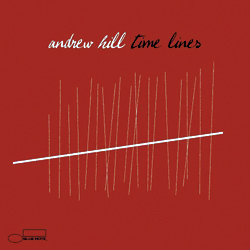
Andrew Hill’s prolific nature during his ’60s stint at Blue Note has been rewarded with a steady flow of reissues and vault digs (the masterful 1969 nonet session Passing Ships was lost until early this century). He returns to the label with Time Lines, which reveals its full power only after a handful of listens. The pianist’s solos retain a Monk-like quizzicality while manifesting Hill’s own command and delicacy. Now 68, he’s often as becalmed as black-fiery, but this is no statement of woeful aging: From the cover’s wry count of years to a sequence that builds in rumble and speed, it lays claim to its moment as certainly as his earlier winners do. Trumpeter Charles Tolliver and multireed man Greg Tardy own a piece of this music; New Orleans product Tardy’s skronking tenor solo on the swingingly off-kilter title tune could be the sound of a man foreseeing the devastation of his hometown, which occurred not long after this date. Bassist John Herbert and drummer Eric McPherson nail down a broad range of material, from a suggestion of Coltrane’s classic quartet—you know, that cymbal rustling that seems to whisper “sweep”—on the ballad “Whitsuntide” to the sprinting chamber-jazz of “Smooth” and “For Emilio.” Time Lines marks the beginning of Hill’s third go-round for Blue Note. If the company’s robust health brings him further attention, it’s truly where he belongs. RICKEY WRIGHT
DRAMARAMA
“Everybody Dies”
(Bayside)
John Easdale is a simple guy. Not simple enough for hardcore, though; like several of his ’80s Northeastern peers, he’d heard punk as Bowie de-swishified, so his Pistols sounded more like P-Furs and his Richard Butler squirmed within the constraints of quotidian N.J. The two best-known Dramarama songs (“hits” would be pushing it) are masterpieces of articulate everyday exasperation, both painful (“Anything Anything”) and comic (“Last Cigarette”). And on their first disc since 1993, the band lurch, as ever, in their same two speeds—brash and sullen—as Easdale’s voice works a similar split: snotty bark and near simper. On “Everybody Dies,” he covers the basics: sex, work, and mortality. And like any simple guy worth your time, he’s of two minds about each subject. Easdale doesn’t get fancy with the titular truism, throttling a satisfaction too irritable to be called solace from lines like “I know lotsa dead people, you know lotsa dead people/Every single second someone dies.” Both “The Company” (a corporate boss’ perspective on “Take This Job and Shove It”) and “Gotta Get Up” (a list of things he can’t do tonight because of work tomorrow) writhe with the same energized desperation. Yet best of all is the reluctant protest song “Good Night, America,” which epitomizes the weary resignation into which left patriotism so often seems destined to slump. (A countrified bonus track reprise doesn’t cut as deep, despite nastier lyrics.) Dramarama speak punky mainstream rock as a language rather than deferring to it as a rule book; Easdale sings the over-40 blues without succumbing to coulda-been bitterness. And if that sounds simple, I’ve got a solo Paul Westerberg back catalog I can unload real cheap. KEITH HARRIS
TELEVISION PERSONALITIES
My Dark Places
(Domino)
Dave Ramm and Jesse Steinchen of the local band the Pulses are pen pals of the TVP’s Dan Treacy. They were even nice enough to make me a color photocopy of one of the airmail letters they received from him; it includes a stick-figure self-portrait situated behind jail bars, a good Dave Grohl joke, and the startling admission that Treacy loves the character Joey on Friends. The return address reads, “The Prisoner Dan Treacy, HMP Weare, Rotherham Road, Portland, Dorset, DTS, U.K.” It was while on the HMP Weare, a British prison barge, that Treacy wrote My Dark Places. Like the great albums that came before it, Dark Places is equal parts dour and light, often within the same song. “All the Young Children on Crack” sounds like it could have been recorded on board the party barge. It features hand claps and tweaked, kiddie-style backing vocals, but also Treacy’s emphatic insistence that “they deserve something better.” “Ex-Girlfriend Club” begins ominously, with keyboards and a stark beat. After an odd little sampled segue, the drums double up and Treacy tosses off, “Don’t be fooled by the rocks/I’m still Danny from the block.” It’s funny, and it’s also creepy. “You Kept Me Waiting Too Long” sounds like a Pet Shop Boys song; the title track stomps, and recalls Wire. “Dream the Sweetest Dreams” is fuzzed and cool and features new member Victoria Yeulet (of the original members, only Ed Ball remains). And Don’t the Kids Just Love It this ain’t, but fans like Ramm and Steinchen won’t be disappointed, either. LAURA CASSIDY
LOKA
Fire Shepherds
(Ninja Tune)
Loka have been skulking around the fringes of Ninja Tune since their first appearance on 2000’s Xen Cuts compilation, intermittently releasing sparse hints of fusion-jazz-critical rehab projects. You’ve already heard about half of Fire Shepherds if you’ve heard 2003’s Beginningless EP. With the slow-simmer noir grandeur of “Beginningless” and “Airfling”—along with “Safe Self Tester,” which sounds like labelmates the Cinematic Orchestra shadowboxing with Earth, Wind & Fire’s 1970 monsoon-velocity instrumental funk jam “Bad Tune”—you wouldn’t be too off base in guessing the EP occupies the new album’s better half. But you wouldn’t be right, either. The new tracks flesh out Loka’s ’70s-influenced sound in a more fluid, elastic way, rewarding die-hard genre enthusiasts with borderline-homage pieces and schooling club kids who know Herbie Hancock solely for “Rockit.” Hancock’s Sextant is the primary impulse for “Freda Mae,” a 10-minute Afro-psych blowout that dismantles the 19/4 time signature of “Hidden Shadows” and reassembles the rhythm into something that trades intricate disorientation for multipercussive clockwork. (They also nail the electric piano sound to a tee.) “Meet Dad” is a more modernized take on fusion: Even with a Joni Mitchell–esque folk-rock strum spot-welded to a precision-engineered Billy Cobham–style beat, the fuzzed-out guitar and enveloping keyboard sound ring out in the track’s clear, post-techno production. And the two-part “Tabernacle” sounds like what might happen if legendary arranger David Axelrod had gotten his start today: the same baroque, heavenward strings and gloriously bombastic drum fills, rounded out into a post-rock hypnosis that does Tortoise one better. NATE PATRIN
GIL MANTERA’S PARTY DREAM
Bloodsongs
(Fat Possum)
Gil Mantera’s Party Dream are a synth-pop brother duo of maximum-bad-taste beats, cheese-vocal histrionics, and furious stray guitarmonies held taut by too-tight Day-Glo aerobic attire. They are also—sigh—the best band from my hometown. Hardly the Youngstown, Ohio, that Springsteen sang about on The Ghost of Tom Joad, the city the Manteras and I grew up in is even further beyond hope than Bruce’s story suggests. (When people sing “Youngstown” to me in their most miserable Boss craggle, I roll my eyes and say, “And that was 11 years ago. Imagine it now.”) Started in 2000, Dream Party make a sound for the post-postindustrial now, which is to say, it’s kinda fun-dustrial. Unlike the shitty new-metal or bar cover bands that fill the town (no disrespect old pals; keep on rockin’ in the free world!), Gil Mantera managed to find some inspiration outside the radio dial and the region in Kraftwerk’s and New Order’s cold pre-techno. Bloodsongs is GMPD’s third album, but the first that’s widely available—weirdly enough, on blues label Fat Possum. Their songs fall into two rough categories: dance-floor party jams with George Michael emotive verses and U.S.E.-sounding vocoder choruses (“Elmo’s High”); and odd Incubus-tinged faux Van Halen remixes like “Buffalo Tears,” where singer Ultimate Donny roars, “I only want justice, I only want equality,” over tinky keyboards preset in far-off factories. Unlike Bruce or the boys back home, the brothers Mantera know that there can still be something to say in that preset present, and that something doesn’t have to be so damn sad after all. Of course, all three of us can feel that way: Neither the band nor I live there anymore. DAPHNE CARR
GUITAR
Tokyo
(Onitor)
Michael Lückner has an obsession, and it’s Kevin Shields. As Guitar, Lückner first delivered 2002’s Sunkissed, a shimmering digital tribute to My Bloody Valentine’s lead shoegazer—and an elegy on that band’s early death and Shields’ failure to deliver more after 1991’s amazing Loveless. The album reinterpreted Shield’s effects-heavy, processed guitar for the laptop age, crisp beats and all. If it was derivative, it was a welcome derivation in a Shields-dry age. But how to follow it up? How else than by imagining what it might sound like if Shields were to deliver a soundtrack for a soporific film set in a lonely 21st-century Tokyo? Surely that would be a masterpiece: Shields playing around with contemporary technology, borrowing Eastern musical motifs, integrating the sounds of Japanese guitar relatives, maybe collaborating with a local musician. If only some young director had such a film and the wiles or budget to bring Shields out of retirement. Oh, right . . . that sort of happened, without Shields doing anything that different or musically interacting with either traditional or contemporary Japan. At least there’s Lückner, working with Omiya City singer and composer Ayako Akashiba to add the sounds of the pipa and the koto to Guitar’s familiar looping melodicism and layered, distorted chords. Tokyo would probably sync up to Lost in Translation well enough if you pause the CD during the karaoke scene. KRISTAL HAWKINS