SATURDAY, Oct. 20
WRITING SEX AND DEATH Writers investigate the literary link between screwing and croaking, noting how both sex and death can signal a crucial moment in a novel’s plot—or the start of extraneous prose. Fight Club author Chuck Palahniuk relates the topic to Choke, his new work featuring a sex addict who gags on his dinner to garner attention. Set in sultry New Orleans, Lisa Jackson’s latest thriller, Hot Blooded, concerns a popular late-night radio host who realizes she’s indirectly responsible for a serial killer slaughtering the city’s hookers. UW creative writing professor Shawn Wong moderates. Maclean Stage, 10:15-11:15 a.m.
FANTASTIC VOYAGE: URSULA K. LEGUIN Remember Earthsea? Even if you’re unfamiliar with literary sci-fi author LeGuin’s series about an imaginary archipelago in which magic, wizards, and dragons are the norm, you’ll probably enjoy her newest Earthsea installment, The Other Wind, displaying LeGuin’s usual memorable characters, carefully chosen prose, and knack for relating fantastic realms to today’s world. The Portland author’s been expanding the genre for 40 years, and in addition to adopting new heroes and story strains along the way, she’s also picked up both a Hugo and a National Book award. She talks with Vonda McIntyre about her body of work and her philosophy of writing. Hugo Stage, 10:30-11:30 a.m.
SIGN OF THE TIMES: FICTIONAL JOURNEYS THROUGH AMERICA’S PAST A novel’s historical backdrop often serves as more than just setting; it can determine plot and change characters’ lives. In Terry Kay’s Taking Lottie Home, Southerners residing in small-town Georgia learn to leave the Civil War in the past. Glen David Gold, the critically lauded author of Carter Beats the Devil, shows how early 20th-century America shapes the future of a magician who comes under suspicion after the death of President Warren Harding. In Love Among the Ruins, Seattle author Robert Clark depicts an innocent teenage romance shadowed by Robert Kennedy’s 1968 assassination and the disastrous National Convention in Chicago that followed. Maclean Stage, 11:45 a.m.-12:45 p.m.
UNDERSTANDING AFGHANISTAN Who says Bookfest’s panels aren’t timely? Larry Goodson, author of Afghanistan’s Endless War: State Failure, Regional Politics, and the Rise of the Taliban; Richard Shenkman, editor of History News Network; and KUOW’s Marcie Sillman talk about the tragedies of Sept. 11, how America’s past actions possibly triggered the attacks, and the future of our country’s relations with the Middle East. Hugo Stage, noon-1 p.m. Sat., Oct. 20.
THE THIN BLURRY LINE Creative nonfiction, fictionalized autobiography, biographical novel, . . . as genres continue to multiply, so do writers who choose to blur fact and fiction. Four such scribes discuss their crafts at this panel, moderated by Nicholas H. Allison, editor-in-chief of Amazon.com’s books department. Kip Fulbeck’s autobiographical novel Paper Bullets recounts the author’s mixed-race childhood with equal parts poignancy and pop culture. Local lawyer Mark Lindquist mingled with the hipsterati of Seattle’s rock scene as research for his novel Never Mind Nirvana. In his whimsical Baseball Is Just Baseball: The Understated Ichiro, UW professor David Shields turns to Mariners star Ichiro Suzuki for wisdom. Former Richard Hugo House writer-in-residence Suzanne Sowinska adds her own thoughts on the flexibility of actuality. Carver Stage, 12:15-1:30 p.m.
WHEN WORLDS COLLIDE: SCIENCE AND FICTION What’s more important when telling a story steeped in science—keep the facts straight and keep your scientist readers’ approval, or disregard the truth so you can focus on the drama? Three authors talk about that tentative relationship between science and fiction. A journalist who has written science and environment features for The Seattle Times, William Dietrich employs his research on the Antarctic in Dark Winter, a thriller set in the South Pole. In his archaeological mystery Skeleton Dance, Aaron Elkins focuses on the moral makeup of Neanderthal Man and the anatomy of a slew of murders. Linda Shepherd’s upcoming novel concerns the woman behind Albert Einstein, speculating on her role in the discovery of the theory of relativity. Hall Stage, 12:15-1:30 p.m.
ALL THAT YOU CAN’T LEAVE BEHIND To escape the tiny town that can’t fit our huge dreams or the disagreeable past we want to forget, we set course for another destination, hoping we’ll discover our true identity by trip’s end. Little do we know that the real self-discovery often doesn’t happen till we come home. A group of novelists that does know this includes Angie Cruz, whose Soledad tells of a burgeoning Dominican-American artist who leaves the dazzle of downtown N.Y.C. to care for her widowed mother; Katie Schneider, author of All We Know of Love, a novel of art and spirituality that follows a Pacific Northwesterner to Italy and then back to the States; Kafka’s Fedora author, A.J. Adler, who has written a novel about an Olympic skier whose life leads him from athletic glory in Europe to family tragedy in Minnesota; and B.C. author Shannon Cowan, who penned the best-selling Leaving Winter, about a woman who moves into her grandmother’s North Vancouver home. Stafford Stage, 12:45-1:45 p.m.
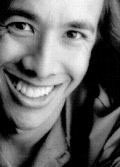
THE MODERN MALE IDENTITY: A NOVEL APPROACH Relating UC-Santa Barbara art professor Kip Fulbeck’s experiences of growing up in a mixed-race household in Covina, Calif., the autobiographical novel Paper Bullets delves into a host of complex topics, including interracial dating, the emasculation of Asian men, and the exoticization of Asian women. This is usual territory for readers familiar with the works of Chang-Rae Lee, David Wong Louie, or Shawn Wong, but Fulbeck offers the often-ignored perspective of being half-Asian and half-Caucasian. He’s just as passionate when speaking on the more whimsical aspects of his life, such as working as a lifeguard, meeting the parents of a new girlfriend, or relying on the support of good friends. With the book’s references to everyone from Ice Cube to Akira Kurosawa, reading Paper Bullets can sometimes feel like playing pop- culture trivial pursuit, but the novel’s overall effect is surprisingly soothing, giving buoyancy and universality to stories that are deeply personal. (Soyon Im) He’s joined by Edwardo Jackson, whose debut novel Ever After has two African-American lovers romancing it up in N.Y.C. Stafford Stage, 2:15-3:15 p.m.
DORIANNE LAUX AND JOSEPH MILLAR The evocative work of these two poets adds an “extra” to ordinary existence. In award-winning Laux’s evocative third collection, Smoke, images of smoke and fire bind together poems about everyday delights and hardships, contrasting grief with hope, death with life. Millar’s Overtime vocalizes the struggles of the working class, as his tightly penned poems detail the daily travails of such unlikely subjects as ditch diggers, waitresses, electricians, mechanics, and the homeless. Beard Stage, 2:30-3:30 p.m.
THE MYTH OF MONOGAMY In Myth of Monogamy: Fidelity and Infidelity in Animals and People, co-authors David Barash and Judith Eve Lipton insist our society’s belief that one man should pair up with one woman forever is, well, just not natural. They write that “monogamists are going against some of the deepest-seated evolutionary inclinations with which biology has endowed most creatures, Homo sapiens included.” Using DNA fingerprinting technology, biologists find that the animal siblings they research often don’t have the same mama and papa—and neither parent is hanging its beak, snout, or muzzle in shame. With Myth, Barash, a UW professor of psychology, and Lipton, a Seattle psychiatrist, explore such controversial topics as why we cheat, why the myth of monogamy was fabricated, and who benefits from perpetuating this myth. Oh, and in case you were wondering, Barash and Lipton are married—to each other. Hugo Stage, 3-4 p.m.
E-PUBLISHING: WHAT NEW AUTHORS NEED TO KNOW As the smoke clears from the dot-bomb fallout, writers are looking to see whether e-publishing is a pillar to be built upon or merely a ghost from yesterday’s Web brouhaha. Ethan Casey, editor of The Digital Publisher, moderates a notable panel of authors whose work has appeared on the Web in one form or another: Matt Briggs (The Remains of River Names), Christine Macgenn (A One-Legged Cricket), Jim Munroe (Angry Young Spaceman), and Peter Rizzolo (This Thing Called Love). The group discusses its past experiences writing and marketing via the Internet and delivers a forecast for online, print-on-demand, and e-book publishing. Hall Stage, 4-5:15 p.m.
SUNDAY, Oct. 21
QUAN BERRY AND RENATE WOOD Two powerful bards seize the stage at this event. A teacher at the University of Wisconsin, Berry visits with Asylum, her richly written debut that won a 2000 Agnes Lynch Starrett Poetry Prize. Renate Wood’s a Berlin-born poet whose image-laden work often processes the shame that has haunted Germany since World War II. She shares her newest book, The Patience of Ice, which is fresh off the printing press. Beard Stage, 10:30-11:30 a.m.
RALPH ANGEL AND MONG-LAN A sense of place permeates the work of these two poets. Angel’s recent collection, Twice Removed, ponders the everyday aspects of L.A.—the traffic, the balconies, the rooftops—as well as the layers of the past that exist beneath this city of surfaces. Mong-Lan, who moved to America after the fall of Saigon, shifts from America to Vietnam and back again in her debut collection, Song of the Cicadas. Thanks to her spare, yet stunning, language and remarkable use of imagery, she picked up the Juniper Prize for this book. Beard Stage, 11:45 a.m.-12:45 p.m.
THE ART OF THE NUDGE Just as brash, repetitive, and ever-present advertisements sell products, the same often applies to job seekers looking to land a cubicle in a magazine-, newspaper-, or book-publishing company. This panel of local editorial types asserts that persistence, not patience, is a virtue when it comes to finding writing and editing work. Speaking are Douglas Gantenbein, contributor to The Economist; Seattle Weekly editor and writer Leah Greenblatt; June Thomas, copy chief and contributor at online journal Slate; and The Stranger‘s editor-in-chief, Dan Savage. Carver Stage, noon-1:15 p.m.
IS THAT A REAL POEM? Examining the boundaries of verse are: Bruce Beasley, whose collection Signs and Abominations revives such figures as Michelangelo, Flannery O’Connor, and Augustine to uncover the bond between religion and art; Jeffrey Harrison, who flashes back to his earlier years in his third collection, Feeding the Fire; and Janet Holmes, the poet behind the musically inclined Humanophone. They’re accompanied by Fine Madness Co-editor Anne Pitkin, Verse Press Editor-in-Chief Matthew Zapruder, and moderator April Denonno. Beard Stage, 1-2:15 p.m.
OTROS CUENTOS: NATIONAL LATINO CONVERSATION Skilled local and national authors engage in conversation about what makes a powerful Latino book. Ilan Stavans, the author of numerous works that communicate what it means to be both Latino and Jewish in America, sports a new memoir, On Borrowed Words. Bainbridge Island author and newly elected Richard Hugo House writer-in-residence Kathleen Alcalᠲecently completed a trilogy of novels with Treasures in Heaven. In his latest poetry collection, So Often the Pitcher Goes to Water Until It Breaks, Rigoberto Gonzᬥz writes narratives about sad Mexican lives. Completing the bunch is Seattle psychiatrist Flor Fernandez Barrios, whose memoir, Blessed by Thunder, relates the ache-filled childhood she spent in Cuba. McCarthy Stage, 1:15-2:30 p.m.
FROM GARAGE TO GRUNGE: 30 YEARS OF NORTHWEST ROCK WRITING The Northwest is teeming with bands hoping to become hugely successful while maintaining their indie cred; it’s also teeming with rock critics who desire exactly the same thing. That’s right: Though they seem like two separate breeds, if not downright enemies, musicians and their critics share a lot: the insiderishness, the posturing, the insecurity, the sense of craft, the brilliance. . . . Gillian G. Gaar, author of She’s a Rebel: The History of Women in Rock & Roll, leads this panel that discusses the limelights and hangovers of writing about music, as well as how criticism and biography have affected Northwest bands. Speakers include Charles R. Cross, whose recent Kurt Cobain bio, Heavier Than Heaven, has accumulated many an accolade; Seattle Weekly staff writer and Northwest Rock History author James Bush; Denise Sullivan, who remembers rock ‘n’ roll’s bad boys and girls in Rip It Up!; and Sean Nelson, former lead singer of Harvey Danger and an editor at The Stranger. Carver Stage, 1:30-2:45 p.m.
VILLAINS MOST VILE A panel of mystery authors talks about how to write villains that are terrifying yet credible. Philip Margolin ventures into Grisham territory with The Associate, his novel involving a young Portland lawyer who’s entangled in a case involving an ethically suspect pharmaceutical company. Pulitzer Prize-winning reporter Jess Walter recently took a “stab” at fiction; his Over Tumbled Graves concerns a Spokane serial killer and his would-be captors. English writer Peter Robinson returns with another Alan Banks novel, Aftermath; this time the detective chief inspector of the Yorkshire Police is tracking a psycho who’s slaughtering attractive young girls. Moderated by Robert Ferrigno, the local novelist behind the just-released Flinch. Maclean Stage, 2:30-3:30 p.m.
MURDER IN SMALL TOWN X: THE POLITICS OF COMMUNITY CALAMITY Four authors detail what happens when death infiltrates small-town society. Set in 1965 on a tiny island in the South Pacific, Andrew Sean Greer’s The Path of Minor Planets shows how lives change course when a young boy dies in a meteor shower. In The Haunting of Hood Canal, Jack Cady’s first novel since his retirement from Pacific Lutheran University, a river attacks its neighboring Puget Sound town after the corpse of a murdered child molester is dumped in its waters. Old Man Lawton has mysteriously disappeared in Michael Collins’ The Keepers of the Truth, which takes place in a nameless rust belt town steeped in economic decline. Things are even more amiss in the nonfictional The Cooper’s Wife Is Missing: The Trials of Bridget Cleary, co-written by Joan Hoff (who appears today) and Marian Yeates. This unsettling work recalls the 1895 trial, torture, and murder by her own family of an Irish woman thought to be under the spell of fairies. Stafford Stage, 3:30-4:45 p.m.
CHOKE HOLD: CHUCK PALAHNIUK Like Fight Club‘s Tyler Durden, the protagonist of Portland author Palahniuk’s new novel, Choke, is a man’s man nursing a wounded ego. Reacting to his inconsequentiality, sex addict and medical school dropout Victor Mancini puffs himself up to Christlike proportions by making people need his help. He gags on his food in public places to enable ordinary diners to become heroes, and he argues against euthanasia for his Alzheimer’s-afflicted mother because, “Even if it means keeping her crippled, I want to be someone’s constant savior.” While parts of Choke‘s plot lack plausibility, the novel’s characters could use a touch of compassion. Almost everyone’s a fuckup on the Palahniukian plane of existence, from the theme park’s K-taking stable boy to the Japanese sun bear at the zoo that “tossed its little mess on the rocks.” Readers who were fond of Tyler’s rant against his Swedish furniture in Fight Club will be pleased to find similar diatribes throughout Choke. Palahniuk’s a master of the impassioned microessay, and Victor a wry expert on everything from American consumerism to the female ear. Choke may be hard to swallow, but at least we can feel it trying to go down. Hugo Stage, 3-4 p.m.
BEHIND THE BLEEP: COPYRIGHT, CENSORSHIP, AND THE CREATIVE PROCESS Two controversial figures talk about what happens when creativity clashes with the First Amendment. Starring Scarlett O’Hara’s mixed-race sister, Alice Randall’s The Wind Done Gone offers a pointed parody of Margaret Mitchell’s 1937 tome, Gone With the Wind. Upon hearing of Randall’s writing project—which, thankfully, recently made its way into print—Mitchell’s estate blew its own wind about copyright infringement. As director of the Free Expression Policy Project at the National Coalition Against Censorship, Marjorie Hines is familiar with what riles people into stopping the presses. In Not in Front of the Children, she traces the history and philosophy of the “harm-to-minors” argument, from the persecution of Plato to George Carlin’s “seven dirty words” to the Communications Decency Act. Carver Stage, 4:15-5:15 p.m.