Two men plead guilty in ATM robbery scheme
Published 1:56 pm Friday, February 20, 2026
Two Texas men have pleaded guilty to crimes related to a scheme where they would tamper with local ATMs, then assault the repair technicians in order to steal the contents of the machines.
On Feb. 4, 2026, Ahmon Hogg, 22, and Seth Coles-Body, 23, both of Texas, pleaded guilty to four counts of bank robbery and two counts of attempted bank robbery in the Western District of Washington federal court. The duo were initially charged on July 17, 2025, with conspiracy to commit robbery and face up to 20 years in prison.
The pair’s charges stem from a string of robberies, including one in Renton, where they would disable ATMs with a glue-like substance, then wait for a repair technician to open the ATM to work on it. The duo then would often assault the technician before taking cash containers, called cassettes, from the ATMs.
According to the U.S. Department of Justice, the pair allegedly disabled ATMs on Dec. 23 and Dec. 24, 2024, in Renton. This was when the ATMs would be loaded with cash for the Christmas holiday.
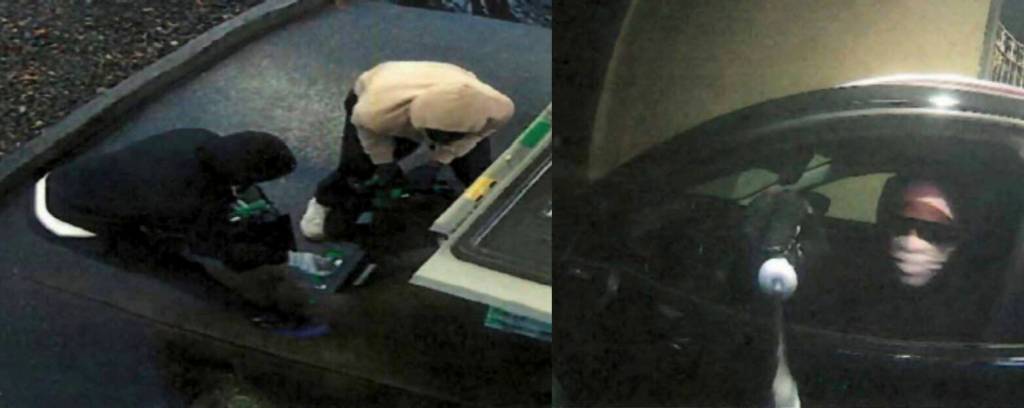
“The co-conspirators disabled a Bank of America ATM in Renton with a glue-like substance that caused the card reader to stop functioning,” the DOJ said. “After the technician arrived and began repairing the machine, he was forcibly confronted by two men who brandished a screwdriver and demanded he open the machine and provide them with the cash cassettes.”
The technician did not open the ATM, and after a scuffle, the technician escaped the scene. The DOJ stated that bank surveillance captured images of the robbers’ vehicle and clothing.
The next day in Vancouver, Washington, technicians were sent to repair a Bank of America ATM, and again, a glue-like substance had been used.
The DOJ stated that after repairs began on the machine, two men ran up, shoved a technician aside, and grabbed five cash cassettes containing currency. The men fled in a car that matched the one seen the previous day in the Renton robbery attempt. Their clothing also matched that of the suspects in the Renton case.
While the Washington investigations were ongoing, Hogg and Coles-Body were identified on Jan. 3, 2025, in connection with ATM tampering cases in the area of Phoenix, Arizona. ATMs for Bank of America and Wells Fargo had been tampered with when a card covered in glue was inserted into the machines.
The FBI set up surveillance on the ATMs and spotted a car that bank images connected to the tampering. Law enforcement stopped the car, identified Hogg and Coles-Body, and released them from custody.
On March 7, 2025, a technician at a Bank of America branch in Redmond, Washington, reported that he had been robbed while working on a machine whose card reader had been disabled by a glue-like substance. Once the machine was open, two robbers ran up and stole cash canisters filled with money from the machine. Five of the canisters were later recovered, damaged, on the shoulder of State Route 520.
A few days later, Coles-Body was stopped by U.S. Border Patrol attempting to travel into Mexico by Greyhound bus with approximately $209,000 in cash. The cash was seized, and Coles-Body was released.
According to the DOJ, on May 2, 2025, Hogg and Coles-Body were back in Houston, where they reside, and they committed another robbery. A technician had an ATM open for repairs, and Coles-Body rushed the technician, causing injuries, and then stole approximately $117,000 from the machine. The pair then ditched the car they were using a short distance away.
In June 2025, the pair traveled to Oregon, disabled two machines and robbed an ATM customer. The pair then drove to South Portland, Maine, on June 30, 2025, disabled an ATM, rushed a technician, beat him and then stole $47,000 from the ATM.
On July 2, 2025, Coles-Body and Hogg were arrested in a traffic stop in Mississippi, with stolen firearms found in their car. They made an initial appearance in federal court in Jackson, Mississippi, on July 3, 2025, and the judge ordered the Marshal Service to transport them to Seattle.
According to the DOJ, under the terms of the plea agreement, prosecutors will recommend whatever is higher between a 121-month sentence — about 10 years — or the high end of the sentencing guidelines range. The defense agreed to request a sentence within the guidelines range calculated by the judge at the time of the sentencing.
The pair also agreed to pay restitution to the victims, currently calculated at $768,900, and to pay damages, including medical expenses for the technicians.