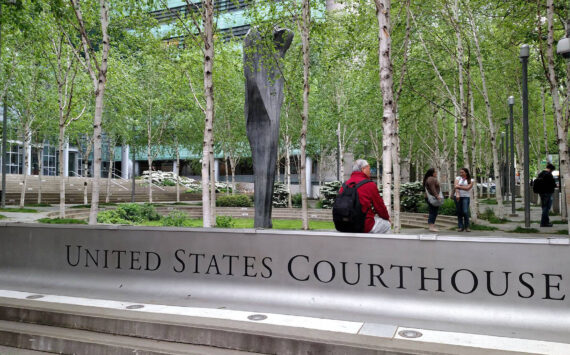
BEST WHISTLE-BLOWERMARK ERICKSON, 35, started working for the University of Washington medical billing office in 1991, quickly spotting what he thought were fraudulent business practices. He worked within the system to change that—to no avail—and by 1999 felt compelled to file a sealed whistle-blowers’ False Claims Act lawsuit and became an FBI informant, secretly tape-recording meetings with the officials he worked for. That ultimately led, this year, to the UW Medical School paying a record $35 million fine to settle U.S. charges of defrauding Medicare and Medicaid, as well as incurring as much as $25 million in legal fees. All that could have been avoided, says Erickson, if officials had followed the law as both he and an attempted whistle-blower, Swannee Rivers, had repeatedly urged. Erickson also proved there is reward in virtue. Under the False Claims Act, a whistle-blower shares in any fines or settlements paid to the government. For his effort, Erickson received $7 million, netting about half after taxes and legal costs. Erickson says it was an opportunity available for anyone in his office who acted. “Most people were living paycheck to paycheck and were reluctant to come forward, as they had a fairly good idea of how management would respond,” he says. “I informed them that billers could be held just as liable as doctors and asked them what would happen if investigators ever showed up. [They] responded, ‘I’ll just play dumb and say I was doing as I was told.'” Dumb, indeed.—Rick AndersonBest Stonewaller vs. Best WatchdogGov. GARY LOCKE likes to say he’s told the public everything about his behind-the-scenes negotiations that led to a $3.2 billion tax break for the Boeing Co. in return for Boeing assembling its new 7E7 Dreamliner in Everett. But ask the tax watchdogs down at the EVERGREEN FREEDOM FOUNDATION in Olympia about Locke’s claim, and you’ll get a good laugh. They’ve been trying to get Locke’s records for most of a year and, after assorted delays and hundreds of blank documents, filed a lawsuit and lost when Attorney General (and, she hopes, Locke successor) Christine Gregoire took the hard line. She and the governor claim those background documents are protected by attorney-client privilege or contain proprietary Boeing business information. So much for open government. Gregoire also got the court to impose an added burden on EFF, requiring the taxpayer’s friend to funnel all its future record requests through the AG’s office rather than the governor’s office, as is the procedure for everyone else. None of which has stopped EFF from trying to get to the truth of the Boeing giveaway. Among other recent findings, the foundation discovered that since legislators passed the $3.2 billion tax incentives last year (in June), Boeing has reduced its Washington workforce by 4,217 jobs (as opposed to adding those thousands of jobs Locke promised). EFF projects that even if Boeing were to continue manufacturing at current staffing levels on its 737, 757, and 767, Washington will be hit by a net loss of over 3,000 Boeing jobs even with the 7E7 assembly plant up and running. Time for your economic stimulus, Washington: Please bend over.—Rick AndersonBest ScandalTake your pick: BOEING, BOEING, or BOEING. There are the ongoing investigations, criminal indictments, and court battle over the theft of internal documents from Lockheed Martin that Boeing allegedly used to beat out Lockheed for a potential $1 billion defense rocket contract. There’s the ongoing Pentagon probe of Boeing and its defense chief, James Albaugh, for his questionable role in negotiating a $1.3 billion AWACS contract with NATO. And there’s the ongoing probe by at least six federal agencies and Congress of the Boeing 767 aerial-refueling-tanker deal that led to the resignation of Boeing Chairman Phil Condit and a guilty plea by company exec Darleen Druyun for conspiring to grease the original $22 billion tanker contract.—Rick AndersonBest Boeing SuckupAfter the Boeing tanker deal hit the fan, SEN. PATTY MURRAY took to the hustings to announce the results of her search for truth and justice in the case, concluding that—ah ha!—Airbus did it. The Boeing rival, said “Pork” Patty, had spread “half-truths” about the deal, and thus “Airbus’ corporate behavior on this matter cannot be tolerated by the U.S. government.”—Rick AndersonBest Local Version of Robert MosesSeattle Monorail Project Executive Director JOEL HORN is a more generic model of the flashy New York power broker and subway builder—partial, instead, to hiking shoes and cotton vests and staying cool in the face of critics and a recall effort. But, love his monorail or hate it, he’s attempting one of the biggest makeovers in this city’s history and could be responsible for changing life here as we know it. The $1.6 billion, 13.7-mile first leg of the new Seattle monorail is the planned beginning of Seattle’s greatest transportation project. If built, the Green Line (set to fully open in 2009) and a handful of future lines crisscrossing the city will cause, among other changes, communities and businesses to sprout up (or not) because of the line’s proximity; civic attitudes and social lives could be affected by swift elevated travel, and a strong downtown could prosper ever more, especially if the system is eventually integrated with rapid transit to the suburbs. The monorail faces a number of obstacles—the biggest, an Aug. 16 bid opening, will determine its feasibility; so will a City Hall–ordered review of its financial projections, which initially came in a third short of expectations. These are just the sort of challenges Horn seems to thrive on. As former leader of the plan to build the Seattle Commons, a park and business/housing development for South Lake Union backed in part by billionaire Paul Allen (but financed by taxpayers), he failed twice at the polls. OK, then, he’ll just build a monorail instead! The vote to approve the monorail succeeded by a mere 877 votes, long before the now- critical issues over bulky design and cost-cutting measures cropped up. Yet no one is more consistently upbeat about the SMP and its future. Horn brushes off suspicion that he’s really in this for himself—”very, very typical kind of conspiracy theory that people have”—and says he, in fact, welcomes criticism. “We encourage it; itkeeps us on our toes.” The question remains, however: Is he ballet dancing toward a successfully executed jete or another stunning fall?—Rick AndersonBEST MEDIA MAKEOVERBack in the glory days of The Seattle Times/Post-Intelligencer joint operating agreement (JOA), Times Publisher FRANK BLETHEN enjoyed virtual control over the city’s daily newspaper market. He bullied competitors, launched regional editions, and kept the poor stepchild P-I off the Web. His motto might be the Dick Cheney–style e-mail he once sent to a suburban publisher who he thought had crossed him: “Fuck you to death.” But times have changed. Blethen now claims the JOA is killing his family’s chances of staying in the biz. Against a background of declining ad revenues and circulation and mounting losses, andhaunted by major missteps that included a devastating strike in 2000–01, the man who runs the dominant paper has now recast himself as an underdog. The millionaire complains that deep-pocketed P-I owner Hearst Corp. is bleeding him dry. In response, the man whose paper endorsed George W. in 2000 has now joined lefty activists railing against “the corporate media,” and he’s run ads in his own paper touting the Times as the last bastion of “independent journalism” in Seattle. An amazing makeover, indeed: The Nero of newspapering has morphed into journalism’s Joe Hill.—Knute BergerBEST TV MAKEOVER (IN PROGRESS)For years, KCTS management was like the Kremlin. Nobody quite understood how it held its decaying territory together, but it did, until one day the illusion was shattered and it all came apart. As longtime CEO Burnill Clark departed under fire last year, the extent of the public TV station’s financial difficulties became apparent; board members even acknowledged they had to reach into their own pockets to meet payroll. Under new CEO Bill Mohler, the corrective measures have been painful, to say the least. The station slashed millions from its annual budget and laid off 30 percent of its staff, including most of its creative talent. But it seems to have reached a point of stability, thanks in no small measure to an anonymous $7 million loan. Last month, Mohler announced that the station ended its fiscal year in the black for the first time in five years. Now the question is: What is it going to do with its newfound fiscal prudence? With so much of its creative talent gone, can it retain its production ambitions or will it become a mediocre “pass-through” station content to pick up Masterpiece Theatre and the rest of the old PBS stable?—Nina ShapiroBest Billionaire MakeoverHaving never really seemed all that suited to extreme wealth, Microsoft co-founder Paul Allen is remaking himself. For starters, he’s converting a fiscally challenged investment portfolio of some $20 billion— it had been $30 billion before the dot-com and telecom bubbles burst—into one that resembles the safe, balanced, dull, carefully vetted holdings of other billionaires. No more investing on a whim in cool tech ventures with the hope they might succeed through the brute force of his deep pockets. Now, before he antes up, Allen wants a 300-page report on his desk laying out the business model. As he told BusinessWeek earlier this year: “Over the last couple of years, we drank some castor oil.” He even had to educate himself about bonds. Yuck. This is not to say Allen has surrendered all whimsy. He has transformed part of the Experience Music Project into the Science Fiction Museum and Hall of Fame. And he’s bankrolled his own space program, giving aviation legend Burt Rutan $20 million to develop SpaceShipOne, which in June flew to an altitude of 62 miles—that’s suborbital space. Back on Earth, Allen’s Vulcan holding company (www.vulcan.com) is buying up and making over Seattle’s South Lake Union neighborhood, with plans for a biotech- anchored urban village that some are already calling Allentown. Whatever they call it, let’s let Allen pay for the road and utility improvements and that streetcar line. He can afford a makeover. The taxpayers can’t.—Chuck TaylorBest Turning Tragedy into ComedyIn 1997, MARILYN RAICHLE decided to start a fool’s festival in Seattle. She had every reason to be optimistic. After all, nothing brings people together like laughter, and she had already birthed a successful and innovative series in the Seattle International Children’s Festival. She had not, however, reckoned with Seattle’s cultural heritage. “This is a town settled by Scandinavians and Northern Europeans,” Raichle notes dryly. There was considerable resistance to the Foolproof Performing Arts series when it featured humor for humor’s sake. In the summer of 2003, however, she hit upon political humor, and suddenly the audience response exploded. In a national political environment where dissent was muted, both houses of Congress controlled by conservative Republicans, and the White House run by the crazed Christian cowboy commander in chief, Seattleites wanted to laugh just to keep from crying. Raichle brought in columnist Molly Ivins,comedian Al Franken, filmmaker Michael Moore, and many others who filled that need. Building on that success, Raichle branched out with important writers and thinkers who weren’t as comic, like former Secretary of Labor Robert Reich, historian Kevin Phillips, author Gore Vidal, Ambassador Joseph Wilson, and former President Bill Clinton. This year, she is focusing on November’s election, using her series as a soapbox to get people involved in the political process. When people accuse her of preaching to the choir, she responds proudly, “C’mon, let’s get the choir cracking!” Never losing sight of the need to keep laughing, her fall lineup includes the hilarious former Texas Gov. Ann Richards, groundbreaking satirist Mort Sahl, and brilliant humorist/storyteller Garrison Keillor.—George Howland Jr. 206-325-3554; www.foolproof.BEST AIRPORT MAKEOVERWith continued reports that our airports are not as safe and secure as they need to be, as well as a healthy buzz surrounding both A&E’s reality series Airline and the latest Tom Hanks vehicle, The Terminal—and with summertime being the season for Seattle tourism—Sea-Tac could not have picked a better time to break in its brand new terminal. The airport was sorely in need of the face-lift regardless of the season; the new space marks the first addition of a terminal facility in 30 years. South Terminal, or TERMINAL A as it is alternately known, feels markedly better than Sea-Tac’s slums, and it definitely feels more modern than any other area in the airport. We even (finally) have those moving sidewalks now. And with the new and improved wing, the airport works slightly better. Those willing to take a bit of a hike can circumvent the ridiculously long line at the south security entry point by taking the airport’s new open walkways to either the north or central checkpoints. As bad as the lines can be, sitting around and waiting can be pretty awful, too, but Terminal A’s aesthetically pleasing and people-friendly seating arrangements might take a little of the edge off. Ditto the huge wall of windows and the vast, beanstalk-accommodating ceiling in the arrivals area. We’re never going to be Denver International or Frankfurt, but with this makeover, Sea-Tac is doing a better job of being Sea-Tac.—Laura CassidyBEST HUNGER-FIGHTING IDEANo, not the Safeco Jumbo Dog. We mean real hunger-solving, as Eirik Olsen is trying to do, one dollar at a time. A year ago, upon discovering our state has the fifth worst child-hunger problem in America, Olsen organized Bellevue-based FEED WASHINGTON, an all-volunteer nonprofit agency. He gently prods businesses and individuals to painlessly donate $1 a month to help feed the children—Olsen says his aim was to make it “easy to be part of the solution.” In 12 months, his organization has provided more than 33,000 meals to hungry kids. That includes more than 10,000 fluid ounces of baby formula for the Project Hope Food Bank in Lynden and over 8,000 servings of pasta to the Tri-Cities Food Bank. He says inner-city programs such as Peace for the Streets by Kids From the Streets and the White Center Boys and Girls Club have benefited from 2,200 meals. No one at Feed Washington, including Olsen, a Ballard High grad and now a Bellevue attorney and Realtor, is paid for their charity work; Olsen even picks up any donor’s credit-card finance charges so 100 percent of a donation goes directly to feeding kids. He has signed up enough recurrent donors to provide more than $1,200 in monthly donations (and growing), which he details in monthly accountings on his Web site. Want to share the painlessness? Go to www.feedwashington.org or call 425-649-5059.—Rick AndersonBEST PRO JOCKSeahawk field leader MATT HASSELBECK is poised for all-pro quarterback status after a breakthrough season that ended with a rare slipup in Green Bay. Once disparaged by Seattle fans, he’s become the most reliable part of the city’s most entertaining sports franchise of the moment, and barring injuries, he ought to have the Hawks in the postseason again. Hasselbeck’s quarterback rating (based on several stats) was among the best in the league last season and might’ve been tops had it not been for the Teflon-handed ball dropping of his receivers. The Hawk offense should be better than last year’s version but, if not, it won’t be for lack of a QB.—Mike HendersonBEST AMATEUR JOCKUniversity of Washington athletic department officials wish they could improve both the football and basketball programs by cloning diminutive standout NATE ROBINSON, inch for inch the greatest local jock since the O’Brien brothers of the 1950s era. Robinson’s father, Jacque, a Husky great of the ’80s, is the only player ever to win MVP plaudits in both the Rose and Orange bowls. But Nate Robinson, once a football star, will be concentrating on basketball again this season before, presumably, entering the NBA draft (as he nearly did this year). His energy and creativity dazzle casual basketball fans as well as peers and coaches. Nominally a guard at 5-feet 9-inches, he also can stuff the bucket and bring down rebounds because of a vertical leap kangaroos would envy.—Mike HendersonBEST COACHThe easy choice is LORENZO ROMAR. True: Anne Donovan has the Storm playing like the early favorite to win the WNBA championship, but Donovan also has the advantage of coaching some of the best talent in women’s basketball. Romar, by contrast, had to take players many would have dismissed as mediocre and mold them into a contingent in which every player believed the team was worthy of national respect. By taking the Husky men’s basketball team from last season’s death-spiral start to the NCAA tournament, Romar now has every authority from Sports Illustrated on down believing for 2004-05, especially with starters and key players returning. More importantly: A long-neglected Husky basketball program has been restored to prominence, a miracle considering the status of UW basketball when Romar came back to coach at his alma mater just two years ago.—Mike HendersonBEST LOCAL OLYMPICS TIEEasy this time. It’s the Kirk sisters of Bremerton, the only sibling swimmers scheduled to compete for the U.S. team. DANA and TARA KIRK qualified last month and should be featured prominently in TV coverage of Olympics events, which commence in Athens Aug. 13, assuming all the concrete sets in time. Joining the Kirks (though not as likely to make prime-time television) are Seattle guys (and Nathan Hale High grads) Jordan Mallock and Nate Johnson, competing in the 500- and 1,000-meter pair canoe.—Mike HendersonBEST LOCAL FALL SPORTS WEEKENDHard to match the one in ’95 that brought Notre Dame football to Husky Stadium and the Yankees to the Kingdome the same day. But pencil in Sept. 25 and 26, when the HUSKIES play NOTRE DAME (on the tube Saturday from South Bend, Ind.), the SEAHAWKS host the 49ERS the next day, and (wake me when it’s over) the MARINERS mess it up three times in Texas playing the RANGERS.—Mike HendersonBEST POST-BUST TECH STARTUPFor those who think “in-flight entertainment” is a quaint part of domestic air travel’s past, Tacoma-based APS is changing that perception. APS’s DigEPlayer 5500 (www.digeplayer.com), first available on Alaska Airlines’ long-haul flights from Seattle, masquerades as a video player for rent. But the trade-paperback-sized gadget is really a compact computer with a large hard disk, color LCD screen, and built-in stand. Not only does it have a library of recent and classic movies, but packed into the player are TV sitcom episodes and several music channels. All of this for $10 per flight rental—or free, if you’re lucky enough to be in first class—and you get to keep the headphones. Hawaiian Airlines and Canada’s Jetsgo have also signed on to use the DigEPlayer, and APS says it expects to have nine airlines on board by the end of this month. The DigEPlayer is a case of the inventor knowing what the customer wants. And he should: APS was founded by Bill Boyer, an Alaska Airlines baggage handler.—Frank CatalanoBEST INDEPENDENT LOCAL TECH BLOGSBlogs (or Web logs) are often no more than very public personal diaries. But they’ve turned into labors of professional love for two local tech bloggers who have found their online niches. WI-FI NETWORKING NEWS (www.wifinetnews.com) from long-time Seattle tech writer Glenn Fleishman is a blog of record for the Wi-Fi industry and—like journalistic old media—breaks stories (such as the failure of Wi-Fi service provider Cometa Networks). LOST REMOTE (www.lostremote.com), founded by KING-TV executive producer Cory Bergman, chronicles developments at the cutting edge of the intersection of TV and technology, from the Internet to TiVo. His group of bloggers from around the country are all closely tied to the business and craft of broadcast news (including, for a time, this contributor)—and sometimes spectacularly disagree with each other to entertaining effect.—Frank CatalanoBEST SERIAL ENTREPRENEURCRAIG MCCAW is the billionaire Hunts Point businessman largely credited with creating the industry known for dropped calls and mind-numbing bills (to say nothing of the device voted “most likely to be confiscated” in public schools). McCaw’s successful McCaw Cellular Communications—purchased by AT&T in 1994 to become AT&T Wireless Services—was followed by his involvement as founder or early major investor in telecommunications companies Nextel, Teledesic, ICO Global, and XO Communications. McCaw’s latest, announced in June: Kirkland-based Clearwire (www.clearwire.com), a firm planning to roll out wireless broadband voice and Internet services to homes and small businesses nationwide. Clearwire’s first cities are Jacksonville, Fla., and St. Cloud, Minn., this summer. McCaw’s ventures have failed as much as they’ve succeeded, but you can’t fault his vision and persistence. Even his failures have pushed the possible in telecommunications forward.—Frank CatalanoBest Defenders of the Little GuyIndigent defense work is hardly the sexiest field in the legal world—the hours are long, the pay small, the clients sometimes problematic. But someone has got to defend poor people when they get popped for drugs or get smacked around by the cops or when protesters get arrested for no good reason. In Seattle, those someones are to be found at the Defender’s Association (TDA), and most particularly in the duo of LISA DAUGAARD and D’ADRE CUNNINGHAM. Let’s just say that, like Tom Joad in The Grapes of Wrath, they are always there. Whenever cops look to be racially profiling African Americans for drug arrests, it’s these two who get the data to prove their point, as they did last fall with evidence derived from police arrest reports that showed that 63 percent of arrests by Seattle police for drugs are of African Americans—a group that composes only 8 percent of the city’s population. And, when there’s a protest, don’t be surprised to see one of them handing out information on protesters’ legal rights. That’s what Daugaard did in March 2003 at one antiwar protest, and she was promptly arrested. Both regularly testify before the City Council on police accountability issues; they’ve pressed their case to the point where the council is actually being forced to pay attention.—Philip DawdyBest OrganizerMost people think of hippies as useless slackers more interested in where their next jam band bootleg is coming from than political action. And then there is VIVIAN MCPEAK, 45. In 1991, he started Hempfest, which over the last 13 years has grown from an event of 500 attendees to a weekend festival that draw over 175,000 people to Myrtle Edwards Park. Sure, many people come to smoke pot openly, but the event’s purpose is far broader: “Peace, justice, and freedom and pot is just a sexy vehicle for this freedom train,” says McPeak, who somehow pulls together 1,200 volunteers to put on an event on the scale of Folklife for $180,000. And all is done with the cooperation of the Seattle Police Department, the outcome of McPeak’s many years of “aggressive diplomacy.”—Philip DawdySEATTLE WEEKLY’S BEST OF SEATTLE 2004 INDEX
BEST WHISTLE-BLOWERMARK ERICKSON, 35, started working for the University of Washington medical