At a Congressional hearing yesterday concerning the Air Force’s controversial bypsassing of Boeing tankers in favor of a larger Airbus fleet, Reps. Jay Inslee of Washington and Dave Loebsack of Iowa zeroed in on a hidden cost SW probed a few weeks back: that the Airbus tanker is so big that it will require millions, if not billions, of dollars in taxpayer-funded retrofits to military bases worldwide. Here’s Loebsack’s testimony (Inslee’s after the jump): “The aerial refueling tanker contract award must serve the interests of the American people and American national security. I repeat that. It must serve the interests of the American people and American national security,” said Loebsack. “The awarding of the tanker contract to Northrop Grumman and EADS will force the Iowa Air National Guard to use scarce resources to construct new hangars in order to accommodate the larger size of the EADS planes. The estimated cost for the construction of the new hangars would be roughly $45 million. Moreover, the runways currently used by the Iowa Air National Guard are not able to withstand the weight of a fully loaded EADS tanker. Thus, new ramps and runways would have to be constructed. The total cost incurred by the Iowa Air National Guard to house the Northrop Grumman EADS plane would be roughly $50 million to $60 million.”Now Inslee: “Coming back, it is not just cost, it is capability. Bigger is not always better, and I am very concerned here that the Air Force has been lulled into the sense that bigger is always going to be better. Frankly, when I found out that the Boeing tanker can serve in twice as many airfields, it can refuel the V-22, which is our tilt rotor aircraft, this aircraft they have can’t refuel one of our aircraft, we are going with a company that has no boom experience, they have never built an airplane commercially with a boom.We have decided to reject a company, Boeing, that delivered a 767 to Japan, one February 19, 2008, a second one March 5, 2008, they are flying, they are in the air, they are a known quantity. And we are taking this risk, an uncertain risk, just for this apparent decision that all of a sudden bigger became better, which is very interesting, because Boeing could have competed a larger airplane, an airframe of the Boeing 777, and didn’t, essentially because they understood that this was a satisfactory size component to deliver.It made sense when Boeing made that decision and when Air Force led them to that decision, because when you look at the loading, the range of loading and what it has done historically, the Boeing 767 is a perfect fit. If you look at the offloading potential, the Boeing 767 is significantly greater than the average offloading in any of either the Vietnam, the Iraqi Freedom or the Southwest Asia conflicts.So we are concerned that this decision of this deciding bigger was better was, A, not fair to a bidder, Boeing, which was not told that that apparently was now the Air Force’s brand new criteria; B, exposes American taxpayers to greater risk with an uncertain contractor, with an uncertain plan in multiple locations; C, causes significant loss of jobs; and, D, violates international law, or at least awards folks who are receiving illegal subsidies violating international law.”
More Stories From This Author





Transit riders will be able to pay fares with credit, debit cards
A new Tap to Pay feature by One Regional Card for All (ORCA) will allow transit riders to use credit…
By
Steve Hunter • February 19, 2026 1:57 pm
King County reports fewest shootings since before the pandemic
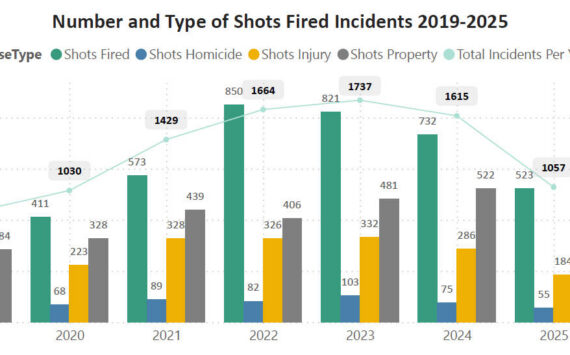
The county saw a decrease in shootings and a change in the demographics.
By
Joshua Solorzano • February 19, 2026 9:00 am
Study shows top crash-prone intersections in King County
King County is home to 11 of the 30 most crash-prone intersections in the state, according to a study by…
By
Drew Dotson • February 18, 2026 2:52 pm