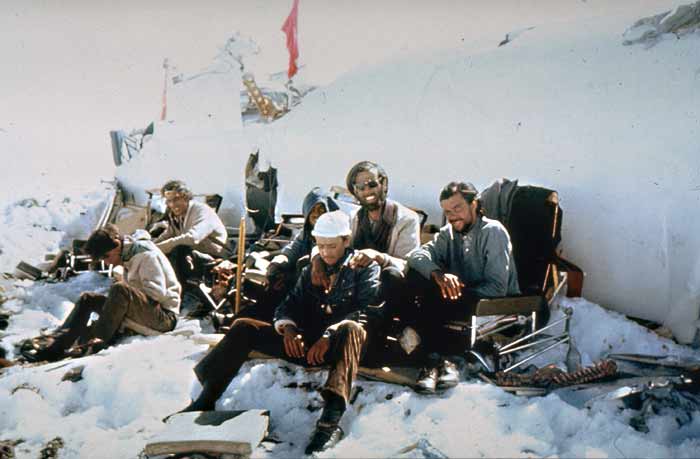
No surprises here—first the subtitle, then the prior book (and later movie) Alive, and finally the inevitable cannibalism. We all know the story, now 36 years old. The documentary Stranded looks to be a bore, musty tabloid news, but it ends up being a genuine and moving reflection—from a very middle-aged point of view—on why, despite enduring horror and death, there is a value to our continued, plodding existence. Most of the 16 final survivors of the rugby team crash in the Andes are interviewed today, interspersed with their own photos and newsreels of the rescue efforts that were—for most of their 72-day ordeal—abandoned. Those boys, now men, came from Uruguay’s privileged class—Catholic, conservative, heirs to the colonial elite. It seems wrong, almost sick, to conclude their trial made them better souls, but that’s exactly what they profess. Starvation, we know, can lead to a kind of spiritual ecstasy (see Into the Wild), an ascetic emptying of the mind. And communion and the Eucharist…that symbolism was well familiar to the initial survivors. They speak of “la comida” and “la carne” in near-religious terms. Says one, “A new society was developing…in which a dead body could become the food that I needed.” The keyword here isn’t food but society. From 16 survivors, we’re told, 100 extended family members were born. Director Gonzalo Arijon reconvenes some of them for a trek to the crash site, weaving discreet re-enactments in among the interviews. The result is as close as we’ve come, in the postwar era, to Shackleton and Scott.
PICK Stranded: Life, Death, and Cannibalism in the Andes