ONE OF the most durable genres, samurai movies have been around almost as long as cinema has existed in Japan. The Northwest Film Forum is programming 11 fine examples, most on new prints, for its Summer of Samurai series, which begins with 1967’s Samurai Rebellion. It’s less well known than Kurosawa’s Throne of Blood and Seven Samurai (also in the retrospective), but it nicely illustrates how samurai movies are often intensely domestic and inward-looking—not all screaming and swordsmanship, in other words. Here, Toshiro Mifune plays a samurai who runs a small fief during the shogun era. Henpecked and aging, tired of intraclan politics, he wants to retire and hand his station to his eldest son. Then their feudal lord forces that son to marry a discarded mistress (after she produced him a male heir). Then, a couple years later, after the mistress has proved herself a good wife and mother within Mifune’s household, the lord tries to reclaim her, since their child is next in line for succession.
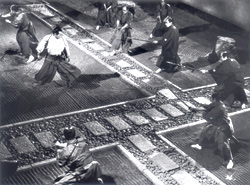
That’s when Mifune snaps: “This is cruel and unreasonable! He doesn’t understand human emotions!” The swords come out, but they’re a long time in coming. Directed by Masaki Kobayashi, the black-and-white CinemaScope-format Rebellion isn’t particularly slow; rather, Mifune’s anger must simmer as we, too, begin to appreciate the unfair strictures of the prototypical, picturesque samurai milieu. Kobayashi carefully frames his figures within the sharp planes and confines of interior courtyards with perfect tile roofs and immaculate gardens. When Mifune finally rails against his society’s “senseless conventions,” it’s no accident that he steps off the stone path and stamps his footprints in the finely raked sand.
Of course, the great Seven Samurai is also a film driven by social injustice. Yet in Rebellion, Mifune’s motivations are most profoundly domestic—he wants a happy marriage, unlike his own, for his favorite son. The image that stays with you isn’t today’s CG-assisted samurai somersaulting through the air to battle dozens of ninja. It’s Mifune striding purposefully up the road, sword sheathed, holding his granddaughter tightly to his chest, demanding justice for his family.