
Here’s a look at all of our recommended films for SIFF’s third week, June 3 through 9. Follow all our SIFF coverage on our special SIFF page, updated daily with reviews, news, and gossip.Published on June 2, 2009

SAcraphine: Martin ProvostaE™s lyrical but bracing portrait of the early-20th-century French painter SAcraphine Louis begins and ends with a quietly ecstatic shot of the artist nestling up to the rustling leaves of a majestic tree. In ProvostaE™s vision, the dirt-poor country housekeeperaE™s elemental flower paintings, derided by her bourgeois neighbors, are powered by her love of nature, the direct line she believes she has to the Virgin Mary, and the support of Wilhelm Uhde (Ulrich Tukur), a German collector whose floors SAcraphine scrubs with the same fervor she brings to collecting chicken blood to mix her own brand of red paint. If SAcraphineaE™s untutored primitivism is a romance imposed by the filmmakeraE”in real life, she sat in on art classes for young ladies in ParisaE”itaE™s a compelling one that seduced an adoring French public and earned the movie seven CAcsars, including a well-deserved Best Actress award for Yolande Moreau. The actress brings a potent restraint to this beady-eyed, unkempt, and all but feral outcast who seethes with inner struggle between strength and appalling vulnerability. SAcraphineaE™s dependence on her patronaE”a cultivated but emotionally detached homosexual, who knew a fellow outsider when he saw one but came and went in her life without warningaE”is almost as unbearably moving as her inevitable unravelingaE”when money and fame cut the artist off from her creative wellsprings and drove her over the edge. (NR) REVIEW BY ELLA TAYLOR Egyptian: 4 p.m., Thurs. June 4
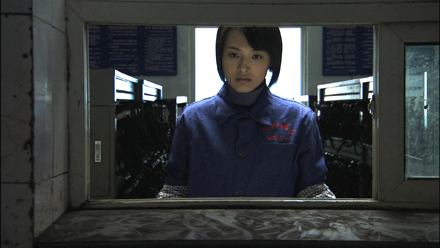
PICK: The Shaft: Another depressing Chinese movie about coal miners! And yet I just can’t get enough of these pictures set in the furnace, as it were, of China’s booming economy. In his debut feature, Zhang Chi divides a family into a triptych of stories, each punctuated by a grim elevator ride down into the clattering mine. First, the sister must weigh her prospects between her present boyfriend, a miner, and a rich cousin living in the city. Next, her layabout younger brother is determined to avoid the mines, but blithely blows off his university entrance exams. Plans are meaningless to me; being alive is enough, he says, fancying a career as a pop star. Only his father knows how wrong the kid is, and the third episode relates the family’s sad history. At 59, he has an ominous cough, even though he’s graduated to an above-ground position. With his kids gone, he begins to wonder about the wife who left him years before. He purchases maps to find her home village. Told to search for her on the Internet, he has no idea what that is. He’s never been out of his town, it seems, never been free of the coal dust. Unlike his children, unlike the movies of Zia Zhang-ke, there’s no awareness of the outside world, no spasms of modernity. Yet as the father inches forward on his quest, his curiosity gives The Shaft a glimmer of hope. He buys a bus ticket, and in the movie’s amazing final shot, there’s the suggestion that even a miner can change his fate. (NR) BRIAN MILLER Also: 6:30 p.m. Sun., June 14.

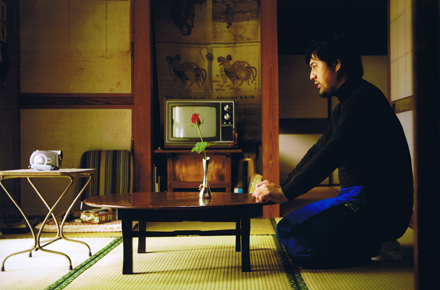
PICK: Inju, the Beast in the Shadow: Barbet Schroeder delivers a delicious genre movie rooted in Japanese crime fiction. The first 10 minutes are a stand-alone distillation of such booksaE”rich in blood, revenge, and vile villains committing unspeakable acts. After that gruesome treat, we meet smug French crime writer Alex (BenoARt Magimel), who fancies himself an expert on the Japanese authors who’ve influenced him. Traveling to Japan with his new bestseller, he tries to meet a reclusive demon author who’s never appeared in public. Naturally the mysterious master resents the usurper, who falls for a lovely tea-house girl (Lika Minamoto) with a mysterious scar on her back and a taste for kinky sex. (Conveniently, she speaks French; though some dialogue’s in English, too.) To better understand the sensei’s twisted mix of pleasure and pain, Tamao tells Alex, you need first-hand experience. And this being a film by Barbet Schroeder (Single White Female, Reversal of Fortune), that means S&M, which only draws Alex deeper into his obsessions. This is the kind of movie that openly and enjoyably winks at its conventions, where the know-it-all Alex can declare that his rival has blurred the line between fiction and reality! Oh really? By the time Alex reconsiders whose story he’s inaE”well, let’s just say that the pen can be a fatal instrument. (NR) BRIAN MILLER Also: Uptown, 1:15 p.m. Sat., June 6; Cinerama, 4:15 p.m. Fri., June 12. 7 p.m., Pacific Place
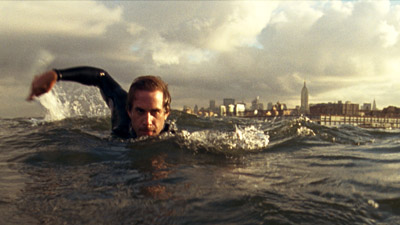
Against the Current: Joseph Fiennes, a.k.a. aEœthe guy who no one can believe shares DNA with Ralph/hasnaE™t done shit since Shakespeare in Love,aE delivers an appropriately mysterious performance in this 90-minute rumination on suicide. Fiennes plays Paul, a financial journalist who lost his wife and unborn child to a tragic accident. (No, itaE™s not 9/11.) Five years later, he convinces his best friend Jeff (Justin Kirk), an underachieving Manhattan bartender-actor, to accompany him by boat as he attempts to swim the length of the Hudson River, a scheme theyaE™d hatched as boys. For the hell of itaE”or, as we later discover, due to her intrigue with PaulaE”schoolteacher Liz (Elizabeth Reaser) comes along, too. While PaulaE™s moral/mortal dilemma here is plenty compelling, the real star is the scenic Hudson River Valley, aided by a haunting score and with noble supporting performances. Kirk is the designated mood-lightener whoaE™s nonetheless able to shed the sass of his Weeds character to reveal genuine spurts of more melancholy emotion. A Washington State native whoaE™ll attend SIFF with this film, Kirk has grown by leaps and bounds since he appeared at SIFF aE™02 in the mediocre thriller Outpatient. (Go rent HBOaE™s Angels in America to see his brilliant turn there.) At the age of 40, heaE™s well on his way to establishing himself as a great character actor, and Against the Current does nothing to diminish such momentum. (NR) REVIEW BY MIKE SEELY Uptown: 9 p.m., Fri. June 5 (Also: 11 a.m. Sun., June 7.)

PICK: Grace: How bad do you want that baby? Do you really, really, really want a child? Birth and horror belong together, dating past Rosemary’s Baby and into folklore. But Paul Solet then adds New Age philosophy, veganism, and aggressive feminism to the mixaE”eliciting laughs and gasps in equal measure. Three strong women are at odds in Grace: pregnant Madeleine (Jordan Ladd), her meddling, baby-crazed mother-in-law (Gabrielle Rose), and the imperious naturopathic doctor (Samantha Ferris) determined to keep men out of the birthing room. (And out of the bedroom, if you know what I mean.) Against the advice of her male doctors (boo! hiss!) Madeleine carries her high-risk pregnancy to term, calling her miracle baby Grace. And yes, Grace turns out to be something of a problem child. You don’t understand, the mother insists, She’s special! She needs special food! The mother-in-law and her hired physicians disagree. The naturopath is more sympathetic, but her professional judgment may be clouded by a certain past, ahem, with Madeleine. Surely destined for midnight-movie status and a long life on DVD, Grace should probably be avoided by pregnant women. But for guys about to become fathers, it supplies a valuable message: See, this is what you leave behind. (NR) BRIAN MILLER Also: Pacific Place, 9:30 p.m. Sat., June 6.

Il Divo: Hard on the heels of the acclaimed Gomorrah, Italian corruption gets a much quieter but equally vigorous workout in Paolo SorrentinoaE™s highly stylized portrait of the countryaE™s most enduring political leader, Prime Minister Giulio Andreotti. Teflon doesnaE™t begin to describe the Christian Democrat who led one after another of ItalyaE™s rapid succession of administrations and survived a major bribery and corruption investigation, while opponents and former allies dropped mysteriously dead around him. Il Divo plays like an elegantly ritualized black comedy, with Sorrentino deploying every formal tool in his arsenal to disrupt facile interpretations of AndreottiaE™s strategically opaque character. Toni Servillo plays Andreotti with brilliant restraint as a physically disconnected man whose curling ears and still, round-shouldered gait hilariouslyaE”and patheticallyaE”recall the desiccated food critic Anton Ego from Ratatouille. We learn that Andreotti was a cultured wit with a giftaE”like this movieaE”for aphoristic quotation; that he suffered from debilitating headaches; that, in his way, he loved his wife, who loved him back in hers. His solitary nocturnal strolls, surrounded by burly blokes with machine guns, offer one of the movieaE™s few clues to the price he paid for his obsessive lockhold on power. Aside from an imaginary aEœconfessionaE in which he grows momentarily unhinged, Andreotti remains a properly unknowable monument on his countryaE™s shadowy, shady political landscape. (NR) REVIEW BY ELLA TAYLOR Egyptian: 11 a.m., Sat. June 6 (Also: 9:15 p.m. Sat., June 13.)

That Evening Sun: Set in rural Tennessee, this Hal Holbrook valedictory plays like an unlikely brilliant mixture of Gran Torino, Sexy Beast, and The Straight Story. The 84-year-old Holbrook, best known nowadays for his Mark Twain stage shows, hasnaE™t displayed this sharp a wit in years, if ever. Whereas Clint Eastwood spends Torino uttering uncomfortably hilarious racial slurs, HolbrookaE™s politically incorrect daggers are hurled at the aEœwhite trashaE family that has unexpectedly come to occupy his ranch. The aEœhis,aE however, has been cast into doubt by HolbrookaE™s lawyer son, who leased said ranch to said white trash with an option to buy after checking dad into a horrid nursing home. Escaping from that facility, Holbrook takes a mighty dislike to the undeserving family occupying an estate he worked his whole life to nurture. But what couldaE™ve been played as a cut-and-dry, good-versus-evil showdown between HolbrookaE™s Abner Meecham and Ray McKinnonaE™s Lonzo Choat ends up as an unexpectedly challenging moral conundrum. It involves issues of class, domestic violence, the decay of rural America, parenting, and treatment of the elderlyaE”and provides no easy answers. If this humble, complex film gets the audience it deserves, Holbrook should instantly rise to the top of OscaraE™s shortlist. (NR) REVIEW BY MIKE SEELY Pacific Place: 6:30 p.m., Sat. June 6 (Also: Admiral, 6:45 p.m. Mon., June 8.)

At West of Pluto: Maybe IaE™m over-conditioned by The Office and all those Christopher Guest mockumentaries to find deadpan humor everywhere, but I thought a lot of this very cinema-vAcritAc film about francophone high-schoolers in QuebecaE”maybe more than intended?aE”was pretty funny. (Two guys, discussing names for their band, suggest Never Break My Nose and Microwave Distortion; assigned in class to give an expository speech about his passion, one kid chooses peanut butter.) ItaE™s not a documentary, but it looks like one, mainly because nothing in the lives of these middle-class kids is exaggerated. TheyaE™re bored and alienated, but not melodramatically so. The few adults depicted are not clueless and malignant. No oneaE™s implausibly beautiful (actual acne and unfortunate mid-pubescent attempts at facial hair can be seen). And the dramatic incidents are merely the sort of things dumb under-entertained kids do, not jolting bloodbaths. The camera just follows around a dozen or so characters, from a day at school to a parents-out-of-town, beer-and-make-out party that gets out of control. ItaE™s believableaE”except for the absolute absence of cell phones; what year is this?aE”and compelling every second. (NR) REVIEW BY GAVIN BORCHERT Harvard Exit: 7 p.m., Sat. June 6 ( Also: 1:30 p.m. Sun., June 7.)
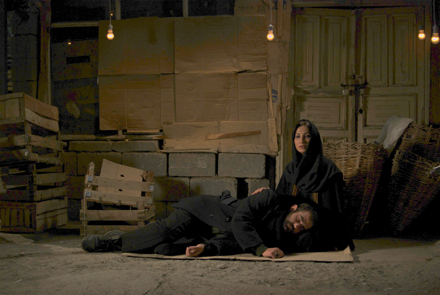
PICK: MarketaE”A Tale of Trade: Nobody has a cell phone yet, but in the mid-’90s, a hustling street merchant in the Turkish shadow economy realizes there will be fortunes to be made from the device. Only problem is, he has no capital to buy a government license. Then, as if in answer to his prayers at the mosque, this gambling, hard-drinking, rarely-at-home husband and father receives a windfall. Thieves have stolen a supply of medicine needed by the local hospital, which hands Mihram (the sly, soulful TayanA§ Ayaydin) a wad of cash to drive to Azerbaijan for the medicine and smuggle it back home. So: Here’s a chance for the small-time hustler to do good, to turn over a new leaf. Or he could misuse the money for his cell-phone scheme. Or, and this is where The Market becomes morally compelling, he could try to do both. Aided by a woeful old uncle in Azerbaijan, Mihram barters his stake, fools border guards, and humiliates a gangster in a high-stakes card game. Then he, the consummate haggler, marches into a medical clinic like a gunslinger. There’s always a price, he tells his uncle. But in this parable of globalization, where petty smugglers are connected to international markets, Mihram ultimately discovers that he has his price, too. And it’s being set far above his head. (NR) BRIAN MILLER Also: 7 p.m. Tues., June 9.

The Red Race: This is the best sports documentary to play SIFF since The Heart of the Game, one of the best IaE™ve seen in a decade. Granted unbelievable access by a Shanghai gymnastics academy (which likely thought the doc would boost its reputation), director Gan Chao follows several young children through their grueling workouts, schooling, and home life. WeaE™ve read about the fishy birth certificates China used for its gymnasts at the last Olympics, but what we see here is an intensely competitive and unforgiving feeder system that molds medal winners at a very young age. Their parents are poor, peasants displaced from the countryside, and their families arenaE™t always intact. Making each selection at the academy, scoring well in meets, and then possibly reaching the national team is a matter of economic advancement not just for the tiny athletes, but for their kin, too. For this reason, we can understand why so few of them cry or complain about the incessant work and stern coaches. One of whom scolds a kid, aEœIs crying useful? Can you win first place by crying?aE Yet these coaches arenaE™t monsters, and the academy isnaE™t exactly child abuse. Everyone knows the stakes involved, even the children (or they soon learn). There is a single, static shot in this movie, perhaps 60 seconds long, that contains more drama than anything IaE™ve seen on film this year: Two girls, aged about eight, in a contest to see who can hang longest from a bar. ItaE™s excruciating to watch, becauseaE”as both girls knowaE”the one who releases her grip first may drop farther than the floor. (NR) REVIEW BY BRIAN MILLER SIFF Cinema: 7 p.m., Mon. June 8 (Also: 4:30 p.m. Thurs., June 11.)

PICK: The One-Handed Trick: Like a cross between Ratso Rizzo in Midnight Cowboy and Christy Brown in My Left Foot, Cuajo (slang for tadpole) is a scrawny, touchy gimp who won’t let disability stand in the way of his dreams. In a poor section of Barcelona, he wants to be a rapper, to build his own recording studio where he and his best friend Adolfo can make music, never mind that he has cerebral palsy. Bathing and walking are a struggle, yet perhaps for this reason he’s the most enterprising hustler in the ‘hood. While most others around him, including Adolfo, struggle with drugs, Cuajo is ceaselessly working. The movie has all the same urgency, speeding through its simple, familiar story with convincing detail. This is the new polyglot Europe, where Arabs and African immigrants (including Adolfo’s father) live cramped together in public housing. A slo-mo wedding scene combines traditional Catalan dancing and hip-hop. Yet even as our two heroes seem on the verge of success, their families are mired in the old culture of despair. Failure and anger spread as if by virus from one generation to the next, giving the film a bleak, realistic tone. As Cuajo, rapper Juan Manuel El Langui Montillo gives a fierce, unsentimental performance. Confidently firing rapid-fire rhymes into the microphone, he’s utterly his own man, one who doesn’t need anyone else’s help or pity. (NR) BRIAN MILLER Also: SIFF Cinema, 1:30 p.m. Sat., June 13.