The Muslims Are Coming!
Runs Fri., Sept. 13–Thurs., Sept. 19 at Grand Illusion. Not rated. 85 minutes.
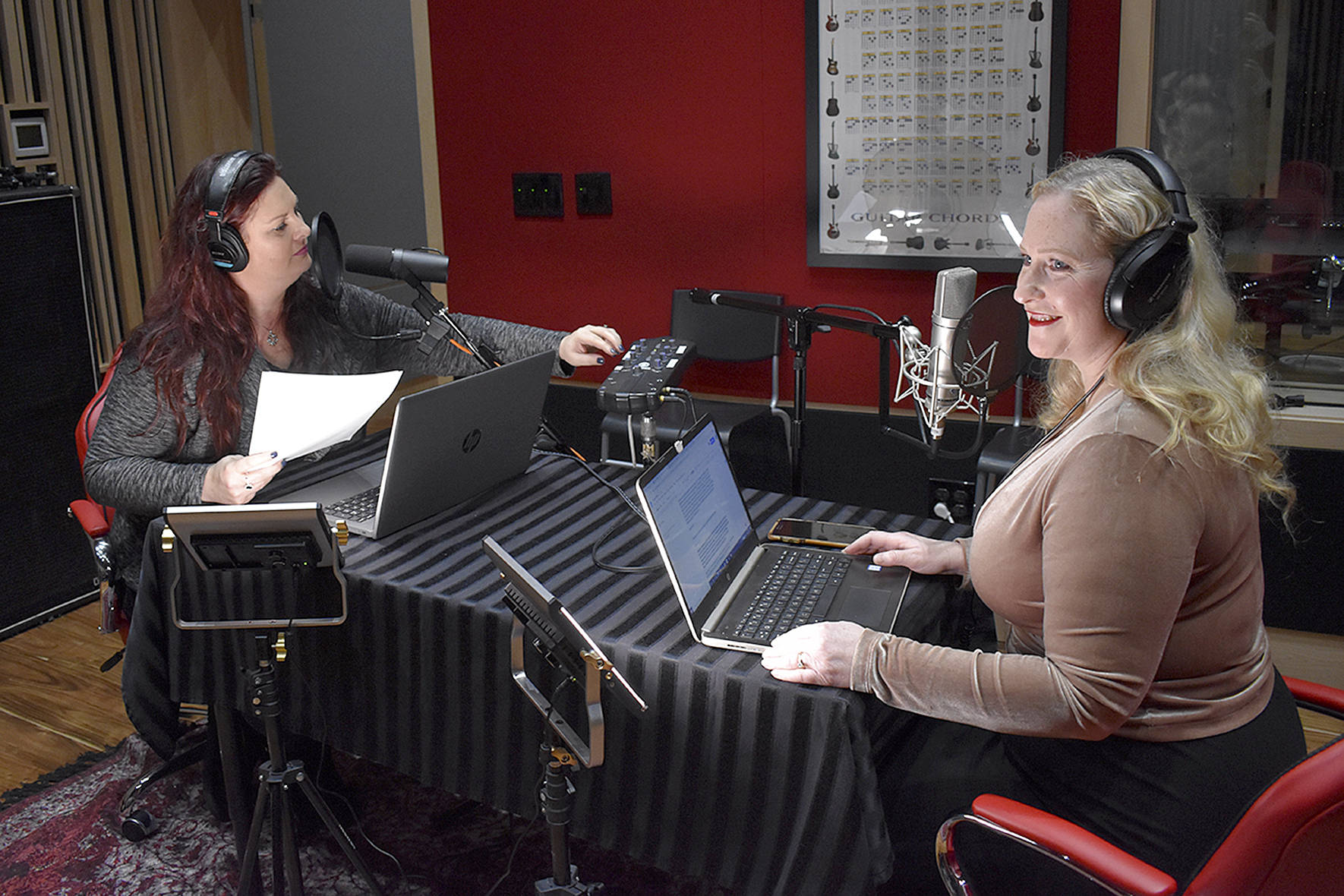
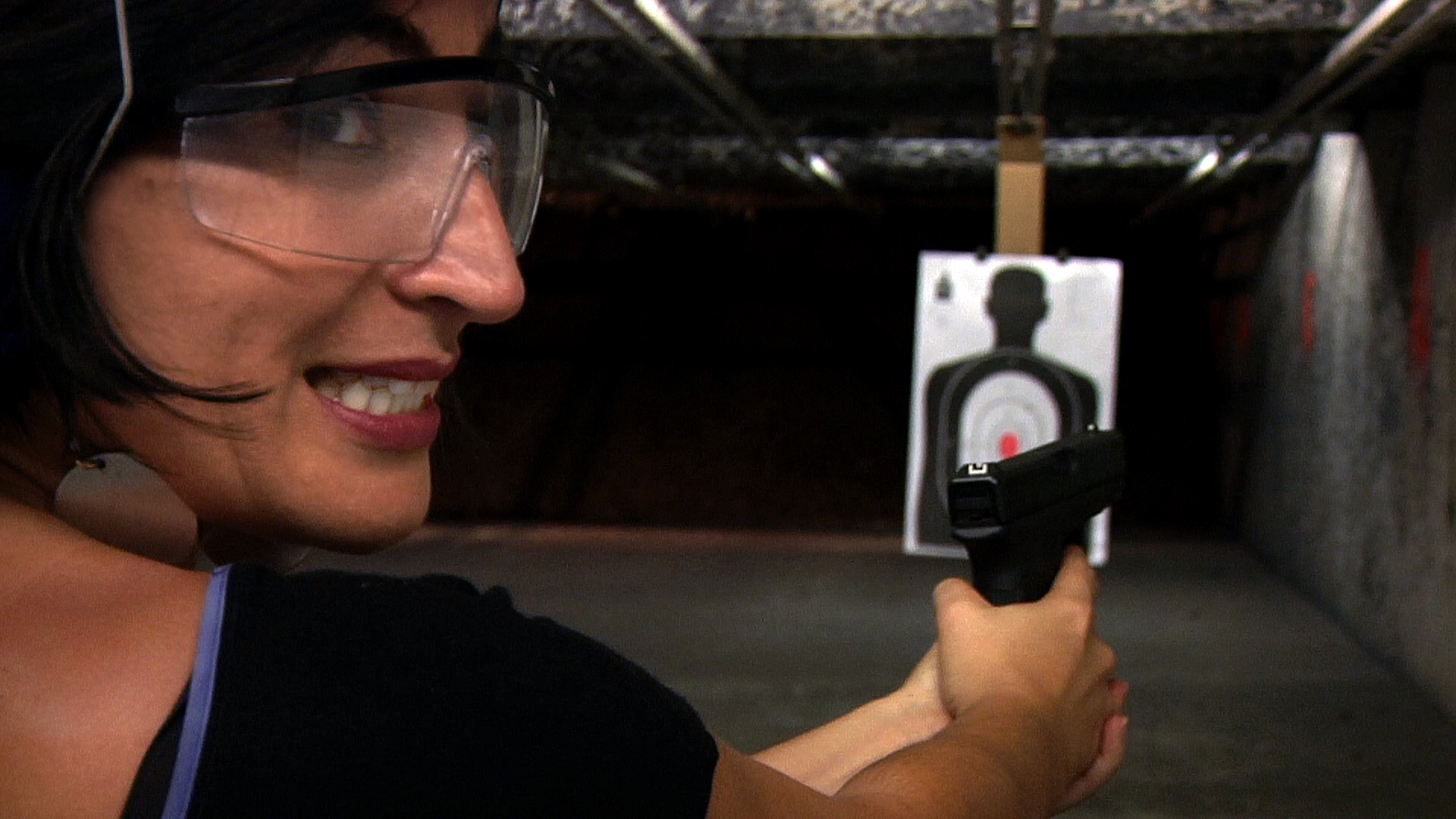
Interviewed in a laundromat, David Cross says he usually avoids identity-themed comedy nights—an evening of gay comics, black comics, Ukrainian comics, etc. Yet he and several other boldface names—including Janeane Garofalo, Colin Quinn, Lewis Black, and Aasif Mandvi—gladly lend their comments to this scrappy little documentary. Because, really, what could be harder than telling jokes onstage after 9/11 when you specifically identify yourself as Muslim-American? Yet two such comics, Negin Farsad and Dean Obeidallah, do just that; and they gathered a half-dozen of their cohort to tour the red states, offering free tickets to their shows. Somewhat padded with interviews (Jon Stewart, Rachel Maddow, etc.), this doc follows their tour and gently attempts to rebut anti-Muslim stereotypes.
It’s all very admirable, but you may find yourself nodding in agreement more than doubled with laughter. With her bright lipstick and plunging decolletage, the L.A.-raised Farsad mocks her mother’s obdurate Persian ways like Margaret Cho. Polite white Southern audiences react better to her familiar family complaints than her I-am-not-a-slut tales from the barroom. The smoother Obeidallah, a New Yorker from an interfaith marriage, uses his generic appearance to sly advantage. (You could see him doing guest shots on a sitcom, playing a programmer from some indeterminate country.) In one bit, when told “You don’t look like a Muslim,” he responds, “Good! That means our secret plot is going according to plan! Bwah-ha-ha . . . ” Most of their peers also joke about prejudice, but with care not to sound angry. It’s like they’re at the 1960s Bill Cosby stage of black humor: Make your point, but from behind a smile, and don’t make anyone too uncomfortable.
Likewise, the filmmakers are generous with the locals they meet, letting only one shop owner’s racism speak for itself. Their best bits are like Daily Show remote segments, as when they set up a sidewalk “Hug a Muslim” booth in downtown Salt Lake City. The funny part is that the Mormon hugs are entirely sincere. Their jokes might land better in Williamsburg or Silver Lake, but the human connection is what counts here. (Note: Directors Farsad and Obeidallah will attend Friday’s screenings.) Brian Miller
POur Children
Runs Fri., Sept. 13–Thurs., Sept. 19 at Sundance Cinemas. Not rated. 111 minutes.
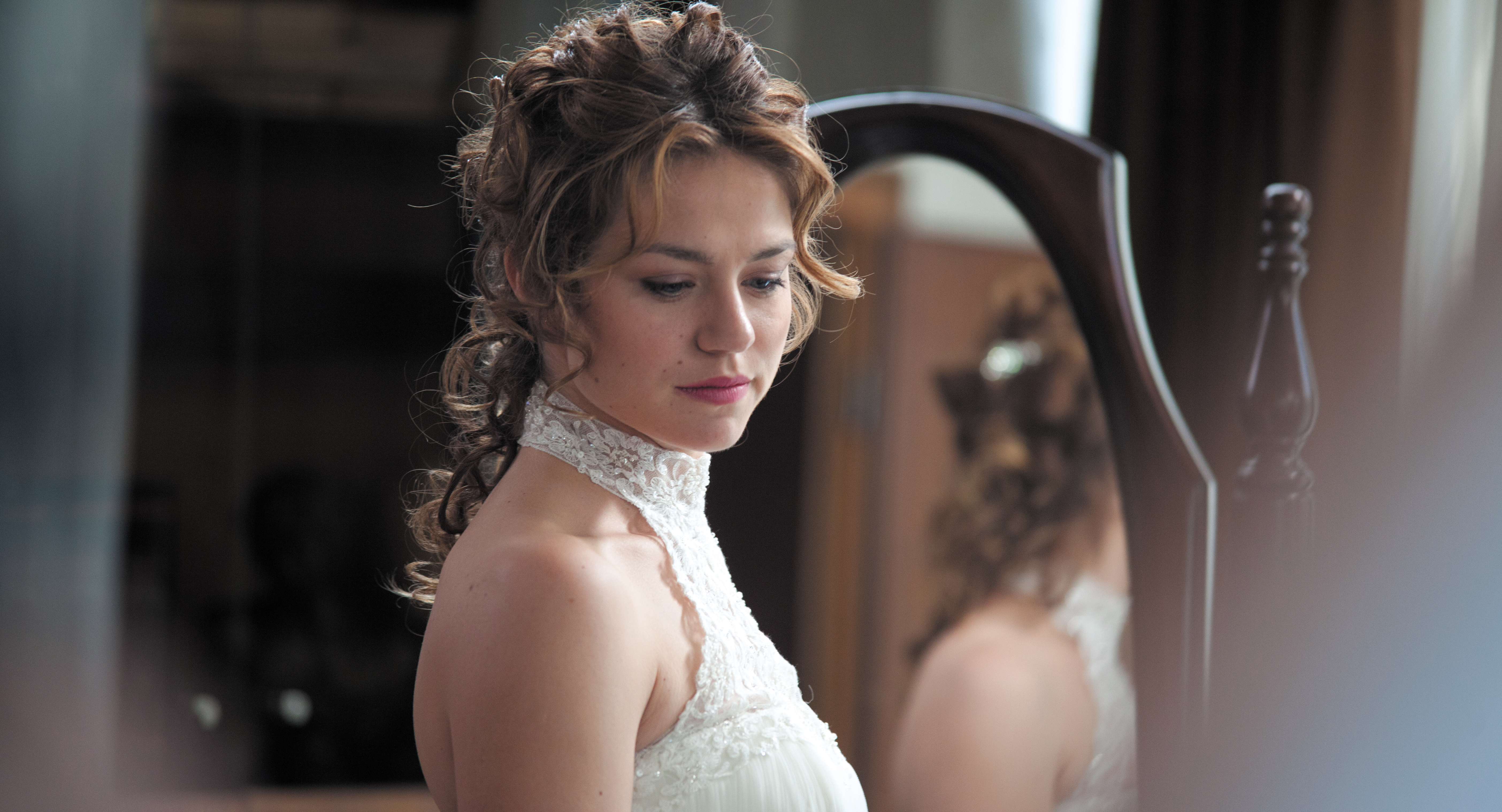
This film’s original French title signals madness; even with the generic relabeling, its very first scenes indicate an unhappy outcome. Directed with a cool, almost voyeuristic lack of judgment by Joachim Lafosse, Our Children is based on a shocking 2007 crime in Belgium that also became tabloid fodder for its peculiar family dynamics. Yet, skipping past the film’s intro, nothing seems amiss when vivacious schoolteacher Murielle (Emilie Dequenne) falls in love with handsome Mounir (Tahar Rahim), a Moroccan who lives with his adoptive father, Dr. Pinget (Niels Arestrup). Mounir seems to have washed out of med school and works as the doctor’s receptionist. He depends entirely on his patron; but what Pinget gets in return for his largesse remains opaque. Only later in the film do we learn that Pinget entered into a sham marriage to bring Mounir’s sister to Belgium; otherwise he has no women in his life, and Lafosse never tips his sexuality.
Murielle proves quite fertile, and Mounir puts little thought into birth control. Three kids are a struggle, and the fourth forces Murielle to quit teaching and become a housewife. Even with their large family living under Pinget’s roof, dependent on his subsidies and gifts, they can barely make ends meet. Would it be cheaper, Murielle asks, to live in Morocco? It’s significant that the suggestion comes from her, not the seemingly secular Mounir. Yet Pinget is the one who explodes in anger. It’s not just his attachment to Mounir, but the entire clan’s dependency serves as a strange kind of validation. This king can’t let his vassals leave—else his power be revealed as symbolic, not ordained.
Arestrup and Rahim previously played master and pupil in the 2009 French jailhouse drama A Prophet; and here the younger man again seems in thrall to his benefactor. In the prior film, Arestrup gave explicit lessons on how to prosper in prison, how the system could be gamed. In the creepily clinical Our Children, the scam is outside the walls yet still hidden. Pinget eventually arranges another “paper marriage” between Mounir’s brother and Murielle’s sister. The whole thing reeks of incest—or, in a more French reading, colonialism, with Pinget arranging the intimate affairs of those he governs.
Murielle, disastrously, discovers she has married two men: the puppet and his master. Overburdened and depressed, she becomes like the heroine of Rosemary’s Baby: lost in her marriage, a woman increasingly subservient and instrumental to male wishes. Dequenne, who burst into world cinema in the Dardenne brothers’ 1999 Rosetta, palpably crumbles under the strain. Is Murielle a monster or the true victim of the piece? Our Children is all the more disturbing because such ambiguity is never resolved. Brian Miller
Paradise: Faith
Runs Fri., Sept. 13–Thurs., Sept. 19 at SIFF Cinema Uptown. Not rated. 120 minutes.
The opening shot of Ulrich Seidl’s Paradise: Faith is both a character sketch and a warning. A woman enters a spartan room, partially disrobes, and kneels before the crucifix on the wall. She then whips herself across the back with a crude cat-o-nine-tails. At length. That’s the warning part: Seidl is serving notice that Paradise: Faith will be a test of endurance and not for the faint of heart. (The movie’s the middle installment of Seidl’s Paradise trilogy, bracketed by Paradise: Love—seen here in June—and Paradise: Hope; they are slightly but not significantly related.)
The woman is Anna Maria, played by the extremely brave Maria Hofstatter. After our startling opening glimpse, we see her as a neatly coiffed medical technician, beginning a staycation during which she’ll trudge though Vienna neighborhoods carrying a statue of the Virgin Mary and buttonholing strangers about joining the ranks of her extreme Catholic sect. Seidl frames her world as perfectly symmetrical, an order upset when her husband (Nabil Saleh) returns after a couple of years away. He is Muslim and also paraplegic, and his resumption of marital place upsets Anna Maria’s tightly wound existence. The movie whipsaws between unpleasant domestic scenes and unpleasant missionary doorbelling, with the occasional break for Anna Maria’s ecstatic and occasionally blasphemous worshiping of her Savior.
This is one of those movies that inspire concern for the actors onscreen. From the very first moments, I was worried about Hofstatter’s well-being (that cat-o-nine-tails must be fake—er, right?), and some of her punishingly long scenes with other actors are the stuff of welts and bruises, to say nothing of nightmares. In a different kind of movie—maybe one in which some measure of sympathy was afforded the characters—Seidl’s unblinking depictions of brutality might lead us into a deeper understanding of this world and whatever issues have led these people to such extremes. Or maybe to some wildly imaginative fable-like zone, as in Lars von Trier’s Breaking the Waves, to name another movie that mashes up faith and punishment. But in Paradise: Faith, the insights get muddied in the nail-on-the-head cruelty—it’s an interesting film to think about, but grueling to sit through. Robert Horton
PRising From Ashes
Opens Fri., Sept. 13 at Seven Gables. Not rated. 80 minutes.
Now that the disgrace of Lance Armstrong is past and the yellow wristbands have come off, we need a new cycling cause to support, a different team jersey to wear on weekend rides. In place of the old Livestrong colors, let me suggest the handsome blue, green, and yellow of Team Rwanda. (You can buy one at teamrwandacycling.org.) Produced and narrated by Forest Whitaker, this powerful documentary unfolds over six years from the time when mountain-bike industry pioneer Tom Ritchey first visited Rwanda. A dozen years had passed since the Hutus’ 1994 genocide against the minority Tutsi, and the country was still in a fragile rebuilding stage. Bicycles, used mainly for transport, were also being raced; and Ritchey brought along his friend and former pro racer Jock Boyer. An 18-year-old trounced the middle-aged pair—and everyone else—in one such race; from that, the idea of a national team was hatched. His life back home a shambles, Boyer stayed behind to coach the squad.
Rising From Ashes is vague about the team’s financial backing. (Faith groups helped support both the team and the documentary—from which all proceeds are promised to Team Rwanda.) It also interpolates Boyer’s redemption, from an underage sex-offense conviction and jail time, rather more than needed. The bigger story is that of Rwanda’s post-colonial history, and there are searing images from the ’94 slaughter. Then a child, Adrien Niyonshuti lost six of his brothers, he says, and 60 members of his mother’s clan. He’s the teenager who would beat Boyer and Ritchey, and as the team’s most talented member, he becomes the focus of Rising From Ashes
Frankly striving for uplift and inspiration, T.C. Johnstone’s film isn’t always subtle, but what’s subtle about genocide? Niyonshuti and his Tutsi teammates don’t talk much about healing (that peculiar Western notion), and they evidently have to be coaxed into recalling the painful past. (The Hutus on the team aren’t pressed on such matters.) What they do best, of course, is ride, and Rising From Ashes is immersed in the particulars of cycling. The team first trains on old hand-me-down bikes through the gorgeous Rwandan countryside; then Boyer adds stern professionalism, takes them to South Africa and the U.S. to race, raises their horizons, and introduces them to the appreciative media. (The New Yorker’s Philip Gourevitch, who knows a thing or two about Rwanda, has profiled the team.) Financial support and new gear follow, leading Niyonshuti to marvel of a new rig, “The first time I rode a bike when you use the brakes, [and] it stops.”
Johnstone’s doc goes all the way through the London Olympics last summer. I won’t give away the results, but after being misled in so many recent Tours de France, everyone here emerges a winner. Brian Miller
PTouchy Feely
Opens Fri., Sept. 13 at Harvard Exit. Rated R. 90 minutes.
What compelling mysteries might be quietly thrumming inside the world of the dentist’s office? It is characteristic of the wistful, daydreamy universe of Lynn Shelton’s films that this unlikely question (has anyone outside the dental profession ever asked it?) makes up part of her latest project. Touchy Feely is the stubbornly—and, I think, wonderfully—low-key follow-up to Humpday and Your Sister’s Sister, the partly improvised comedies that put Shelton on the indie-movie map. This new one is again shot in Seattle, Shelton’s hometown. Two siblings experience unexplained eruptions in their professional skills: Massage therapist Abby (Rosemarie DeWitt, from Your Sister’s Sister) is suddenly repulsed by the touch of human skin, and dentist Paul (Josh Pais) develops magical healing powers that can cure his patients’ jaw problems.
These phenomena are suspiciously related to the everyday issues afflicting the two, as Abby has been dawdling over an invitation to move in with her boyfriend Jesse (Scoot McNairy), and Paul has passively allowed his practice to dwindle because of his super-awkward manner. Meanwhile, Paul’s college-age daughter Jenny (Ellen Page) is trapped in her job as a dental assistant, and carries around an unrequited crush on someone who probably won’t return the feeling.
Except for the magical-realist touches, this story does not break new ground, and its resolutions are not surprising. But in the film’s exactly observed living rooms and offices, something human is going on, in a way too many movies don’t get. Maybe this film is about the need to see people in a new way, which also describes Shelton’s deep-tissue work with actors. For instance, veteran character actor Pais has dozens of movie and TV credits, yet this is a breakout role for him (if the word “breakout” applies to a movie this languid). And Page, easily typed as a brittle comic performer after Juno, has never been more vulnerable and touching.
If Touchy Feely were a European film and had subtitles, it would probably get better reviews; it has audience-friendly moments, but mostly this is about mood and place. And speaking of place, Shelton’s filming in Pugetopolis is never pictorial, but always sunk into authentically lived-in locations. You’ve been to this dentist’s office before, though you might never have suspected what went on there. (Note: Shelton and actor/musician Tomo Nakayama will appear at the Friday- and Saturday-evening screenings.) Robert Horton
E
film@seattleweekly.com
Dequenne’s Murielle marries more men than she realizes.Fabrizio Maltesse/Versus Prods.