

PThe Hunt
Opens Fri., Aug. 16 at Guild 45th. Rated R. 111 minutes.
Mads Mikkelsen plays a serial killer on TV’s Hannibal, but in Thomas Vinterberg’s study of rumors and self-righteous hysteria in a Danish village, he’s a compassionate preschool teacher who falls under wrongful suspicion of child sexual abuse. Adorable little Klara (Annika Wedderkopp) lives under a cloud of anxiety at home, where the verbal scuffles of a troubled marriage makes her shrink in dread. Mikkelsen’s Lucas, a trusted friend of the family, is the most stable and comforting adult in her life, and she clings to him like a lifeline.
When Klara pours out a confused but alarming string of inappropriate phrases she heard spoken by teenage boys, mixed with misguided anger toward Lucas, alarm bells go off. The police investigation is leaked to the public before it’s even begun, then suspicion about Lucas spreads like a virus through the community. Everyone assumes he’s guilty.
Vinterberg works in the same key of personal transgression and raw, inchoate emotion that made his 1998 The Celebration so effective. Onetime friends suddenly treat Lucas like a convicted war criminal somehow free on a technicality; it’s open season for vigilantism without consequences. That a community of hunters should treat Lucas as their prey is a powerful metaphor, even if the portrait of official conduct is well short of realism. (The citizenry, school, and government all seem bound in a malign knot of indifference or gross negligence.) I can’t help reflecting on the far more ambiguous and complicated reality of Andrew Jarecki’s 2003 documentary Capturing the Friedmans, which appears to be a direct influence on Vinterberg and his co-writer, Tobias Lindholm.
But those are quibbles compared to the heat, rage, and fear of the main performances. The gentleness in Lucas hardens under abuse, burns with the helpless fury of betrayal, and slips into a kind of martyred masochism. Meanwhile, his furiously loyal son (Lasse Fogelstrøm) feels like the world has turned on his father. And even as the town is torn apart, Vinterberg never forgets Klara. The adults won’t explain a thing, but she figures out it’s her fault. Wedderkopp’s nervous slide from sunny affection to anxiety, dread, and guilt are as piercing and honest as anything created by Mikkelsen. Vinterberg traffics in primal emotions. Nobody is left untouched here, least of all the audience. Sean Axmaker
PPersistence of Vision
Runs Fri., Aug. 16–Thurs., Aug. 22 at Grand Illusion. Not rated. 83 minutes.
Don’t make a masterpiece. Or at least don’t set out to make a masterpiece. That’s one of the lessons of this compulsively watchable documentary about celebrated animator Richard Williams and how he never finished his designated magnum opus.
Williams is a Canadian, now 80, who ran a profitable animation studio in London for decades. Expert at turning out brilliant short films and TV commercials, Williams began on his real work—the labor of love that all the other stuff was paying for—in the early ’60s. His original concept for the feature involved tales of the folkloric Middle Eastern character Nasrudin; and although the concept veered away from that character, the colorful Arabian Nights theme persisted throughout the decades. Yes, decades: The project lost backers, missed deadlines, underwent rewrites, and outlived some of its original animators. Williams dawdled so long that he was forced to endure the success of Disney’s 1992 Aladdin, which bore a suspicious resemblance to his own work-in-progress. At one point in the process, Williams won two Oscars for his boundary-pushing work on Who Framed Roger Rabbit and snagged big-studio backing for his masterpiece, now titled The Thief and the Cobbler. And this is where it becomes clear that money wasn’t the main issue with completing the picture—Williams was.
Persistence director Kevin Schreck assembles a big group of Williams’ former employees to weigh in on the heartbreaking arc of this project. He does not, however, have Williams himself—the animator refuses to discuss The Thief and the Cobbler these days—but we hear a lot from Williams anyway, thanks to sizable clips of him talking about the film in various phases of its development. He isn’t shy about the word “masterpiece,” nor about wondering what Rembrandt would do in his position. Williams emerges as a recognizable cracked-genius stereotype: exacting in his methods, specific in his vision, and rough on subordinates who don’t see working 80 hours a week as normal. The completed segments of his dream film show astonishing, hallucinatory images, but his associates acknowledge that Williams never really had the overall storyline plotted out, even after he’d spent millions of dollars on it.
Stories about doomed crusades have a built-in appeal, especially when there’s a grand, visionary angle. Persistence of Vision has all that, and even if you know how the train wreck is going to end, the spectacle is hard to resist. ROBERT HORTON
The Pirogue
Runs Fri., Aug. 16–Thurs., Aug. 22 at Northwest Film Forum. Not rated. 87 minutes.
Where’s Matt Damon when you need him? So soon after Elysium, in which poor, desperate migrants risk their lives to reach the prosperous shore (well, space station), we have two films this week on the same subject. Here, a Senegalese fisherman pilots his boat (or pirogue) full of fellow asylum-seekers toward the Canary Islands. In Terraferma (see below), still more impoverished Africans are washing onto the beach of a Sicilian island. During SIFF over the past decade, we’ve seen several similar movies from France, Holland, England, even Switzerland, yet American filmmakers rarely consider our own southern border. (Maria Full of Grace and A Better Life are two recent notable exceptions.) Inside Fortress Europe and across the Mediterranean, artists are more willing than governments to consider the cost of maintaining barriers against the relentless tide of refugees.
Director Moussa Toure begins his compact, affecting drama at a raucous wrestling match full of folk rituals and religious blessings. It’s an exuberant scene with the athletes in traditional costumes, invested with centuries of animist meaning. Yet the spectators mostly wear Western clothing, and some have eyes glued to their cellphones. Among them is Baye Laye (Souleymane Seye Ndiaye), who’s being pressured by a smuggler to sail a small boat seven days north to the Canary Islands, controlled by Spain, which might grant his clients refugee status. With a wife and son to support, Baye Laye is eventually persuaded; his layabout brother, a would-be musician, joins the other 30 aboard the open-topped pirogue.
As Baye Laye sets his fee, selects his crew, and says goodbye to his family (possibly for years), The Pirogue takes on the aspect of an old Western. Here is the stoic leader of the wagon train, full of optimistic migrants, trying to maintain order despite various secrets, lies, and factions among the voyagers. Baye Laye has a GPS in his pocket and two outboard engines for power, but equally important are the talismans and fetishes adorning the boat and its passengers (one even has a lucky chicken whose fate you can guess). This is very much a voyage of faith, and some confusing flashbacks among the passengers play like ecstatic visions. They’re caught between realms in an unforgiving purgatory, and none of them can swim. Brian Miller
Prince Avalanche
Opens Fri., Aug. 16 at Varsity. Rated R. 94 minutes.
What makes Prince Avalanche a summer movie? Maybe it’s the aimlessness of its wandering story line, even more than the literal backdrop for the thing: two guys on a summer job sprucing up a lonely road in West Texas. A recent fire has burned the surrounding countryside, which gives the setting a pleasant, haven’t-quite-seen-this-before-in-a-movie quality.
The guys are Alvin (Paul Rudd) and Lance (Emile Hirsch), and they really don’t get on. Alvin wears a mustache of self-satisfaction, as befits a man with a secure collection of platitudes and a condescending air to match. Lance is the brother of Alvin’s girlfriend (Seattle’s own Lynn Shelton, heard only on the phone), and Alvin tries manfully to impose his standards of behavior on his younger cohort. They putter along the blasted landscape, painting new yellow lines on the road and arguing about what constitutes mature behavior.
It’s to director David Gordon Green’s credit that the eventual revelation that Alvin’s life is not as together as he’d like to think is treated not as gotcha irony but as a natural piece of confused masculine existence. And even that plot point, though important, is folded into the film’s casual approach—in fact “plot” might be too strong a word to describe the odd, slightly stoned rhythm Green gets going here.
The movie’s set in 1988 and adapted from an Icelandic movie called Either Way (seen at SIFF last year). It’s a good fit for Green, whose recent bro-centric films Pineapple Express and Your Highness were very different in tone from early beauties such as All the Real Girls. Along with some bull’s-eye observations about male posturing, Prince Avalanche summons up a handful of quasi-supernatural moments, as though resisting easy pigeonholing. And the actors are well up to the movie’s oddball challenges: Rudd has always been able to suggest the human presence behind his nonpareil comic talents, and Hirsch, who’s beefed up since wasting away in Into the Wild, contributes a portrait of arrested adolescence without distancing himself from the role.
The striking music is by Explosions in the Sky and Green’s usual composer, David Wingo, another gorgeous plus. If only all these admirably unexpected elements didn’t steer quite so inevitably to a sentimental wind-up. It seems that a premise like this can lead only to the fellows going on a drunken toot and finding their way to mutual understanding. Alas. Despite its soft center, though, Prince Avalanche gets a director back on track and succeeds as a quiet summer doodle. ROBERT HORTON
Sign Painters
Runs Mon., Aug. 19–Thurs., Aug. 22 at Northwest Film Forum. Not rated. 80 minutes.
The more I type, the worse my handwriting gets. And forget about drawing something. Even architects have mostly traded pencil for computer. Yet this new documentary by Faythe Levine and Sam Macon celebrates a pre-digital enclave of the design trade: commercial sign painters. Their handiwork is what you see revealed on a brick wall when an old building is torn down, or at antique markets and yard sales. Yet a few practitioners continue their craft today. “It’s not fine art,” says one (the doc is terrible about identifying its sources). “Be decorative and informative at the same time.”
Once a union trade, we learn, sign painting has eroded to something more like day labor or an artisanal sideline for graphic artists. (We watch one woman hand-painting elegant address numbers on expensive L.A. houses.) Old-timers speak nostalgically about their boar’s-hair brush bristles and the intricacies of hand-lettering back in an era when fonts weren’t carefully copyrighted by Adobe. The drying time of paint is considered, as is the use of a maulstick. Then there’s the lost art of gold leaf (and you thought toner was expensive).
A few younger sign painters claim to have graduated from graffiti, but neither seems a viable career path these days. For better or worse, the cursor has replaced the brush. Most of the graying experts here are too old to be working on their feet all day, outside in the elements. The doc ought to have been screened during NWFF’s ByDesign festival last month, when desk-bound design professionals would’ve marveled at their forebears ability to keep a steady hand while standing on a ladder.
Levine and Macon have also published a companion book that makes it easier to study and appreciate these fading craftsmen and their legacy. And here’s one last bit of professional wisdom, which probably also applies to other fields: “Never use pink without asking the customer first.” (Note: The directors will appear at Monday’s screenings.) Brian Miller
The Spectacular Now
Opens Fri., Aug. 16 at Harvard Exit, Lincoln Square, and Sundance Cinemas. Rated R. 95 minutes.
This adaptation of a 2008 young-adult novel by Tim Tharp plays like one of those cautionary old TV after-school specials. You know—Jenny has an eating disorder, or Jimmy is smoking too much pot, or Jeremy needs to tell someone the gym teacher is touching him in inappropriate places. Here our fatherless teen protagonist is Sutter (Miles Teller), who lives a wildly unsupervised life of partying and blown-off homework. He wakes up on a lawn, unsure where he left the car, which introduces him to smart-girl Aimee (Shailene Woodley, one of Clooney’s kids in The Descendants). They’re total opposites, and The Spectacular Now is the story of their unlikely yet plausible romance.
Oh, and Sutter is plainly an alcoholic, though that term is curiously omitted from The Spectacular Now, because that would be too . . . no, wait a minute, what American family isn’t familiar with that term? And how could college-bound Aimee not be not brainy enough to detect Sutter’s constant drinking? You’re telling me these things aren’t discussed, particularly by his mom (Jennifer Jason Leigh), after her alkie ex abandoned them? Today’s teens, and audiences, are smarter than that.
Still, director James Ponsoldt’s young duo behaves with a likable, naturalistic ease. There are no Hughesian quips or ridiculously hunky/beautiful high-schoolers here. This is suburban Georgia, not The O.C. Ponsoldt had his indie breakthrough with Smashed (whose star, Mary Elizabeth Winstead, shows up as Sutter’s sister). Here again he shows a nice touch with the uncharmed lives of ordinary characters unaware how one misstep could lead to disaster. Both these kids are from families close to slipping out of the middle class, shadowed by the recession. In response to such stresses (absent fathers, etc.), Sutter’s credo is “Live in the now,” while ever-striving Aimee’s goals are to own a horse farm and work for NASA. They’re both living in a bubble, but such is first love.
Reality intrudes in The Spectacular Now’s clunky third act, as a road trip to find Sutter’s father (a fine Kyle Chandler) yields predictable results. The storytelling here surpasses the story (adapted by Michael Weber and Scott Neustadter). Every generation needs its new Say Anything. This isn’t that movie, but it earns points for trying. Brian Miller
Terraferma
Opens Fri., Aug. 16 at Varsity. Rated R. 88 minutes.
The setting is a remote volcanic island off Sicily that looks like a lot of other harshly beautiful locales in Italian neorealist cinema. The family isn’t destitute, but the old fishing trade is dying, and they could make more money renting their house to summer tourists, then move to shore. And the 20-year-old son, Filippo (Filippo Pucillo), has no prospects and little education—he can’t even speak proper Italian without a dialect, his widowed mother (Donatella Finocchiaro) frets. These people in the southernmost outpost of Europe are lagging far behind the affluent north; yet their island is a gateway for boats full of migrants who have it even worse in Africa.
Out fishing with his stubborn, leonine grandfather (Mimmo Cuticchio), Filippo spots a stranded raft. Before the coast guard arrives, they’ve impulsively rescued a few swimmers. The men flee on shore, leaving them with a pregnant Ethiopian woman (a non-professional and former refugee billed only as Timnit T.) and her young son. Harboring migrants is illegal, and the local police are unyielding sticklers, so what should they do?
Director Emanuele Crialese previously addressed the immigrant experience in Golden Door, with Sicilian peasants arriving at Ellis Island, there to be confounded by a strange new land. By contrast, Terraferma is confined to the shoreline: One wave of immigrants is arriving at a place where the natives yearn to leave. Crialese leaves the irony implicit, while mostly dwelling on the textures and traditions of the ancient, unforgiving island (actually Lampedusa, closer to Africa than Sicily).
Still, Crialese’s characters never get beyond type, and Pucillo is a woefully broad and callow young actor, given to incessant mugging. Terraferma sketches a drama of situation, if not depth or subtlety. You wish Crialese had developed his topical themes further—or that someone else had done it for him. Filippo and his family get no help from their government, and they naturally feel solidarity with these poor, oppressed newcomers. In a real sense, they’re all in the same boat. Brian Miller
PThe Wall
Runs Fri., Aug. 16–Thurs., Aug. 22 at SIFF Cinema Uptown. Not rated. 108 minutes.
Everybody bumps into an existential block now and again. They just don’t generally experience the literal THUNK encountered by the protagonist of The Wall. The unnamed character, played by Martina Gedeck, wakes up in her friends’ Alpine hunting cabin, only to discover the friends still absent from a hike the previous day. Accompanied by their dog, she walks along a pretty lakeside road and abruptly face-plants into a transparent, all-encompassing force field. She can’t go farther.
Don’t expect a sci-fi explanation for her roadblock. What we have here instead is pure, abject isolation, as Gedeck discovers her enclosed world includes a large swath of nature, a bevy of animals, but no other humans—and no way out. After her initial adjustment, she learns how to manage her food supply, hunt for deer, and shed her fierce I-ness in favor of a newly conscious connection to the world. If that description makes the movie’s theme sound as transparent as the all-encompassing wall, fair enough—but the execution is suitably lyrical. This setup predates Stephen King’s book and TV series Under the Dome by a long chalk: The Wall is adapted from a well-regarded 1963 novel by Austrian writer Marlen Haushofer. That’s the era of The Twilight Zone and The Incredible Shrinking Man, works that bear some resemblance to its single-premise study of how catastrophe might force an awareness of what it really means to be human. On that score, The Wall is absorbing, as Gedeck passes through the changing seasons and stupendously pretty Alpine scenery.
Director Julian Polsler rests the concept on the strapping shoulders of Gedeck, the star of Mostly Martha and The Lives of Others. Completely deglamorized here, Gedeck makes a thoroughly believable transition from awkward egotist to focused deerslayer, albeit one with profound, conflicted musings on her lonely place in the universe. The film has a few strands of dialogue, but mostly we’re in tune with her voice-over narration, which Gedeck speaks in English for this export version (a wise move, given the torrent of words on the soundtrack). The cliche that movie narration is a weakness is nicely rebuked by Gedeck’s voice, and her genuinely thoughtful observations fall as gently as the first snow of the Austrian winter. This sort of movie requires a delicate touch, and Gedeck and Polsler have found it. ROBERT HORTON
E
film@seattleweekly.com

Ndiaye at the helm.ArtMattan Prods.
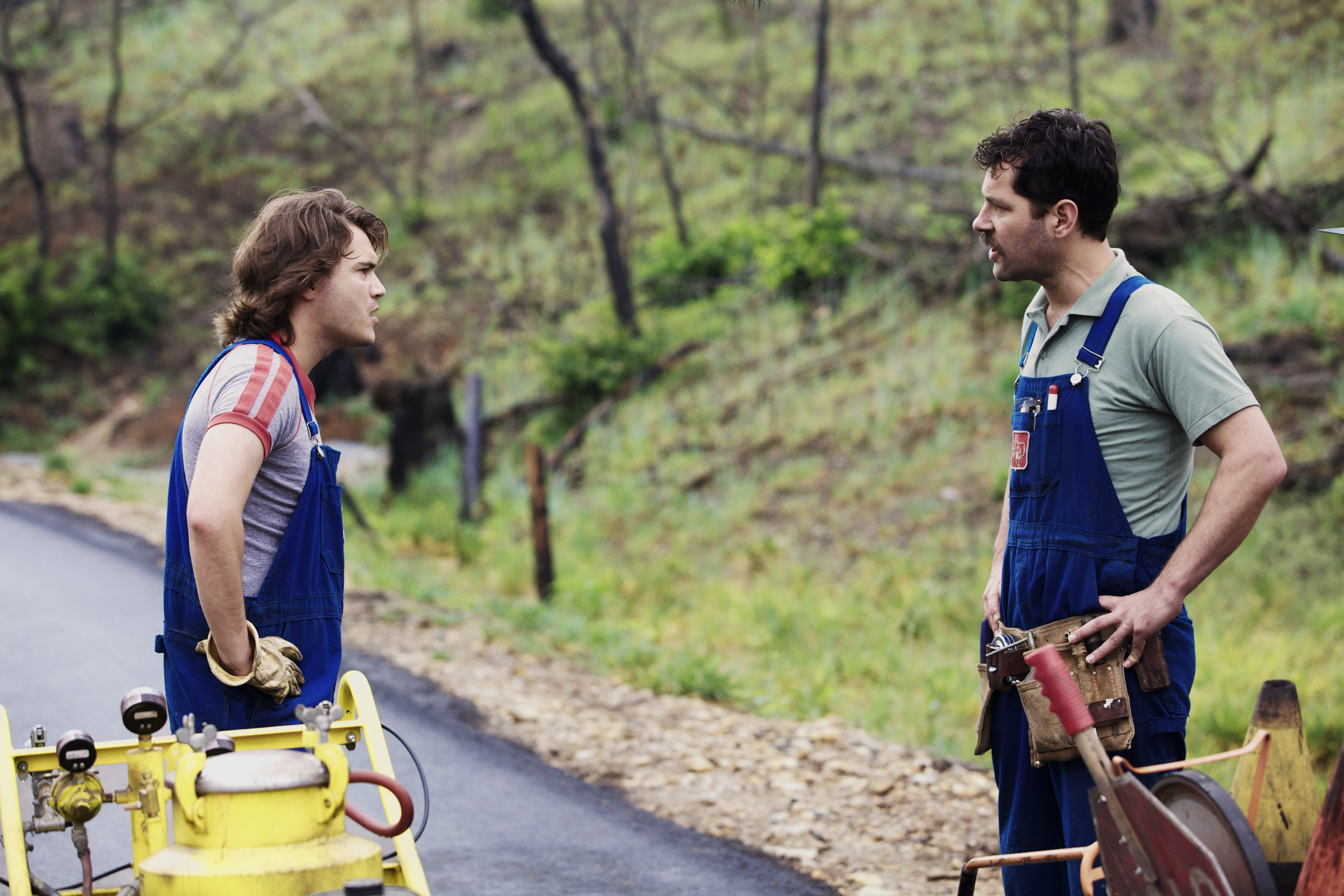
Painting the road again: Hirsch (left) and Rudd.Magnolia Pictures

One of Sign Painters’ unidentified subjects practicing his craft.signpaintermovie.blogspot.com
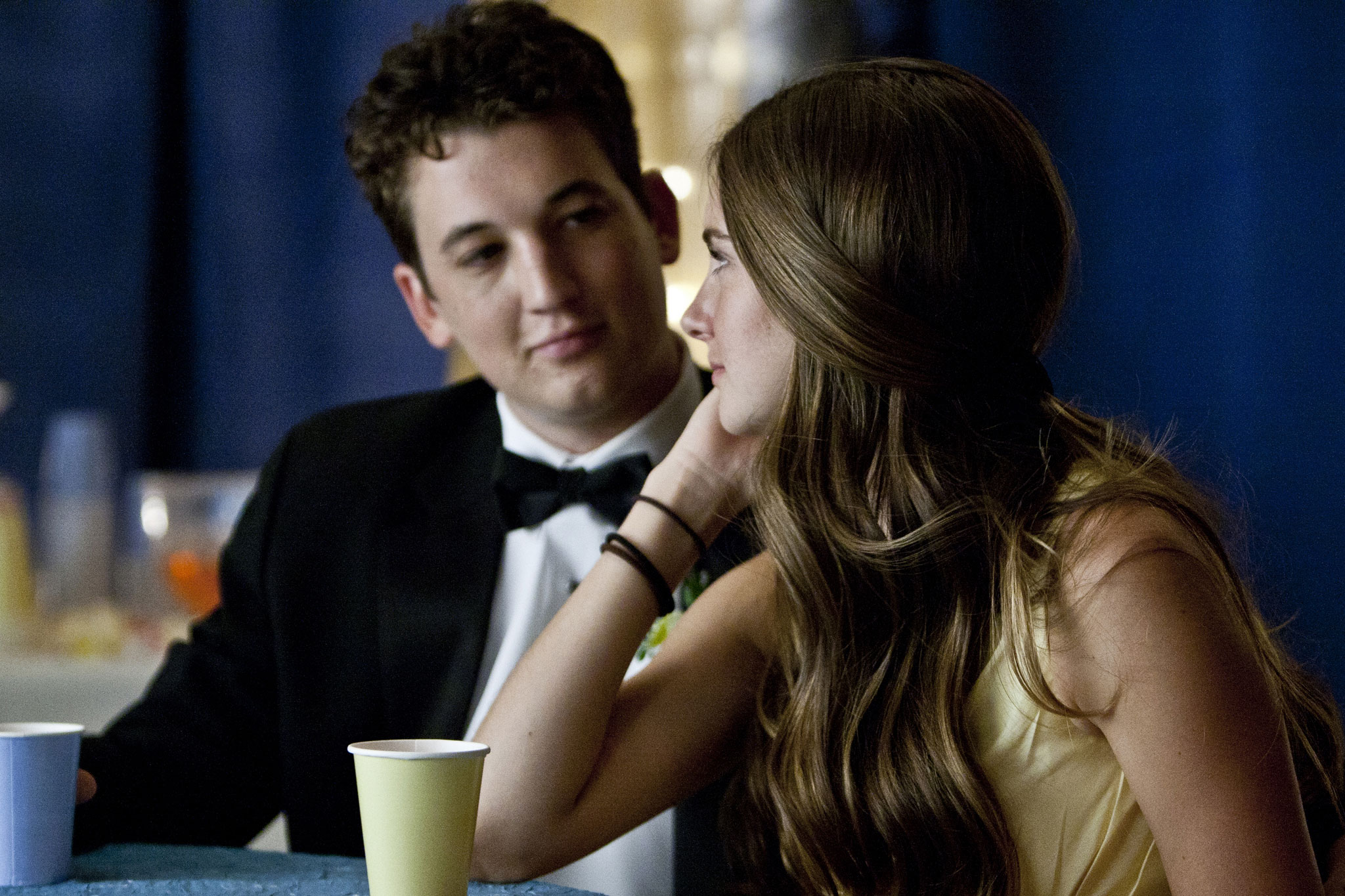
Awkward and authentic: Teller and Woodley.Wilford Harewood/A24 Films
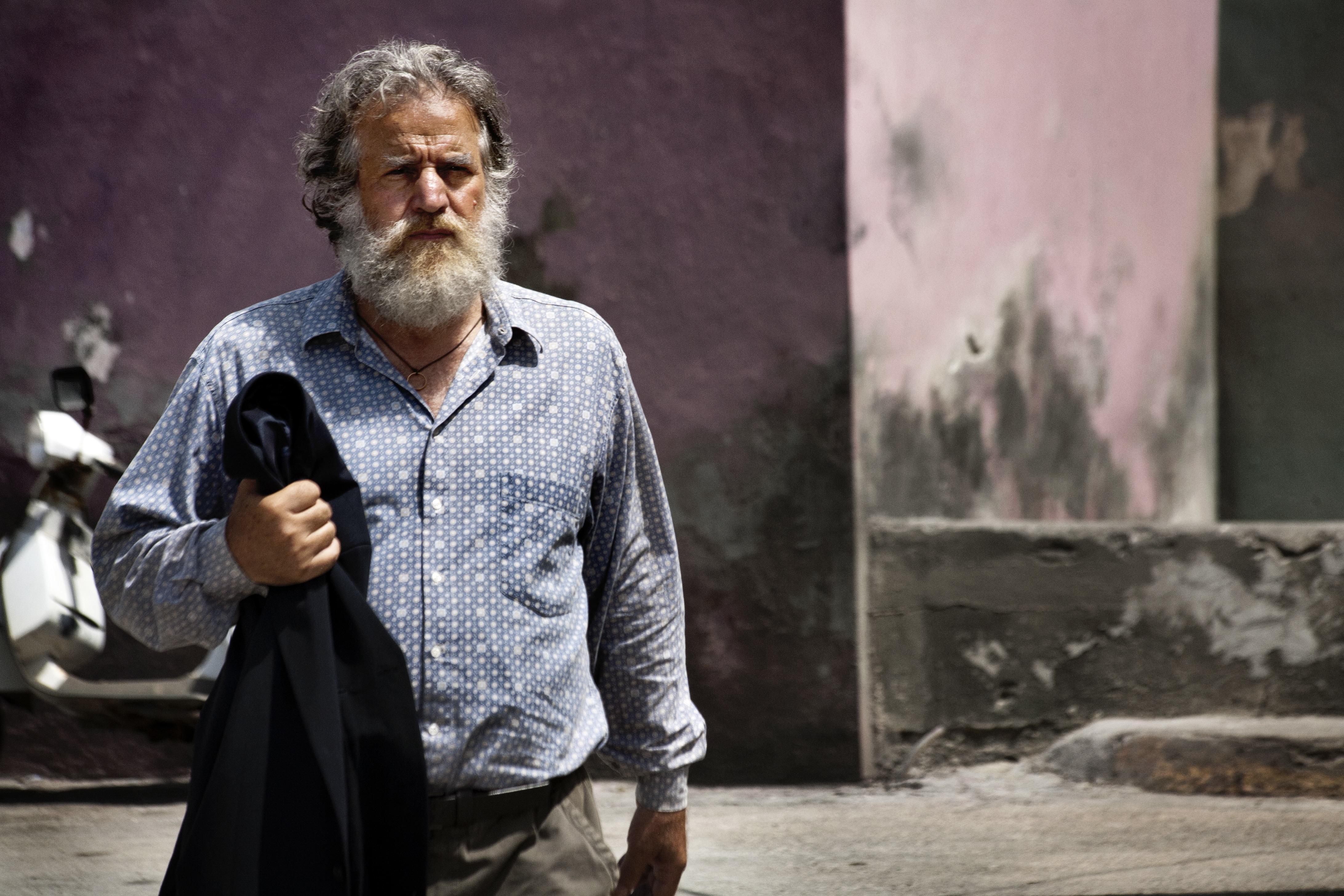
Cuticchio’s fisherman clings to tradition.Cohen Media
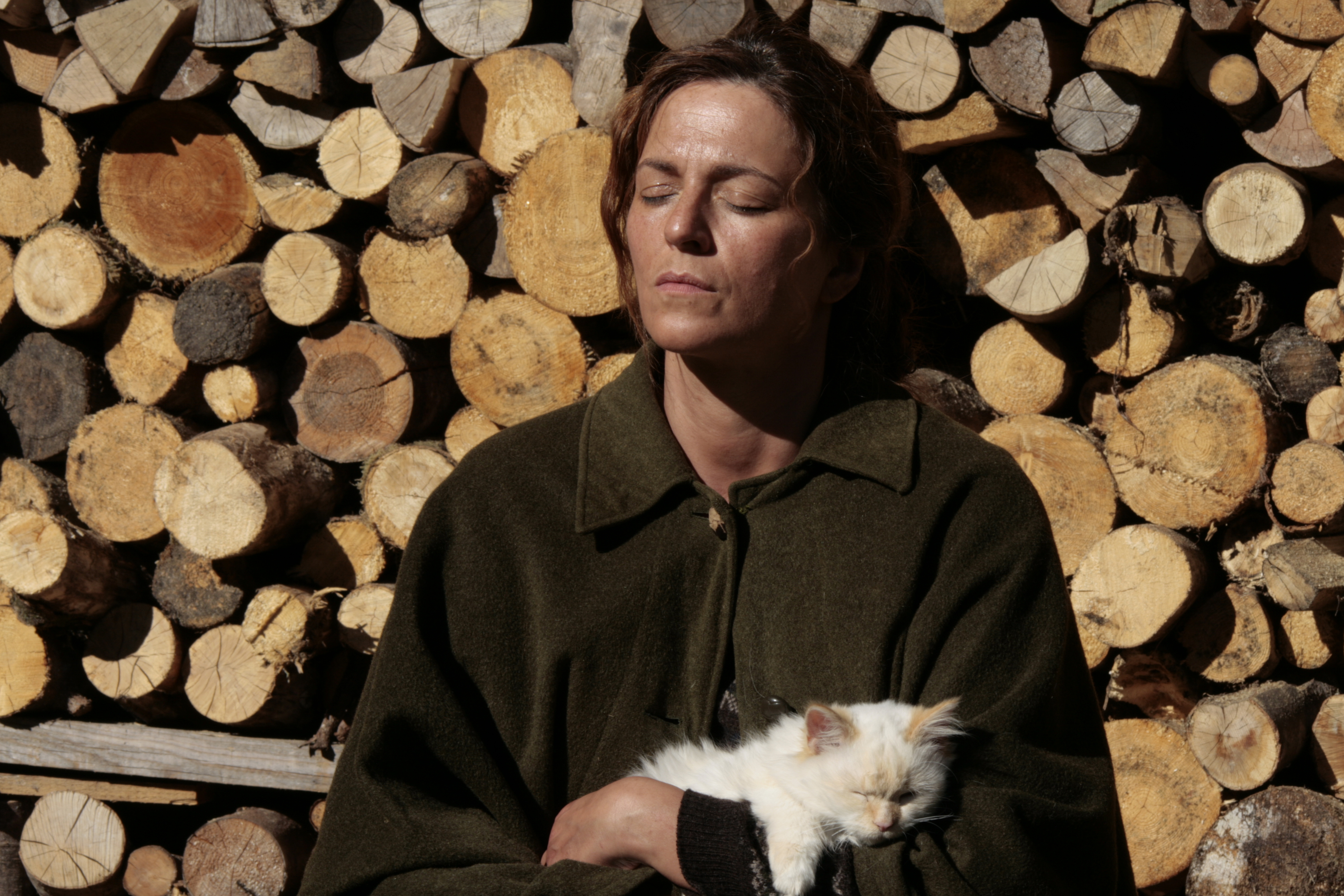
Gedeck’s heroine is trapped in a bubble.Music Box Films