PAugust: Osage County
Erickson Theatre off Broadway, 1524 Harvard Ave., 329-1050, balagantheatre.org. $20–$25. 8 p.m. Thurs.–Sat., 2 p.m. Sun. Ends April 27.
The movies have their thrills and moments of excellence, but only the stage can provide a rapid-descent spelunking into the depths of what drives us all. August: Osage County, which won both the Pulitzer and Tony for best drama in 2008, is that kind of play. Tracy Letts’ text is a surefooted and unblinking examination of the ties that bind and the transgressions that rip people apart. It’s a sad, funny, horrific tale, told with compassion and a ferocious commitment to honesty by Balagan Theatre director Shawn Belyea, with a cast as fine as has ever trod a Seattle stage.
Letts’ basic story is as old as the Greeks. Adult children return home at a time of family crisis, and we learn what they already know—why they love each other, the secrets they’ve kept (or think they have), and the limits of kinship.
In this regional premiere, the Weston clan is led by poet/patriarch/drunk Beverly (Charles Leggett) and his pill-popping wife Violet (Shellie Shulkin), a woman given to flights of semi-lucid fancy. Daughters Barbara (Terri Lazzara), Ivy (Caitlin Frances), and Karen (Kate Jaeger) get along well enough at the outset, but like a high-stakes game of psychosexual Jenga, old insults combine with new injuries until their sisterhood buckles under the strain.
Extended family members Mattie Fae (Lisa Viertel) and her husband Charlie (John Q. Smith) add fuel to the fire with quarrels over their ne’er-do-well son, Little Charlie (David Goldstein). Then there’s Barbara’s estranged husband Bill (Chris Ensweiler), trying to keep up appearances while their daughter (Devynne Gannon) navigates puberty and inappropriate sexual advances through a haze of pot smoke.
All the technical elements are perfectly in sync here, and despite the three-hour run time (with two intermissions), the show remains 95 percent lean. There are laughs aplenty early on, but ultimately August: Osage County takes a heavy toll. Still, if you’re a theatergoer who grows weary of shows that whiz by as little more than pleasant distractions, Letts’ dramedy is an exception to the rule. It’s the best play I have seen in decades, crammed full of staggering moments of surprise and performances that will haunt you for years to come. KEVIN PHINNEY
PSwan Lake
McCaw Hall, 321 Mercer St. (Seattle Center), 441-2424, pnb.org. $28–$173. 7:30 p.m. Thurs.–Fri., 1 & 7:30 p.m. Sat., 1 & 7 p.m. Sun. Ends April 21.
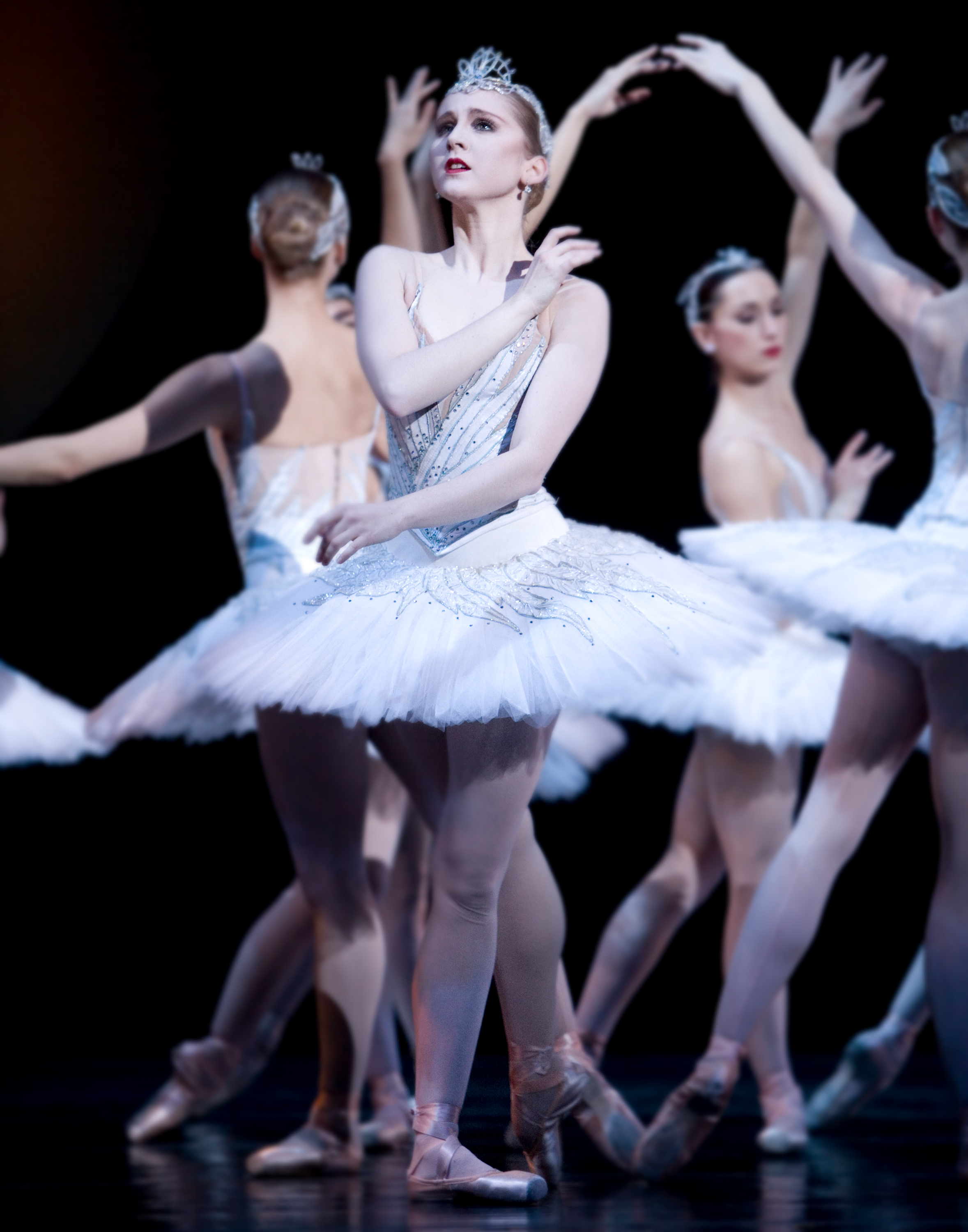
This is the fourth time out for Pacific Northwest Ballet’s current production of Swan Lake. The company premiered this version of the 19th-century classic in 2003 and has been bringing it back since. While some of the design elements, like the symbol-laden tilted walls of the palace, have not really aged well, Kent Stowell’s choreography, based on the Marius Petipa/Lev Ivanov original, remains strong. With this series of performances we get to see multiple casts, with dancers at various career stages returning to this challenging work.
Opening weekend had four couples rotating in the lead roles, alongside 50-plus dancers playing courtiers and servants. Kaori Nakamura, dancing with Seth Orza, and Carla Korbes, partnered by Karel Cruz, are both returning to the double roles of Odette/Odile. After their success in Romeo et Juliette earlier in the season, both women bring similar skills to this classical part. Nakamura zeroes in on the specifics of each moment as the Queen of the Swans, who falls in love with Prince Siegfried but is betrayed when he’s tricked into swearing his love for another. Korbes gave a lovely performance on opening night, but really came into her own at the Sunday matinee—it seemed as if the entire theater held its breath during her time onstage. Her legato sense made the trajectory of the plot appear inevitable. Both ballerinas bring an incredible maturity to their interpretations.
Maria Chapman and Lesley Rausch each debuted as Odette/Odile last weekend, a significant milestone in their careers. Chapman, whose partner Jerome Tisserand was also dancing his first Siegfried, was able to step beyond the part’s considerable technical challenges in several beautiful sequences, especially as the gentle Odette. Rausch danced with Batkhurel Bold, a veteran Siegfried who offered her the best kind of support in their duets. Like Korbes, Rausch has a powerful sense of sustainment in slow passages, and made excellent dramatic use of that skill. All four couples will perform the second weekend, joined by Carrie Imler dancing with former PNB artist Casey Herd.
Let’s not neglect the supporting cast, which is full of riches. In the past, Jonathan Porretta shone as the virtuosic Jester; he’s still just as sharp, but in this run he shares the role with Kyle Davis, Kiyon Gaines, and Benjamin Griffiths. Both Gaines and Ezra Thomson gave first performances as the fussy tutor Wolfgang, and both developed a wide variety of stage business for the tipsy character—now much more distinctive than the usual “companion to the prince” role. Finally, Laura Gilbreath danced the “Persian” solo with incredible aplomb, making a figure that could easily devolve into kitsch into a demigod. SANDRA KURTZ
E
stage@seattleweekly.com