Opening ThisWeek
Flight of the Storks
Runs Fri., Jan. 31–Thurs., Feb. 6 at SIFF Cinema Uptown. Not rated. 180 minutes.
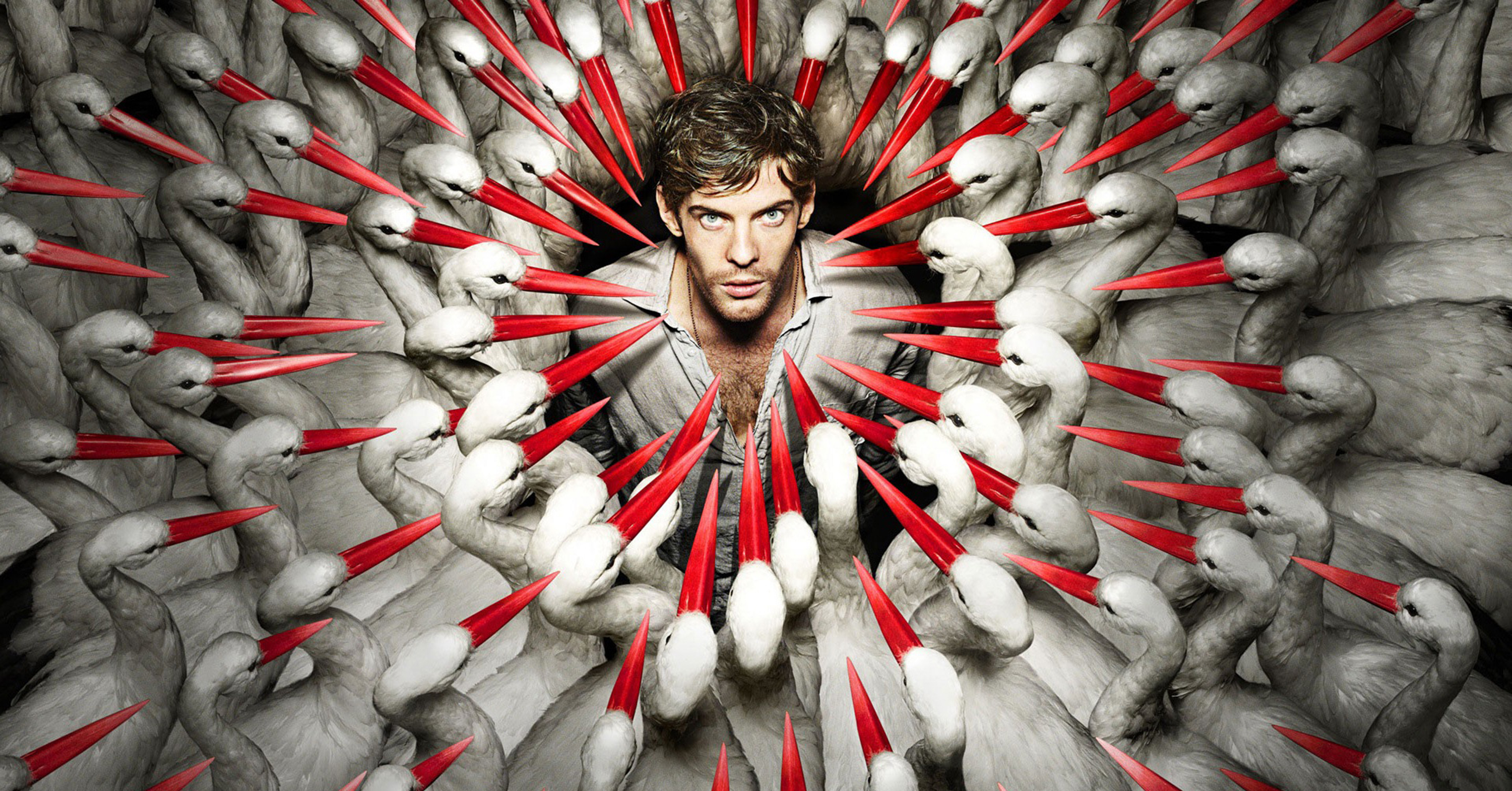
Based on a French crime novel and previously broadcast on TV, this muddled, meandering, pan-European thriller contains loads of familiar elements. We’ve got a confused young hero, Jonathan (Harry Treadaway), who stumbles into a criminal underworld. There are diamond smugglers, illegal heart transplants, South African hit men, a sexy and lethal Israeli soldier babe (Perdita Weeks), not one but two mad scientists, and some sort of Manchurian Candidate–style mind-control scheme going on. The MacGuffin that Jonathan is following is the migration path of storks from Switzerland to Bulgaria, then from Israel to central Africa. His bird-tracking mission was originally meant to help his rich ornithologist mentor, dead at journey’s start but seen in repeated flashbacks. And as he tracks the storks, Jonathan is being tracked by a shady Swiss cop (Clemens Schick), his mustache a malign sneer.
We know that naive Jonathan’s parentage is going to be problematic when he explains to the cop that he’s been orphaned twice: first losing his English birth parents in the Congo, then losing his Swiss adoptive parents more recently. What he’s vague about is the role of ornithologist Max (Danny Keogh), a kind of surrogate father/shrink/Svengali figure to this rootless, nervous young man. Jonathan is not, jumping ahead a bit, really Jonathan; but neither is he some sort of amnesiac Bourne killer with a briefcase full of black-ops skills. He’s more like a fragile escaped mental patient in search of treatment; animal tranquilizers (!) frequently trigger hallucinations and flashbacks that both illuminate and complicate Jonathan’s quest.
Treadaway sometimes suggests a younger, scruffier James McAvoy, and this film’s trippier sequences also made me think of Danny Boyle’s recent Trance—a much more compact and effective head-case thriller. Here, director Jan Kounen often seems to be borrowing from the Trainspotting/The Beach playbook, with Storks’ grotty absinthe bars and fetish clubs, but maybe that’s preferable to the sleek, generic Euro action flicks of today. Storks ends in a flurry of Gothic nonsense—Mary Shelley meets Joseph Conrad in the jungle—that will leave you as bewildered as poor Jonathan. “Who are you?” he’s asked. “That’s what I’m trying to find out,” he replies. Viewers may not share his patience. Brian Miller
PJobriath A.D.
runs Fri., Jan. 31–Thurs., Feb. 6 at Grand Illusion. Not rated. 102 minutes.
In 1974, Jobriath performed at the Paris Opera standing atop a 40-foot penis structure while dressed as King Kong. In the press leading up to the event, Jobriath said, “The outcome will be that, as I descend into the penis, I’ll turn into a Marlene Dietrich look-alike.”
Despite that, you’ve probably never heard of Jobriath—once billed as the “David Bowie of America” and “the true fairy of rock” by his sleazy manager and hypeman, Jerry Brandt. One of the first openly gay rock musicians back in the ’70s, and an inspiration to gay artists today like Jake Shears of Scissor Sisters, Jobriath was a massive failure, a textbook example of a record label dumping massive amounts of money into an artist who completely flopped.
Directed by Kieran Turner, this documentary details the rise and rapid descent of this forgotten figure; in so doing, Jobriath A.D. also sheds light on an unexplored part of gay history. In the glam-rock era, when mainstream rockers were putting on lipstick and glitter and copping a feminine look to keep up with the trends, Jobriath was the real deal. A former stage actor who’d appeared in Hair, Jobriath talked openly about wanting people to imagine him when they thought about what “gay” meant, looked like, and sounded like. Unfortunately, his plan backfired, thanks to his manager’s insane overpromotion and the prevailing homophobia of 1970s America. Jobriath was one of the first notable musicians to succumb to AIDS, dying in obscurity in 1983. (A sad footnote: Morrissey attempted to book Jobriath as an opener for his 1992 tour, unaware the singer had passed.)
Jobriath A.D. does a comprehensive job of presenting this little-known tale, splicing in enlightening interviews from his family, peers, promoters, and fans, and adding wonderfully executed animated segments. (These help bring the story to life in an appropriately over-the-top manner that Jobriath surely would’ve liked.) For fans of the ’70s or those interested in LGBT history, Jobriath A.D. tells a story you won’t likely hear anywhere else. Kelton Sears
Northern Light
runs Fri., Jan. 31–Thurs., Feb. 6 at Northwest Film Forum. Not rated. 105 minutes.
Trends are hard to judge in documentary filmmaking, but I’d point to the new immersive focus on ordinary lives, not newsmakers or hot-button topics. We’ve recently seen portraits of humble fishermen (Leviathan) and collegians (At Berkeley) at NWFF; now first-time director Nick Bentgen ventures up to Michigan’s Upper Peninsula to examine three working-class families bound by the sport of snowmobile racing. Northern Light is not a sports doc, however. It takes a good hour to reach the International 500, an endurance race run on an icy outdoor oval. It also takes most of that hour to figure out who’s related to whom, what their names are, and so forth. (There is no narration, only a few intertitles.) Bentgen seems drawn to his subjects’ sheer normalcy rather than any distinguishing quirks of character or geography.
We watch as they hunt and pray, work on trucks and snowmobiles, and discuss the fear of an impending childbirth. (The camera later follows, at a discreet distance, into the delivery room.) Everyone smokes; most everyone is a little chubbier than the coastal ideal; and while no one talks politics, the town of Sault Ste. Marie is clearly in the red-state heartland. These people don’t “cling” to guns and God, as candidate Obama once so unfortunately mused; faith and firearms (and snowmobiles) are simply ingrained tradition. When one young dude, who knocked up his girlfriend, speaks of being fired and rehired at a better $11-per-hour job (“And I get paid weekly! ”), he sounds genuinely stoked at his good fortune. Later that girl’s father, a laconic but loving truck driver, withdraws $900 in cash for the entry fee to the I-500—top prize, $10,000. It’s like playing the lottery, but at least these men have a say in the odds.
Bentgen’s approach is respectfully Wisemanesque here. He never judges or condescends to his inarticulate subjects. Yet neither does Northern Lights ever make the case that their lives are any more worthy of scrutiny than our own. Seattle Weekly writer, Amazon coder, Starbucks barista—would you watch a doc about such mundane Seattleites? I doubt residents of the UP would be so fascinated by us. Brian Miller
12 O’Clock Boys
runs Fri., Jan. 31–Sun., Feb. 2 at SIFF Film Center. Not rated. 76 minutes.
The lure of a dirt bike is strong, as I remember from boyhood. It’s an important step up from the bicycle in rural areas, a means to teenagerhood. But who would ride those smoke-belching, knobby-tired, two-stroke bikes in downtown Baltimore? The 12 O’Clock Boys are an informal family of black teens—don’t call them a gang—who parade on Sundays through the streets, helmetless and often popping wheelies. Lofty Nathan’s new doc includes TV news reports explaining how the Baltimore police have adopted a no-chase policy toward these unlicensed and often dangerous thrill-seekers. Frequently speeding and cutting across lawns and sidewalks, they’re a public nuisance in a city that has bigger problems on its plate. Yet when Nathan films them in slo-mo, you can see how irresistibly heroic they are to Pug, a 13-year-old boy whom the documentary follows for the next three years.
The obvious danger here is ghetto tourism, which Nathan does not avoid. Most everyone here is poor and black, and subtitles are often necessary to understand their words. Pug’s single-mother Coco was once an exotic dancer; she has five kids, one of whom will die before the movie’s done; and her degree of control over Pug is tenuous at best. His only goal is to join the 12 O’Clock Boys, who are mentored by a middle-class-seeming guy named Steve. From his truck, he keeps tabs on the police helicopter watching his riders; he’s like a benevolent Fagin overseeing his flock.
With his dreadlocks and love for animals, the charismatic Pug wants to be a veterinarian and a professional dirt-bike rider. The reports from school aren’t good, but Nathan evidently lacked access there. He follows Pug and company on various rides, interviews one reasonable-sounding cop (later accused of police brutality), and asks a few questions from behind the camera. His approach, like that of the exuberant bike riders, is hands-off; and he never digs for context—accidents, fatalities, etc.—that would help us separate YouTube hype from public safety. Are these kids any more obnoxious that those Critical Mass cyclists, more dangerous to themselves or others? “Don’t matter if I fall,” says Pug, the implication being that his life doesn’t have much value. There is the terrible sense here that this likable young fellow is right, and no documentary is ever going to change that. Brian Miller
E
film@seattleweekly.com

Pug on his first real dirt bike.Oscilloscope Laboratories