
Opening Nights
Jesus’ Son
West of Lenin, 203 N. 36th St., 216-0833, book-it.org. $22. 7:30 p.m. Wed.–Sun. Ends Nov. 24.
The primary challenge facing Book-It Repertory Theatre in its adaptation of Jesus’ Son is that Denis Johnson’s 1992 story collection lacks a clear narrative arc. Instead, the 11 stories are loosely linked by a few themes—rampant drug use and bad decisions chief among them—and the brutally honest perspective of a desperate narrator who speaks in Johnson’s lucid barroom poetry. Jeff Schwager’s adaptation boldly forces a narrative on the stories by having one actor play the role of the narrator throughout. The result is a memory play that jolts from one bad situation to another. The hero’s search for meaning is meandering and foggy, yet the collected tales do create a sense of story and culminate in a few startling moments of grace.
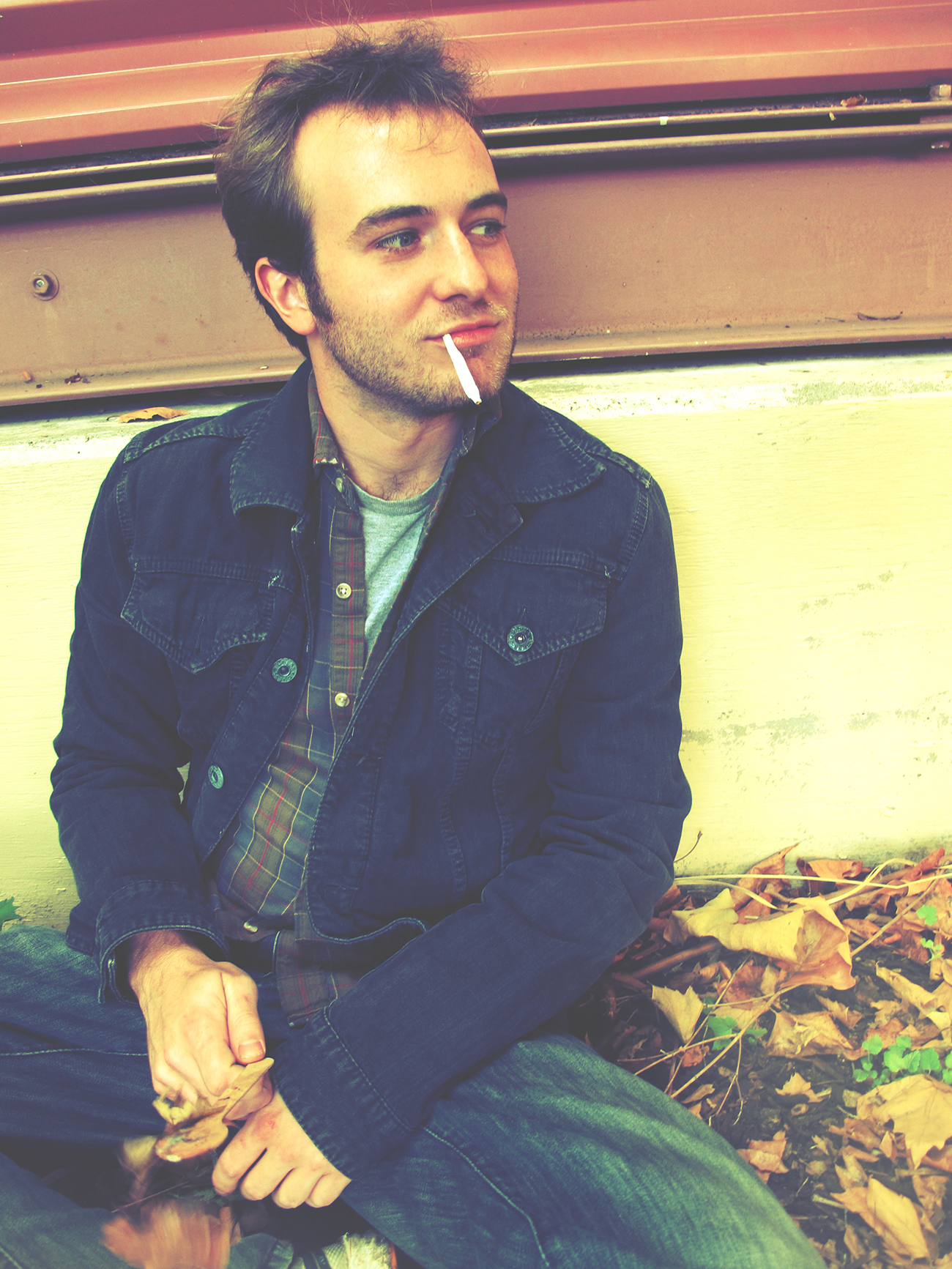
Scott Ward Abernethy plays the protagonist Fuckhead with a true addict’s sense of resignation. Beset by bed-head and a hunger for heroin and pills, Fuckhead stumbles from one vignette to another. (Schwager has not included all of Johnson’s original tales here, but cherry-picked those with the greatest theatrical possibility.)
Josh Aaseng directs the show, expanded from last fall’s staging, for Book-It’s traveling Circumbendibus program. Here, in West of Lenin’s black-box space, the set is anchored by a bar selling $4 PBRs, with live music from guitarist Owen Ross and multi-instrumentalist/vocalist Annie Jantzer. The duo plays a key role in the production, performing background music throughout and giving Jesus’ Son a sense of place, in time at least, by playing old rock songs like “Cowgirl in the Sand” and “Bird on a Wire.”
In the first scene, based on Johnson’s story “Car Crash While Hitchhiking,” Fuckhead has a premonition of disaster for the young family that offers him a ride. He gets in anyway, telegraphing his death wish, and the audience is treated to a disquieting bit of stagecraft. As Fuckhead narrates, the wreck is enacted in slow motion, the family’s horror made apparent as the band plays “Heroin,” the tense and propulsive Velvet Underground song with the lyric that gave Johnson the title for his collection. Hearing the screams of the driver’s widow in the hospital later, Fuckhead proclaims, “I’ve gone looking for that feeling everywhere.”
This is Jesus’ Son’s most powerful moment, and, like Fuckhead, I was spoiled by it—hoping for another dreadful fix. The play never again achieves such complete synergy of music, performers, and text. Yet the strong and fevered performances—in particular Zach Adair’s as hospital janitor Georgie—keep the tenuous narrative together enough to let Johnson’s intoxicating prose shine. MARK BAUMGARTEN
PKylian + Pite
McCaw Hall, 321 Mercer St. (Seattle Center), 441-2424, pnb.org. $28–$174. 7:30 p.m. Thurs. & Sat., 1 p.m. Sun. Ends Nov. 17.
After opening its season with one iconoclast, Pacific Northwest Ballet is following up with two others. Like Twyla Tharp, the Czechoslovakia-born Jiři Kylian and Canada’s Crystal Pite are both taking ballet in unusual directions, combining it with several other movement styles. In this program of four dances, their work feeds PNB artistic director Peter Boal’s desire to broaden the horizons of his dancers and their audience.
Kylian’s hybrid style retains the physical virtuosity of ballet, but tempers it with a kind of organic lyricism, drawing a more grounded quality from modern-dance techniques. After making over 75 works, most for Nederlands Dans Theater, he’s become one of the major influences on European contemporary dance—and an increasingly popular import to the U.S. PNB already dances a pair of his works to Mozart; and here we see how Petite Mort and Sechs Tanze both make sly fun of baroque mannerisms. New to PNB is Kylian’s 1981 Forgotten Land, inspired by an Edvard Munch painting of three women contemplating a drowned landscape. Given a propulsive quality by Benjamin Britten’s Sinfonia da Requiem, dancers surge like water across the stage, where couples struggle and fail to remain together.
Those who’ve previously seen Pite and her Kidd Pivot company at On the Boards will be familiar with some of her extreme movement choices. But those kinetic experiments are really amplified by the sheer scale of Emergence. Created four years ago for the National Ballet of Canada, the work features almost 40 dancers in a stunning investigation of group behaviors and “hive mind,” drawing images from the insect world. Ballet often uses unison movement to create a sense of rising momentum, but here the collective action is more threatening than exhilarating. At several key moments, the dancers count in sotto voce as they snap from one position to another—a thoroughly eerie effect.
Opening weekend was packed with truly impressive performances. Rachel Foster’s intensity was thrilling in the opening section of Emergence, where she was like a newborn colt struggling to master limbs and joints. Andrew Bartee and Kiyon Gaines, alternating in a thrashing solo from the same work, launched themselves across the stage. Lindsi Dec and Karel Cruz were a sleek pair in Petite Mort and an anguished one in Forgotten Land. But it was the company as a whole, throughout the program, that knocked the audience flat. Sandra Kurtz
E
stage@seattleweekly.com