Opening Nights PIn the Heights Village Theatre, 303 Front St.
Published 7:59 pm Friday, September 19, 2014
Opening Nights
PIn the Heights
Village Theatre, 303 Front St. N. (Issaquah), 425-392-2202, villagetheatre.org. $35–$67. Runs Wed.—Sun. Ends Oct. 26. (Then Moves to Everett Oct. 31–Nov. 23.)
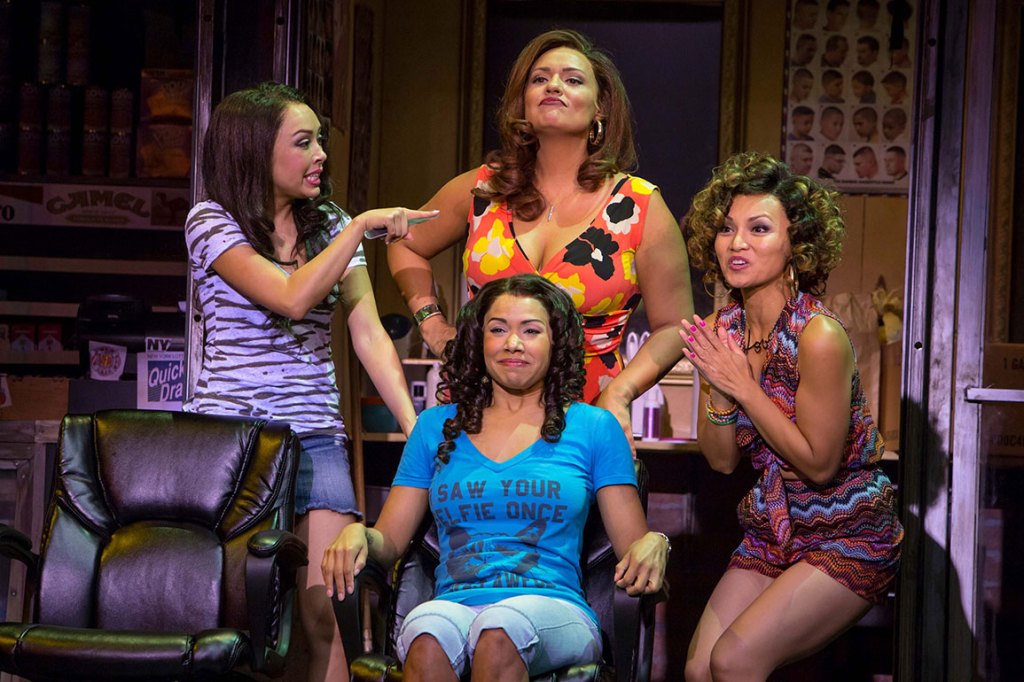
See Village Theatre’s percolating production of In the Heights and be baffled anew at why this show hasn’t earned the fanatical popularity of Wicked or inspired the critical orgasms of The Book of Mormon. Or, for pity’s sake, been moviefied. Musicals are obviously no studio’s priority right now, but 60 years ago, Lin-Manuel Miranda (music and lyrics) and Quiara Alegria Hudes (book) would have inked a Hollywood deal during intermission of opening night, so solid and surefire is their 2008 story of the changes that beset residents of Manhattan’s Washington Heights neighborhood during two sultry summer days.
My Mexican-American plus-one wasn’t entirely forgiving of everyone’s delivery of the script’s frequent Spanish, but he had no other complaints about the cast, and neither do I. The show’s challenges are not only emotional—from one scene to the next, it’s a roller-coaster from humor to anger to tragedy to salsa-driven joy—but technical too. In particular, the opening and closing numbers of Act 1 mix dialogue sung, spoken, and rapped in intricate succession with dance and, in the finale, a blacked-out stage. Nobody misses a beat of either kind, even though the show’s packed with incident and necessarily fast-paced. But everything lands; everything works; every song, scene, and bit gets its most impactful tempo and weight as guided by director Eric Ankrim. (We have to assume that the ensemble was properly vetted by the Ethnicity Police who protested The Mikado this summer, and that they gathered from the actors all the blood tests and family histories required to ensure that everyone is racially authentic for their roles. Though some of those cast photos do look suspiciously pale; Village Theatre ought to brace itself for picketers.) Gavin
Borchert
Mary’s Wedding
West of Lenin, 203 N. 36th St., 352-1777, wearenctc.org. $15–$30. 8 p.m. Thurs.–Sun. plus Mon., Oct. 6. Ends Oct. 11.
Canada isn’t known for great stage drama, yet New Century Theatre Company is taking a chance on one of that country’s most popular—and troublesomely titled—contemporary plays. Stephen Massicotte’s 2002 love story is also an antiwar tale related partly as a dream sequence. Mary (Maya Sugarman), a transplant from England, meets farmer Charlie (Conner Neddersen) right before he departs overseas to fight for the Canadian Cavalry Brigade in World War I. This cliched boy-meets-girl/boy-loses-girl setup then bends space and time via flashbacks and letters, blurring reality with contrived conversations.
Yet, under the astute direction of John Langs, this exacting, thrifty production approaches the material as stealthily as a gold-medal curling team. Most notably, Brian Sidney Bembridge’s stunning scenic and lighting design prove theatrically versatile and visually exquisite. With limited resources he creates a lightning storm causing one to consider scampering for shelter. Additionally, his brilliant barn set seamlessly switches into trenches or a tea party, while Langs’ blocking eagerly employs every edge of the space. Matt Starritt’s sound design aptly accentuates the advancing drama, giving almost cinematic scale.
Despite the script’s flaws, Sugarman and Neddersen invoke empathy while infusing intensity in the material. Mary’s final monologue will touch anyone who’s lost someone they loved—whether in war or peace. That said, you can rent better tearjerkers, like Love Story or Terms of Endearment. Or, for a Canadian alternative, perhaps a particularly dramatic episode of Degrassi will be on the air.
Why is this passably pedestrian play being staged now, when Taproot produced it in 2007? World War I began a century ago in August, and Armistice Day is coming up on November 11. We still have troops in Afghanistan, where Canada has also contributed combat and peacekeeping personnel (and suffered casualties). So Mary’s Wedding is still somewhat topical. And for me at least, the most interesting part of this script was learning that our neighbor to the north actually has a military history. Alyssa Dyksterhouse
The Mountaintop
ArtsWest, 4711 California Ave. S.W., 938-0339, artswest.org. $15–$35. 7:30 p.m. Wed.–Sat., 3 p.m. Sun. Ends Oct. 5.
The Ferguson, Missouri, shooting death of Michael Brown and its ongoing national fallout provide a sadly auspicious moment in which to mount a play about Martin Luther King’s final hours in Memphis. Yet rather than preach, Katori Hall’s 2009 dramedy takes us down an imaginative rabbit hole behind the door of Room 306 at the Lorraine Motel on April 3, 1968. Burton Yuen’s whimsical pink curtains and bedspreads suggest fairy tale as much as newsreel in a play that seeks to uncover the regular man behind the icon—the stinky feet, smoker’s breath, and roving eye of the dreamer.
Reginald Andre Jackson brings a demeanor of intelligence, strength and road-weary fatigue to this MLK. Depleted as the battalion of dead paper coffee cups lying around the room, King sweeps in, beelining for the john whence we hear him pissing. “America is going to hell,” he intones. We hear the evidence: A 16-year-old black boy was killed by police the prior week during a protest King organized; the Vietnam War is a quagmire; and blacks are restricted in their comings and goings—even those of King’s stature.
But the revelation of both this play and this production is Camae, the earthy chambermaid who brings “Preacher King” his room-service coffee and recommended daily requirement of smart-mouth. Brianna Hill’s magical performance carries the uninterrupted 90-minute piece when the script’s devices wear thin (like King’s insatiable lust for cigarettes, which she reliably provides from her brassiere—King’s excuse to keep her in the room). Camae’s scrawny pluck endears, and Hill’s glorious upswept eyes channel pity, disgust, self-aggrandizement, affection, and mystery. Her comedic one-liners—like “Civil rights’ll kill you before those Pall Malls,” delivered in the non-code-switched Southern dialect she and King share in privacy—help distract King from his cares.
Director Valerie Curtis-Newton’s delicate touch lightens the inevitable telegraphing of a death foretold and neutralizes an irritating phone-call sequence that could ruin the play. (It’s a writer’s device of Hall’s that Hill helps save.) Toward the end of The Mountaintop, the set breaks apart like a future-filled egg, with display monitors folding resonant moments of history, lyric, and rhetoric into the motel story like stiff egg whites into lively batter. This marvelous mashup, an annunciation of sorts delivered by an uncanny messenger, readies the complex, conflicted human man for his final march. Margaret Friedman
E
stage@seattleweekly.com