There’s a wealth of accessible, interesting, and sometimes even important public art far beyond the border of SAM’s waterfront compound (or even right next to it). No single collector or institution governs these far-flung sites and installations, which include freely viewable art sitting on private land. So set your Google waypoints en route, as we tour some of the best pieces of public art (plus a few lost, overlooked oddballs) in and around Seattle, some of which are so undersung, they don’t even have a placard identifying them. Read Brian Miller’s entire story.Published on April 27, 2009
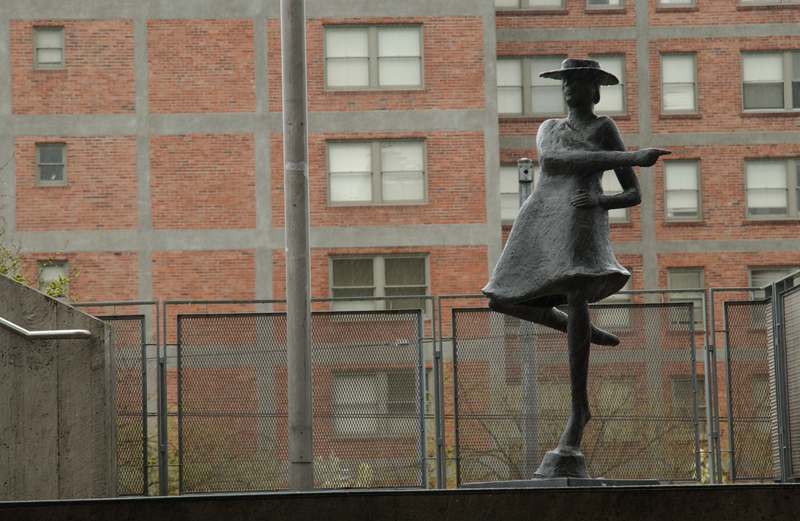
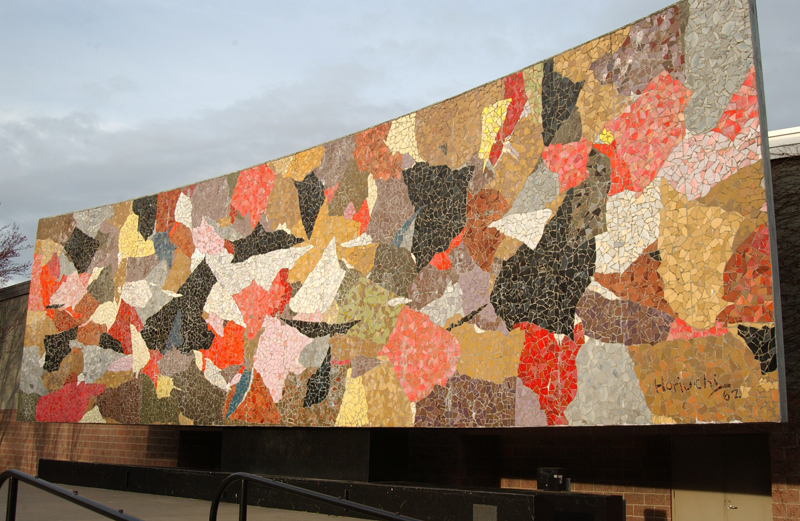


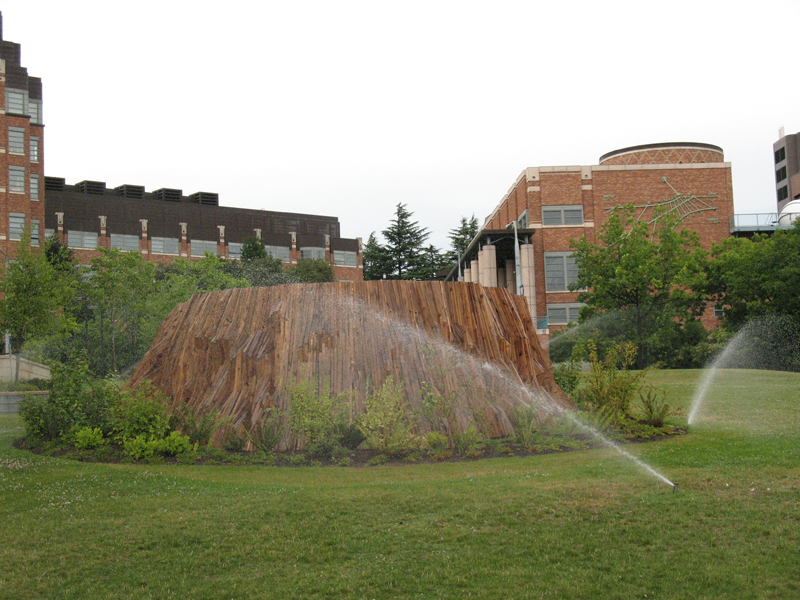
Stronghold, UW campus, NE Pacific St. at 15th Ave. NE.: The original UW campus downtown was once covered with old-growth timber, as was its present location when the school moved north in 1895. Now, as that institution continues its inexorable sprawl south of Pacific Avenue toward Portage Bay, New York artist Brian Tolle reminds us of that arboreal past with his recently installed Stronghold. It is, at first glance, nothing more than stump on a manicured lawn. Walk closer (sprinklers permitting), and youaE™ll see that itaE™s a constructed stump, an invented artifact made of inexpensive cedar slats. Measuring about 23 feet in diameteraE”with a seating area within, bring your lunchaE”Stronghold suggests the enormous tree trunks that once drove this regionaE™s economy, that helped establish the city and our stateaE™s first university (founded in 1861). But such towering cedars and firs are all gone, of course, and TolleaE™s materials are of the size and grade you could buy at any lumber yard. This neo-stump stands next to a new UW bioengineering building onaE”appropriate, since technology is the new timber of the Northwest. In shape, the irregular ring also echoes our skyline of ancient, crumbling volcanoes (Mount St. Helens in particular) that were formed in violence. The installation recreates our local history before it met the crosscut saw.
Stronghold, UW campus, NE Pacific St. at 15th Ave. NE.: The original UW campus downtown was once covered with old-growth timber, as was its present location when the school moved north in 1895. Now, as that institution continues its inexorable sprawl south of Pacific Avenue toward Portage Bay, New York artist Brian Tolle reminds us of that arboreal past with his recently installed Stronghold. It is, at first glance, nothing more than stump on a manicured lawn. Walk closer (sprinklers permitting), and youaE™ll see that itaE™s a constructed stump, an invented artifact made of inexpensive cedar slats. Measuring about 23 feet in diameteraE”with a seating area within, bring your lunchaE”Stronghold suggests the enormous tree trunks that once drove this regionaE™s economy, that helped establish the city and our stateaE™s first university (founded in 1861). But such towering cedars and firs are all gone, of course, and TolleaE™s materials are of the size and grade you could buy at any lumber yard. This neo-stump stands next to a new UW bioengineering building onaE”appropriate, since technology is the new timber of the Northwest. In shape, the irregular ring also echoes our skyline of ancient, crumbling volcanoes (Mount St. Helens in particular) that were formed in violence. The installation recreates our local history before it met the crosscut saw.
Stronghold, UW campus, NE Pacific St. at 15th Ave. NE.: The original UW campus downtown was once covered with old-growth timber, as was its present location when the school moved north in 1895. Now, as that institution continues its inexorable sprawl south of Pacific Avenue toward Portage Bay, New York artist Brian Tolle reminds us of that arboreal past with his recently installed Stronghold. It is, at first glance, nothing more than stump on a manicured lawn. Walk closer (sprinklers permitting), and youaE™ll see that itaE™s a constructed stump, an invented artifact made of inexpensive cedar slats. Measuring about 23 feet in diameteraE”with a seating area within, bring your lunchaE”Stronghold suggests the enormous tree trunks that once drove this regionaE™s economy, that helped establish the city and our stateaE™s first university (founded in 1861). But such towering cedars and firs are all gone, of course, and TolleaE™s materials are of the size and grade you could buy at any lumber yard. This neo-stump stands next to a new UW bioengineering building onaE”appropriate, since technology is the new timber of the Northwest. In shape, the irregular ring also echoes our skyline of ancient, crumbling volcanoes (Mount St. Helens in particular) that were formed in violence. The installation recreates our local history before it met the crosscut saw.
Stronghold, UW campus, NE Pacific St. at 15th Ave. NE.: The original UW campus downtown was once covered with old-growth timber, as was its present location when the school moved north in 1895. Now, as that institution continues its inexorable sprawl south of Pacific Avenue toward Portage Bay, New York artist Brian Tolle reminds us of that arboreal past with his recently installed Stronghold. It is, at first glance, nothing more than stump on a manicured lawn. Walk closer (sprinklers permitting), and youaE™ll see that itaE™s a constructed stump, an invented artifact made of inexpensive cedar slats. Measuring about 23 feet in diameteraE”with a seating area within, bring your lunchaE”Stronghold suggests the enormous tree trunks that once drove this regionaE™s economy, that helped establish the city and our stateaE™s first university (founded in 1861). But such towering cedars and firs are all gone, of course, and TolleaE™s materials are of the size and grade you could buy at any lumber yard. This neo-stump stands next to a new UW bioengineering building onaE”appropriate, since technology is the new timber of the Northwest. In shape, the irregular ring also echoes our skyline of ancient, crumbling volcanoes (Mount St. Helens in particular) that were formed in violence. The installation recreates our local history before it met the crosscut saw.
Stronghold, UW campus, NE Pacific St. at 15th Ave. NE.: The original UW campus downtown was once covered with old-growth timber, as was its present location when the school moved north in 1895. Now, as that institution continues its inexorable sprawl south of Pacific Avenue toward Portage Bay, New York artist Brian Tolle reminds us of that arboreal past with his recently installed Stronghold. It is, at first glance, nothing more than stump on a manicured lawn. Walk closer (sprinklers permitting), and youaE™ll see that itaE™s a constructed stump, an invented artifact made of inexpensive cedar slats. Measuring about 23 feet in diameteraE”with a seating area within, bring your lunchaE”Stronghold suggests the enormous tree trunks that once drove this regionaE™s economy, that helped establish the city and our stateaE™s first university (founded in 1861). But such towering cedars and firs are all gone, of course, and TolleaE™s materials are of the size and grade you could buy at any lumber yard. This neo-stump stands next to a new UW bioengineering building onaE”appropriate, since technology is the new timber of the Northwest. In shape, the irregular ring also echoes our skyline of ancient, crumbling volcanoes (Mount St. Helens in particular) that were formed in violence. The installation recreates our local history before it met the crosscut saw.