CD Reviews
Published 7:00 am Monday, October 9, 2006
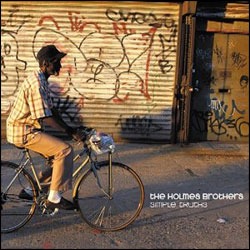
THE HOLMES BROTHERS
Simple Truths
(Alligator)
For 35 years, the Holmes Brothersactually two brothers and a cousinhave been blurring the lines between gospel and secular music. But Simple Truths is the first time the Brothers have fully left Sunday service for the pleasures and regrets of Saturday night, and they seem to revel in the new freedom. Their originals sparkle, from the sly, raw-leather ride of “Run Myself Out of Town” to the easy Memphis sheen of “We Meet, We Part, We Remember,” the best Al Green song Al never recorded. Strong as their own material is, it’s as interpreters that they truly shine. They reunite the old neighbors of soul and country with their takes on “I’m So Lonesome I Could Cry,” “He’ll Have to Go,” and Townes Van Zandt’s “If I Needed You,” letting mournful vocal harmonies and spare guitar shamble down the avenues of heartbreak. The social protest of Bob Marley’s “Concrete Jungle” is stripped of its skanking reggae rhythm and reborn as an acoustic song: still relevant, still angry but tempered with the pride of survival. The centerpiece, however, is “Everything Is Free”: Gillian Welch’s neo-hippie coffeehouse anthem loses its sterility as Popsy Dixon’s voice brings the intimacy of experience to the words, the melody wrapping effortlessly around the lyrics. The simple truths of life, it seems, lie in its basic emotions. And the Holmes Brothers hold them up so we can see ourselves in each and every one. Saturday night isn’t so far from Sunday morning, after all. CHRIS NICKSON
The Holmes Brothers play the Triple Door at 7:30 p.m. and 10 p.m. Wed., Jan. 14. $25.
MOBY
18 B Sides + DVD
(V2)
There’s a difference between saving your best for last and seeming to not know the difference between when your shit is good and bad, but I suspect the fact that I prefer this odds-and-sods fan thank-you to Moby’s actual 18 album from 2002 has little to do with either. More like that album emanated the kind of nervousness that comes with the pressure of following up a monster18 replicated Play‘s structure without its consistency or reach, and as a result, even the good songs got buried. Here, he’s mostly doodling in the same way he has for most of his dance-identified careeronly the sketchbook feels freer and less constrained than what eventually ended up on canvas, framed. Since Moby’s great gift is knowing what works and then hammering it into the ground, B Sides‘ best moments are those that come closest to 18‘s: the “Lordy don’t leave me” gospel moans of the album’s “In My Heart” are reprised on “String Electro,” while “Downhill” sounds like an inversion of 18‘s “Another Woman” played for the micro-lounge (love that teasing, muffled title phrase and the equally soft hi-hats) rather than the parlor room. Sure, he’s still using the same four-chord pattern he’s used on all of his records, and now that he’s really, truly gone Hollywood, he’ll never get any of his always-nebulous cred back. But you don’t have to have read his mid-’90s interviews to guess that maybe he’s better off not making major statements anyway. MICHAELANGELO MATOS
PELICAN
Australasia
(Hydra Head)
Chicago instrumental quartet Pelican are only associated with Aaron Turner, the Hydra Head Records honcho and mastermind behind scholarly Boston hardcore collective Isis, in that he designs their album layouts; longtime friend Sanford Parker recorded the hefty dirges of both Australasia and the band’s untitled debut EP, released last February. Still, the Isis imprint is obvious, which is ironic given that Isis themselves have long been saddled with comparisons to the repetitive, tribal machinations of Neurosis, so much so that Turner has refused to add an auxiliary audiovisual component to Isis’ meat-and-potatoes live show on the grounds that it would propagate the association. All three bands detune their rock axes until they resemble caveman clubs, but perform with preternatural patience and introspection. By eliminating the frontmanusually an interchangeable Cookie Monster growler in this genrePelican bravely leave what initially appear to be rudimentary grindcore compositions vulnerable to attack. The unspoken expectation: If you’re an instrumental metal band, you’d better be fucking good. Australasia‘s six songsperhaps “continents” would be more appropriatetake about 50 minutes to grind by because the players are enamored with establishing a groove and methodically beating it to a pulp. “Drought” is built on a balls-simple, palm-muted progression. Guitarists Laurent Lebec and Trevor de Brauw deftly insert sharp bends, behind-the-nut scrapes, and other improvisational flourishes, never striving to startle with a mathy signature U-turnMetallica without masturbation. Whereas Isis’ and Neurosis’ overarching man vs. nature/God themes are fairly obvious, it’s unclear what Pelican are trying to convey via Australasia. So be it. Instrumentals of such brain and brawn naturally encourage imaginative interpretation, and this is a gorgeous clinic in restraint and release as ready-made for headphones brooding as blasting aimlessly down a deserted
freeway. ANDREW BONAZELLI