L7’s last North American hurrah isn’t about nostalgia
Published 2:50 pm Tuesday, June 2, 2026
“The cost of a tour bus is like a down payment on a house.”
That’s not a complaint from a struggling local band trying to scrape together enough gas money to get to the next show. It’s the reality facing L7, one of the most influential alternative rock bands of the last four decades, as they prepare for what vocalist, founder and guitarist Donita Sparks describes as the band’s “last hurrah” for North America.
For many musicians, touring has become increasingly difficult. Rising transportation costs, venue expenses, lodging, crew salaries, and production costs have squeezed artists at every level. While stadium acts continue to thrive and smaller bands often survive through sheer DIY determination, mid-level touring bands have found themselves in a particularly challenging position.
“Touring is really expensive now,” Sparks said.
That economic reality is one reason L7 is scaling back its North American touring plans.
But despite the significance of the upcoming dates, Sparks isn’t interested in framing the tour as a farewell.
The band is already discussing a global run in 2027.
Instead, these shows feel more like a celebration of survival.
For a band that formed in Los Angeles in 1985, survived the rise and fall of grunge, endured an extended hiatus, and returned to active touring nearly a decade ago, survival has become part of the story.
**
L7 emerged from the Los Angeles underground at a time when glam metal dominated the Sunset Strip. Their abrasive blend of punk, hard rock, and social commentary didn’t fit comfortably alongside the polished image-driven, primarily lyrically vapid bands that dominated commercial rock, MTV, and FM radio at the time.
What many listeners don’t realize is how important the Pacific Northwest became to the band’s development.
While L7 is often associated with Los Angeles, Sparks credits Seattle and the broader Northwest scene with helping the band find an audience when many people back home weren’t quite sure what to make of them.
“The Northwest was way more welcoming to us,” Sparks, a native if Chicago, said.
That support came not only from fans but from the musicians themselves.
When discussing the Pacific Northwest scene that would eventually explode into the mainstream during the early 1990s, Sparks recalls a community that was surprisingly supportive:
“A lot of those bands were very progressive,” she said.
That environment helped L7 establish roots in a region that would become central to alternative rock history.
A major part of that story was their relationship with Seattle based indie label, Sub Pop.
Long before grunge became a global phenomenon, the Seattle label helped expose the band to audiences that were more receptive than many they encountered elsewhere.
Looking back, Sparks credits Sub Pop as a turning point.
For Seattle music fans, that connection remains one of the reasons L7 feels less like an out-of-town act and more like a distant cousin returning home.
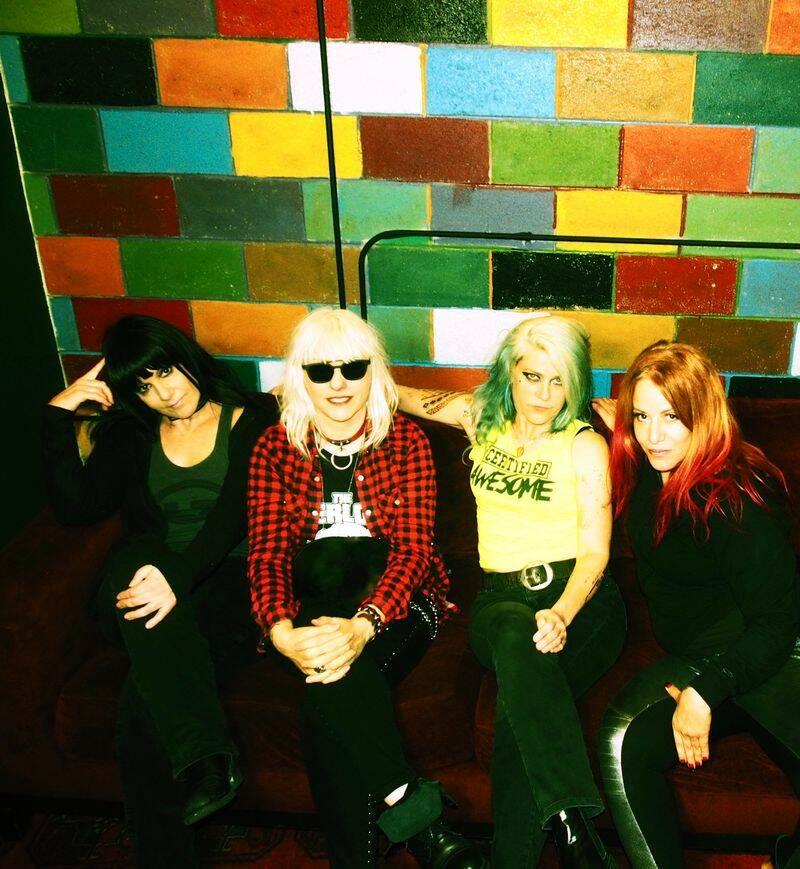
When they arrive at the Showbox SODO this November, they’ll do so with the same lineup that helped build that legacy: Donita Sparks, Suzi Gardner, Jennifer Finch, and Demetra Plakas.
That continuity is increasingly rare.
After forming in 1985, the band remained active until 2001 before entering what Sparks describes as an indefinite hiatus.
“We just got worn out,” she said.
The combination of industry changes, declining momentum, and the physical realities of touring eventually pushed the band into a lengthy break.
For many groups, that would have been the end of the story.
Instead, L7 reunited in 2015 and discovered something unexpected: People still cared.
Not only did longtime fans return, but younger listeners began showing up in significant numbers.
The crowds now include fans who discovered the band during the grunge era and fans who weren’t born when L7 initially broke up. “There are teenagers who know all the lyrics,” Sparks said. For a band whose early career predates streaming services, smartphones, and social media, the sight can still be surprising. “I assume they found us through their parents,” she added with a laugh.
Whatever the reason, Sparks has embraced the new generation of listeners.
That generational crossover has become one of the most rewarding aspects of the reunion years.
It also challenges the assumption that L7 is simply operating as a nostalgia act.
“This isn’t just nostalgia for us,” Sparks said.
The band continues to release new music, including 2019’s Scatter the Rats, and Sparks says an upcoming EP is already in the works.
Unlike many reunion tours built entirely around old material, L7 regularly incorporates newer songs into their live sets.
The goal isn’t simply to recreate the past; it’s to continue building on it.
That creative drive remains central to Sparks’ identity as a songwriter.
Asked what advice she would give younger musicians, her answer was remarkably straightforward: “Work on songwriting. Write about your own life.” She believes too many artists try to imitate scenes, lifestyles, and experiences that don’t belong to them. “Don’t try to write somebody else’s story,” she said. Authenticity, she argues, still matters.
The band’s own catalog reflects that philosophy.
L7’s music often blends humor, anger, politics, and personal experience in ways that can feel both confrontational and oddly relatable.
Sparks describes many of the songs as “anger anthems,” though that label only tells part of the story.
Humor has always been just as important.
That combination helped distinguish L7 from many of their peers and may explain why the songs continue to resonate decades later.
**
When discussing her songwriting process, Sparks said most songs begin with a rhythm or guitar part. The melody usually comes next. Lyrics arrive later. There are occasional exceptions. One song, “I Came Back to Bitch,” was built around the lyrics first.
But generally, the process remains much the same as it was forty years ago.
That consistency has helped preserve a creative voice that remains distinctly L7.
Their influence, meanwhile, has spread into unexpected corners of popular culture.
One of Sparks’ favorite reinterpretations of an L7 song remains The Prodigy’s version of “Fuel My Fire.” She recalled being surprised when she first heard it. Another favorite is a performance of “Shitlist” by Sinéad O’Connor accompanied by the Sydney Orchestra.
Both examples demonstrate how far the band’s influence extends beyond the alternative rock scene where they first made their name.
Yet despite the accolades, the history, and the growing legacy, Sparks remains focused on the work in front of her.
L7 will share upcoming dates with Amyl and the Sniffers, a pairing that excites her precisely because it raises the bar.
“You’ve got to bring your A-game,” she said.
During the conversation, Sparks and this reporter briefly discussed the phrase “iron sharpens iron,” a concept describing how talented people push one another to improve.
The phrase seemed to resonate with her.
It’s also an appropriate description of how L7 has survived.
The band has never relied solely on nostalgia, reputation, or historical significance. Instead, they’ve continued challenging themselves and one another.
As the North American run approaches its conclusion, Sparks hopes fans view it as a celebration rather than a funeral.
“We want to go out on a high note,” she said.
At the same time, she doesn’t want the final shows to become overly sentimental.
“We don’t want to get too emotional,” she said.
After forty years, countless tours, industry upheavals, a lengthy hiatus, and a successful reunion, L7 remains what it has always been: loud, funny, angry, and unapologetically itself.
Whether these dates ultimately mark the end of large-scale North American touring or simply the close of one chapter remains to be seen.
For now, Seattle audiences have one more chance to see a band that helped shape alternative music while refusing to become trapped by its own legacy.
Four decades after they started, L7 is still moving forward rather than looking back.
Not dead.
Not retired.
Just Pretend We’re Dead.
L7 plays Showbox SODO on November 10, 2026.