Opening Nights PBo-Nita Seattle Repertory Theatre, 155 Mercer St. (Seattle
Published 11:04 pm Wednesday, October 23, 2013






Opening Nights
PBo-Nita
Seattle Repertory Theatre, 155 Mercer St. (Seattle Center), 443-2222, seattlerep.org. $12–$65. 7:30 p.m. Wed.–Sun., plus matinees. Ends Nov. 17.
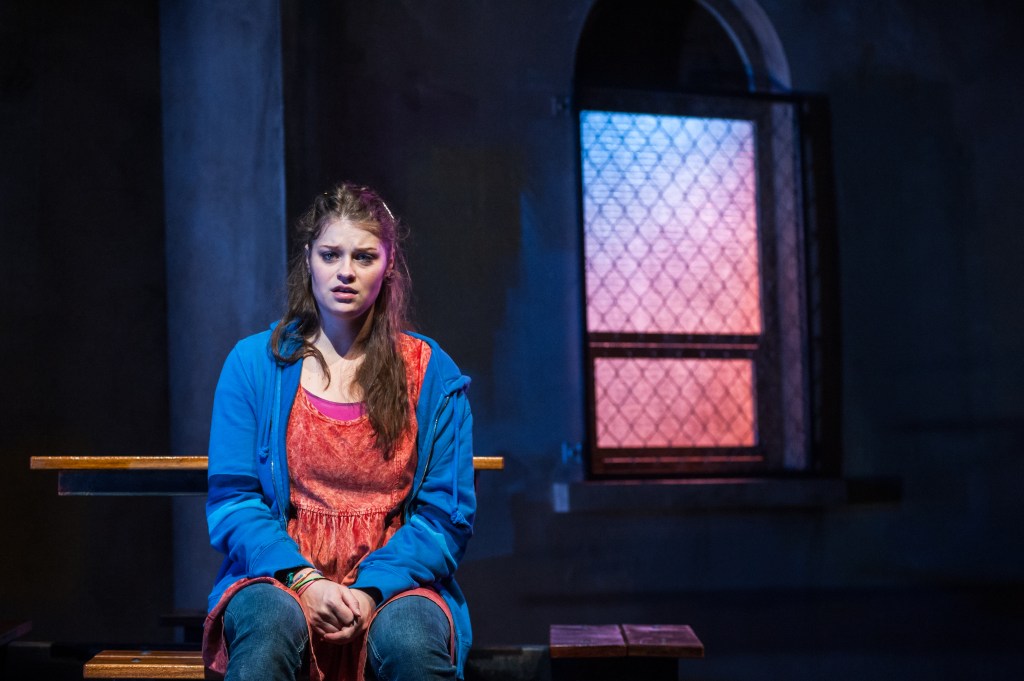
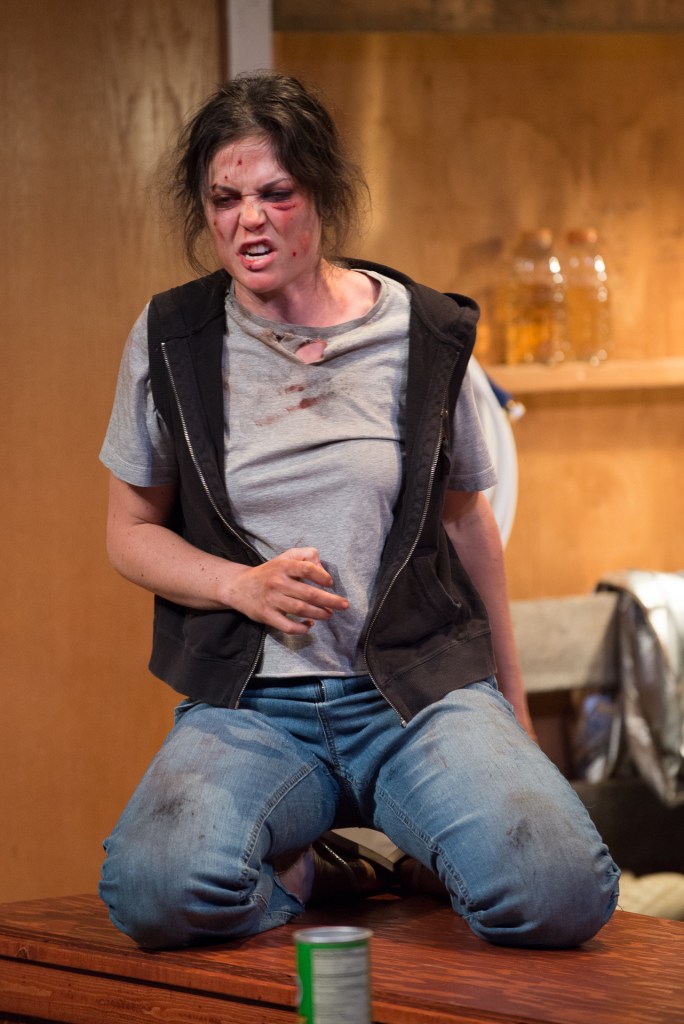
Ahhh, 13. Even in the most optimized life, that milestone year cultivates more awkwardness and drama than any other. In most lives it also cultivates melodrama, cliches, sullenness, depression, and a host of other tedious symptoms mostly absent from Elizabeth Heffron’s beguiling new one-woman play. In it we meet a smart, sensitive St. Louis girl (eponymous Bo-Nita), her socially marginal single mom Mona, Mona’s various consorts, and Grandma Tiny, known for “professional” belly-dancing in stilettos.
Hannah Mootz deftly and heartbreakingly embodies all these characters and more in rapid-fire situational episodes Bo-Nita recounts. Directed by fringe fave Paul Budraitis, Mootz teeters between girl and hag, thug and wag, with nary a moment’s conflation. Her multiple performances in one seal her reputation as one of Seattle’s most intriguing and technically adept talents. Though the only performer onstage, each of her distinct characters steals scenes from the others; it’s a stage trick like an Escher drawing.
Bo-Nita tells the funny, affecting 90-minute story of her life while kicking around the playground of her new school, evoked by Jennifer Zeyl’s adobe walls—painterly and desolate as a Balthus interior—which Robert J. Aguilar saturates in colored light reflecting her emotions (from howling magenta to sun-bleached bone). She has plenty to talk about, starting with a mishap in which she thought her “semi-ex-stepfather Gerard” had died while sexually accosting her, and the consequences as she, Mona, and Mona’s current beau Leon (aka Leroy, #47, Whozzits) trump up what they think is a plausible scenario to dispose of the body. Even while packing Gerard’s death-induced stiffie into fishnets, Bo-Nita’s lexicon glides seamlessly between raunchiness and poetry; her overuse of similes underscores the urgency to make herself heard by a world outside the pail of mean crabs she was born into.
Local playwright Heffron (Mitzi’s Abortion, New Patagonia) gives ambiguities their ample due: Gerard isn’t a pure monster, and Mona isn’t stupid or without a conscience. But the system has failed everyone through wrong incentives and lack of opportunities, compounded over generations. The boppy refrain of Blondie’s “Dreaming” captures the piece’s dream-deferred, dashed hopes. It’s shattering to watch the song pass from Mona’s anthem to Bo-Nita’s. Margaret Friedman
PMuch Ado About Nothing
Center House Theatre (Seattle Center), 733-8222, seattleshakespeare.org. $25–$48. 7:30 p.m. Wed.–Sat., plus matinees. Ends Nov. 17.
All the screwball elements are in place: a cigarettes-and-whiskey-voiced blonde, a strapping playboy who’d sooner be dead than wed, and their coteries, plus a honey-throated crooner, horn-rims, beach balls, parasol drinks, espadrilles, masts to climb, and a boat to hide in. It’s 1953, and Messina, as conceived by Craig Wollam, is a waterside pleasure dome, replete with canal, pool, harbor, rampart, and tawny stone esplanade. When bonny Don Pedro (Jim Gall) announces “I know we shall have reveling tonight,” his hips wriggle a cha-cha. A nearly vocational commitment to leisure and fun replaces the careworn war years in George Mount’s sprawling postcard of connivance and flirtation. As the setting for Shakespeare’s most endearing comedy, Messina is a place you’ll want to bide awhile.
Naturally Jennifer Lee Taylor and Matt Shimkus get the plummest bits as the fiercely unhitched sparrers Beatrice and Benedick. Her Bette Davis eyes belie a knack for clowning, and his seemingly impassive, Kennedy-jawed face becomes irresistible when stricken by her words. The careenings of this love-wreck, and that of Beatrice’s virtuous cousin Hero (Brenda Joyner) and her gullible admirer Claudio (Jay Myers), propel us from sartorially sophisticated swizzle parties to casual picnics, outfitted (emphasis on “fitted”) by Doris Black. As if the rich visuals, enhanced by Roberta Russell’s ethereal lighting, were not world enough, Rob Witmer’s soundscape offers yet more gratifications, including crickets, waves, and payoffs for some funny slapstick setups. These include Benedick’s eavesdropping scene and Dogberry’s (David Quicksall) investigating his assistant Verges’ derriere with a Geiger counter.
The postwar period setting offers Don Pedro’s malevolent brother Don John (Nick Rempel) a handy excuse for his bitterness: In white military uniform, his reticence looks like haunted PTSD from World War II or Korea. But despite the trappings of the superficially chipper, tragedy-erasing early ’50s, Mount doesn’t force historicity, opting rather to let the themes sing as they will to whom they will. And speaking of singing, Justin Huertas (as a Bobby Darin–like Balthasar) has an uber-smooth voice that ups the cool of every Michael Brockman composition he performs, including the beautiful pep song for the ladies, “Sigh No More.” In this Eisenhower-era, A-bomb setting for the Bard, where even the Kinsey Report makes an appearance, nothing’s more explosive than passion and a lit fuse. Margaret Friedman
PRed Light Winter
ACT Theatre, 700 Union St., 292-7676, azotheatre.org. $25–$30. Thurs.–Sun. Ends Nov. 24.
Adulthood is supposed to bring maturity. When it doesn’t, some hapless souls get stuck in a revolving door of post-adolescence, hoping that either expectation or inertia might somehow lead to responsibility, self-fulfillment, and happiness. Red Light Winter is a play about a trio competing in the Tough Mudder that is life—and instead of helping one another rise above a rising tide of circumstances, everyone’s trying to stand on the others’ shoulders. Drowning may result.
It’s also a tale of alienation, over-education, and the selfish choices people make when they think no one is looking. At the bottom of the heap is Matt (Richard Nguyen Sloniker), a suicidal “emerging” playwright who might actually emerge—if he weren’t so terrified of the world and hiding in his ratty little abodes. During a winter trip to the sex salons of Amsterdam, his former college roomie Davis (Tim Gouran) returns to their hostel with French hooker Christina (Mariel Neto), supposedly to help Matt get over his cheating ex-girlfriend. As it turns out, the ex was cheating with Davis, and now they’re married. Oh, and Davis banged Christina three times before bringing her back to Matt as a peace offering.
Act II begins in New York a year later. Matt’s obsession is now no longer his ex, but the Amsterdam one-night stand who left a red gown he now regards as her surrogate. Christina shows up unexpectedly because (of course), cad that Davis is, he gave her Matt’s address rather than his own when she asked for it. Suddenly she’s back in Matt’s room, nothing like what she originally represented herself to be, and her memory of him is as vague as his is clear. Cue Davis, who drops by while Matt is out retrieving food for the woman of his dreams, and Davis . . . cannot remember who she is, either. Until finally it dawns on him: “Oh,” he says with a knowing smile, “you’re that whore.”
There’s an ugly denouement to Adam Rapp’s 2005 drama, a sort of psychological bloodbath where all the injuries are internal. The New York playwright has a gift for dialogue that echoes the darker side of Woody Allen. Apart from a few comic asides, there are multitudes of moments in Red Light Winter when you wish, absent any compassion among these three, one would have the good sense to Get the Hell Out of There.
In Azeotrope’s second staging of this piece, with the same fine cast as its 2010 debut production, Desdemona Chiang again directs this maelstrom-in-miniature with near-balletic grace. She lets Rapp’s characters stalk one another in concentric circles until there’s no place left for refuge. None of the nude scenes feels gratuitous; they only compound the characters’ vulnerabilities and missed opportunities to make amends.
In an odd way, Red Light Winter makes perfect Halloween fare. After all, what’s more horrifying than seeing someone suffer, then looking on as they drag everyone else down with them? Kevin Phinney
E
stage@seattleweekly.com