Kiss of the Damned Opens Fri., May 10 at Harvard Exit. Rated
Published 5:21 pm Thursday, May 2, 2013


Kiss of the Damned
Opens Fri., May 10 at Harvard Exit. Rated R. 97 minutes.
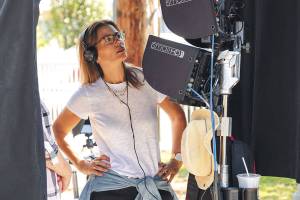
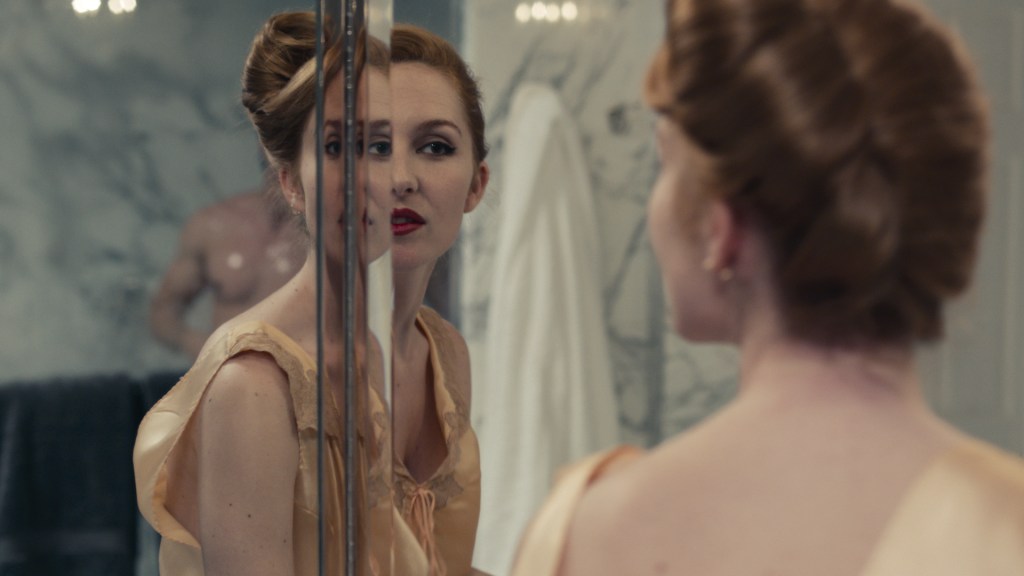
Some vampires are new (Twilight), some vampires are old (Nosferatu), and some borrow from a movie tradition that lies in the VHS middle. Director Xan Cassavetes—yes, from the famous film dynasty—has made a hybrid vampire thriller: present-set in a spooky lakeside Connecticut mansion, yet steeped in the erotic hauteur of vintage European cinema. Ridley Scott’s 1983 The Hunger is perhaps the best-known example of such glamorous bloodsucking, but sexy, ennui-ridden Continental vampires run back through the ’70s and ’60s. Titles like Roger Vadim’s Blood and Roses or Jean Rollin’s Le Viol du Vampire were once aired on the old L.A. cable outlet Channel Z (the subject of Cassavetes’ 2004 doc of the same name). If you’re a fan, as the director is, her Kiss of the Damned will have genre appeal.
Most viewers, however, will find the movie tedious and hermetic, as screenwriter Paolo (Milo Ventimiglia) falls for the sexy French Djuna (Josephine de La Baume), who doesn’t go out during daylight because “I have a skin condition.” Yeah, right; we’ve heard that before. Their romance is set to a retro synth score suggesting Giorgio Moroder. Their first frenzied kiss is through the bolted door to her house; of course Paolo wants in. Djuna chains herself to the bed to protect him from her fangs, writhing ecstatically with lust. But consummation is inevitable, so that Cassavetes can continue with her sibling-rivalry soap opera.
Djuna’s bad-girl sister Mimi (Roxane Mesquida) soon appears, setting up a vampire love triangle. Meanwhile, Paolo expresses a writer’s fascination with his new deer-hunting vampire powers. (As in Twilight, these vamps can feed on animal blood.) “It was so natural,” he muses. “Everything felt so heightened.” (Memo to vampires: Never date a writer.) These murky, slo-mo chase scenes through the forest aren’t much to look at, but Cassavetes effectively creates a feverish mood in what is, after all, a one-location, low-budget film. It’s like True Blood with an MFA but none of the resources. When Paolo meets Djuna’s Eurotrash friends in “the community” at a chic cocktail gathering, he’s asked, “Are you new?” The answer applies to the movie as well: not new enough. BRIAN MILLER
Midnight’s Children
Opens Fri., May 10 at Egyptian. Not rated. 140 minutes.
When Midnight’s Children was published in 1981, one might have assumed that its promising author would become best known as a writer of magical realism and an observer of the divide between India and Pakistan. That’s not the way it worked out for Salman Rushdie. His 1988 novel The Satanic Verses was judged to be blasphemy against Islam by the world’s worst literary critic, the Ayatollah Khomeini, and Rushdie has lived under threat of death ever since.
Midnight’s Children predates all that, yet its absurdities depict the maelstrom out of which such chaos comes. And when the new film adaptation was in production in Sri Lanka, it encountered lingering hassles related to Rushdie’s notoriety; at one point a forced shutdown was lifted after director Deepa Mehta made nice with the president of the island nation.
The movie is a streamlined version of the novel—aren’t they all?—but the 146-minute running time conveys some level of epic sprawl. Much of the narrative springs from the precise moment India becomes an independent nation in 1947, which coincides with the birth of two boys who are switched in the hospital. Shuttled off to a wealthy Muslim family is Saleem (played as an adult by Satya Bhabha) whose life collides with the tumult of India and Pakistan over the course of 30 years or so.
Saleem is also telepathically bugged by a score of other children born on his and India’s birthday; these supernaturally gifted entities—including, of course, the kid switched at birth with Saleem—crowd and bicker and generally make trouble inside his head. For these scenes, Mehta fuzzes up the screen and piles on the ghostly auras—which might be the worst possible approach to conjuring up magical realism.
The Canadian-Indian Mehta is best known for her trilogy about the subcontinent, Fire, Earth, and Water, and those films succeed because of her sturdy sense of social-issue melodrama. Rushdie’s world needs something else, a tricky blend of irony and flow, and except for certain episodes (a wonderful opening reel involving a physician who meets his future wife when he treats her as a demure patient standing behind a sheet), the movie doesn’t sustain that feel.
It does have humor, however, and an excellent cast of veterans and newcomers, including some very amusing children. If the movie doesn’t soar, it does catch the bustle of a Rushdie canvas, and the backdrop is fascinating. And Rushdie himself narrates. His voice is calm, wry, detached. It has the sound of messy history—personal and national—refined into art. Even if we never quite believe the young Saleem could grow into that voice, it’s the most interesting thing about Midnight’s Children. ROBERT HORTON
Something in the Air
Runs Fri., May 10–Thurs., May 16 at Northwest Film Forum. Not rated. 122 minutes.
What the ’60s were, and what became of the New Left movement it birthed, depends largely on your perspective. Conservatives regard the era as their crucible—that moment when Western civilization teetered on the edge of anarchy and had to be saved, even if it meant firing upon your fellow citizens. (Only days ago, Kent State unveiled a memorial to the four young antiwar protesters shot to death on May 4, 1970, by National Guardsmen.)
The scene in France was strikingly similar, as Olivier Assayas’ new film tries to make clear. But the counterculture’s rise and fall is also the Rashomon event of the baby boom. No two people remember it the same, and most lose something elemental in trying to pin it down for posterity.
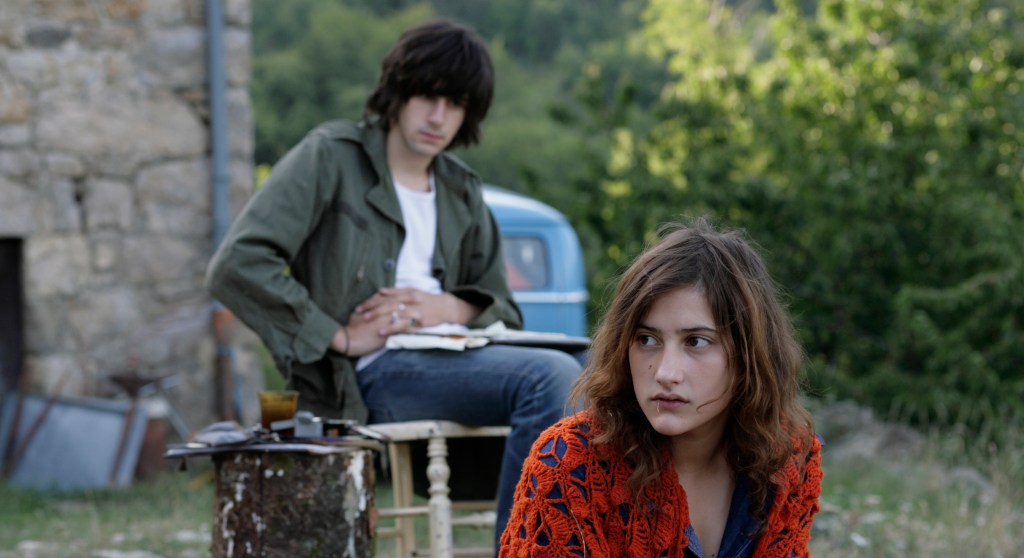
Something in the Air is what Assayas calls an “extension” of his 1994 Cold Water, and it returns two character names from that film, Gilles and Christine, like archetypes of the radicalized young French left. Gilles (Clement Metayer) is an aspiring high-school artist of Banksy stripe, studying the human form by day and sloganeering with spray paint by night. It’s 1972, and his art is visceral, unabashedly political, and roaring for attention. His muse Christine (Lola Creton) is a coquettish nymph, all sex in sun-drenched rooms; her elliptical smiles bespeak affection without commitment. Their paths quickly diverge and intertwine again as Assayas’ script explores the restless wanderlust of leftists who come to realize, through a haze of pot smoke and random acts of vandalism, that they’re risking their lives for a cause that’s collapsing under the weight of its own aspirations.
The film works best as a travelogue. Picture Anthony Bourdain as a wide-eyed young radical guiding you through the streets of Paris as protesters are beaten down; into Italian piazzas where revolutionary films are screened for donations to the Cause; and to the Near East, where kids flocked for enlightenment and cheap hashish. Assayas captures this corner of the revolution with passion and a striking breadth. Visually, the film is often gorgeous, particularly as it lingers on an idyllic French landscape or meanders with an artist’s eye over yet another sexually liberated ingenue.
But—and here’s the problem with almost every film that attempts to depict the tumult of that era—there’s a sense that Something in the Air should be accompanied by a docent who explains that this is merely one twist of one artist’s historical kaleidoscope, and that half-a-dozen other filmmakers would gladly argue the veracity of every frame. KEVIN PHINNEY
E
film@seattleweekly.com