Michael Apted’s subsequent chapters of this famed documentary series, first created for
Published 8:00 am Tuesday, February 5, 2013
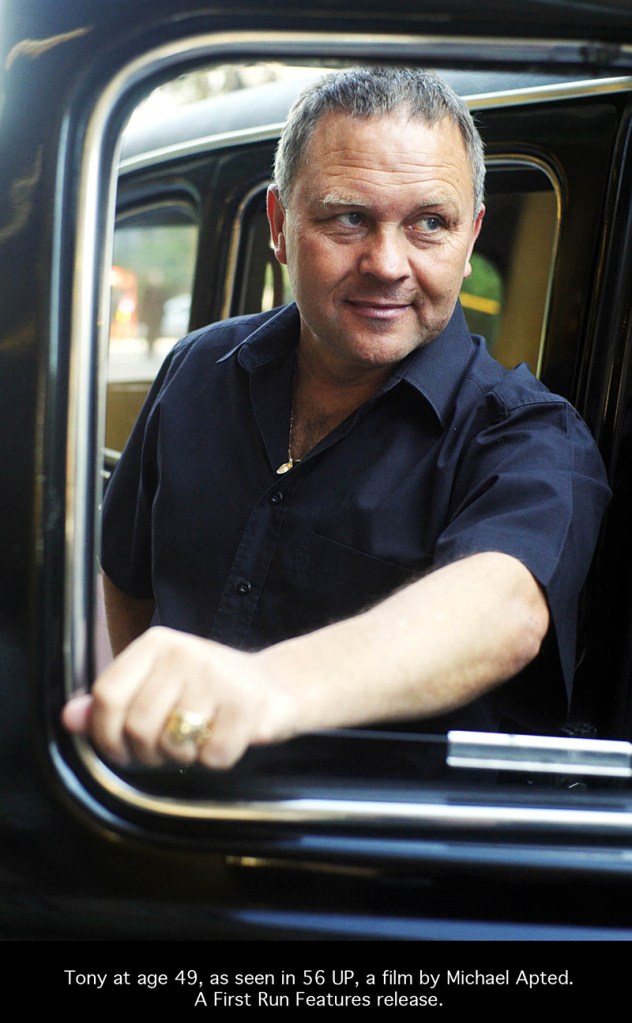
Michael Apted’s subsequent chapters of this famed documentary series, first created for British television in 1964, have ranged far beyond his original brief. That mission was to see after Seven Up!—directed by Paul Almond—how class determined subsequent social advancement in a nation still feeling the effects of war and the loss of empire. “This has been a glimpse of Britain’s future,” declared the cheerful narrator (a device thankfully abandoned), only the future of 56 Up is far different than anything envisioned in ’64. Would the privileged maintain their privilege? Would the Labor Party help the poor—then mostly white and native-born—climb the socioeconomic ladder? After the Beatles, Margaret Thatcher, and Tony Blair, 56 Up’s subjects seem rather pessimistic, if not quite bitter, about the UK’s enduring inequalities.”There is still a class system,” says well-off barrister Andrew, “but it’s based on financial success. It’s been ever thus, and I don’t think it’s ever going to change.” Echoing him is Lynn, a working-class East Ender who cycled through various social-work positions before being made redundant. The Labor Party has failed, she says, and others from her circle share that view, criticizing Thatcher and David Cameron for weakening the welfare state.Apted, a Granada TV researcher in ’64, has in his seven follow-up films been a sympathetic off-camera presence. He lobs questions in 56 Up (“Do you measure your life in terms of success or failure?”), yet resists any overview or analysis. When Tony, the charismatic jockey-turned-cabbie, predicted a real-estate bubble in 49 Up, Apted now reminds him, did he know how prescient he was? Tony has dabbled in Spanish real estate and watched that market collapse, and it is those market forces—which we shorthand as globalization—that go undiscussed. Andrew and John, another prosperous university grad and attorney, seem to do well despite the recession. Poor Neil, previously homeless and mentally ill, will never do well; the best he can hope for is state support and the scant dignity of a town councilman’s job. Yet he endures, and his story is not so terrible as we might’ve predicted after 28 Up. “How many people are happy?” Neil asks rhetorically. Apted doesn’t put that question to Andrew and John, but they have wives, weekend homes, and ski vacations, so perhaps he needn’t.Though I very much admire it, the problem with this acclaimed series—beyond its lack of outside context—is that each new installment must recycle so much old footage. We need to be reintroduced to the subjects again and again, every seven years. Some go on hiatus and return, like leftist ex-teacher Peter, who uses the film to promote his new music career. So why does Apted indulge him? Each individual story subsumes the issue of class. Apted is more interested in coping than social advancement: the ways his subjects—rich and poor—adapt to their circumstances. That means divorce, unemployment, health issues, and grandkids (apparently none of the 14 original Seven Up! kids have died). Physicist Nick, now on his second marriage in the U.S., wants to see “a real study” about class and social outcome, but Apted has no data to offer—only anecdotes. His sample size is too small and self-selecting; he and his subjects are all on a friendly first-name basis by now.In a real sense, they’re our friends, too (and also minor celebrities in England, thanks to a wide TV audience). And what do we do when reuniting with old friends—fill out questionnaires and filter the results through a computer? No, we trade stories. 56 Up isn’t science, but it satisfies with the slow, steady turning of life’s ordinary pages. film@seattleweekly.com