The Silence Before Bach: Europeans lord their culture over us
Published 7:00 am Tuesday, July 29, 2008
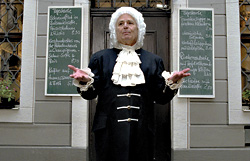
At once cerebral film essay and unsweetened ear candy, Pere Portabella’s Silence Before Bach is nearly as tough to categorize as its maker. The 78-year-old Catalan—at various times a commercial producer, anti-Franco activist, and avant-garde film artist—is known mainly, if at all, for having facilitated Luis Buñuel’s blasphemous 1962 Viridiana. Silence is not quite as jocular as Viridiana (although sometimes as surreal); it’s a high-toned experimental feature that eschews narrative and ponders the social history of music, creating a dialectic between sound and image as well as between a costumed 18th century and a contemporary post-national Europe. This cool, deliberate film suggests that Bach’s music is the quintessence of European civilization. The structure is anecdotal: A Spanish trucker has a renaissance mural painted on his rig and talks music as he rolls through the characterless Euro-countryside. Meanwhile, down in the subway, serious young cellists occupy every seat, embracing their instruments in an unexpectedly erotic image. The picture lapses briefly into biopic—almost as a joke. A historic Leipzig church is filled with Bach’s music…as well as Bach himself (Christian Brembeck) at the organ. Portabella’s sense of music is most directly expressed when a church cantor observes that Bach’s compositions have the power to convert secular musicians to religion. Bach’s music is “the only thing that reminds us the world is not a failure,” someone says—and not as a joke.