Many years ago, I was a young cook, still making my bones on the prep side of the line. I cut meat, ran my knife through hundreds of cases of mushrooms, babysat demis like a mother sitting up with a sick child, and stood there in front of my board, grooving along to the plastic-wrapped galley radio blaring the Ramones and Beastie Boys in eternal counterpoint to the smooth tocktocktock of blades tapping wood.
The best job in those days was chopping mushrooms. There was something totally sexy about the tug of the knife slipping through flesh— knocking buttons down by the flat, 10 pounds in 10 minutes. The worst job was stemming spinach. It came into the kitchen in big bags packed with tender leaves, still gritty with soil, and we would take the bags, split them open, dump five or 10 of them into a deep sink filled with icy water, and then start pulling the stems off each individual leaf—maybe a thousand of them, maybe 10 thousand. Suffice it to say it was a lot.
We stemmed the spinach because spinach tastes delicious, but spinach stems taste woody, bitter, and wrong. Because, when used for one of the composed salads coming off the garde manger station, the leaves were laid on, one or two or three at a time, with extraordinary care and attention to detail, and if, God forbid, the chef—an angry, pop-eyed, gin-blossomed Alsatian who’d missed his true calling as an Obersturmführer in the Waffen-SS and always announced his presence behind you by spitting on the back of your neck—ever found a plate headed out the door with an unstemmed leaf on it, he’d probably send you outside into the alley to stem the leaves off the fucking trees.
Flash-forward 10 years or so. I’m a chef now myself, and can’t imagine the jokes my prep cooks make about me (and since most of them are Tamil and Puerto Rican, I can’t understand half of them anyway). But some things haven’t changed. The first thing I teach my new garde manger men is that nothing we do here, in this charming, rustic little neighborhood bistro, is slap-and-serve. It might look that way going out the door—tangles of greens on the plate, drizzles of oil and spatters of port-wine reduction—but making it look that way takes care.
Little details, things like stems and spatters, they all matter. Rusticity, at a certain level, is a style as fine and particular as haute cuisine. The trick is for the plate to look thrown together by some sweaty, grill-scarred thug in the back, but taste as if it had been lain down by an angel-genius with a direct line to the food gods. The power of the neighborhood bistro, the tavern, the pub-as-restaurant, is to be better than anyone thinks it ought to be, to stun with greatness when mere goodness is all that’s expected.
Someone forgot to explain this to the cooks at Smith. Forgot to tell them—slowly and using small words—that ugly is not a valid style, that dull is not an appropriate seasoning.
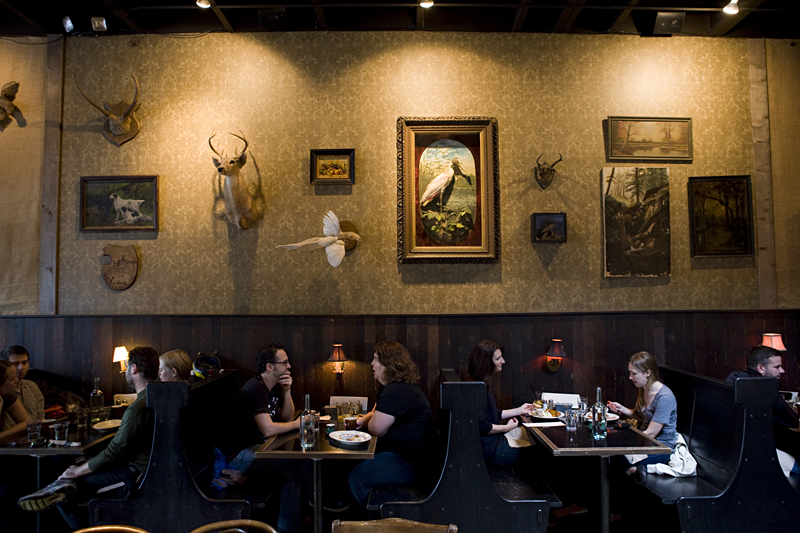
The minute I step through Smith’s doors, I like the space. It’s dark and rough around the edges, sparsely decorated with taxidermied animals and portraits of garage-sale quality, and looks for all the world like a local pub in the English countryside which, through poor investment or maybe the owner’s gambling problems, has been forced to sell off half the art and animal heads and some of the fixtures just to keep the lights on. A man dressed in wood paneling could disappear here utterly, and the faux gas lamps at every table sport mismatched shades. On the radio, Robert Plant is tearing his way through “The Battle of Evermore,” lending the whole place an air of weird magic, as though you could look through the blank spaces on the walls and almost see back into an uncertain past where a gangly, pimple-faced teenager and his best friend, Jimmy, are standing on a rickety stage, leaning into those first hammer-of-the-gods power chords and shaking their hips around, scaring the locals.
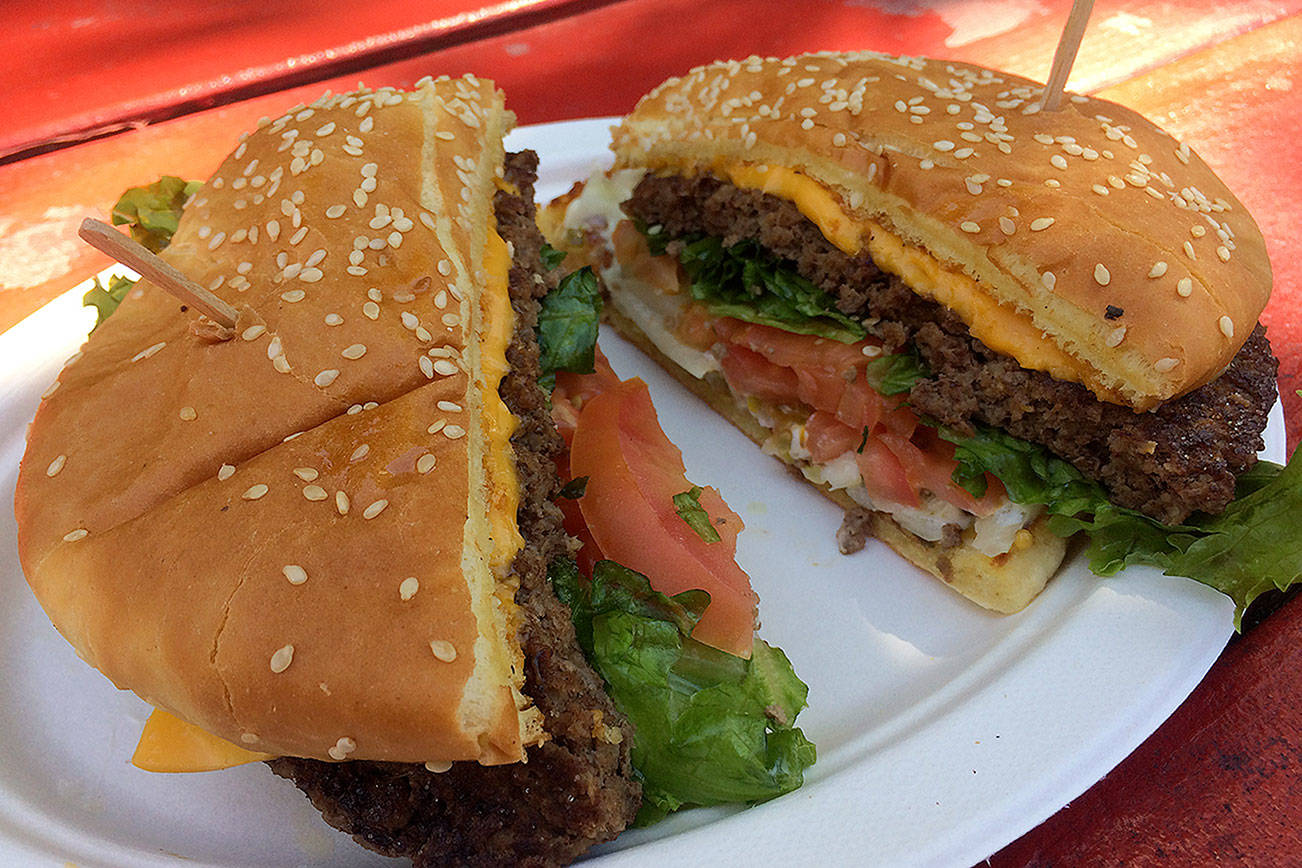
Open the menu and the entire thrust of the place is laid plain: bowls of marinated olives, cheese plates with honeycomb, cured meat with pickled fennel, a Painted Hills burger, pork belly, sweetbreads, and hanger steak. The proteins are confined to a single expression of chicken, lamb, and a fish of the day. Smith is aiming straight for that rustic sweet spot—a target with a very small bull’s-eye for all those reasons mentioned above, but one which is by no means impossible to hit. All it takes is care, thought, an easy hand, and a good eye.
I order poutine, a plate of sweetbreads, and a simple salad of local lettuces and almonds, and ease back into my booth behind a Rainier tallboy, anticipating good things.
Here’s how tough it is to fuck up poutine. With only three base ingredients to deal with (french fries, gravy, and cheese curds), you have to be cheap, careless, and blind all at the same time. You have to be pretty much completely checked out not to get it right in your sleep. Poutine is the very definition of a lay-up: fry the fries, pour on the juice, top with curds, then blast it under the salamander for a minute to make everything all nice and melty.
I’ve known cataleptic ex-Denny’s night cooks who could do this right. But not the kitchen at Smith.
Let me explain the problems, start to finish. Don’t just wave the fries over the hot oil and assume they’re done. They’re going to be soaking in gravy, so give them some time to firm up. And then there’s the gravy itself. If you’re lazy, use regular gravy. If you’re fancy, use a nice reduced jus. I’m not sure where Smith got the hybrid beef water they were using, but it tasted like commercial beef base mixed up from powder, left to sit too long in the steam table until it became all chunky, and then thinned with tap water to stretch it over the last of the night’s plates. Except that I was there early, so I don’t know what excuse this kitchen had.
Finally, the salamander is only there to melt the curds, not to try to reheat the plate or crisp up the limp fries. You know what happens when you try to use the top-broiler to repair the sins of the fryer? You burn everything: the cheese, the blackened tips of the fries—everything. And then you decide to serve it anyway? That’s beyond me.
As for the sweetbreads, they were largely inedible. Sweetbreads are delicate things; they want care and attention. Done correctly, they can be delicious—soft and tender and presented like God’s own McNuggets on a plate with appropriate sides. But Smith’s version—served crusted in cornmeal, deep-fried, and then sliced-to-serve into big, ugly chunks—was more like a poorly-done chicken-fried steak attacked with a hatchet. Further, they were served dry—untroubled by sauce—which is fine if your sweetbreads are light and subtle, but not when they’re just dumped unceremoniously onto a plate beside a (reasonably artful) fan of black plums glazed with harissa. The plums were actually lovely and restrained, so a matching gastrique would’ve been nice. Or a plum sauce. Anything. But no: This was rusticity taken to an illogical conclusion, simplicity without art.
And I don’t think I have to tell you what was wrong with the salad.
I went back to Smith twice more. A crowded weekend brunch under the staring eyes of stuffed prairie chickens was slightly more successful, with peppery micheladas and half a Tecate sharing table space with skillet-served baked eggs over a bed of prosciutto and topped with a sea of mustard and Gruyère-jacked béchamel.
There were big platters of the traditional “Full English Breakfast,” which was probably the only time that the kitchen’s “just throw it on a plate and get it out the door” style actually worked: mounding together excellent baked beans with a sharp bite of spice, three fried eggs, thick-cut bacon, a slab of ham, and baked tomatoes with black pepper, all topped with a slice of bread fried in bacon grease. Leaving aside the fact that the kitchen never bothered with the sausage promised on the menu, and that the baked eggs came garnished with a shriveled piece of kale burnt to a crisp beneath the salamander, it was otherwise a perfectly serviceable breakfast.
Coming back for another dinner on another night—sitting down in that cozily half-finished room and wanting so much to like it, to feel that perfect, sweet click of food and beverage and place all synching up together, I ordered a glass of Côtes du Rhône and a hanger steak with roasted turnips, turnip greens, and baby beets. It was a dish perfectly calibrated for the vibe that Smith seemed to achieve effortlessly, the kind of thing you could imagine being picked up in white paper from the local butcher and dug from the garden in the back.
When it arrived, I knew without taking a bite that it was a failure.
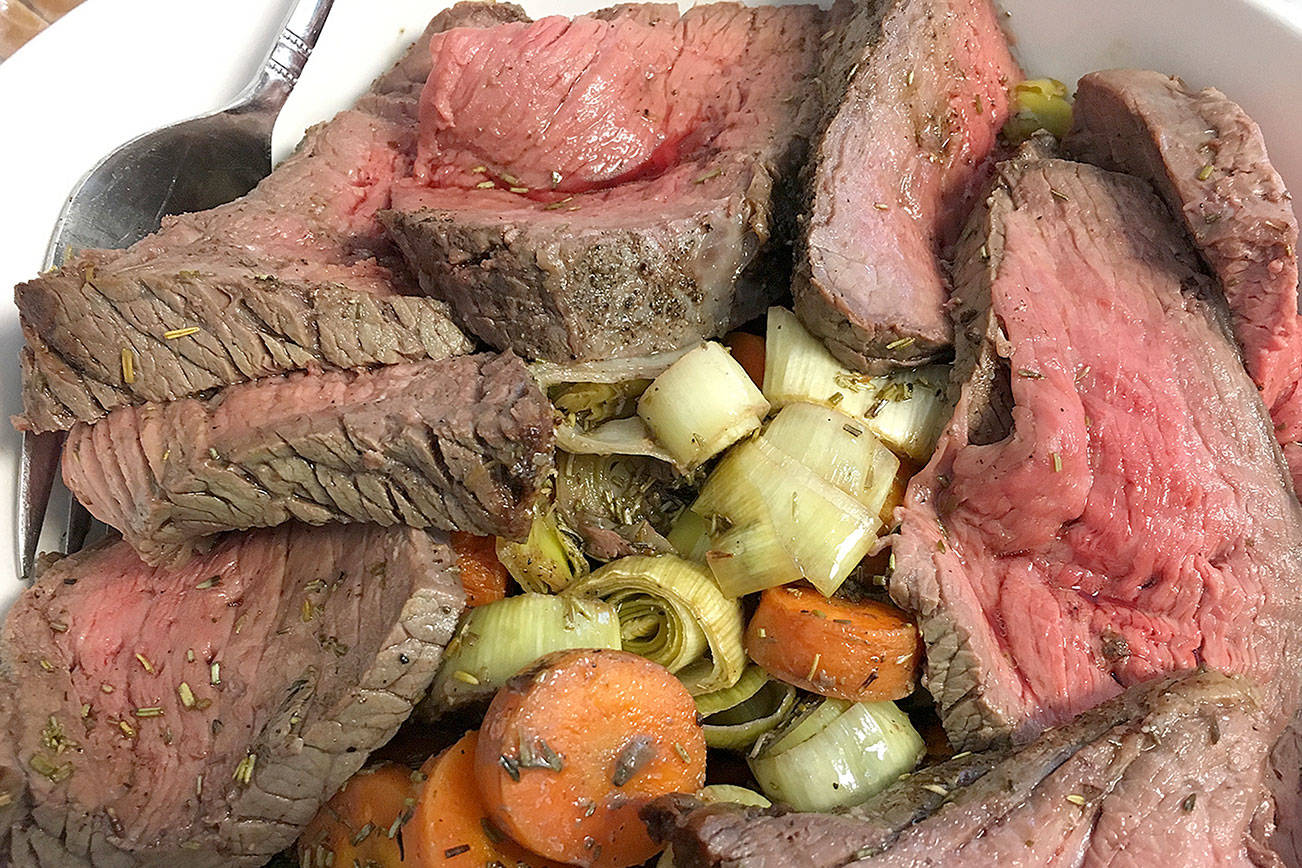
The steak had a nice char to it, but hadn’t been rested. Having been sliced in the kitchen, it was bleeding like a murder victim and looked like it’d been hacked to bits by a chimp with a dull cleaver. What’s more, the baby beets were served raw and cold, beside and atop the roasted turnips (only one of which had been roasted enough to actually chew easily); and the greens, while tasty, nicely salted, and smartly used, were done no favors by the blood and fat sloshing around in the well of the plate.
A composed salad, a well-done jus, a bittersweet plum dressed in a harissa glaze or a jumbled-up plate that is jumbled up just so—these are what matter when you’re trying to walk the upscale/lowbrow line that Smith is, that tightrope between rustic intent and haute execution. There were opportunities for Smith to have achieved that magical equipoise of greatness in a place where only goodness is expected. But it fell short in nearly every respect, so what could’ve been a great bar with excellent food became instead just another good bar where I will never eat poutine again.
PRICE GUIDE
Poutine: $8/$11
Sweetbreads: $10
Hanger steak: $16
English breakfast: $15
Baked eggs: $10