Top

music

Stories


Myth 61 Revisited

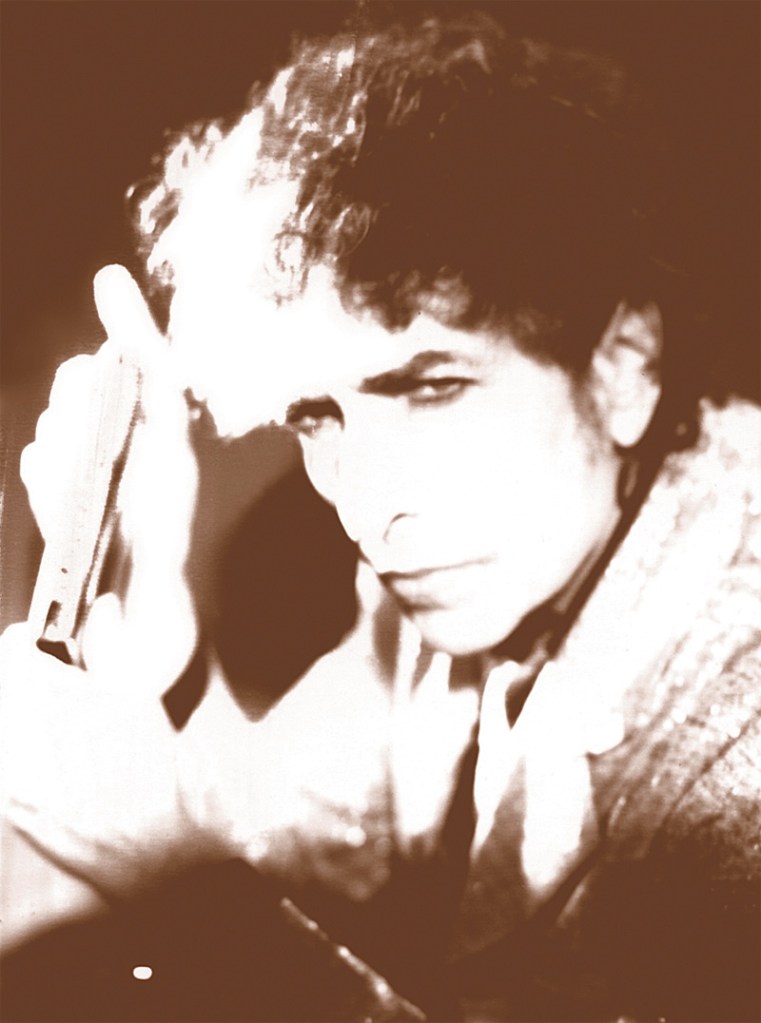
"Authentic pop music" is a fallacy that has forever plagued Bob Dylan. It also created his legend.

No one played me Bob Dylan's music growing up, thank God. My parents were a little older and definitely not into nasal caterwauling and country warbling. That was a part of the '60s they hated, along with Southern cops and the war in Vietnam. So the first time I really heard Bob Dylan was high school, late '80s, after I was already marinated in music, opinionated, informed. I'd heard Dylan covers plenty—Hendrix, the Byrds—but it wasn't until college that I started meeting people who were putting on that particular brand of intellectual pretension that cloaked itself in anti-intellectualism and Marxism, who claimed to find the "real America" in Dylan's stripped-down arrangements and scratchy yodel.

I didn't get his music right off the bat—I was married to big, hooky choruses and long, indulgent guitar solos—so I had to struggle a little. I struggled at first even to stand it, mostly because I couldn't stand the kids in wool caps and army jackets who misused their big vocabulary words and swore that Dylan would change my life. I was pretty sure that if my life was going to change, it wasn't going to happen from looking down the barrel of some out-of-tune hillbilly music. But enough of my college friends insisted that Dylan was great that I kept trying. Despite the undeniable truth that some of Dylan's songs were untouchably great, I wasn't hip to what the big deal was. THIS guy? This is the famous Bob Dylan? This monotone sneering over the same endlessly repeating three chords, interminable verses, nonsensical words? Why is this guy such a legend?

Eventually I came around, but I'm grateful that I heard Dylan this way, grateful I wasn't steeped in his lore from the outset. Because Dylan's legend is insane; it blinds people to his actual legacy as a musician, and the lure of its appeal reinforces the pernicious lie of the pop-music prophet. Dylan is one of the fountainheads of pop stardom, and certainly he's one of the first repositories of "authenticity" from whence all claims of authenticity in pop follow. And the idea of "authenticity" having anything to do with pop music is one of the bloodiest lies in modern history. Authenticity has NOTHING to do with pop music. That's a belief system propagated by German music writers and humorless teenage assholes. I've known a lot of musicians, and after a while you realize they're all authentic, all equally authentic. It's hard enough to write enjoyable songs without also trying to put over some scam on people. I guarantee that if you put Katy Perry and Leonard Cohen in the same room, they'd feel like members of the same tribe. It's only music fans who need to call one thing "real" and another "fake." What the fans treasure as honest and real is almost always just a question of taste. Either you like it or you don't—trite, but true.

Dylan's significance hinges on one of America's central fallacies: the idea that the simple man is more honest than the educated man, the farmer and laborer more trustworthy than the lawyer or professor, the poor person closer to the source, closer to God, than the middle-class person. Dylan copied the music and the sound of sharecroppers and mountain men, and their presumed honesty was conferred on him. If the Appalachian dirt farmer just naturally has more integrity and connection to the headwaters of art than the big-city lawyer, it follows that the Minnesota snot-nose who sounds most convincingly like an Appalachian dirt farmer must share that integrity—with the added advantage of possessing big-city irony and detachment in place of the inconvenient racism and plain stupidity the dirt farmer might bring to the table.

So Dylan got lifted by a postwar world desperate to have the simple truth be the solution to modern problems. Race riots? Nuclear Armageddon? Thank God we found this sneering kid from the Midwest to straighten it all out for us. I don't blame him for the way he acted; my God, he was just a child. A child being told that he was a prophet, or a seer, by a bankrupt culture he barely understood. Either he was the last honest man or the first one. He was no more petulant or gaseous than any other smarty-pants would be in that situation. Rock musicians who become famous at a young age are encouraged to make a categorical error, encouraged to think that because they're good at one thing they must be good at all things. They are confirmed in the young person's belief that they already know everything, and so they lose the ability to hear that they're wrong—or worse, lose the ability to hear that they don't even know enough about a thing to be wrong. So they start talking about politics, or religion, or even love, with an authority that no 22-year-old has earned. And we encourage them, as fans, because we're always looking for a savior.

So not knowing Dylan before I was 20, not being told that he was the savior until I could judge for myself, saved me a lot of heartbreak later on. I wasn't primed to think that saviors were a thing, or certainly not a thing I was looking for in rock and roll. I didn't get too worked up about the Clash, or Fugazi, or the Minutemen. I didn't get off on their tunes that much, so the fact that they were held to mean something profound, that their legacy eclipsed their prowess, wasn't something I shed a lot of tears over. Nothing about them had a greater significance to me than simply how good their choruses were.

1 | 2 | Next Page >>
 
  • Angela Merkel 09/14/2010 6:28:00 PM

    I'm wondering very much why you refer to *German* music writers as the last believers in a concept call "authenticity"?

  • Louis 09/08/2010 2:26:00 AM

    This is a good piece, but at the end you contradict yourself. You conclude the second-to-last paragraph stating that you only judge bands on their music, then in the last paragraph you admit to liking Bob Dylan for reasons other than his music. Which is it? Otherwise I agree that young people don't know anything, but at the same time that makes them better at observing things for what they are. They're generally free of the hard-set, unshakable prejudices and ignorance and fear (Tea Party, anyone?) that characterize the old, are still capable of adaptation and change, and are more likely to call bullshit when they see it. Combine that with ambition and talent, and there you have Bob Dylan. One side of him at least.

  • Admiral Wonder 09/05/2010 11:53:00 PM

    One thing that's always struck me about Dylan is his evasiveness, and his repeated claim that only songs matter--songs that have, yes, the simplicity of an honest country man, but also the bizarre clutter of poetic and non-poetic stuff, as in Like a Rolling Stone or Gates of Eden, what have you. I don't think the myth of him is of authenticity. Not many people who either survey his beginnings or what he was doing from, say, 62-76, would apply that tag. Dylan is great, in my humble opinion, because he absorbed so much. He is a holder and preserver of American tradition, even though he at times mixed that stuff (or reinvented it) with French symboliste poetry or Ginsberg or Donne. In any case, what remains impressive about the man is that, if you consider his last three albums, he's deeply invested in continuing on the traditional music that so clearly moves him but in a way that makes it flexible, and even partially evasive itself. Love and Theft is a good example. The entire album is people with characters facing uncertain dilemmas, and the title is pulled from a book on black face minstrelsy. Dylan in black face (listen to the song Mississippi), both hiding and revealing something more crucial about where a lot of this music stuff comes from. No one else has done it better or really is still doing this in the same way. For this, he should be praised. And it's true he's written more amazing songs than anything else I can think of right now.

  • vralia 09/05/2010 10:24:00 AM

    Nail on the head, John. Thank you.

  • Vatten 09/04/2010 9:27:00 PM

    "if you put Katy Perry and Leonard Cohen in the same room, they'd feel like members of the same tribe" Katy Perry and Bob Dylan same tribe ? Doubtful. To which claim of Authenticity do you refer, your own ?? Looks like bringing up a fake argument and going loose on it. If only, see Bob Dylan as a musician with big influences on an innumerable amount of other musicians, like Jimi Hendrix used to read endlessly in Dylan-songbooks, Jack White knows almost every Dylan song by heart, Neil Young calls him the master, Springsteen said he freed his mind, like said the list is endless, Bob Dylan is just GOOD, who ever gives a sh .... about authenticity

  • Robert Corbett 09/04/2010 7:03:00 AM

    Interesting, but one wonders why a musician as creative and as educated (a CHID graduate no less) as Roderick still thinks that what gets the knickers of adolescent boys in a bunch about music has any relevance when it comes to discerning art. I am sure he knows that Dylan from the start annoyed purists. They had a point -- the revival and reworking of folk music started as far as the back as the thirties, which has something to do with why Pete Seeger is a much an activist as a performer. Then this, well, Kid!, has the audacity to perform the same songs, but also write his own, and then turn the whole movement inside out by the age of 25 -- which was the start. What a cool move! Naturally ever after boys in whatever they are wearing will hunker down and whisper that this stuff is Authentic. However, just because boys keep saying such things doesn't mean it is not true. Dylan is just a pop song writer in the same way as Cole Porter and Carol King and Stephin Merrit. (The list can go on.) Others, not so much, and I do mean Kate Perry, though she may grow into something. It would be good if we could revise the vocabulary and perhaps keep it away from young men, but there is at the core of the idea that should not be dismissed. The problem with throwing around the A word is the attitude that people do it with and the attitude that people have to it. Because at its core is an acknowledgment of a sense of wonder--without which we have no Art worth having. Leonard Cohen might see Perry as part of his tribe, but probably observe she is has journeying to go to follow his path. {Listening to Gram Parsons amd Emily Lou Harris sing "Love Hurts" by Boudleaux Bryant)

  • oh-mercy 09/03/2010 6:34:00 PM

    Yikes- Get self-righteous much? Sounds like you have a bit of a superiority complex. Or inferiority with an ax to grind-? (no pun intended) I've been a fan since the '60's and I admit that I find him a fascinating and complex figure but I just don't recognize these fans you talk about though I know some are out there. And I certainly don't recognize the Dylan you describe- not his voice, his musical ability or his motives, political or professional. When asked about his fame and crazy appeal in an early interview you could see his discomfort and frustration when he answered... "what do you want me to say,... It just happened, just like other things happen." (paraphrased) I will agree with you here: "to his everlasting credit, Dylan never believed what people said about him...." He does just keep doing his thing, and may he do so for a very long time.


Most Popular Stories

Find a Concert


Now Click This

Browse Voice Nation
  • Voice Places

    Voice Places

    Discover restaurants, nightlife, travel, shopping...

  • VOICE Daily Deals

    VOICE Daily Deals

    Get 50 to 90% off every day on restaurants, movies, massages...

  • Best Of

    Best Of...

    More than 10,000 of the BEST things to eat, drink, and experience

  • My Voice Nation

    My Voice Nation

    Join the Village Voice community and get exclusive deals and info

  • Happy Hour

    Happy Hour

    Your local Happy Hour guide at your fingertips

or

Log in or Sign up

Social Connect:

Use your favorite account to access My Voice Nation.


Use your My Voice Nation account to log in:


Forgot password?
or

Sign Up or Log in

Social Connect:

Sign up for My Voice Nation with your preferred network.


Sign up for a My Voice Nation account:


Privacy policy