Thriller App
Published 7:00 am Tuesday, August 10, 2010
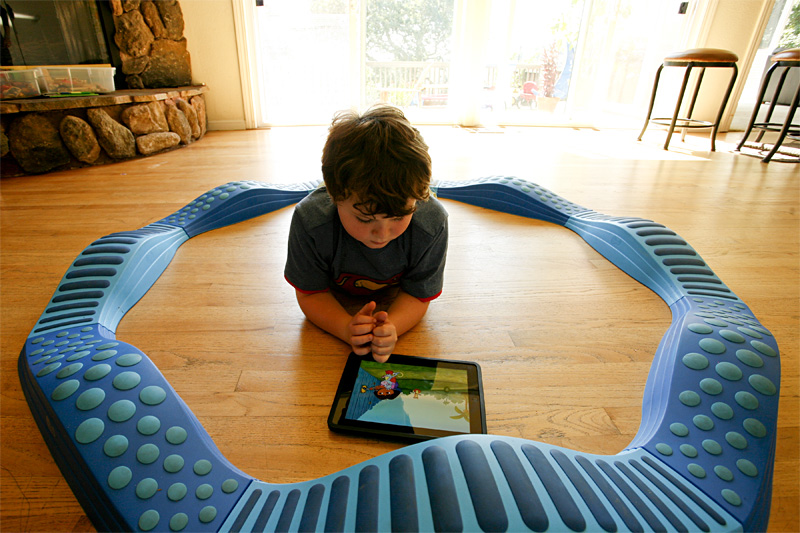
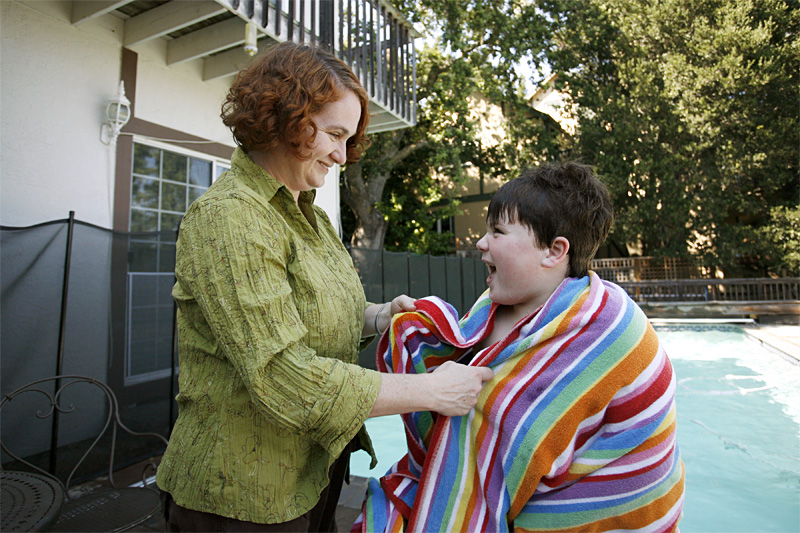
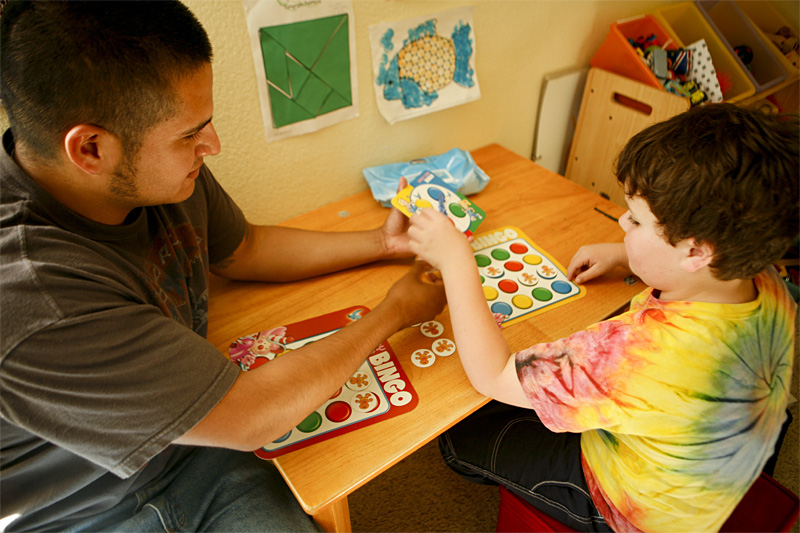
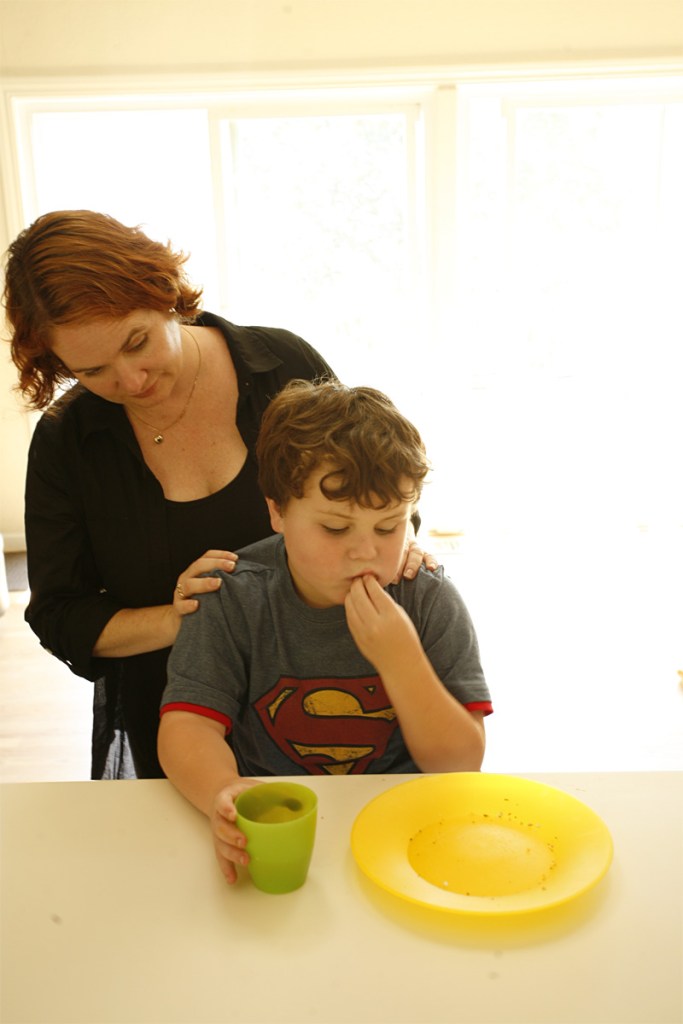

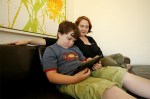
Three weeks had passed since Shannon Rosa had glanced over the numbers on her tiny blue raffle ticket. Like many other parents, she had agreed to cough up $5 not because she thought she had any real chance of winning, but to support the school. Now, as she sat in her Honda Odyssey in a Redwood City, Calif., parking lot, about to pick up some tacos for the family, her cell phone rang. It was the school secretary. Rosa had won the raffle.
Alone in her van, she screamed. Then she drove straight to Clifford School to claim her prize: a glistening new iPad.
Although Rosa already owned an iPod Touch, she had purposely held off on the iPad. She isn’t an early adopter; she likes to wait until the kinks are worked out. But for $5, she didn’t mind taking the iPad home one bit. Maybe Leo would like it.
Leo is Rosa’s 9-year-old son, and when people ask her about him, she is mindful to explain him in a way that will set appropriate expectations. He is a boy with intense autism, she says. He is not conversational, he learns very slowly, and he has been prone to violent outbursts. He is essentially a triple-sized toddler. Leo had shown interest in the iPod Touch, but its 3.5-inch screen was difficult for his fingers to navigate.
For all those reasons, Rosa had no expectations when she handed her son the iPad—a half-inch-thick, touch-screen tablet computer three times the size of its smaller cousin, the iPod. Though scrolling through the icons is easy for most users, the device was not created with special-needs consumers in mind.
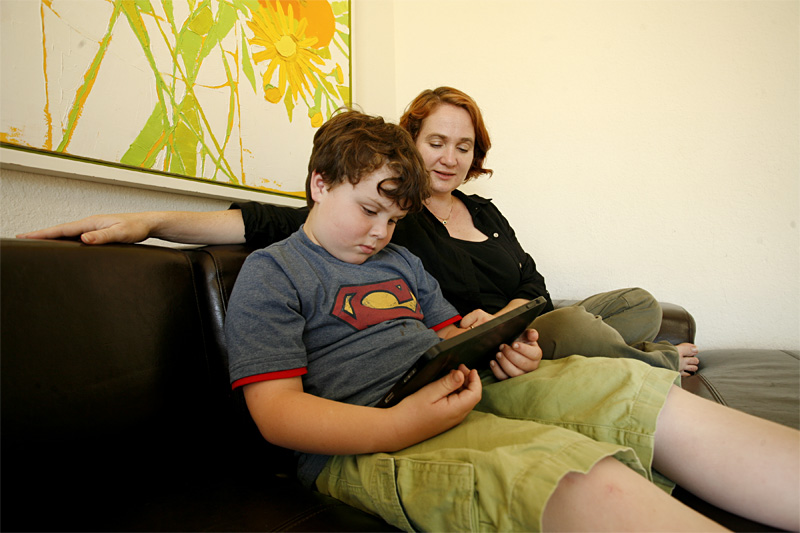
So when Leo took it in his small hands as if it were an old friend, and, with almost no training, whizzed through its apps like a technology virtuoso, his mother gasped in amazement. After he began spending 30 minutes at a time on apps designed to teach spelling, counting, drawing, making puzzles, remembering pictures, and more, she sat down at her own computer.
“With the iPad, Leo electrifies the air around him with independence and daily new skills,” Rosa typed into an entry for BlogHer, a blogging network of women which she edits and writes for. Her blog was one of the first to bring widespread public attention to what one expert has called “a quiet revolution” for the autism community.
Since the iPad’s unveiling in April, autism experts and parents have brought it into countless homes and classrooms around the world. Developers have begun pumping out applications specifically designed for users with special needs, and initial studies are already measuring the effectiveness of the iPod Touch and the iPad as learning tools for children with autism. Through the devices, some of these children have been able to communicate their thoughts to adults for the first time. Others have learned life skills that had eluded them for years.
Though there are other computers designed for children with autism, a growing number of experts say the iPad is better. It’s cheaper, faster, more versatile, more user-friendly, more portable, more engaging, and infinitely cooler for young people. “I just couldn’t imagine not introducing this to a parent of a child who has autism,” says Tammy Mastropietro, a speech pathologist based outside Boston who uses the technology with numerous clients. She sees it as a game-changer for those with autism, particularly those most severely affected.
Rosa agrees.
“I don’t usually dabble in miracle-speak,” she says, “but I may erect a tiny altar to Steve Jobs in the corner of our living room.”
Hand in hand, Shannon Rosa, Craig Rosa, and their children, Leo, India, and Gisella, meandered through the Ferry Building in San Francisco one recent afternoon. Amid the wafting aromas of strong coffee and freshly baked breads, Leo broke free from his sisters’ grasp. He skipped sideways, beat himself on the stomach, and squealed.
After finding a table, Rosa began to unpack some Acme Bread items. Leo went wild. He snatched his croissant, tore at it, and stuffed the pieces in his mouth faster than he could chew. He grabbed at the food in front of his family. He ducked under the table and attempted to eat off the floor. “More, please,” he said frantically. “Thank you, please.”
For the Rosas, outings like this can be a challenge. Without the iPad and its ability to occupy Leo, the excursion would be near-impossible. In particular, he has a hard time behaving himself around food, which is typical for a child “on the spectrum,” a commonly used phrase for what is formally referred to as autism spectrum disorder. Mostly, though, people just call it autism.
Scientists know little about autism, but in general they agree that the developmental brain disorder manifests in three ways: communication deficits, social incompetence, and obsessive behaviors. Last year, the Centers for Disease Control found that one out of nearly every 100 children born in the United States was on the spectrum.
Some on that wide-ranging spectrum become productive, happy, and even brilliant adults. Often those people are said to have Asperger syndrome, or Pervasive Developmental Disorder Not Otherwise Specified (PDD-NOS).
Others require constant supervision and exhibit severe learning difficulties throughout their lives. The care of an autistic person over his or her life-span runs more than $3 million.
Whether they are high- or low-functioning, children with autism tend to be visual learners who gravitate toward technology and screens. They are less adept at recognizing human faces and expressions. They tend to prefer interacting with inanimate but engaging objects like the iPad. What happens on an iPad’s screen is predictable. Humans—particularly those making cryptic sounds and faces—are not.
After finishing his own bread and everybody else’s at the table, Leo requested his prize possession.
His mother handed it over, and he brought his head very close to it, as if to snuggle. Then he began scrolling through the apps, gazing intently at the screen while deciding what he wanted to pull up.
“Want to watch a video?” Rosa asked. Although Leo didn’t answer, he had clearly understood her, because he scrolled easily to a new cluster of icons, one of which represented his favorite Teletubbies video. He selected it, then watched in awe for several minutes as the vibrant, bizarre creatures rolled around.
After Leo exited the video and continued browsing, his mother suggested he make a rainbow. Leo can’t use a pen or pencil very well because, like many autistic children, he has problems grasping small items. Before the iPad, his most advanced drawing was a smiley face with legs.
But that day, Leo located and clicked on the icon for the Draw Free app and selected a blank canvas. He touched his index finger to the screen, swung it in a half circle, and repeated the motion several times, thickening the arc. Finally he scribbled small circles on either side to represent clouds.
Then he drew an umbrella. Then he drew a happy face.
“This is only after a month,” Leo’s father said. Craig Rosa works as a producer for KQED’s multimedia science program, Quest. He believes his son’s interest in the iPad has lengthened his attention span. “It gives you hope, and you begin to expect more instead of less.”
But there’s a reason the Rosas aren’t quite calling this a miracle. There have been times when Leo loved a new toy for a few days or weeks, then never looked at it again. It’s hard to say what he’s really capable of learning. They don’t want to overhype the effects of the iPad, especially before finding out if science will back them up.
Rosa has been running a little study of her own on Leo. Using an app called Stories2Learn, she is trying to teach him to eat like a little gentleman.
In winning that raffle contest, Shannon Rosa inadvertently stumbled on a cutting-edge treatment that scientists, therapists, application developers, and parents around the world are only beginning to use.
In Pennsylvania, developer Seema Patel is working at the Autism Center of Pittsburgh on an iPad app that will challenge children with autism to identify the emotions of a robot named Popchilla. In Toronto, a profoundly autistic and nonverbal girl is using iConverse on the iPod Touch to tell her mother where she wants to go shopping.
Netherlands-based company Assistware Technology has developed Proloquo2Go, one of the iPad’s most popular education apps. It allows users to select and align photographs representing words, which the iPad (or iPod Touch) will speak for them.
In Australia, Canada, and the United States, small-scale scientific studies are already underway. In 2008, “iPod Therefore I Can: Enhancing the Learning of Children With Intellectual Disabilities Through Emerging Technologies” monitored the progress of 10 autistic children on iPod Touch at a school in Victoria, Australia.
One boy who had been struggling for years to learn how to wash his hands was shown photographs of himself doing it correctly on the iPod, while voiceovers and pictorials reinforced his behavior. “It was not long before he was washing his hands successfully,” the study reported.
Another student with behavioral problems showed an attitude improvement when given an iPod. Feeling cool, the boy began “grooving round the playground.”
About 60 percent of the educational goals set for the study were met. The researchers concluded that participating students and their families would have “greater potential to live healthy, fulfilling, and productive lives.”
Another study conducted in the United States and published last year in Journal of Positive Behavior Interventions found that teaching autistic students desired behaviors with instructional demonstrations via the iPod, also known as video modeling, improved their ability to move between classrooms without wandering off or hitting one another. The study found that the iPod was optimal because video clips could be easily repeated, widely distributed, and watched anywhere.
So far, only one study is looking at the newer iPad. “Touch Technologies in the Classroom” is underway at Beverly Junior Public School in Toronto. Rhonda McEwen, an assistant professor at the iSchool at the University of Toronto who is running the study, introduced iPods and iPads into six classrooms of autistic students at the school in February.
McEwen is still gathering data, but she says the feedback from a initial round of teacher interviews has been largely positive. One teacher said students’ attention spans seemed to be lengthening. Another had tears in her eyes when she explained that she had been working with a boy for two years, unsure whether he understood language. “With the iPod, for the first time, he was able to demonstrate that he did understand,” McEwen says.
Although students with autism typically don’t socialize with each other, a third teacher told McEwen that one student sat beside another to work on a language program. “They looked at it together,” she said. The teachers agreed that although the students had few interests, they were interested in the iPad.
A yellow school bus winds through the hilly suburbs of Redwood City, then pulls over outside a spacious Tudor-revival home. Inside, Rosa stops midsentence and tilts her head. “Leo,” she whispers, and flies out the front door.
She greets her son as he steps off the bus, and takes his large backpack and cap. He’s dressed in a tie-dye shirt and a five-point harness to keep him seated during the bus ride. He is inexplicably barefoot.
“Are you hungry?” she asks, knowing very well that he is. He embraces her, and she sees that once again he has been seeking out dirt. “You need to wash your face, dude,” she says.
Clearly excited to be home, Leo books it to his backyard play area, where there is a pool, a trampoline, a rocking horse, a large swing, and toys galore. “This whole house is set up for Leo,” she says.
Although the house is tidy and welcoming, a close look reveals abundant evidence of Leo’s destructiveness. Along the banister that runs up the stairs, several pegs have been displaced; he kicked them out. Cabinet doors have been dislodged, walls have been scraped, and the living-room couch springs have ruptured. His mother doesn’t really even notice the damage, she says, other than when guests are here.
“Want a sandwich,” Leo says. His mother asks what kind, already knowing the answer: peanut butter. She asks anyway, because when Leo wants food, there is an opportunity to get him to speak. He seems to realize that the fastest way to get the food is to answer questions as best he can.
When she places the food in front of Leo, he goes to town on it.
“Small bites, please,” she says. He ignores her. “Leo, small bite.”
After eating, Leo runs to his room and re-emerges naked, carrying his swim outfit of trunks and a long-sleeved white shirt. His mother helps him dress, then secures goggles over his eyes. He backs into the pool and immediately begins splashing wildly, then swimming adroitly in patterns. “He’s like a little naiad,” Rosa says.
Leo used to drink the pool water and then have “accidents,” she remembers, but he mysteriously stopped. That’s common. Leo will be intensely interested in something, and suddenly he just won’t be. “Last year he was all going for dive toys,” she says. “This year he [couldn’t] care less.”
The Rosas fear this could someday happen with the iPad. But for now, Leo is absorbed in it.
Quietly perched on the couch after his swim, Leo practiced animal words, which have recently become his favorite. “S! W! A! N! Swan!” the device announced as he lined up the letters, then it quacked. As Leo kept himself occupied, Victor Cabrera, a therapist of whom Leo is fond, talked about the boy’s progress.
In the year and a half that Cabrera has been visiting four times a week, he has noticed advances in Leo’s independence. Leo can now make a sandwich, brush his teeth, tolerate visitors, and use the bathroom on his own. Before getting the iPad, he wasn’t very good at using his fingers, Cabrera says, “but look at him now.”
Leo flew through apps and settled on one that helped him learn to count. “You can put anything he likes on there,” Cabrera says. “Music, movies, educational apps. He can be on it.”
Cabrera is an instructional aide for a class of autistic children at the Morgan Autism Center, a private school in San Jose. There is already one iPad in his classroom, and in the fall, the center will bring in several more. “We are seeing the same results we have seen with Leo,” he says. “The kids are actually enjoying educational tasks.”
Because children with autism often become agitated when they feel out of control, or when they don’t know what will come next, they require visual schedules, or pictorial representations of the events in their day.
Prior to the iPad, those schedules were created manually. For teachers, that meant cutting and laminating pictures, then gluing them to Velcro strips. For students, it meant using the same images each day.
On the iPad, visual schedules—including interactive dragging, animation, and cool sounds—can be quickly put together using the First-Then app.
Rosa has been using this app to show her son when to expect mealtimes. In addition, she’s using the Stories2Learn app to demonstrate how she would like Leo to behave at the dinner table. She has created a “social story,” pairing photos of food with audio explanations and text. Leo has to touch the screen to move through his story; with any luck, this multimedia learning approach will make an impression.
Apple has remained characteristically silent with the news media on the “quiet revolution” its products have started in the autism community.
But the company has been receiving plenty of feedback—alongside requests for discounts and donations—from parents with special-needs children. Meanwhile, health insurance companies have been hesitant to cover Apple’s technology, which they consider primarily recreational, partly due to a fear that those without true medical need might try to game the system.
That isn’t to say that the iPad is perfect for children with autism. For one thing, the built-in battery doesn’t last forever. Sometimes, inexplicable software glitches can crash the system. Most problematic might be its durability: one bad tantrum, and there goes the screen. Some on the autism spectrum lack manual dexterity, or are simply not capable of learning how to use a computer.
At the Massachusetts Institute of Technology Media Lab, Matthew Goodwin, the director of clinical research, is about to launch a large-scale project examining what the iPad and other new technologies can do for people with autism. “In my mind, the iPad is not the end-all be-all, but it is currently a very appealing system given its size, rich screen display, and processing power,” he says.
He’s also interested in how it could help revolutionize the way behavioral science is conducted. “Gathering behavioral data on mobile devices like the iPad would help us get outside the laboratory and observe life where it happens—in the real world,” he says. It would also allow many more people with autism, including those who have difficulty taking part in laboratory assessments, to contribute data.
Goodwin sees numerous possibilities for the iPad. He loves the idea of hooking it up to a discreet wristband being developed in the Media Lab that could wirelessly monitor physiological arousal. The iPad could then have a sense of an autistic child’s frustration level, and when the child became upset, the device could automatically introduce something calming. Maybe it would be music. Maybe the iPad would tell the child to take a deep breath.
The technology has the potential to make autistic children’s lives easier, Goodwin says. But if the devices are proven successful, they might also be able to show society the unrealized potential in children with autism.
The progress of these children is measured in small steps.
A couple of weeks ago, Rosa and Leo headed home from Seattle, where they had spent two days on a boat. Her husband and the girls were staying longer to partake in activities they knew Leo wouldn’t enjoy, so Rosa and her son were flying back together.
When it was time for them to board their plane, the flight was delayed, supposedly for just 10 minutes. Then an announcement said it would be another 10 minutes. This unexpected change was problematic for Leo, because Rosa had told him he could not eat Nutter Butter cookies until they were in the air. Because their flight might be ready at any time, she was unable to go and buy him another snack.
Leo was getting cranky, which scared Rosa. She worried he might have another airport meltdown, like the one that had once ended their family vacation. Her only hope was the iPad.
She took it out and opened iEarnedThat, which allows the user to divide a photograph into any number of animated puzzle pieces. As the puzzle is completed, players earn rewards. Leo usually does puzzles of about 15 pieces. Rosa bit her lip and created one with twice that many. “I wasn’t sure he would have the patience,” she said.
For the next half-hour, he sat quietly and finished the puzzle. Then they boarded the plane, and Leo got his Nutter Butter.
Not only did the iPad help them avert a crisis, but Rosa also found out that her son was capable of going one step further in completing a puzzle. He was up for the challenge. With every small advance Leo makes on the iPad, his parents’ hope swells.
They find themselves wondering what else he can do. Beyond the progress Leo will make, the iPad also gives them a window into the enigmatic mind of their son. That’s something more than a near-miracle.
Ashley Harrell is a staff writer for SF Weekly, a Village Voice Media publication. Taylor Friedman contributed reporting to this story.