Battle of the Booze
Published 7:00 am Tuesday, July 27, 2010
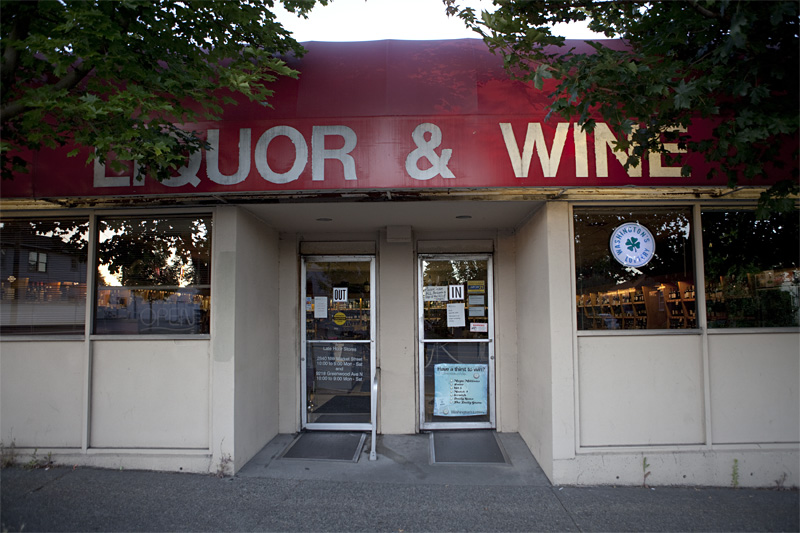
Sandeep Kaushik is worried about the changing scenery should voters this fall decide to turn Washington’s state-run liquor business over to the private sector.
“You could see five retail liquor stores for every Starbucks in the state,” says Kaushik, spokesperson for Keep Our Kids Safe, a labor-backed coalition opposing two historic initiatives to privatize hard-booze sales.
Not that Kaushik’s got anything against liquor. As he wrote in 2004 while working as a staff writer at The Stranger, “The simple truth is that alcohol never hurt anyone, and besides, even if it did, it was his or her own fault and not the fault of the booze.” For that matter, he added, “Look at me. I’m a huge success in life and I stay drunk all the time.”
Now a spokesperson-for-hire, Kaushik ‘s right about the landscape should a majority of voters toast either (or both) Initiative 1100 or Initiative 1105 on November 2: According to a January study by State Auditor Brian Sonntag, privatization could create as many as 3,300 retail outlets selling spirits statewide. That’s 10 times the current number of state liquor stores, and roughly equal to the number of state Starbucks and McDonald’s outlets combined.
“Mini-marts, gas stations, drugstores, drive-thru liquor stores,” says Kaushik, a father of two. “It makes you wonder where liquor won’t be sold.”
Accessibility would increase, and so might the cost of booze. Sonntag’s study hints at such a rise, and former state Rep. Toby Nixon, an I-1100 supporter, says the reality is that the legislature could almost double the current 33 percent per-bottle tax, leading to higher shelf prices.
But the demand is apparently there. The two initiative camps turned in petitions with more than 750,000 signatures total, with I-1100 now approved for the ballot and I-1105 likely to be certified soon. These “people’s initiatives” happen to be the brainchildren of three major corporations that have spent more than $3 million in the hope of reaping millions in booze sales. One, warehouse chain Costco, the world’s ninth-largest retailer, turned its 28 Washington stores into mini–political mercantiles, using employees to solicit customer signatures for I-1100 with come-ons to the effect of “Imagine if you had a case of Jack Daniels to go with that year’s supply of paper towels.”
Of the two measures, I-1100 would result in the most dramatic changes, eliminating a “three-tiered” system that regulates manufacturing, distribution, and retail sales. The state would turn over those government operations to private businesses that already carry beer and wine, and to new licensees as well.
I-1105 would similarly privatize the liquor retail system. But Costco, Walmart, Safeway, and other big-box retailers don’t like this measure as much. They want to be their own distributors, and I-1105 mandates a middleman role for big beverage carriers such as Bellevue’s Odom Corporation, a major contributor to the I-1105 campaign.
Either way, if privatization is approved, demon rum could become as accessible as milk and cookies in Washington next year—if voters can figure out what they’re voting on, that is.
The notion of taking Washington’s liquor business out of government hands has been debated from legislative chambers to neighborhood bars almost since the Washington State Liquor Control Board was created after the end of federal Prohibition in 1933.
Lawmakers could never bring themselves to turn over the state’s hard-booze monopoly to private operators, giving up control—and millions in annual revenue. Ten years ago, a gubernatorial committee also took a hard look at privatization and then voted against it. So after decades of no options, the public suddenly has two competing initiatives offering potentially different results and debatable costs.
For sure, privatization means closure of the state’s 315 state-run (and, in more remote areas, contracted) liquor stores next year, likely eliminating about 900 state jobs and stopping the flow of at least $60 million in liquor revenue going to state and local government programs. To critics, the initiatives promise a diversion of public money into corporate coffers under the pretense of downsizing big government. But both initiatives’ backers claim these state funds could be restored by hiking liquor taxes, adding to what is already America’s highest state liquor levy.
Auditor Sonntag’s report, which offered several “liquor model” options for privatization, concluded that the state could increase revenue by as much as $277 million over five years by selling off its retail/wholesale operations. The report made no recommendation, but “my personal opinion,” says Sonntag, a possible Democratic gubernatorial candidate in 2012, “is that the sale and distribution of alcohol is not a core function of state government.”
Initiative backers today think a majority of citizens agree. But a July 9 poll by KING-TV and Survey USA on ending Washington’s distinction as one of eight states that control wholesale and retail liquor sales showed no clear support for the measures. About 65 percent of respondents said they trust the state rather than private stores to responsibly sell liquor.
Sonntag thinks the Liquor Control Board could maintain oversight over store locations and hours of operation. But hard liquor would surely flow more freely—Sonntag’s own projections include a 15-percent increase in sales if the state relinquishes retail and wholesale control. And sales have to increase—and/or taxes must be steeply hiked—to make up the lost state revenue, as the initiatives propose.
Thirty-two states are open or license states, while 18 have some form of control. Of the latter group, only Washington and seven other states operate their own retail stores.
Steven Schmidt, spokesman for the National Alcohol Beverage Control Association, which represents control states, says governments increasingly turn to privatization proposals to fill budget holes. Virginia is weighing several such options, as are Mississippi, Vermont, and North Carolina. In recent years, Iowa, West Virginia, and Ohio have privatized various aspects of their booze-sale systems to increase revenues.
However, no other state has taken the long step away from control that Washington is contemplating. Iowa, for example, retained its wholesale monopoly to keep those funds flowing in, as Virginia is also proposing. (Iowa tried privatizing its wholesale warehouse operation, but had to resume control after its private contractor went bankrupt). Oregon has a semi-privatized system, contracting all its stores to private operators. But for Washington voters to hand off both retail and wholesale operations, Schmidt says, would be unique in modern times. “No state has ever [voted to] completely privatize their systems,” he says.
A study released by Schmidt’s group suggests they shouldn’t. The Alcohol Research Group, a public-health think tank, found that the 18 control states, such as Washington, were making $53 on every gallon of liquor sold, while non-control states made just over $15—in spite of data provided by Schmidt’s group that shows “a significant increase” in sales due to a vastly expanded retail system after privatization was adopted.
Social costs are also an issue. A press release from Kaushik’s group quotes Sharon Ness, a Tacoma nurse, saying that she often sees in her hospital the results of drunk-driving crashes. “Why on earth would we ever want to sell liquor in the same stores where we sell Cheerios?” she asks.
Joe Martin, a longtime social worker at Pike Market Medical Clinic, thinks license sales are sure to drive more business his way. “It follows,” he says, “that we’ll see more need for health care and ways to deal with homelessness.”
Still, privatization is the Promised Land to many. In Ohio, which partially converted its operations in 1997, the state pays licensed retailers a commission for selling state liquor. Last year brought in a record $729.9 million in sales through 440 stores. About $163 million went to the state, which also saves more than $20 million annually by no longer operating the outlets.
With two initiatives to choose from, Washington voters face the extra challenge of understanding the competing measures and possibly scattering their pro-privatization votes, a scenario which could result in neither proposal passing despite majority sentiment in favor of the underlying premise. The duel has also complicated the initiative-backers’ campaigns: They’re facing off against not only privatization opponents like Kaushik’s group, but each other as well.
I-1100 spokesperson Sharon Gilpin says I-1105 “leaves the state budget with a major revenue gap.” I-1105 spokesperson Charla Neuman says, “It’s the other way around. Our initiative makes sure the state makes its money back, and hopefully more.”
State figures show that as much as $68 million in programs will have to be defunded if privatization is approved, unless the revenue is made up by raising the already sky-high liquor sin tax—33 percent—on top of a 28-percent retail price markup. To compensate for the state’s lost markup revenue, could the legislature raise the tax by 28 percent or more? Absolutely, says Nixon, the former state representative.
“I think that’s actually quite likely,” says Nixon, who has been following the issue closely and has joined the pro-1100 camp. “I think the legislature won’t hesitate to restore the revenue level [through taxes] to what it currently is.” That could lead to higher retail prices, depending on how much retailers add on. “One of two things is going to happen if privatization passes,” says Kaushik. “Taxes are going to go up, or we’re going to see really devastating cuts in core programs, or both.”
Then there’s the problem of victory. If both measures pass, Secretary of State Sam Reed says the one with the most votes will win. Yet if both were approved, language from the two measures—some of it conflicting and confusing—would have to be combined, according to state law, with no real formula to guide the process. The legislature would get involved, along with an appeals court or two.
“In other words,” Reed said in an interview with TVW, the likely drawn-out drafting of the final legislation “is going to give the attorneys a lot of fun.”
The first question for voters to mull over, though, is whether Washington’s government-run booze business is broken, and if so, will presumably cheaper booze, higher corporate profits, and arguably less government revenue fix it?
Under the state’s current formula, a distiller gets about $4 for making a bottle of liquor sold for about $14 at state stores. Almost $7 of the consumer’s cost is state and federal taxes; the other $3 is the state’s markup to generate revenue.
Total sales, taxes, and other fees brought in more than $900 million last year. The Liquor Board was able to pay its operational costs and those of its regulatory and enforcement operations and still net $333 million to fund other state and local programs. About $200 million of that went to the state general fund, says liquor board spokesperson Brian Smith. Another $70 million went to help pay for drug and alcohol treatment and education programs and the state’s Basic Health Program for the needy, while an additional $63 million went to cities and counties, with about $7 million ending up in Seattle’s general fund.
“Loss of these local revenue distributions from the state,” says Seattle deputy finance director Hall Walker, “would be a real hit for the city,” which is currently facing a $50 million deficit. Liquor money helps pay in part for police, fire, parks, libraries, and Seattle Center, Walker says. The city has already put off the hiring of 21 additional police officers and has reduced its library collections budget by $500,000, in addition to cutting parks programs.
“Neither initiative 1100 or 1105 would directly replace the lost local funding,” Walker says. “My understanding is that Initiative 1105 does contain a provision that would direct the Liquor Board to recommend a per-liter tax to the legislature that would offset the lost funding, although the initiative itself does not approve the tax, and it is unclear if the legislature would do so.”
Gilpin, the spokesperson for I-1100’s campaign, called Modernize Washington, says that if the measure takes effect next summer, it would remove the state markup but leave the current state tax rate intact. Closing state retail and wholesale operations and retaining the tax will offset operational costs and maintain some of the pass-along revenue, she says, leaving less than $60 million to be made up.
“In a $30 billion state budget, it is not much to make up,” says Gilpin, a consultant who has run political and initiative campaigns in California and Washington. Nonetheless, she adds, “In these times, all revenue is valuable. And that is why the initiative is drafted to leave the legislature in charge of raising a tax to make up the loss. Will booze cost more and [the increase] be passed on to the consumer? If the legislature is moderate and makes up the gap, no.”
Then again, no one knows what the legislature would do with its tax opportunity. Conversely, if Tim Eyman’s newest initiative, I-1053, is also approved, the legislature would have to assemble a two-thirds majority vote in Olympia to raise taxes.
Ex-legislator Nixon says the Eyman initiative is the key. “I think it’s likely 1053 will pass,” he says. “And I don’t think the legislature could put together a two-thirds vote on this issue.” In that case, any new liquor tax would be doubtful, potentially leaving a huge budget gap.
Gilpin claims rival initiative 1105 would turn over the state monopoly to the distributors, “making it their monopoly—not good for consumers,” she says.”I also think they are talking auctions for licenses, which is really bad for the small-store guys and gals.”
Her counterpart, Neuman, of Washington Citizens for Liquor Reform, says the distributors, who are the money behind 1105, will continue to do business no matter which initiative might pass. “Not everyone will be able to operate like Costco and the mega-stores, with their own delivery systems,” says Neuman, onetime press secretary for Sen. Maria Cantwell and consultant to 2009 Seattle mayoral candidate Joe Mallahan. “I-1105 will benefit the little guy more.”
Neuman says passage of the rival measure would repeal some of the current record-keeping requirements, “and the state will have no way of tracking what’s going on with liquor sales.” She argues that the 1100 plan will leave a deficit too large to be made up unless the landscape is littered with liquor outlets. I-1105 allows for a longer phase-in of private operations; retailers would begin peddling spirits by October 2011, with the state not fully closing down its operations until April 2012.
A fact sheet from 1105 claims its initiative “guarantees $100 million or more in additional revenue to the state in the next 5 years,” while 1100 “increases the state deficit by over $550 million in the next 5 years.” Conversely, 1100’s Gilpin predicts the 1105 plan could end up costing consumers as much as $5 more per bottle than today’s prices if distributors win a middleman role and the legislature is given carte blanche to hike taxes. The catch is the public won’t have fully accurate answers to those and other claims by either initiative unless one—or both, to make no mention of Eyman’s 1053 wild card—passes.
Then it’ll be too late, says Kaushik. His group—backed by United Food and Commercial Workers, the union that represents state liquor-store employees—has selected a few figures from the state auditor’s report too. In particular, under the state’s current system, Washington maintains a 94-percent compliance rate in non-sales to minors, the highest in the U.S. But states with privatized sales have an average compliance rate of only 75 percent. (Both these figures were provided for Sonntag’s report by the liquor board.)
“That means roughly one out of every four underage kids who walk into a convenience store to buy liquor walks out with a bottle in hand,” says Kaushik. “Do voters know that?”
If privatization proves a bust for the state budget, it will, by contrast, be a boon for corporations. I-1105, for example, is underwritten by two major beverage distribution firms seeking the increased proceeds sure to flow from a government-free booze market. They also hope to prevent distillers from selling directly to retailers, requiring licensed distributors to act as delivery middlemen. (Distributors make their money contracting with alcohol makers to deliver their products to market.)
One of the two—and so far only—financial backers of 1105 is the Odom Corporation, a major U.S. distributor that continues to expand its Western reach. Owners John, Jim, and Bill Odom, sons of Milt Odom, who founded the company in Alaska 76 years ago, recently partnered with Miami-based Southern Wine and Spirits of America to distribute beer, wine, and spirits from two corners of the country.
To date, Odom has given $967,000 to a campaign that produced 360,000 signatures. Young’s Market of Los Angeles has added another $1.2 million to fund the drive. Young’s is also a major distributor in this state and owns K&L Beverage, with its large Washington operation.
Odom spokesperson Denise Milligan referred all questions to campaign spokesperson Neuman. “The distribution industry will grow with passage of either initiative,” Neuman reiterates, with the blossoming of thousands of new sales outlets.
Issaquah-based Costco Stores is the donor ($735,000) to the other measure, I-1100, although a few individuals have contributed about $1,500 total. The warehouse chain, which in 2005 tried but failed in court to significantly change state beer and wine sales laws, would be well positioned to begin retailing discounted liquor through its bulk-sales method. No matter how much booze Costco peddles, under I-1100 the chain’s big-box stores would pay the same price for licenses as mom-and-pop outlets—$1,000 annually, along with a $2,000 one-time application fee.
Costco’s in-store initiative drive helped produce more than 390,000 signatures (only 240,000 were needed for ballot certification). In a statement, the corporation maintains that I-1100 best serves its members and the state’s consumers in general by “providing them greater choices in their purchasing options and allowing them to benefit from efficiencies that the private sector and competition can bring to the sale of liquor.”
Other I-1100 endorsers include the Northwest Grocery Association and the Washington Restaurant Association. Campaign backer and Renton Wine Alley owner Allison Helfen says passage of I-1100 would allow her to add spirits and possibly double her business, while Wally Wright, owner of Seattle’s Meridian Market, thinks the initiative offers savings to taxpayers and is something “we can make some money on.”
Furthermore, in a recent opinion piece for the Puget Sound Business Journal, restaurateurs Tom Douglas, Chad Mackay, and Pete Hanning toasted I-1100, calling the control system “antiquated” and adding that “many of us who are in the restaurant business have our hands tied even more because it limits our ability to work in a free-market system to negotiate the best possible prices for all of our goods and services.”
Mick McHugh, however, isn’t so sure. He’s the owner of F.X. McRory’s, the cavernous steak and chop house in Pioneer Square, where the well-stocked Whiskey Bar is captured in a memorable LeRoy Neiman painting. “Frankly,” says McHugh, “we’ve had great success with the state liquor board in our 33 years here. They helped us create one of the world’s great bars. We have over a thousand labels now, all by special order through them, all super-premium stuff.”
Still, instead of having to pick up his large liquor orders from a state store, he’d like to have the option of having it delivered, perhaps by a distributor (some offer bars the option of buying on credit as well). “I guess my question is, is it [privatization] for the chains’ benefits only, or will the small businesses, single businesses, and one-license shops benefit as well?”
Kaushik says he’s encouraged by reactions to the opposition’s campaign against the loss of state jobs, the “jeopardizing” of public safety through increased sales, and the possible hit to the state budget.
“By going out and explaining what these measures do, we see a change in attitudes,” he says. “People really have to read the fine print.”