Can Citizen Boards Effectively Police the Police?
Published 7:00 am Tuesday, May 19, 2009
Chris Harris’ family is still trying to figure out what happened in Belltown during the early morning of Sunday, May 10. That’s when the 29-year-old waiter encountered two King County Sheriff’s deputies who mistakenly thought he’d been involved in a stabbing in the neighborhood; Harris ended up with multiple skull fractures and in a coma at Harborview Medical Center.
“There’s a whole lot more to the story” than is publicly known, says Harris’ stepfather, Todd Keeling. The family’s attorney, Sim Osborn, says he has taken affidavits from two witnesses who say that Harris had his hands up and was surrendering when a deputy named Matthew Paul “blasted” Harris headfirst into the concrete wall of the Cinerama Theatre just as a late-night screening of Star Trek was getting out.
“One witness said the sound of his head hitting the wall was like the sound of a bat hitting a ball at a Mariners baseball game,” Osborn recounts. Then, according to Harris’ stepfather, who has seen a videotape from Cinerama’s security camera, Paul jumped on top of Harris’ unconscious body and “flipped him like he was a bale of hay.” (Sheriff’s office spokesperson Sgt. John Urquhart denies this, saying that Harris “appeared to be running out of steam but he was still moving” when he was knocked against the wall.)
As the Sheriff’s office proceeds with its investigation of its deputies’ behavior, Keeling says “We want accountability.” Coincidentally, one day after the Harris incident, the county passed long-debated legislation that will allow for civilian oversight of disciplinary investigations in the Sheriff’s office. It will establish an Office of Law Enforcement Oversight, headed by a civilian director, that will review cases independently of the Sheriff’s office, which will still conduct its own investigations. If the director disagrees with the department’s handling of a case, that person can recommend—but not compel—further investigation. The legislation did originally call for the oversight director to have the power to compel investigation. But County Council member Bob Ferguson, the legislation’s co-sponsor, says the council was forced to compromise after negotiations with the King County Police Officers Guild.
The guild will also have a say in selecting the oversight director. The five-person committee who will choose a pool of candidates, from which the county executive must choose, is to include appointees of the guild, the Puget Sound Police Managers Association (representing captains in the Sheriff’s office), the county council, and the executive. The presence of two Sheriff’s office representatives on the selection committee “is one thing that has concerned me,” says American Civil Liberties Union of Washington deputy director Jennifer Shaw, who sat on the blue-ribbon panel that the county council convened to make recommendations on an accountability system. “It gives law enforcement several layers of votes.” (The guild did not return a request for comment.)
The legislation will also create an 11-member citizens’ oversight committee. Civil-rights attorney Lynne Wilson, who sits on the board of Mothers for Police Accountability, says that community members have long desired a citizens’ “board that’s independent and can make the police chief [or in this case, the Sheriff] change the outcome of a case.” But the citizens’ committee will not have access to case files, and is intended as a purely advisory body.
This isn’t a surprise to Wilson. She says she’s come to realize that such a notion is “probably impossible,” because, as police guilds across the country have fought bitterly to point out, police officers have legitimate rights and established disciplinary processes that citizen boards can’t simply override. And even citizen boards that don’t have the authority to change the outcome of cases have found themselves locked in fierce political battles. Just look at Seattle, where the once high-profile Office of Professional Accountability Review Board seems to have dropped off the map.
In 1999, the city created a civilian-headed Office of Professional Accountability (OPA) inside the police department to conduct disciplinary investigations. The city also continued the existing position of police auditor, whose task would be to monitor whether the OPA was doing its job—but not to change outcomes or compel further investigation.
Then there was the OPA Review Board, formed in 2002, whose mission was long in contention. Under the leadership of Pete Holmes—an attorney now running for City Attorney—the board reviewed closed cases (unlike the auditor, it did not have access to open case files) and wrote a number of stinging reports on how those were being handled. In particular, the board criticized former Chief Gil Kerlikowske, just confirmed as the nation’s drug czar, for his interference in disciplinary decisions.
The public hasn’t seen some of those reports, though, because the board became locked in a battle with the city and the Seattle Police Guild over how much it could reveal about individual cases. Because of an agreement between the city and the guild, board members were deemed personally liable should they release information that was deemed confidential.
City Attorney Tom Carr contended that the board should be looking at statistics, not the details of specific cases. The board argued that it needed to look at cases to comment on patterns, and claimed it was being censored. (See “Two-Tone Tommy,” SW, May 13, 2009.)
The years-long controversy led to two blue-ribbon panels and to legislation last summer that revamped the city’s police-accountability system. According to city council member Tim Burgess and others who worked on the legislation, it was intended in part to clarify the role of the board and to eliminate overlapping functions between it and the auditor. One thing it did was to give the board the role of “community outreach.”
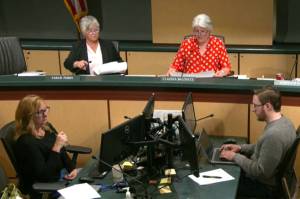
And that is what a new board of 11 members has since been doing, according to chair Patrick Sainsbury, a retired county prosecutor. That and “trying to figure out what we can do, what we should be doing,” he says. The new board’s first report, released in March, reflects its focus on community outreach. It is essentially a list of all the community groups it has met with—a sharp contrast from the scathing reports that once made headlines.
Sainsbury, a loquacious, white-haired 67-year-old, says that the board still intends to review disciplinary cases around specific topics of interest—say, the use of Tasers. “One of the questions we hope to answer soon is what should we focus on first,” he says. He expects the board to discuss that question at a daylong retreat in June.
Board members remain personally liable for the release of confidential information—”I don’t plan to do anything that would cause me any liability,” says Sainsbury—and Holmes believes the board has been sidelined by its new role. “I think the city wanted to make sure that the board would never again be in a position to report, as it did, on cases that were embarrassing to the city,” says the City Attorney candidate.
But Burgess insists that the city has added to, not taken away from, the board’s responsibilities. He also says that the changes the city has made to the auditor’s role constitute “a huge sea change” that advances police accountability. Most importantly, the auditor now has the authority to compel the OPA to investigate cases further. Former Superior Court Judge Michael Spearman is scheduled to be confirmed as auditor on May 26 pending a city council vote.
Harriett Walden, director of Mothers for Police Accountability, says that when you look across the country, it’s the auditor-like positions that work most effectively. Holmes, on the other hand, contends that an auditor who has “daily contact with the police” and who reports to city officials inevitably “becomes part of the system he or she is supposed to be reporting on.”
Leo Hamaji, a public defender who sat on one of the city’s blue-ribbon panels, adds that transparency is better served by a group of people rather than a single individual: “How much can one person explain or disclose?”
But if you read the public reports of the outgoing auditor, former federal prosecutor Kate Pflaumer, it’s apparent that she disclosed quite a bit. A report on the period of April through September 2008, for instance, discussed one case in which an officer “continued to use punches and knee strikes” after a suspect was subdued, and another in which a truck driver found sleeping in a parking lot was handcuffed and Tasered merely because of his apparent “non-cooperation.”
In another report she talks about her frequent criticism of the so-called “180-day rule,” whereby officers escape discipline if an investigation runs longer than 180 days. It’s a rule that Pflaumer says undercuts the auditor’s new power to compel further investigation, because there may not be time to do so and still discipline an officer.
“I’ve been pretty much of an activist auditor,” she says. “[But] I don’t know if you’ve read my reports. Not many people have.”
And in a job that is part-time, she didn’t get them out in front of people. “Kate Pflaumer did an excellent job,” says Wilson, the civil-rights lawyer. “But there was a lapse in her connection to the community.”
Assigning a community-relations function to the review board is meant in part to ameliorate that problem. Whether the review board will do more than that remains to be seen, but for now a number of people seem happy that the issue is out of the news.
“Not to be embroiled in controversy is not necessarily a bad thing,” says City Council member Nick Licata.