So, what would you think?
The hip-hop scene—the one that’s getting enough attention and producing enough talent and drawing enough crowds to potentially help you get your name circulating, and maybe land a deal with a local label and later a deal with a national one, with all the fun and freedom that accompanies doing what you love for a living—is a winding, 40-minute drive away (weather and traffic permitting), and you don’t have a car. What you have is a job at a pawnshop, a wife, two young kids, a crammed one-bedroom apartment, and a ferocious hunger and work ethic to go with it. It’s just . . . you’re so far away from the heart of the scene.
So, what would you think?
Well, maybe you’re thinking your hometown of Everett—which looks like one dreary stretch of car dealerships, crummy bars, and cracked pavement—is a handicap. You’re thinking this place you hate to love and love to hate is holding you back a little. Because no one in the Seattle hip-hop scene gives a fuck about your ‘hood, much less about anyone in it.
You’re not ashamed of where you’re from, of course, because you’re a pretty brash dude made bolder and stronger by fatherhood and marriage. And after all, you’ve ventured out into the bright lights of the big city and introduced yourself to many of the local heads. But you’re also realistic—you know you’re going to have a harder time working your way up the hierarchy of Seattle hip-hopdom than most. And it’s all because of where you’re at. Or so you think.
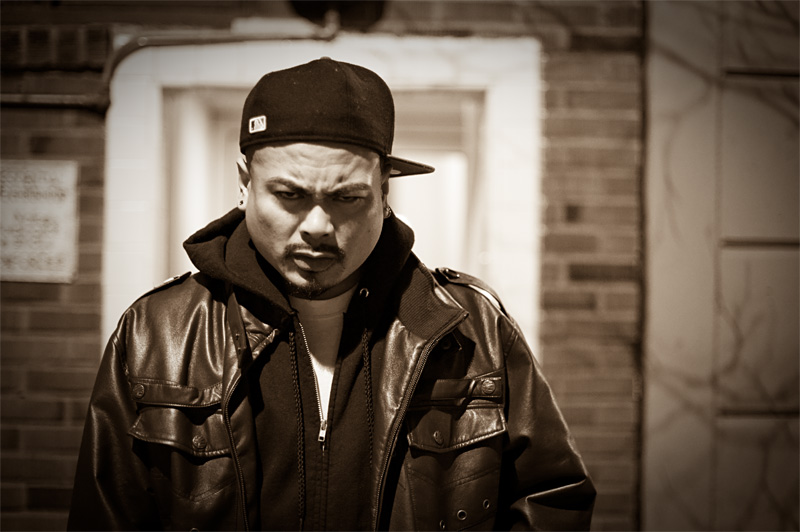
After two face-to-face meetings and one long phone chat with 24-year-old MC Ripynt (pronounced “repent”; more on that later), aka Corey Tate, I tried to imagine what approaching the Seattle scene must look like from his station in Everett, and came up with the portrait that opens this story. It’s tricky business, sure—especially given that Ripynt reveals himself both in conversation and in his surprisingly self-assured music to be a complex guy, shot through with emotions and passions that extend way beyond geographical borders—but I think I’m accurate in saying he feels the burden of his provenance. But to what extent it will hold him back, I’m not so sure.
Ripynt, for his part, has a pretty clear view: “You hear people talk. Everett gets no respect from Seattle. Anything north of Shoreline gets shitted on. The only thing that’s worse than that would be if I’m outta Marysville.”
One of his producers, Sinic (real name Randy Ross), who’s now based in Edmonds but who met Ripynt when they worked together at a KFC in Everett in 2001, agrees: “When everybody thinks of Everett rappers, it’s pretty negative.” And in order to rise up, Sinic says, he’ll have to head south. “I do think for Ripynt to break out, he’s going to have to spend a lot of nights in Seattle.”
But how welcome will this outsider be among the Emerald City elite when he releases his second full-length album (the first dropped in 2005 and doesn’t reflect his development, he says), titled R.I.P.: Re-inventing Poetics later this year? Does anybody really even care where he’s from? Or are they more concerned with the quality of his music and performance skills?
The weird thing is, for as much as Ripynt has to say about his hometown, Everett isn’t much of a character on his lyrical stage. Indeed, it wasn’t even the most pressing subject I initially wanted to talk to him about. Over beers at a dive bar called The White Buffalo, on Everett Way, I tell Ripynt something that’d been on my mind since he first came to my attention—that his name, even by hip-hop’s tortured grammatical standards, is twisted almost beyond recognition.
“I spell my name fucked up, and I know that,” he says with typical honesty. To his credit, since his moniker reads like “rippin’ it,” not “repent,” he addresses the misunderstanding in a fun and infectious song titled appropriately, though no less confusingly, “Rippin It.” Sinic’s production is laid-back West Coast cool sprinkled with space-age effects, providing a nice contrast to Ripynt’s wicked quick delivery. Lyrically, it combines the best of his abilities as a writer—playful word-slinging, efficient rhyme schemes, and a fierce dedication to saying what he thinks.
In many of the 12 tracks I’ve heard, Ripynt trains his high-powered microscope on his underdog status, revealing a ragged topography of wounds both superficial and bone-deep. One might think that, given his view of his hometown, those aches and pains would be Everett-centric, but that’d be wrong. Ripynt projects himself across far more interesting terrain.
For example, on “Breakthrough”—which features an intricately woven tapestry of synths and orchestral sounds co-produced by Sinic and his other main beatsmith, his 18-year-old brother Chris (aka Aether), and a big-lunged chorus by rising star Krizz Kaliko (who hails from another nowheresville, Kansas City, Mo.)—Ripynt tackles socioeconomic struggles and music’s life-saving properties: “It taught me nothing can hold me back/I’ve been on the bottom and I won’t go back/Broke and hungry, I know about that.”
Ripynt takes the trials-and-tribulations theme to an even darker and more personal place on “The Scarecrow.” (No, the straw man circled by crows isn’t Everett, either.) The production comes courtesy of a collaboration between his brother and Sinic, but what makes it stand out is Ripynt’s telling, in gory detail, of his temporary separation from his wife, April, when their first son, now 3 years old, was just 1.
April says she can’t listen to it without crying, but adds, “I think that his more personal songs are his best.”
So where does Everett fit into Ripynt’s schemata? While he reps Everett proudly in at least one song I know of, and makes no apologies for where he’s from when talking, the northern city is often subsumed by a larger force in his lyrics—that of the hip-hop movement across the Northwest. Ripynt’s greater regional focus is, in part, practical; after all, Everett doesn’t exactly ring out like, say, Atlanta. However, it also reflects his view that the hip-hop scene isn’t limited to Seattle. Like the genre itself, what he says he’s doing is a small pixel on a bigger screen.
That philosophy would seem to be borne out by at least one Seattle-based luminary, though he does undermine Ripynt’s anxieties. “It doesn’t matter where you’re from,” says Candidt, a respected MC and the promoter of the popular live-show series “The Corner.” “If you’re from Everett and you’re dope, people are gonna know and respect you.”
DeVon Manier of Sportin’ Life Records goes one step further. He says he has Ripynt’s mix-tape and that he thinks he’s a talented MC. While he’s seen the term “hobby rapper” applied to “people from outside the scene” on online message boards, he says that “it’s more of an Internet joke” than a firmly held belief. The real problem, as Manier sees it, is the general nose-in-the-air vibe this city sometimes gives off. “Seattle, man, it can be a snobby place. We’re snobs about our coffee. We’re snobs about our marijuana. And we’re snobs about our music.”
Beside murmurs in clubs and over-the-transom gossip, that may be what Ripynt is picking up on—the general feeling Out There that MC immigrants aren’t welcome. As up-and-coming rapper Wizdom writes in an e-mail, there’s an advantage to being in Seattle when trying to book shows: “The name ‘Seattle’ kind of speaks for itself, so if you rep Seattle, you have a slight edge in terms of relevance.”
I don’t think Ripynt is going to have much to worry about. Like Manier, I think his skills, coupled with his eye-crossing output—he’s recorded some 40 songs in the past year, according to Sinic—and balls-out persona will help to mitigate, if not eliminate, any perceived inequities emanating from his Everett origins. If nothing else, that he’s not faking anything should give him a pass through the local hip-hop hallways.
Says Ripynt: “I don’t wanna say Seattle, since everybody already knows I’m from Everett. I don’t wanna be a fraud.” He adds, “I’m from the Northwest. I like to rap. Deal with it.”