Earth and the Sweet Hereafter
Published 7:00 am Tuesday, June 24, 2008
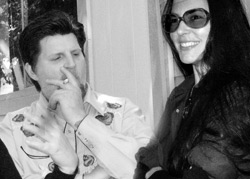
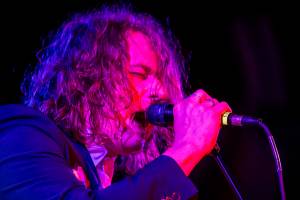
Jesse Sykes is the last person you think of when you think “ambient doom metal.” Likewise, the band that pioneered the genre, Earth, is the last band you think of when you think “moody American roots music.” But the two have more in common than you think. Sykes first met Earth front man Dylan Carlson in 2005 during the recording of Altar, a collaboration between Earth’s doom-metal progeny, Sunn O))) and Boris. Sykes contributed guest vocals to a song called “The Sinking Belle,” which featured Carlson on guitar.
Since then, the individual styles of both Earth and Sykes’ band, Jesse Sykes & the Sweet Hereafter, have begun to resemble each other. Carlson has moved his band’s drone into the rootsier terrain of country and gospel, while Sykes has allowed the darkness and expansiveness of Earth to seep into her music. Together, they’ve been on a tour of the West Coast, which closes this weekend with two nights at the Tractor. Sykes and Carlson sat down before the tour to discuss their common ground, which ended up spanning much more than music.
Jesse Sykes: I was doing some advance press with a woman from L.A. the other day. And the woman said “You and Earth? Isn’t that a weird bill?” It got me thinking that to some people who aren’t really aware of how our bands have grown and changed in the last couple of years, they might, y’know, be freaked out. But I was like, “Miles Davis played with Neil Young back in the day.”
Dylan Carlson: People nowadays just book four versions of the same band on a tour. We had the same thing happen when we did Europe with Sir Richard Bishop. And when we toured with Jack Rose, people were like, “Why are you touring with a solo acoustic guy?”
JS: I’ve been listening to your latest record (The Bees Made Honey in the Lion’s Skull) a lot. And on a really obvious level it doesn’t take much to notice the differences in our music. I call [your music] “sublingual American music.” But there are a lot of similarities.
DC: I think you and I share a lot of influences; the Grateful Dead—all the psychedelic bands that went country. I don’t think it would be that weird if, say, the Sweet Hereafter wasn’t around, to have you singing in front of the music we make. We’re not as alien as people think.
JS: I was reading an article and you guys were talking about growing up in the Northwest. You were talking about the dark energy here—I always call it “the resonant hum”—and about the idea of evil and how evil is something that emanates from the land. But humans assign the negativity concept to it because it affects our life in a negative way. And lately, there’s a lot going on with the environment and these storms that have been happening. I was just watching the news and listening to your record and it all kind of converged. I got deeply sad, and your music was the best soundtrack for it because it made me want to celebrate uncertainty. I dunno…it was this perfect convergence.
DC: I used to call those moments “getting fucked by the Zeitgeist.” I think maybe there’s more of an awareness of [the resonant hum] in the Northwest because this part of the country was one of the last settled. Although you wouldn’t know it when you look around, we used to have huge trees here, and there was nothing where Seattle is except for a cliff. Whatever it is about frontiers where the rules are not there, where everything comes up against nothing. [The Northwest] is an area of turmoil and change as opposed to the more subtle parts of the world.
JS: I always wonder if the people who are now moving to Seattle, the people who are unfortunately the reason why the landscape is changing here so much…
DC: The condo-building scum?
JS: Yeah, if they’re aware of that darkness. Like, if you just moved to Seattle this year, is that something you innately feel, or are most people just blind to it?
DC: I don’t think they feel it.
JS: You have such an intense personal and musical mythology. We live in a really weird time now, and since we’re talking about music to some degree, I feel sorry for young bands because they don’t have the opportunity to generate a mythology anymore.
DC: Bands today, their entire history is how many hits they get on their MySpace page.
JS: Totally. My friend told me about some band in L.A. he played with. The club introduced the band as: “Here’s blah blah blah with 150,000 hits on MySpace!” I mean, this is what the world is coming to?
DC: That’s what A&R departments are doing now. Basically just sitting there counting MySpace hits and then going, “Yeah, that’s the band we need to sign.”
JS: It’s so fucked up.
DC: And I was thinking—and this is totally off the subject—I was looking at a Fender catalogue and there was a picture of Avril Lavigne holding a Fender guitar. She doesn’t have any, like, real existence outside of how she dresses. They say she dresses like this because she’s “punk rock,” and then that ends up in one of those gossip mags. She’s in the back of a car with Jessica Simpson and Lindsay Lohan—you know all of those people in the back of some SUV—and she’s hanging out the window flipping the camera off because she’s “punk.” But she’s no different, other than the way her people dress her and the band they hire to play in the studio.
JS: It’s a trip. I think what’s happening in our culture is that things that were kind of thought of as “evil” and “scary” are seen as little cutesy, fluffy friends to have. People send their kids to camps now to learn how to be rock stars. I got a lot of flak once because a friend of mine worked at one [of those camps] and I was dissing it. It’s like, why would you send your 10-year-old daughter to go lead a life of misery? What happened in our culture is that there’s this perception that everyone deserves this slice of a certain pie that, frankly, I was attracted to as a young kid because it was dark and dangerous.
DC: And they don’t want to put in the work involved.
JS: The things that are sacred about rock ‘n’ roll have been sold as a commodity.
DC: It’s like when old guitars suddenly became vintage, and they started being bought as fetish items by doctors and lawyers who grew up liking rock music. That really disgusts me. It’s like the magic’s gone. In Lord of the Rings, when the elves were just leaving Middle-earth and the world becomes more real, that’s kind of like what’s happened with music.
JS: A friend of mine was telling me about this conversation he had with some other guy about downloading music on his iPod. And the guy was complaining about having so much music that he didn’t know how to process it all. Everyone wants their music to be free, but these iPods and their owners are admittedly going crazy with this option anxiety. Music doesn’t even mean anything to them anymore.
DC: Up to the ’40s and ’50s, being a live musician accorded you the most status and biggest paychecks. When the recording industry started kicking into full gear, it became more important to become a recording artist. People who played live only played live to push product. Say with Bob Wills or Hank Thompson before the recording ban during WWII, they could fill huge ballrooms full of people because that’s what people wanted. Suddenly, it became just about the commodity. First there was the record, then there was the 8-track, and now CDs and downloads. I’m hoping that [digital downloads] are the last vestige of that commodity-based idea of music and the recording artist. I’m hoping that as gasoline becomes scarcer and plastic becomes scarcer, that computers and TVs will become scarcer and people will see live music in their own city like they used to. Everyone would be forced out of their house to experience the real world.