My Brother Got Burned
Published 7:00 am Tuesday, May 27, 2008
Nineteen-year-old Sebastian Burns was leaving a haircut appointment in Vancouver, B.C., when a man sporting a long ponytail and cowboy boots asked for help. He said he’d locked his keys in his black Trans Am; could Burns possibly drive him back to his hotel where he had a spare set? Burns agreed.
Back at the hotel, Burns’ new friend invited him for a drink. The two talked philosophy and life goals. Burns confided that he and his high-school pal, Atif Rafay, had an idea for making a movie about two teenage boys falsely accused of murder. The man with the ponytail replied that, as it happened, he knew of someone who might like to invest in such a project.
Two days later, he and the investor—we’ll call him Mr. Big— arranged a meeting with Burns. They took the teen up to Whistler, where the ponytailed guy and Mr. Big revealed they were criminals. Mr. Ponytail stole a car, then Mr. Big, an apparently senior gangster, pressured Burns into driving it back to Vancouver. Burns did, though he complained the $200 they paid him wasn’t enough.
And that was just the beginning of their joint projects. The two men gave Burns bundles of cash and asked him to deposit it in various banks, a task for which they paid him thousands of dollars.
Eventually the talk turned to murder. “I fuckin’ toasted a guy,” the ponytailed man told Burns at one point. Referring to Mr. Big, he said: “You know how fuckin’ solid [he] is?…When it came time for fuckin’ court, the person that could finger me, they’re not around anymore, so I know that business gets taken care of.” Another day, the man got Burns to “stand guard” while he beat the crap out of somebody.
Meanwhile, the two men broached the subject of a gruesome triple murder involving the family of Burns’ housemate Atif Rafay. On July 12th, 1994, Rafay’s father, mother, and 21-year-old autistic sister had been bludgeoned to death by baseball bats in their Bellevue home. Burns and Rafay, who had come to Vancouver immediately after the crime, were considered the chief suspects by Bellevue police. Rafay stood to gain $500,000 in insurance money from his parents’ death.
The two gangsters told Burns they could destroy evidence the Bellevue police department had on the two teenagers—but only if they met Rafay and the two spilled the complete story.
Smiling and laughing in a hotel room one day with their criminal friends, Burns and Rafay owned up to the crime, with Burns described as the muscle for two of the three murders.
“Did you see it happen?” Mr. Big asked Rafay.
“Yeah.”
“All three?”
“No, only one.”
“Which one?”
“My mom.”
He also asked: “How did it feel to kill your parents and knock off your sister?”
“Pretty rotten,” Rafay said. “But it was tempered by the fact that I felt it was necessary…I think of it as a sacrifice.”
Little did these aspiring filmmakers know that hidden cameras were rolling the whole time, and that the two men they had befriended were actors themselves—undercover agents of the Royal Canadian Mounted Police, who had staged the whole series of events.
While the Bellevue police department was keeping tabs on the boys, the RCMP had launched its own investigation using a trademark technique dubbed by the Canadian press as a “Mr. Big” operation, after the crime boss who an agent pretends to be. Creating an atmosphere that says crime is OK, flashing around guns and wads of cash, the undercover Mounties attempt to get their targets to talk about past misdeeds.
On that fateful day in 1995, Rafay and Burns appeared to do just that. (The account above is based on the videotape and also on legal documents.) They said they did the deed in their “gonch”—Canadian slang for underwear.
The salacious detail only added to a press frenzy that made the Rafay murder case perhaps second only to the Green River Killer in amount of local ink spilled and footage shot. Here were two exceedingly handsome, affluent, and seemingly arrogant college kids accused of committing an unimaginable crime against the family of one of them. There were immediate comparisons to Nathan Leopold and Richard Loeb, two wealthy college kids and self-styled Nietzschean supermen, who in 1924 killed a 14-year-old boy. Rafay and Burns also loved Nietzsche.
The press frenzy continued, on and off, for 10 years, as the case dragged on with a soap opera–like trajectory. A long extradition battle hinged on whether King County prosecutors would promise not to seek the death penalty, as demanded by Canadian officials. Prosecutors eventually concurred. Then, as the trial approached, Burns was caught in a jailhouse sexual encounter with his public defender, Theresa Olson, who famously described the incident as a “hug gone bad.” She and her co-counsel were removed from the case.
The CBS program 48 Hours did a special, which also spawned a book, Perfectly Executed. The coverage, like public opinion in general, was not sympathetic to the accused. In the minds of most Seattleites, Rafay and Burns are as guilty as O.J.
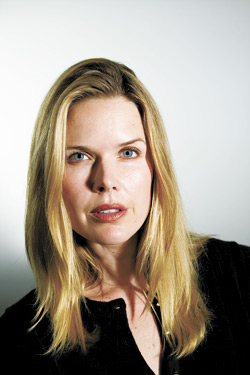
But now Sebastian’s sister, Tiffany Burns, is trying to change hearts and minds—and is having some success. After the boys’ 2004 trial, in which they were found guilty and sentenced to life without parole, she left her job as a TV newscaster in Cleveland in order to make a documentary about the Mr. Big–type sting operation, calling into question the methods used by the RCMP. Screening next week at the Seattle International Film Festival, Mr. Big argues that undercover cops insidiously lure their targets, who are so intimidated by the supposed gangsters they’re dealing with that they tell Mr. Big whatever they think he wants to hear—even if that means puffing themselves up by saying they committed a crime that in fact they did not. (See Brian Miller’s capsule review of the film, with showtimes.)
The film’s publicity material carries glowing quotes from Barry Scheck, co-founder of The Innocence Project, an organization devoted to freeing the unjustly imprisoned, and from Rubin “Hurricane” Carter, founder of a similar organization in Canada called Innocence International. Carter served 20 years before his murder conviction, a cause célèbre at the time, was overturned on appeal.
In fact, both organizations, after reading the transcripts of the trial, have gotten involved with the case. Rafay and Burns are now appealing the verdict. They have turned in legal briefs; prosecutors are scheduled to do so by month’s end. And the two Innocence groups are offering whatever help they can, including advocacy with the press, additional legal advice, and forensics analysis. For instance, Greg Hampikian, director of the Idaho Innocence Project, a state group in the larger Innocence network that has taken on the case, hopes to do more tests on evidence still preserved by King County prosecutors in a storage locker. (The Seattle-based Innocence Project Northwest only takes cases once all appeals have been exhausted.)
Hampikian and Carter say they are struck by two things: the lack, in their view, of hard evidence and the dubious methods by which a confession was obtained. “That confession doesn’t hold water with me,” Hampikian says. Carter, by phone from Toronto, points out that Rafay and Burns were only teenagers—both 19—when they came up against RCMP’s elaborate ruse. “The RCMP has no business acting like criminals,” he argues.
Peter Marsh, director of special operations for the RCMP in British Columbia, says he is reluctant to discuss Mr. Big techniques for fear of giving away too much to potential targets. He says this, however: “It works.” And Canadian police do it all the time. Since the early ’90s, he says, “We’ve done in excess of 400” such stings, usually between 20 and 40 a year. The idea, he says, is to “put people at ease so they’re as comfortable as you can get them to discuss their previous crime.” And he adds that flashing money around is a crucial part of the game. “Greed is what catches most people. They see a lot of money at the end of the rainbow. That’s why they take part.”
But could greed trap someone who isn’t guilty of the crime under investigation? Marsh says he doesn’t think so, since most members of the public wouldn’t get involved with a Mr. Big in the first place.
Burns’ and Rafay’s lawyers and their supporters claim that the boys were scared of these gangsters, who talked about murder and appeared to beat up someone before Burns’ very eyes. Sure, the tapes appear to “show Sebastian and Atif sitting there, coolly discussing” the murders, Ken Klonsky, media relations director for Innocence International, concedes. “So it appears as if they’re not under duress. But if you showed the entire context,” he argues, a different picture would emerge.
Burns, who had most of the contact with the undercover agents, initially denied having anything to do with the murder, Klonsky says. “It’s only when he felt that his life was in jeopardy that he gave them what amounts to a confession,” he says. The defense’s legal papers also say that the boys feared that Bellevue police were so intent on nailing them that they had fabricated evidence. So, the defense claims, the two teens cribbed details from news accounts to make up their story.
People do claim to commit crimes they haven’t done, says Richard Leo, a law professor at the University of San Francisco who has written extensively about false confessions. “It’s been more well-documented in the age of DNA,” he says. In many of the cases he’s studied, real perpetrators have been caught and even prosecutors agreed that the confessions were false.
A consultant for the defense in the Rafay case at the time of trial, Leo says Mr. Big tactics are likely to produce false confessions because “it’s psychologically coercive.” While he doesn’t remember all the details of the sting operation, he says he believes threats or implied threats were involved. And that, he says, “is blatantly illegal in the U.S.” Tiffany Burns’ documentary says the same thing. She argues the operation was only allowed into evidence in her brother’s case because it occurred in Canada. Fuzzy on the legal issues, she says she relied on Leo, who appears in the movie, for this judgment.
What Leo goes on to say, and other criminal law experts confirm, is more nebulous. Coercing confessions is illegal, prohibited by both the Fifth and Fourteenth Amendments, which protect defendants against involuntary self-incrimination and guarantee due process, respectively. It doesn’t matter whether the operation occurred in the U.S. or not.
So the key question, from a legal point of view, is: Were Burns and Rafay coerced? King County Superior Court Judge Charles Mertel noted that the confession was not made while Burns and Rafay were in custody. “The defendants,” he said, “were free to leave or not leave” and “speak or not speak.” But defense lawyers contend the two were coerced, and it’s one of the key points in their appeal. They also object to Mertel’s refusal to let Leo testify.
Another defense consultant barred from testifying at the trial was a former Drug Enforcement Administration undercover cop named Michael Levine. But he doesn’t think Burns and Rafay were frightened into confessing. He thinks, as they smiled and laughed in the hotel room, they were doing something else—”bragging and lying” as they tried to appear tough. He says it happens so often there’s a name for it: criminal braggadocio. It’s something he says he came across when he himself pretended to be a crime boss. Turns out American cops, too, use the scheme. Levine says he did so “100 to 200 times.”
In fact, Levine teaches the method as an instructor for police academies around the country. He’s upset that in Mr. Big he appears to bolster the contention that there’s something inherently wrong with it; he says he tried, unsuccessfully, to have himself removed from the film. And he thinks the kids received fatefully bad legal advice to portray themselves as being frightened when the jury can see in the tape that they’re smiling and laughing. It’s a legal strategy, pursued in appeals briefs as well, that he believes will keep Burns and Rafay in jail even though they’re “100 percent innocent.”
He says the problem with the “substandard” Mr. Big sting operation in this case is that the undercover agents were pursuing a confession, not the truth. When Burns and Rafay started to say things that indicated they weren’t guilty, Levine says the agents led the conversation in another direction. And they didn’t ask for key information that only the real murderers could have known, like how they got Rafay’s mother to lie in a prone position with a scarf over her head.
Thus, regardless of whether the operation was legal, the question from a broader perspective is: Did it produce the truth?
What makes Greg Hampikian suspicious is that the teens’ confessions don’t match the forensics evidence. A biology professor at Boise State University, he points to testimony from the state’s expert on blood spatters. Such evidence provides clues as to how many people were involved in a crime, because when blood spatters, a clear spot is left on the wall behind where someone is standing. “It is my opinion that there [were] two people in this room during the attack,” state forensic expert Ross Gardner testified, referring to the murder of Rafay’s father. Yet, Hampikian notes, Rafay had told Mr. Big that he wasn’t present during the murder of his father, which would leave only Burns in the room.
He points further to forensics evidence that he says leads away from Burns and Rafay: a hair found on a bed that was neither theirs nor the victims’, and blood found that was a mixture of Rafay’s father’s and some unknown person’s.
Hampikian has traveled to Seattle to look at all the evidence that prosecutors keep in a storage locker: dented wall boards, rug pieces, hair samples, and blood spatters. Nothing, he contends, ties the pair to the murders. He finds it particularly significant that no blood was found on the teens’ clothing or hair (aside from a drop of blood on Rafay’s jeans, which the defense argued could easily have been obtained while finding the bodies). “It’s hard to imagine they did such a crime and did not have any blood,” Hampikian says.
Bellevue Police Detective Bob Thompson, who headed the investigation, doesn’t agree that there was no hard evidence in the case. Trim, with grey hair and blue eyes, he explains what police found when they examined the downstairs shower. They sprayed the shower with a chemical that reveals traces of blood, he says, and “boom, it lit up like a Christmas tree.” It was the blood of Rafay’s father. “So we knew that the killer had showered.” And they found hairs of Burns in the shower.
“On the floor of the shower,” Thompson emphasizes. “They weren’t in the drain.” Thus he deduces that the hairs belong to the last one in the shower: the killer. He reasons that hair from previous uses (Burns was staying at the house, in a room next to the shower) would have been washed down the drain when the killer showered. “The killer washed himself off, washed the blood off the [shower] walls, dried himself off, and then forgot to turn the water on one more time to wash the hairs off that were left on the floor,” he says.
Hampikian counters: “Hairs from inhabitants are usually not probative unless they are tightly linked to the crime.” For example, he says, “a hair on a weapon.”
Thompson points, too, to the teenagers’ “strange” behavior and their account of finding the bodies. Rafay, for instance, said he saw his mother lying prone on the basement floor, but didn’t go to her to check on her condition. “It was his mother,” Thompson says. “Something, do something.” His sister was still alive, moaning in another room, but he didn’t check on her either. (Rafay and Burns have said they wanted to get out of the house fast because they were afraid the killer was still inside.)
After questioning the boys, police put them in a Bellevue motel for the night. “You know where they went?” Thompson asks. “Down to Blockbuster,” where Thompson says they rented a Bruce Lee martial-arts flick called Enter the Dragon and a Chevy Chase comedy. “Just to laugh it up a little,” Thompson deadpans.
“They put them in a motel with nothing, no phone. What were they supposed to do, stare at the walls?” asks Carole Burns, Sebastian’s mother. She’s at her home in West Vancouver, a Tudor two-story with a dramatic cliff garden rising from the patio, which she shares with her husband David and 37-year-old daughter Tiffany, who has moved back in while she promotes her film and looks for a new TV reporting job.
To the Burnses, it was the police who were acting bizarre.
David Burns says that when he found out about the murders, he called the police to find out if they were holding his son, saying he was puzzled that he hadn’t heard from him.
“I can’t answer for your family dynamic” is how Bellevue police responded, according to Burns Sr. The police department were, in fact, questioning the teens, and then put them up in the motel.
In the same conversation, police told Burns his son “was a big eater”— implying that Sebastian was callous, enjoying his food despite the bloody scene he had just witnessed. “The police were becoming instant psychologists,” he says.
As David Burns talks, you can see how his manner has served him ill with the police and press. He was described, in police accounts, as being rude to Bellevue police when they attempted to question him. A British native, now retired, David comes across as starchy. Asked what exactly he did in the field of commercial real estate, he replies: “Nothing I’d rather go into.” Carole Burns, in contrast, is open and forthcoming, and has no problem talking about her career in finance.
In the living room, after a lunch that Carole prepared, Tiffany suggests that she, her father, and her brother all share a personality trait that made Sebastian unlikable to the jury. “We don’t answer questions directly,” she says. “We think about it. Maybe we aren’t seen as straightforward. We’re all a little eccentric.”
“I object to the use of the word ‘eccentric,'” David Burns interjects.
As a child, Sebastian played cello, went on outdoor survival trips, and was, Carole says, a “smart kid but lazy.” He went to Capilano College, the place Carole says that kids go if their grades aren’t good enough to get into the University of British Columbia. Hence, he was not an academic star like his friend Rafay, who got a scholarship to Cornell. And he didn’t live up to his own boast to undercover cops that he and his friends were “amongst the smartest people in the world.”
It’s boasts like this that may have done Burns in more than any evidence. Prosecutors and police hammered away at the notion that he was a deeply unlikable character, capable of anything. Rafay, in King County Deputy Prosecutor James Konat’s characterization to the jury, was an “Ivy League intellectual,” while Burns was “an incredibly annoying, and if ever it was possible, perhaps even more arrogant individual.”
“That’s what the case boils down to,” says Donna Larsen, a Seattle University law student who wrote daily dispatches on the trial for her blog, trialdiary.com, and came away convinced that the pair were innocent. “Konat doesn’t like Sebastian.”
“You know, Sebastian was a bristly kid,” says Klonsky, of Innocence International. “Arrogant. Atif also suffered from a little bit of hubris.” Their behavior after the murders—for instance playing music so loud at a Vancouver house they shared that neighbors complained—didn’t help their profile, he says. “It wasn’t pretty. They did some things that were raucous. That’s a long way from being a murderer.”
Burns, it seems, is bristly still, and possibly continues to suffer from an inflated idea of his capabilities. Now 32, he has rejected his lawyer and is petitioning the state Supreme Court to allow him to represent himself.
Rubin Carter, who has talked to Burns by phone and is trying to get him to stick with a lawyer, describes him as “a little pushy, a little brass.” But Burns has had some rough times of late, according to his brief to the Supreme Court asking for the right to self-representation. He says he sustained a facial fracture in an assault, was held afterwards in segregation for months, and lost so much weight that prison authorities judged him to have an eating disorder and forced him to take anti-depressants and anti-psychotics.
Rafay, also 32, retains some of his former traits too. Most notably, he is still an intellectual. Klonsky, who has been corresponding with Rafay, reads a couple of his letters—dated with Roman numerals. Vilified for his love of Nietzsche, Rafay nurtures it nonetheless. “Certainly anyone with a penchant for quoting Nietzsche usually endears himself to me,” he writes in a letter to Klonsky from this past March 23. It’s a comment made in reference to a book he read by Holocaust survivor Viktor Frankl.
He goes on, in that same letter, to discuss the works of Dostoevsky, Primo Levi, and Louis Begley, who wrote a book about a Jewish boy in Poland during World War II.
“So I am not wholly unfamiliar with the subject of extraordinary suffering,” Rafay writes. “Often it is a relief from one’s own degradation.”
Klonsky and Carter, who together have visited Rafay at the Monroe Correctional Complex, where he is being held, both say he has a constant smile on his face despite his circumstances. Rafay, however, writes about his suffering. From that same letter:
“I am generally accused of a certain cheerfulness, to which I think I am temperamentally inclined. But it has been tried these past years in a terrible way. I feel I have been and continue to be damaged in irrevocable ways. And it is hard for me to envision ever now being anything other than profoundly unhappy.”
Klonsky is moved by Rafay’s letters. Where Konat saw cold-bloodedness in Rafay’s intellectualism, Klonsky sees humanism.
He cautions that, no matter how much research you do on a case, “you can never know the absolute truth of anything.” Nonetheless, he says he simply can’t fathom that the Rafay he knows would watch his family be bludgeoned to death. “My gut feeling: No way. No way. In my mind, it just didn’t happen.”