Look out, Olympia, the Democrats are in charge! As the state Legislature convenes this week, Democrats control all three chambers of government: the state House, 55 to 43; the state Senate, 26 to 23; and the governor’s mansion. The last time these stars aligned was 1993.
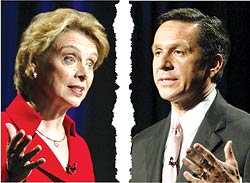
Republicans hope to make Gov. Christine Gregoire’s term as short as possible. On Friday, Jan. 7, the state Republican Party challenged Gregoire’s election in court (see “The Do-over Campaign,” p. 10), claiming the chaos of the vote counting made her victory invalid. The GOP hopes that a judge will require a “revote” between her and former Republican state Sen. Dino Rossi. Gregoire is pushing ahead, clearly hoping that governing will be the best medicine for the illness plaguing the electoral system
A fractured franchise hasn’t stopped other executives from being extremely successful at pursuing their political agenda—Presidents George W. Bush and Thomas Jefferson spring to mind—yet another specter is haunting Olympia: the ghost of 1993. That was the last time that a new Democratic governor, Mike Lowry, came into office with a Democratic majority in the Legislature. Lowry and the Democrats passed progressive, comprehensive health care reform and helped close a $1 billion state deficit with $600 million in new business taxes. It was good legislation, but political disaster. Voters responded by pounding the Democrats at the ballot box the following year. In 1994, the Democrats lost 28 seats in the state House and haven’t controlled Olympia since.
This year, the Democrats have a difficult task in front of them. They have no money (a $1.8 billion budget deficit is projected for the next biennium); a state full of problems (transportation gridlock, education shortfalls, health care crises, and unemployment woes); a whole bunch of riled-up interest groups that worked hard to get them elected and now expect payback; an ambivalent electorate (“We want more services but fewer taxes”); and some really angry Republicans just waiting for them to overreach.
Democrats are divided about how to respond. Some are trying out new rhetoric, hoping that a different way of talking about raising taxes and requiring employer health care will produce broader public support. Others want to tack to the middle—stick with Gov. Gary Locke’s 2003 no-new-taxes approach. They also face very real divisions within their caucuses over style and personality.
The Players
At the beginning of this new legislative session, the most powerful player in Olympia, Gov. Gregoire, is also the biggest cipher. What kind of a governor will she be? Will we get the dynamic three-term attorney general who in 1998 orchestrated an incredible $206 billion settlement between the states and the tobacco companies that is bringing Washington more than $4.5 billion? Or will we get the tentative gubernatorial candidate of 2004 who never found a strong message, connected poorly with the voters, and eked out a meager 129-vote win after three counts?
Gregoire, 57, born in Auburn and raised by a single mom who worked as a short-order cook, rose through the ranks of state government, first reaching prominence as the head of the Department of Ecology under former Gov. Booth Gardner. At Ecology, in 1989, she cut her first megadeal: the Tri-Party Agreement between the state and the federal government over the cleanup of the Hanford Nuclear Reservation. Not only was the agreement a model for cleanups around the nation, but for the last 15 years, Gregoire has also consistently earned high marks from nuclear watchdogs for her defense of the accord in the face of the feds’ efforts to weaken it. Look for her to operate as governor in a similar fashion: She will bring all parties to the table, conduct some intense negotiations, and try to fashion agreements that drop jaws.
She’ll have to learn how to talk to the public first. During the gubernatorial campaign, Gregoire failed to communicate effectively. Her style was so legalistic that people came away never knowing what she stood for. Town Hall’s David Brewster, founding editor of Seattle Weekly, says, “I don’t know what she really is. She ran an issueless campaign.” You hear this criticism of Gregoire repeatedly—yet she delivered detailed policy papers on education, the economy, and health care with a host of specific proposals (although much vagueness on how to pay for them). The details never gelled into something people could grasp. Gregoire needs to define herself quickly. Right now, the Republicans are rushing to label her—in a variation of President Rutherford B. Hayes’ nickname—Her Fraudulency.
Gregoire’s main collaborators face big challenges of their own.

(Jay Vidheecharoen)
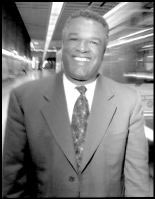
House Speaker Frank Chopp: a control freak who plays an inside game. |
Speaker of the House Frank Chopp has to prove that he can be as good a legislator as he is a campaigner. Chopp, 51, born in Bremerton, is president of the social-service agency the Fremont Public Association. He has had a stormy tenure as leader of the House Democrats—frequently clashing with members of his own party. He was elected in 1994, the year the Democrats lost 28 seats and control of the House. In 1998, he took over as leader of the House Democrats and has picked up 16 seats in the last six years. There’s no doubt that Chopp has been extremely effective at recruiting good candidates and helping them run winning campaigns. His ability to help Democrats govern is another question. Chopp plays a very inside game, so it is hard for outside observers, including the press, to know what is really going on. Pundits, Republicans, and some of his fellow Democrats accuse Chopp of being a control freak who hampers his team’s ability to negotiate by never delegating authority. He dismisses the criticism. “I don’t think what they are saying is accurate, fair, or timely.” Feuds between Chopp and some other key Democratic players—Locke; House Appropriations Chair Helen Sommers, D-Seattle; and House Transportation Chair Ed Murray, D-Seattle—are Olympia’s biggest open secret. Says Chopp, “We have had numerous conversations with Ed. We are finding a lot of common ground. The same goes for Helen.”
Sometimes the bickering has been about substance—Locke was a big supporter of the transportation funding behemoth Referendum 51, while Chopp seemed ambivalent. Sometimes it has been about style—Chopp and Sommers are both hardheaded. Chopp also has to navigate the very real ideological divisions in the House Democratic Caucus between liberal urban members and centrist suburban members. Forging consensus is no easy task. House Majority Leader Lynn Kessler says of her speaker, “He has to push people quite a bit to get things done, and people get pretty angry.”
This year, however, Chopp has a new governor to work with, his largest majority of House members, and a Democratic state Senate. He needs to show that he can lead or get out of the way. He intends to lead: “What’s important is to focus on a clear agenda—education, health care, and jobs. Good public policy that the public can support. We will be very judicious about our priorities.”

(Pete Kuhns)
Senate Majority Leader Lisa Brown: a fresh face who says, “Do it my way.” |
Over in the state Senate, Majority Leader Lisa Brown, D-Spokane, brings an entirely different public persona to a similar set of problems. Brown, 48, is a professor of organizational leadership at Gonzaga University and the first Democratic woman to lead the state Senate. She is a member of an endangered species—the Eastern Washington Democrat—but since she represents the urban districts of Spokane does not have a particular geographical affinity with her rural Eastern Washington Republican colleagues. While Chopp is introverted and hard to draw out, Brown is sunny and charming, punctuating her interviews with laughter. Yet, in November 2004, it was Brown who, after only two years as leader, faced a serious challenge from maverick state Sen. Ken Jacobsen, D-Seattle, revealing real divisions about her leadership, while Chopp, despite constant rumors of a coup, has never faced an actual fight.
Jacobsen says the clash was stylistic, not ideological. “I’m a consensus guy. She’s more, ‘Do it my way!'”
Brown responds, “Any leader who is active is going to make decisions people don’t like. I am not as much of a laissez-faire leader as people have seen in the past.”
At the same time, she thinks the reports of her as an old-style, iron-fisted leader are overstated. “You have got to be kidding me. I find that a little bit amusing.”
Since Brown is relatively new in leadership and the Senate leader never attracts as much attention as the speaker, this term won’t be as crucial for her personally. That doesn’t mean she won’t be working hard to make it a success. While Brown, like Chopp, is among the most liberal of Democrats, she thinks the way forward is through bipartisan cooperation. “I imagine Gov. Gregoire will reach out to Republicans and seek better solutions. The public wants that, and the solutions are more sustainable.” She tells one of her favorite jokes, “Whenever we do something really important—like building stadiums—we have a five-corners-of- the-state process, and votes come from all caucuses.” She hopes to work with Gregoire and Chopp to find solutions on education, jobs, and health care that Republicans can support.
At the moment, Republicans don’t seem interested in anything but holding a new election for governor.
On Friday, Jan. 7, at a CityClub forum previewing the upcoming legislative session, Republican leaders made it very clear they do not accept the results of the governor’s election. Rep. Bruce Chandler, R-Granger, the new Republican leader of the state House, says, “People have lost confidence in the integrity and the accuracy of our elections. We are hearing from hundreds—thousands—of constituents: ‘This election was a mess, we will probably never know who won the election.’ There is nothing that prevents the state from holding another election.”

(Pete Kuhns)
Senate Minority Leader Bill Finkbeiner: He puts a nice face on GOP obstructionism. |
On Jan. 4, state Senate Minority Leader Bill Finkbeiner, R-Kirkland, sent out a blistering press release that said, in part, “In a democratic society, where we rely on elections to identify our leader, we need to have confidence that those elections are fair and accurate if we expect people to follow that elected leader. We may have to go to a revote to restore voter confidence.”
Three days later at the forum, he hedged a little on the revote question, just enough to keep the Seattle audience from booing him, but not so much that he would alienate any Republicans in the room. Finkbeiner’s considerable rhetorical skills make him an effective spokesperson for the revote effort: He manages to make the GOP’s obstructionism seem likable and reasonable.
Gregoire desperately needs GOP legislators, like Finkbeiner, to decide that the revote option is not viable, so they turn instead toward her effort to build bipartisan cooperation and compromise.
Can We Talk?
At least for the immediate future, the Democrats are going to have to rely on one another to pass legislation. They agree on their priorities—the economy, education, and health care—but they don’t necessarily agree on what needs to be done. They will also have to pass a balanced budget—that’s required by law. The budget is their most basic task, and the early signs indicate that the Democrats are already struggling with whether to raise taxes and how to talk about the problem.
On the campaign trail, most every reporter will tell you that Gregoire pledged, like Rossi, not to raise taxes. Now state House Appropriations Chair Sommers says the new governor has already agreed to find new revenues. Gregoire told The Seattle Times shortly after being certified as governor, “I never really said, ‘no taxes.'” Once again, Gregoire is sounding like she did on the campaign trail—more of a lawyer than a leader. It’s the kind of double-talk that can be fatal.
On the 1992 gubernatorial campaign trail, Democrat Lowry pledged he would only raise taxes as a last resort—a pledge that was key to his victory because it moderated his old congressional reputation as a typical tax-and-spend liberal. On Nov. 19, 1992, eight weeks before he was inaugurated, the Times reported Lowry, faced with a $1 billion deficit, had come to the end of the road and concluded a tax hike was necessary.
Leaving aside for a moment whether new taxes are needed (they are, and the state economy can handle them), Gregoire ought to learn from her predecessor’s error. Don’t talk about raising taxes before you even take the oath of office, because if you do, soon you won’t be able to talk about anything else. The Lowry tax increases paved the way for a populist tax revolt that began with 1993’s Initiative 601—it strictly capped state spending—and is still with us today in the form of Terrible Tim Eyman.
The Democrats do face a very real $1.8 billion deficit in the roughly $26 billion biennial state budget. That’s the difference between the money the state is expected to take in from taxes and the amount it will need to meet the state’s obligations in the next two years. Some of the big items that are driving increased government spending include obligations to state pensions ($615 million), increases in teachers’ and state workers’ salaries and health care costs ($520 million to $560 million), cost-of-living increases for vendors who operate state-subsidized homes for the elderly and the developmentally disabled ($128 million), and picking up the costs of caring for the mentally ill that the feds are dumping ($81 million).
These are not the kinds of issues that make the public line up and say: Tax me! Tax me! Many of the Democrats recognize that.
Rep. Hans Dunshee, D-Snohomish, says, “Some of our caucus wants to raise taxes, but there is plenty of our caucus that doesn’t.”
The key committee chairs on budget, the House’s Sommers and Senate Ways and Means Chair Margarita Prentice, D-Renton, both want to raise taxes. Says Sommers, “We need more revenue. There’s no doubt about it.”
House Republican Floor Leader Doug Erickson, R-Bellingham, is confident that would be a mistake. “The public doesn’t support tax increases,” he says. “The difficult position for the Democrats is that they made promises that will require large tax increases.”
Rep. Dave Upthegrove, D–Des Moines, is part of a team that is developing a palatable message for the Democrats—he calls it “a family-values agenda.” He explains, “We are going to focus on a values-oriented approach to helping families with their security. Our issues are the same they’ve always been: creating good jobs, investing in education, and making health care affordable.”
While Upthegrove’s approach is transparently pandering to the “values voters” who showed up in last year’s election’s exit polls, at least it’s a start. Better to try some new language than stick with the same old lines that you know don’t work.
Upthegrove, the House’s youngest Democratic legislator, is very mindful of the mistakes of his elders. “This won’t be 1993, with a huge tax increase and radical health care reform.”
The Republicans and business leaders will sure try to paint it that way—in fact, they are already issuing dire warnings to that effect.
Buying Insurance & Job Hunting
In 1993, Lowry, faced with a health care crisis where 550,000 Washingtonians lacked insurance, passed a comprehensive new system that required all employers to cover their workers and created a state-run Basic Health Plan to cover the self-employed and jobless.
This year, on the campaign trail, Gregoire decried those big companies—like Wal-Mart (my example, not hers)—that do not provide insurance to many of their workers, forcing them to be uninsured or onto the rolls of the state-subsidized Basic Health Plan. She also pledged to come up with a plan to insure every child in the state.
Labor unions are already pushing a “pay-or-play” system that would force big companies to provide coverage or pay taxes to support the Basic Health Plan. Let’s see how the business community and the Republicans respond to a new health insurance mandate.
Again, the Democrats are trying to frame the issue differently.
Senate chair of the Health and Long Term Care Committee Karen Keiser (and communications director for the Washington State Labor Council), D-Kent, gives “pay or play” a different name and tries to frame it as an issue of competition between those businesses that provide health coverage and those that do not. Says Keiser, “We are looking at ‘Fair Share, Health Care,’ a revenue-neutral item for those companies that do already provide health coverage—so a large company does not get an advantage from not providing health coverage.”
Speaker Chopp says, “No one in the state wants any kid in the state to go without health care. We’ll have a proposal to provide health care for every kid in the state. We’ll do it in a thoughtful way.”
State Sen. Pam Roach, R-Auburn, thinks the Democrats are doomed to repeat past mistakes. “We could end up with a 1993 all over again—a Hillary Clinton health care plan,” she says. “Legislators don’t learn from past sessions. They listen to their constituents. What is Christine Gregoire going to say to labor? That she doesn’t want to sign their legislation?”
The road doesn’t look any easier for Democrats when it comes to another of their top priorities: creating jobs.
There are two main planks to their economic development push: a state fund for biotechnology and new money for much-needed transportation improvements. The former is controversial even among Democrats, while the latter requires a hike in the gas tax when prices at the pump are already high.
Even those who criticize Gregoire for vagueness on other topics surely heard her repeatedly call for state investment in the biotech sector. In 2009, according to House Technology Chair Jeff Morris, D-Anacortes, Washington will receive a one-time $500 million bump in the proceeds from the tobacco settlement negotiated by Gregoire. The new governor wants to combine that $500 million with private investment to create a $1 billion Life Sciences Discovery Fund to provide research money for projects like stem-cell research in the Puget Sound area and bioagricultural research at Washington State University and to boost the supercomputing program at the Tri-Cities’ Pacific Northwest National Lab. Morris plans to hold hearings on the idea of using tobacco money for life sciences research in the first week of the new legislature.
It will be controversial because originally the tobacco settlement money was supposed to be used to help states offset the health care costs associated with smoking. In 2003, when Gary Locke floated an idea similar to the Life Science Discovery Fund—he called it Bio21—Senate Majority Leader Brown told Seattle Weekly she didn’t like the idea of using tobacco money for biotechnology. “We are one of the few states that has remained true to using that money for health care,” she said at the time. Expect the debate over the best use of the tobacco money to continue.
New investment in transportation is popular with Democratic leaders and the business community, but the internal politics of the Legislature will make it challenging to accomplish (see “Gridlock Politics,” Dec. 8, 2004). Proponents argue that new transportation taxes are a two-fer: They create construction jobs and maintain infrastructure that is necessary for any other kind of economic development. House Democratic Transportation Chair Murray and Senate Transportation Chair Mary Margaret Haugen, D–Camano Island, agree that among the state’s top priorities should be to take the lead on funding for Seattle’s unsafe Alaskan Way Viaduct and the state Route 520 bridge connecting Bellevue and Seattle. In 2003, a bipartisan majority raised the gas tax 5 cents a gallon—the first raise in 13 years. That will produce $4.1 billion over the next 10 years. The state Department of Transportation estimates that King, Snohomish, Pierce, and Kitsap counties alone have “key” projects that currently need $19 billion in funding. The Democratic leaders want new gas taxes as well as tolls, HOT lanes, and other innovative funding sources. Unfortunately, during the 2004 election, both Republicans and Democrats used the issue against their opponents, making it more difficult to round up the necessary votes again. In addition, Republican leaders say the state hasn’t proved it can wisely use the money from the last gas-tax hike; therefore, it’s too soon for another one.
The other approach to creating a healthier economy is by investing in education. “Quality education for Washington’s citizens is their ticket to a good job,” says Senate Leader Brown. “Educational opportunity is an old theme, but it’s still relevant.” While the public clearly supports better pay for teachers, smaller class sizes for public-school kids, and more undergraduate openings at the state’s universities, the voters also just turned down Initiative 884 that would have raised $1 billion annually for education through an increase in the sales tax.
Speaker Chopp says he hopes the Legislature will take a similar approach as it did when Referendum 51, a big transportation funding package, failed in 2002. The next year, the Legislature cut the package in half, focused it, and passed it without a vote of the people. “The same dynamic will happen on education. This is just as needy, if not more so,” he predicts. While Chopp won’t talk about what would be in such a package, it’s easy to imagine. In 2000, the voters passed initiatives mandating lower class sizes and higher teacher pay, but the measures did not include any funding—passing new taxes to pay for them in the Legislature would provide at least some political cover for the Democrats. There is also a clamor to pay for the cost of the many new students—the state is experiencing a baby boomlet of college-aged people—who want to enroll in the state’s four-year colleges. That again would seem like an expense the public would support. Says Chopp, “We have started talking about prioritizing our bills—how to push them forward to reflect our agenda and support programs the public supports.”
Republicans don’t share Chopp’s sense of optimism about education specifically or the coming session in general. GOP strategist Dave Mortenson says, “The most difficult times in Olympia are when one party controls all three houses. You no longer have a loyal opposition. You have inflated egos. The position of the parties is often easier to deal with than the differences of personality. That’s when it gets nasty.”
So come May or June—the legislative session is supposed to last 105 days, ending on April 24, but nobody thinks it will be over that soon—many Democrats may be wondering why they wanted to control this mess anyway. By then, the GOP hopes to have a palliative for the Democrats’ pain from a heavy crown: a new Gov. Rossi.