Running With Fear
Published 7:00 am Monday, October 9, 2006
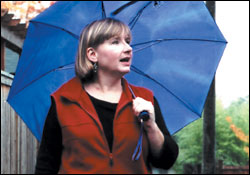
My career as a breast cancer poster child began in October 1998, shortly after surgeons removed my right breast. Just a few weeks later, the first chapter of Jeanne’s Diary went live on the now-defunct OnHealth Web site, with 13 more chapters to follow over the next nine months or so.
I wrote each chapter in the moment?in the early morning when the whole world was asleep but me, or whenever I was overwhelmed. I wrote about my fear of chemotherapy, insurance problems, going bald (twice!), a woman in my support group who died, and about my children, who struggled with their fears that I would die.
The diary, and the attached bulletin board where readers could tell their stories, brought national attention to OnHealth, a Seattle-based dot-com that was once the most widely read health site on the Internet. But that was nothing compared to the attention that resulted when I was fired.
OnHealth fired me in January 2000, just as I was finishing chemotherapy for the second time and was at an all-time low in terms of physical energy and emotional strength. It was a front-page article by another writer, Carol Smith of the Seattle Post-Intelligencer, that put enough pressure on OnHealth to make the company agree to settle quickly. Smith’s story triggered a tsunami of bad publicity?local TV, even NBC was calling?and OnHealth just wanted it to stop.
This is where I first entered “poster child” status and embarked on a career writing about cancer as a way of facing my fears.
FEAR: THE LIST
I live with fear. I think every cancer patient and every cancer survivor does. Ever since that first bout with breast cancer more than five years ago, the fear has been like an alien hand, sometimes squeezing my throat, making it tough to breathe, sometimes wrapping itself around my heart.
We Americans find it somehow shameful to admit to being afraid. We don’t like to read that soldiers in World War I were so afraid that they defecated in their pants before battle, as Newsweek reported recently. We do our best to make the fear go away, with drugs if possible.
And it’s a brave doctor who says the “F” word?fear?to a patient. Usually, it’s “anxiety” that we are coping with, or “stress.”
Here are my fears, large and small:
Dying, of course.
Leaving my children without a mother.
Akira is a college freshman, an independent and motivated young man, but he still needs his mother and his home. How would he feel if our house were sold and the only home he had was a dorm room?
Robin is only 13. If I die before he reaches 18, he’ll leave friends and family, including his brother, and live with his father in San Francisco. Not a great solution for a grieving child who has lived his whole life in Seattle. Would he be able to take his dog with him, at least?
Pain.
Needles and nasty medical procedures.
Being unable to support myself, or perhaps, even to brush my own teeth. Oh, the indignity of that.
And, always, the constant fear that the cancer will return, as it has three times now.
ON A FIRST-NAME BASIS WITH CHEMO
Chemotherapy. That word sends chills down most people’s spines. When my doctors recommended chemotherapy five years ago, I was more afraid of the treatment than I was of the disease. I seriously considered walking away and doing nothing after hearing this news.
“How many ways can you say scared?” I wrote in November 1998. “Terrified, apprehensive, afraid, nervous, freaked out?just plain scared.
“For the two months following my breast cancer diagnosis, I rode an emotional roller coaster over the prospect of undergoing chemotherapy.
“Chemotherapy. You know, the treatment where they pump you full of poisons to kill cancer cells and your hair falls out and you vomit for days at a time and the cure is nearly as deadly as the disease. That treatment.”
Well, I survived that bout with chemotherapy and the next?when the cancer came back a few months later in the skin where my breast used to be. Then, after my cancer resurfaced Hydra-like in my bones in December 2001, a two-year stint with a miracle drug called Herceptin. And now, as of a few weeks ago, I’m doing chemotherapy again. There is a new tumor, resistant to the Herceptin, in a rib end near my spine. I still get Herceptin, but we’ve added Navelbine to it.
Before I continue, a plug for chemotherapy: It’s not the chemo that your grandmother or even your aunt endured. (One of my aunts went through breast cancer treatment almost 20 years ago. Her reaction to the chemo was so severe that she would start vomiting as her car pulled up outside the hospital.) I have never vomited once during chemotherapy, and I’ve managed to work at least part time almost the entire time I’ve been in cancer treatment.
These days, there are good drugs to control, or at least minimize, the side effects of cancer treatment. The chemotherapy drugs themselves are also less crude. Doctors have worked out new doses and schedules for giving these powerful drugs that make them both more effective and easier to tolerate. With the drug I’m on now, Navelbine, I was able to get on a plane to Charleston, S.C., the day after treatment.
OK, I can handle chemotherapy, but what about fear? Doctors often suggest that cancer patients take drugs such as Ativan or Xanax to help them cope with the “stress.” They recommend counseling or psychotherapy.
Then there are the alternative ways of coping: yoga, meditation, self-hypnosis. . . . I’ve tried most of these myself, and I’ve written about coping by using these and other methods as well. But perhaps the most unorthodox?and successful?method I’ve chosen is to run toward my fear.
The “advice we usually get is to sweeten it up, smooth it over, take a pill, or distract ourselves, but by all means make it go away,” writes Pema Ch?dr?n, about fear in her book, When Things Fall Apart (Shambhala, 2000). Ch?dr?n is an American Buddhist nun and teacher at Gampo Abbey in Nova Scotia.
Ch?dr?n’s book reached out and grabbed me from the shelves of the East-West Bookstore when I was reeling from the news that my cancer had returned for the FOURTH time. In it, she suggests a different approach: Stop running from your fear. Turn and face it.
“No one ever tells us to stop running away from fear,” she writes. “We are very rarely told to move closer, to just be there, to become familiar with fear.”
When I read these words, I finally had a way to explain what I have been doing ever since my first cancer diagnosis? running toward my fear by writing about what I fear most: cancer. I immerse myself in it, day in and day out. I write about my own experience, profile other cancer survivors, describe clinical trials, and detail the treatments available for cancers of various types.
For the past two years, I’ve been writing for the Web site of the Seattle Cancer Care Alliance. I’ve profiled patients, including Sarah Larson, who beat leukemia when she was only 8; Oktar Babuna, a neurosurgeon from Turkey who came to SCCA for his second transplant, also for leukemia; and Suzanne Larsen, an outspoken woman who has overcome terrible odds to survive ovarian cancer. She says if you have ovarian cancer, choosing the right doctor is a “life-or-death decision.”
This works for me. I feel I am making a unique contribution, with my skills as a journalist plus my unique perspective as a cancer patient. And I’m making a living, working mostly from home.
BREAKING RANKS FOR A RIPE PAPAYA
My disease has reached a stage where there is little hope for a cure. This is not your grandmother’s breast cancer?in those days, either you were cured, crudely, by the surgeon’s knife, or it killed you fairly quickly. This is a new disease, a chronic disease, made possible by advances in medicine.
Metastatic cancer, for those of us lucky enough to have a type that responds to treatment, is a chronic disease that can be managed, like heart disease, for example. I have periods of treatment, followed by periods of remission, with fairly good quality of life throughout.
If you met me on an airplane or at the grocery store, you would have no idea that I am sick. I’m plump, not gaunt. I have hair. I work, mother my two teenage boys, and enjoy every day that I am alive.
About the only clue that might tip you off is that I am obsessive about hand washing and germs (after all, my white cell counts are low, leaving me vulnerable to infection). I’m the woman in the public rest room who soaps her hands twice and opens the door with a paper towel. Don’t sneeze in my direction, please.
Fear causes sleepless nights, cold sweats, high blood pressure, and shaking hands. But fear does something else as well: It sharpens my view of life and my enjoyment of every little moment. The clich?s are true?”You don’t know what you’ve got till it’s gone,” or in danger, anyway.
So while the past five years of my life have held some of the worst moments, they have also held some of the best.
Spending Sunday mornings painting a mural of a Chinese dragon on a wall in the alley behind my house. Friends come to paint, Robin and the neighbors join in, and I feed everyone hot homemade cinnamon rolls.
Going dancing on Capitol Hill with a group of friends after my cancer went into remission. I hadn’t been out that late in years. Snuggling up late at night and listening to my older son talk about girls and life and girls.
I would not have experienced life with this degree of intensity and joy if I were not painfully aware that the end of my life is much closer than I ever expected.
My parents, both children of the Great Depression, taught me to defer gratification. They never bought anything on credit. Vacations were camping trips in the family Ford. If you wanted something, you saved and bought it when you had the money in your hand.
While I still agree with my parents’ views when it comes to big-ticket material things, I think they taught me to delay gratification in other areas as well. Since my cancer diagnosis, I’ve broken ranks.
If I want a ripe papaya out of season, I pay $4 for it and enjoy it to the last slippery bite. If I want a few potted flowers to brighten my front porch, I buy them and get my money’s worth every time I enter or leave the house.
Now, sometimes, I play first and clean the house later, rather than “work first, play later,” as my mother taught me.
I call this new view of life “front loading.” It means that I do the things that are most important to me?and to my children?now. Because all I have is now.
In November, my younger son and I squeezed a trip to Charleston into a busy week that included cancer treatment on Friday and taking the plane for South Carolina on Saturday. Why? Robin, my son, has been a serious student of the Civil War since the age of 10, when he read The Boys’ War by Jim Murphy. He wanted to go to Charleston to see the Civil War submarine, the Hunley, and Fort Sumter, where the first shots of the war were fired.
I’m hoping to take my older son, Akira, a student at the University of Washington, with me to Tokyo for a week at New Year’s. Akira was born in Japan, and he wants to spend some time there practicing martial arts. If he goes with me, he can check out a couple of dojos firsthand.
I want to go because Japan has been a big part of my life. I have a master’s degree in Japanese language and lived in Japan for a total of seven years, including a couple of years working for Newsweek. I have good friends there whom I see all too infrequently. And I want to celebrate the New Year by staying up all night in Kamakura, one of the old capitals that celebrates the holiday in a big way. I’ll ring bells at the ancient temples, eat holiday delicacies from street stands, and stay up till morning by a bonfire on the nearby beach.
Of course, I’ll be about 12 weeks into this course of chemotherapy by then. So I’ll buy trip insurance, in case I have to cancel.
If you’ve read this far, you might draw the lesson that all anyone has is the present, regardless of whether they are sick or healthy. And you might conclude that everyone should “front load” their lives and eat dessert first.
I would agree, except that I hate “should” and I try never to tell anyone else how to live, even if I’m asked. But you are free to draw that lesson if you choose.
MY COLLECTION OF SOAPBOXES
Just because I don’t tell other people how to live or die doesn’t mean that I don’t have a few rants that have grown out of my years of living with and writing about cancer.
Here they are. Imagine a row of soapboxes in front of you, with me jumping from one to the next in no particular order. My mouth is open wide, and I’m shouting.
SOAPBOX NO. 1: WHOSE DISEASE IS THIS?
I’m the one with cancer. It’s my disease, and I get to make the decisions about how I’m going to live with this disease and what treatments I will agree to do.
My doctors, bless them, understand this. But many friends and family members don’t. They try to tell me what I should do, despite the fact that I have never asked for their advice.
One relative, who happens to sell high-priced vitamins, pushed me to add her brand of vitamins to my regimen while I was in chemotherapy. When I told her that my doctor asked me not to take vitamins during chemo, because they may interfere with its effectiveness, she said, “Doctors don’t know what they are talking about.”
In fact, my doctor, Dr. Robert Livingston, does know what he is talking about. He and a well-known local naturopath, Dr. Dan Labriola, have collaborated on research on this subject.
But that’s not really the point. It’s my disease. I get to make the decisions. If I want to eat peach pits and douse myself with holy water from Lourdes, it’s my decision.
At this moment, I’m battling with a friend who thinks she knows better than I do about my life and my cancer treatment. I told my friends in an e-mail dated Oct. 1, “I do not want to discuss the treatment that I will be getting, reasons for the treatment, or anything related to that. I am satisfied with the recommendations of my doctors, and find it exhausting to talk about. . . . “
Despite that message, this friend keeps trying to tell me what to do.
Now you might be thinking that I should be grateful for the many friends I have who are concerned about me and want to help. Yes, I am grateful, but being badgered to revisit decisions that I made and am comfortable with is no help at all.
SOAPBOX NO. 2: KEEP YOUR FEAR TO YOURSELF
This whole long article is about my fear, and how I take that fear and make lemonade out of it. I think I cope pretty well with my feelings, and I’m always available to my children, to help with whatever problems or fears they might have.
But I cannot cope with other people’s fear, and it’s astonishing how often friends and family come to me?the person who is sick?to help them feel better about the fact that I am sick and may die soon.
I have literally spent hours on the phone with my grieving friends, telling them that it’s OK, that I will be fine . . . and when the conversation is over, I am exhausted.
An offshoot of this is telling a person with cancer all your personal cancer horror stories. Don’t do this. This is unkind.
A friend reminds me that it is a common coping mechanism to automatically mention that your father or mother or brother died of cancer when confronted with someone who has the disease.
And he goes on to suggest that a thoughtful friend would listen and offer support, without dumping his own cancer tragedy on someone who is sick, and in that way find comfort for his own loss.
I agree, and I’m not suggesting that the people who care about me don’t need to vent their emotions, including their fear, but not to me. I can’t handle it.
SOAPBOX NO. 3: PRESSURE GOOGLE
I love the Google search engine, but I don’t love the company any more. If you search for a cancer-related topic on Google, up pops a sponsored link selling a “New Coral Calcium Complex From Okinawa,” which, according to the ad, is a cure for cancer and the reason Okinawans live so long.
I sent a letter to CEO Dr. Eric E. Schmidt by snail mail and an e-mail to the PR department that I asked to be forwarded to Schmidt.
The letter said, in part:
It is EXTREMELY irresponsible of Google to accept [this] . . . sponsored link to run on pages where a user searches for “cancer.”
If you are a medical doctor, then you know this is bogus. You probably also know that the people of Okinawa are long-lived because of a diet that includes about three or four times as many servings of fruits and vegetables (real food, not supplements) as the recommended “five a day” we Americans try to eat.
You should be ashamed of yourself for accepting this kind of advertising. . . .
I received a very polite reply from a woman identified only as “Heather from the GoogleAdWords Team” that said, in part:
Google believes strongly in freedom of expression and therefore offers broad access to content across the Web without censoring results. . . . You may be aware that a different set of laws and regulations apply to commercial speech (advertising) than to the search results we show when you do a Google search. As a business, Google must make decisions about where we draw the line in regards to the advertising we accept, both from a legal and company values perspective. . . .
Since I received this letter, Google has announced that it will hire a third-party company to verify online pharmacies before allowing them to advertise on the site. It’s not clear, however, whether this will include only online pharmacies, or if it will also include companies that sell unregulated products like the marine-grade coral.
Write to Google, ask them to stop accepting ads for bogus products that prey on the hopes of people who are dangerously ill. Here’s Heather’s e-mail address: adwords-pr@google.com.
SOAPBOX NO. 4: THE PINK RIBBONS
I hate them. I really do. I don’t understand what they are for?support and solidarity, something like that, but I’m not getting that from a little twist of pink metal pretending to be a ribbon.
Instead of pink ribbons, I’d rather have national health insurance or any health insurance plan that insures sick people. The way things are now, if you are young and healthy, you can get health insurance at a reasonable cost. If you are old or, God forbid, sick, forget it.
If you want to support people with cancer, forget the ribbon and lobby for national health care. Or for a state health insurance plan that is open to everyone, rich and poor, sick and well. Olympia is helping to balance the budget by taking health insurance away from 60,000 of the working poor in our state.
Will this save money? Please. All the research has been done: A person without health insurance will wait until she gets really sick and then go to the emergency room at Harborview, which cannot turn her away. Then Harborview will write off the bill, which probably equals one year of health insurance premiums, if not more.
Who makes up the difference when Harborview writes off a bill? You and me, the taxpayers.
SOAPBOX NO. 5: THE LANGUAGE OF CANCER
Let’s start with the clich?s: “Died after a long and courageous battle with cancer.” Everyone who dies of cancer is automatically brave. Read the obituaries, you’ll see what I mean.
Notice all the military metaphors and male imagery? Why is that?
It’s gotten so that I’m afraid to be a coward. It might show up in my obituary: “Jeanne Sather died Wednesday after a brief, cowardly skirmish with cancer.”
I’ve been working on this one for almost as long as I have had cancer, which is to say five years of trying to come up with an alternative to the clich? “battle with cancer,” and I haven’t found one yet. Help, anyone?
In the meantime, I’m writing my own obituary (which will say I died, not passed away, left us, or passed over to the other side) and planning my own funeral.
SOAPBOX NO. 6: NIMBY TO THE MAX
Clinical trials are essential to cancer research. Without clinical trials, new drugs and treatments cannot be approved. No matter how promising a new treatment looks when tested with lab animals, it cannot be used to treat people until it has been carefully evaluated through the several phases of a clinical trial.
Most Americans understand this, and the majority of people surveyed on this issue say that no drugs should be given to people until they have been thoroughly tested for safety and effectiveness in human subjects.
But here’s the kicker: The majority of Americans, something like 80 percent, say drugs must be tested on humans, but only about 4 percent or 5 percent of adult cancer patients actually volunteer to take part in clinical trials themselves.
This is NIMBY-ism on an incredible scale. What do these people (who want the newest and best cancer treatment and want it yesterday) think researchers are going to do, test the new drugs on people in the Third World?
Those of you who don’t have cancer aren’t off the hook, either. Sign up for a prevention trial, and do your part for humankind.
PERHAPS THE BEST thing about my experience as a breast cancer poster child is that all sorts of people (including friends of friends, people I will never meet face-to-face) call me when a friend or family member is diagnosed with cancer. Typically, they feel helpless and don’t know what to say.
For me, that’s less of a problem now. I make gentle suggestions of ways to help and things to say. These words?and the tens of thousands I’ve written in Jeanne’s Diary for various Web sites and in this story?are what I have to give. They are also my memorial, what will remain when I am gone.