To some, Dr. H. Richard Winn was the University of Washington’s fall guy. If so, it was a soft landing. Investigated for submitting hundreds of thousands of dollars in questionable Medicare and Medicaid insurance billings, the 60-year-old UW brain surgeon plea-bargained a lesser charge of obstruction of justice and, in November, was sentenced to five years of probation and 1,000 hours of community service—in the community of Katmandu. With court approval, he’s spending four months teaching and treating patients at Tribhuvan University Teaching Hospital in Nepal, where the neurology department is just seven years old. Winn also lost his prestigious UW chair in neurosurgery, paid a $4,000 criminal fine, and had to pay $500,000 to Medicare and Medicaid. On the other hand, that half-million was money prosecutors say he wrongly appropriated from taxpayers in the first place, submitting “incorrect claims” throughout the 1990s. For agreeing to resign, he also received a golden parachute of $970,000 and was excused by the UW from paying $500,000 in legal fees. “Anyone who thinks the punishment called for here is too lenient has no idea what Dr. Winn and his family have been through in the last year and what still lies ahead of them,” insisted U.S. District Court Judge Robert Lasnik at sentencing, adhering to U.S. Attorney John McKay’s leniency recommendations. But what lies ahead for Winn—he has already dashed off a check for the $504,000—is no prison time and no likely loss of his medical license. He also remains eligible to receive federal grants, can still bill for Medicare work, can obtain another prestigious teaching position elsewhere, and has a guarantee of up to $3.7 million in UW unemployment compensation until he finds the job he wants. Let that be a lesson to him.
More pressing now is what lies ahead for the UW and its medical school. The complex federal probe—which began in 1999, the year the UW settled an earlier Medicare-billing dispute by paying back $3.6 million—hangs over the campus like the methane that lingers over the old Montlake dump. Winn’s actions and conviction foreshadow an uproar to come if, as some UW and federal officials are predicting, the university ends up paying as much as $25 million in legal fees, fines, and settlement paybacks resulting from a decade of questionable Medicare billings. Cautions L.G. Blanchard, spokesperson for UW Medical, the umbrella name for the med school and UW hospitals and medical clinics: “No one knows exactly how much money is in dispute; it could be $1 million, it could be a lot more.” The questioned billings from the 1990s have been ballparked at $10 million to $20 million—some or all of which the school could be asked to repay through a negotiated settlement, and which could constitute one of the nation’s largest university Medicare-billings cases. The UW insists its actions weren’t intentional and notes that some hospitals and doctors around the U.S. have stopped accepting Medicare patients because of such billing disputes and unfair reimbursements. Figures for fiscal 2002 show just how much the university and the government typically disagree on what services are covered and what aren’t: The UW billed Medicare and Medicaid for $107 million but was paid only $34 million. The $73 million difference, says Blanchard, “was just money out the door” for the university.
‘PISSED OFF ABOUT WINN’
The UW’s legal fees and any fines or settlements will be taken in part from the earnings of other doctors, some of whom are mulling legal action to recover lost income. By law, the UW’s Medicare and Medicaid funding also could be cut, though that’s highly unlikely. Additionally, U.S. prosecutors are on the verge of filing one or two more criminal complaints against UW doctors. “I can’t say much,” says assistant U.S. attorney Susan Loitz, who helped prosecute Winn, “because it’s an ongoing criminal investigation.” The UW last week said kidney doctor and chief of nephrology William Couser, 63, was discussing a plea deal. Like Winn, he is suspected of illegally billing thousands of dollars in Medicare services.
At the UW, you can cut the tension with a scalpel. “I swear,” says one veteran physician, “everyone out here’s got an attorney or is retyping their r鳵m鳮” The UW concedes that “hundreds” of UW employees have been provided “dozens” of attorneys during the four-year federal probe. Some of the questioned Medicare billings date back to 1992 and have been the product of untold numbers of doctors and billing personnel. An operating-room nurse says doctors’ voices rise when they begin talking about the costs and the harm done by the scandal, especially when Winn’s name pops up. “Oh god, are they pissed off about Winn and his deal,” says the nurse, who describes the doctors’ angst as a “firestorm brewing.”
Such anger is misdirected, says spokesperson Blanchard. Winn’s $500,000 legal costs indeed came out of the doctors’ revenue pool, he confirms. But money for Winn’s multimillion-dollar resignation pact comes from other “nonpublic” revenue. (The UW considers revenue other than state dollars as nonpublic, though the state, of course, owns and operates the tax-exempt school.) The thing is, says Blanchard, “This place continues to function extremely well,” and, he emphatically notes, only one out of 1,300 staff doctors has been indicted. “Some people are mad,” Blanchard says. “We understand that. But as an overall enterprise, we continue to function as usual and attract top-notch faculty” such as newly hired genome researcher Robert Waterson, who, Blanchard says, “knew all about the investigation.” Not a single faculty member has quit Winn’s former neurology department because of the scandal, Blanchard adds. But the school also acknowledges that Department of Medicine chair William Bremner is playing referee in a squabble over a replacement for chief of nephrology Couser; some doctors want an outsider, but, says Blanchard, a selection committee has opted for an in-house candidate, Stuart Shankland. The UW says it’s not a major dispute, although Bremner, in a recent e-mail, asked doctors “to put aside feelings of divisiveness that have been increased by the profound stresses of the investigation.”
IN INTERVIEWS, PHYSICIANS—most of whom preferred to talk off the record—say they feel they’re literally paying for someone else’s “misdeed,” as Winn called his felony. Some are considering a lawsuit to recover the $15 million (and counting) legal tab, which includes several million dollars for a new Medicare-compliance program that the UW calls second to none. The upset doctors would like to raid the medical-school board and its insurance company for recompense. Just the threat of a suit could force a settlement, doctors figure, and even UW special deputy attorney general Dan Dubitzky allows that’s conceivable. “It may be there is insurance which may cover some of the fees, and they may be recovered,” he says. “But that’s down the road.” He also speculates that an agreement could be reached through negotiations rather than in court. Dr. Doug Hanel, a Harborview surgeon, says the UW has been covering the legal fees from reserve funds, but that’s a “shell game” that will ultimately leave the docs holding the bag. (The UW also extracts physician revenue to buy new equipment and support $2 million in annual charity care.) Hanel says he, like other docs, has worked 15 percent harder this year and made about 30 percent less, due a great deal to slumping Medicare reimbursements. “If that doesn’t change,” he says, “and we’re eventually hit with the bill for these legal fees, you’ll see a mass exodus of doctors from the UW, and around the state, for that matter.”
Doctors say they chose the UW over better-paying private practice because they’re dedicated to public medicine and deserve what they were promised. It’s unclear how much sympathy they’ll get from Joe Taxpayer, since UW docs pull down an average base salary of $120,000 (which is, however, below the U.S. med-school average of $145,000). UW med salaries range from $37,700 for a first-year resident to $252,000 for dean Paul Ramsey. A 2001 state ranking of the top-paid state employees was dominated by UW doctors. (No. 1 on the list was then-UW president Richard McCormick, at $285,000; Gov. Gary Locke was 237th, with $135,960.) Then there’s the real bucks teaching doctors can earn from research supported by grants or from UW hospital and clinic services, which can double their income. Lofty physicians such as Winn have made a bundle that way. For fiscal 2002, Winn earned $617,800—$438,861 of it through clinical work. Winn was well paid, Blanchard says, because he was, after all, a neurological surgeon, “extremely hardworking, and his billings were quite high”—if not always accurate.
PHANTOM SERVICES
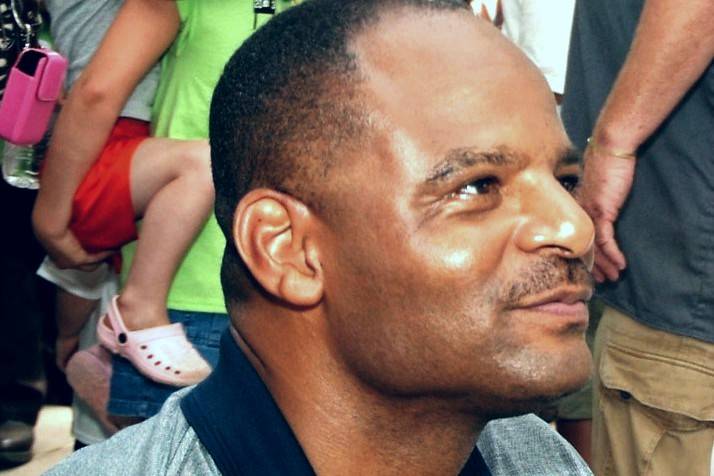
Balding, bespectacled, and bow-tied, Winn was a UW doctor for 20 years, a confident physician exuding the sometimes-godly arrogance needed to open a brain. His supporters ask critics to remember Winn’s accomplishments and to ask themselves how they’d feel if it was their child’s injured spine or spouse’s diseased brain that was salvaged by his genius and laser knife. The son of a doctor, married for 37 years, with two grown children, Winn became the nation’s youngest (40) neurology department head at the UW in 1982. Though he has not announced his next career move, he is said by associates to be considering a staff position at the University of Pennsylvania in his home state. Penn’s neurology chair, Sean Grady, who wrote the court in support of Winn’s plea bargain, studied under Winn when Winn taught at the University of Virginia in 1981 (another school Winn is said to be considering). Ironically, Grady, who also was on the UW faculty in the 1990s, is seen as a top candidate to replace Winn here. Irony No. 2: Penn currently holds the record for a university Medicare and Medicaid billings-investigation settlement—$30 million in 1995.
The UW says the feds are winding up the criminal portion of their probe, with civil charges and settlements to follow. Four separate federal and state agencies and the U.S. attorney’s office in Seattle are reviewing the questionable billings to Medicare, which is the government’s health insurance for those over 65, and Medicaid, the health insurance for the poor. Money from TRICARE, a military health-care system, is also involved. A federal grand jury began probing the payments in 2000, after UW billings-office worker Mark Erickson tape-recorded incriminating conversations with doctors and secretly blew the whistle. Reams of billing documents demonstrate how the doctors and their university milked the federal medical-insurance system, investigators contend, benefiting the university and the doctors individually. Investigators have built a case they say belies the university’s defense that the false claims were the unintentional result of complicated filing regulations. The school knowingly overcharged for medical procedures that weren’t done, the government contends, and billed taxpayers for phantom doctor services. “You don’t charge for a doctor who wasn’t there,” says a federal official involved in the review. “That’s not complicated.” But UW attorney Dubitzky says it is. “The regs are terribly confusing, particularly when applied in the context of a teaching hospital. Every day, auditors find misbillings, and the money is repaid. Sometimes it’s in the school’s favor, and they have to pay us. This goes on all the time.”
THE INVESTIGATION FOCUSES on what until last fall was called the university’s Academic Medical Center (AMC), the UW’s collection of hospitals and clinics and its medical school. The name is now UW Medical, changed for simplification, the school says. The umbrella group was created in 1992, centralizing the massive computerized revenue process (the med school’s annual budget is $1.4 billion). The new system streamlined controls and accounting but made it more difficult to oversee. A UW official says some of the first billings now in question occurred about the time the AMC was created. In 1996, the U.S. began what it calls PATH (Physicians at Teaching Hospitals) investigations into Medicare billing at the UW and around the country, suspecting abuse of funds at some of the 125 U.S. academic medical centers. The current investigation is an offshoot.
Federal investigators, in both the ongoing criminal and civil cases, have been studying the computerized and hand-written paperwork from two UW billing practices. One, UW Physicians, bills for the doctors’ services to patients at UW Medical Center, UW Physicians Network, and at the UW’s teaching hospital, county-owned Harborview Medical Center. (UW Physicians Network doctors provide care at a specialty center and eight community clinics from Auburn to Woodinville.) The second billing practice, Children’s University Medical Group, serves school doctors working at Children’s Hospital. Whistle-blower Erickson, 34, worked for both billing groups from 1991 to 2000. He claimed UW staff doctors charged the government for services they never performed. In some cases, doctors were billing for services while away on vacation, say federal officials. According to the charges in Winn’s case, doctors also falsely filled out small treatment-billing cards they carry on their rounds.
‘DISRUPTIVE AND DEMORALIZING’
Though millions of dollars are at stake, the scandal adds up to more than lost money. The revered Winn is gone. So is respected associate professor Arthur Fontaine, 55, the UW’s former radiology-section chief. The UW says he was asked to step down during the investigation, and he has since left for a job at Group Health Cooperative. Couser, the kidney doctor now negotiating a plea, the UW says, also stepped down because of the investigation but remains at the school. UW Physicians administrator Brian McKenna and another medical-data official, Patrick Murphy, have become cooperating government witnesses, attorneys confirm.
The university’s Board of Regents, though it sought Winn’s resignation, beseeched the court to accept his criminal plea bargain. Winn’s leadership made UW neurology perhaps the top department of its kind in the U.S. Its doctors perform 3,000 operations a year, about 1,500 of them lifesaving, and six doctors who now chair other university neurology departments trained under Winn. He also enriched the school by leveraging a steady stream of research grants. (The UW is one of the top five U.S. grant schools and is first in such categories as biomedical research.) In a five-page letter penned by regents Dan Evans and Gerald Grinstein, the board claimed that rejection of Winn’s plea could lead to an agonizing criminal trial (during which, of course, all the dirty details would have been aired) and would further distress medical-school personnel. “This process,” the board said, “has been very disruptive and demoralizing for most people in the Department.” If the court would accept Winn’s deal, the medical school could “move on.”
IT HAS MOVED ON, but to what? U.S. Attorney McKay said he hoped Winn’s conviction would “reverberate” around the U.S., and some fear the UW will become an example as well. The Justice Department clearly wants university presidents everywhere to know that their campuses, too, could become a federal crime scene. “All of us neurosurgeons around the country and throughout the world understand that Dr. Winn has pleaded guilty and is thus accountable for his actions,” says Dr. Mitchel Burger, a former UW neuro- surgeon who now is neurology chair at the University of California-San Francisco. He wrote the court supporting Winn’s plea: “This will not be forgotten anytime soon, and has had a lasting impression on all of us in both the academic and private neurosurgical communities.” The Seattle FBI office says health care fraud on all levels is the No. 2 white-collar crime in this region (bank fraud is first), and the agency has fielded a multi-jurisdictional task force to probe it locally. Federal officials say they’re not focused on everyday billing errors but on patterns of them—like the UW’s.
To tax-money watchdogs such as Bob Williams of the Evergreen Freedom Foundation in Olympia, “The UW is suffering from an ethics crisis.” It’s not just doctors like Winn, he says, but “the regents, trustees, and president who have taken no meaningful action to address the problem and restore the public trust.” Problems with Medicare funding and bookkeeping are hardly new to the med school. Take 1997, a bountiful year. Medicare investigators determined the school was wrongly charging for experimental heart-implant devices. The UW eventually settled with a $3.6 million payback. As an offshoot of that probe, UW officials had to shut down three private foundations found to have been improperly operating within the med school for six years, run by a UW heart doctor and university personnel. Also in 1997, three conflict-of-interest allegations were sustained against a professor of radiation oncology, who had been accused of using his university position to benefit his private cancer center. Again that year, a lab department manager was sentenced to 11 months in jail for falsely submitting 40,000 hours of time-payment claims, amounting to more than $200,000—a fraud that went undetected for 19 years.
The latest scandal broke because whistle-blower Erickson, unable to stop the cheating within, he claims, went outside the system. UW officials think that was unnecessary, yet even then Winn still believed he could pull off an inside cover-up, obstructing a grand jury by telling fellow doctors that he had spies and would fire those who betrayed him and warning employees that “heads would roll” if they didn’t lie about billing procedures. If he now serves as a symbol of change at the UW, so does Erickson. He has filed a federal False Claims Act lawsuit and, if joined by the U.S. in his action, can share in whatever funds the government recovers from the university. At a standard 10 percent to 20 percent, that could amount to more than $2 million. Let that be a lesson, too.

UW Medical Complex
Includes the School of Medicine, UW Medical Center, Harborview Medical Center, and UW Physicians neighborhood clinics.
Inpatients annually: 45,000.
Outpatients annually: 900,000
Faculty: 1,300.
Medical residents: 1,000.
Medicare funding, 2002: $58 million billed, $19 million paid.
Medicaid funding, 2002: $49 million billed, $15 million paid.