PETER CASE
PETE KREBS
Tractor Tavern, 206-789-3599, $10 9 p.m. Thurs., Jan. 16
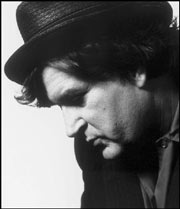
Like so many musicians of his generation, Peter Case can blame it all on Bob Dylan. Or at least a mid-’60s paperback biography of the singer that claimed the erstwhile Robert Zimmerman had left home when he was 11, seeking his destiny as a ramblin’ musician out on the road.
The truth, of course, is Dylan didn’t go anywhere until he was 18, and even then the Hibbing, Minn., native only ventured as far as the local college campus. But like all good storytellers, Case can appreciate a bit of mythmaking—even if it was the spark that led him to leave his Western New York hometown before his 16th birthday.
“It’s funny, I really did take off from home as a teenager and hitchhike all over ’cause I read that book,” says Case with a laugh. “I thought that’s what you had to do to become a great songwriter.”
Emulating Dylan and the itinerant bluesmen he idolized, Case hitchhiked his way across country, eventually landing in San Francisco where he was quickly drafted by Jack Lee and Paul Collins into the Nerves. The group released one influential EP, 1976’s Hanging on the Telephone (the title track later a hit for Blondie), before Case went south to Los Angeles to found the Plimsouls. It was leading that short-lived combo—still considered one of power-pop’s seminal outfits—where Case came closest to mainstream stardom, thanks to the song “A Million Miles Away,” featured prominently in the Nic Cage comedy Valley Girl.
“It’s funny that it still follows me around,” says Case, of the group that broke up some 20 years ago. “I don’t mind it, but when people talk about the band they tend to get it wrong. The Plimsouls wasn’t about power-pop or new wave or whatever. The whole gimmick with the Plimsouls was about having great songs.
“In a way, I’ve done a lot of my best work since then,” observes Case, “but that was my big moment of media blast. That [period] was like my musical childhood, really. I was like 24 or 25 when I cut ‘A Million Miles Away.’ I’ve come a long way since then.”
INDEED, CASE’S post-Plimsouls career may not have had the same high profile or cult cachet, but it’s been filled with a fair share of musical highlights. Beginning with 1986’s self-titled solo debut, 1989’s Grammy nominated The Man With the Blue Post Modern Fragmented Neo-Traditionalist Guitar, and 1992’s Six Pack of Love, Case quickly emerged from the shadow of his former band, recasting himself as a gifted acoustic songsmith, drawing on a variety of styles—country, blues, folk—with an easy, alchemical grace.
The mid-’90s marked something of a career crossroads for Case as he parted ways with Geffen Records. Although his solo efforts had anticipated—perhaps even helped usher in—the era’s “unplugged” boom, Case suddenly found himself cut adrift. Without the muscle of a major label behind him, Case was forced to rebuild his fortunes independently, dedicating himself to a tireless, often glamourless, run of solo touring. “It really was like starting over,” he recalls of the period.
Fortunately, Case soon found a home with Vanguard Records—a small but iconic folk and blues imprint—ushering in the second phase of his solo career with critically lauded fare like Torn Again, Sings Like Hell, and Full Service No Waiting. (In between, Case re-formed the Plimsouls for a successful reunion album and tour that drew the expected raves from pop acolytes.)
More recently, Case expanded his palette with 2000’s soulful Flying Saucer Blues and 2001’s live affair, Thank You St. Jude, where he gamely resurrects nuggets from his catalog (much of his Geffen output, unfortunately, remains out of print domestically), and which may well rank as his best effort.
While his sales figures won’t threaten to shatter any SoundScan records, Case is comfortable with his modest commercial standing. Perhaps his greater difficulty in the stratified world of roots music is being the kind of performer who doesn’t fit neatly into any one subgenre. While he’s most often pegged as a “folk artist,” it’s a description Case finds ill fitting.
“The kind of music I do is not really ‘folk’ in the way people associate with the term—it’s not like that scene in Animal House where the guy’s singing ‘I Gave My Love a Cherry’ and John Belushi breaks the guitar over his head,” chuckles Case. “The people I’m into—Rev. Gary Davis, Lightnin’ Hopkins, Robert Johnson, Mississippi John Hurt—their thing wasn’t about folk or blues so much as it was just an intense form of expression, an intense form of music that just happened to be done by a solo guy.
“My thing is telling stories,” he adds. “In a way, it’s an evolution of what I was doing in the Plimsouls. The songs in the Plimsouls were little slices of the story, and then I started telling the whole story.”
THE WHOLE STORY has not been a particularly pleasant one of late for Case. The past two years have witnessed both the death of his father and a divorce, events—along with the period’s larger turmoil—that served as the foundation for his latest collection, Beeline.
“On the new one, I didn’t really sit down and write the songs—they just came out. It was a really emotional period personally—and, of course, nationally with the whole Sept. 11 thing,” he says. “It didn’t seem like the right thing to do was to sit down and try and write narrative songs as I have in the past. As it happened, stuff just kinda came out of me. [A lot] of the songs were really composed without paper, without pen—just out of thin air.”
The album’s opening track, the sprite “If You’ve Got a Light to Shine,” was first among a batch of material conceived in this fashion. Written on the Sunday morning after 9/11, its multifaceted fusion—merging wailing sonic figures, jaunty rhythms, and a meditative lyrical message—sets the tone for a collection by turns brittle and beautiful, but ultimately rich in purple pathos.
While Case has varied his sonic approach with each album, he takes a rather unexpected tack with Beeline, drawing both aesthetic and spiritual inspiration from the realm of world music—particularly the ethereal motifs of Indian ragas.
“I found that kind of music is an amazing expression of emotion. You have the morning raga that’s for longing and the evening raga, which is for grief. I guess those two feeling were pretty heavy in me at the time.”
Though Beeline is an album steeped in sorrow, Case is quick to dispel the popular portrait of him as some sort of glum-faced troubadour. “I’m not in a depressed place,” he insists, laughing. “Really, I’m not. I feel invigorated with all [the things] I have going on. I’m still out there playing, and I feel like I’m still rocking.”
In fact, among his myriad side projects— which include last year’s Grammy- nominated tribute to Mississippi John Hurt and a handful of literary endeavors—Case is writing an On the Road-style chronicle of his life as a musician, starting with the fateful cross-country trek that began when he first put down that Dylan bio some 35 years ago.
“Yeah, I have been out there for a long time,” he says laughing, “I guess I’m the real rolling stone.”