Not So Fast
Published 7:00 am Monday, October 9, 2006
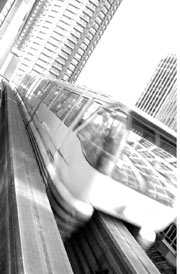
From his office high on the 42nd floor of the Bank of America Tower, Joel Horn can see the future. Looking south toward Safeco Field, the path of the proposed monorail stretches out before him, from Yesler Way through King Street Station, past Sound Transit’s Union Station headquarters, and south toward the West Seattle Bridge. Horn, technical program manager for the Elevated Transportation Company (ETC), envisions a day when stoplights and traffic jams will no longer be impediments. The miracle monorail will whisk travelers high above it all at speeds exceeding 50 mph. “We’re going to take people where they want to go,” Horn says.
The ETC’s offices, located in the city’s tallest building, give the agency a bird’s-eye view of its larger rival. But for the past two years, the monorail agency has labored in Sound Transit’s shadow. Monorail proponents regard Sound Transit as everything they’re trying to avoid: a hulking bureaucracy —seemingly accountable to no one—that has yet to lay a single yard of steel on its heavily altered, over-budget light-rail line from downtown Seattle to Tukwila. (A 1.6-mile line in Tacoma is on track for completion next year.) But Sound Transit is years ahead in the process of building a network of light rail, heavy rail, and bus service, while the monorail project—to be financed by a 1.4 percent motor-vehicle excise tax, on the Seattle ballot in November—still seems like a fanciful, if perhaps attainable, dream.
Unlike the light-rail project, which has a record of achievement and failure, the monorail agency is still selling promises and projections. And while it’s too soon to praise the monorail or bury it, there are some alarming signs. Ridership numbers, the basis for the monorail’s sky-high revenue projections, seem implausibly large. The board that will govern the monorail agency, the Seattle Popular Transportation Authority, will be—like Sound Transit’s—mostly appointed, not elected, with just two members chosen by the public. Neighborhood opposition, which prompted monorail planners to move their route three blocks east in Belltown, is starting to percolate elsewhere, but the ETC has no mitigation plans in place. And the ETC’s cost estimate of $1.75 billion is based, like Sound Transit’s initial estimate, on minimal design work and engineering—a mistake partly to blame for $1 billion in overruns that cost Sound Transit a large measure of its popular support.
On Nov. 5, Seattle voters will decide if the monorail deserves a chance to prove it can succeed where Sound Transit fumbled. Here are some of the sticking points.
RIDERSHIP
The ETC loves to tout its ridership projections, and it’s no wonder: The figures are nothing short of astonishing. The ETC predicts 69,000 people on average will ride each weekday between Ballard, downtown, and West Seattle by 2020: 57,000 commuters; 8,000 “event riders” attending Bumbershoot, Mariners games, and the like; and 4,000 tourists. That’s nearly three times the current ridership on all 11 bus routes between Ballard, downtown, and West Seattle, which carry about 22,500 riders a day.
Sound Transit had to slash its ridership forecast by two-thirds after its original route, from SeaTac to the University District, was shortened by seven miles—eliminating service to the city’s populous North End. At 42,500 riders a day, Sound Transit’s latest projection is dramatically lower than the monorail’s. One reason, according to Sound Transit spokesperson Lee Somerstein, is that the light-rail agency didn’t include event and tourist rides, “which are difficult to reliably quantify and typically generate the most ridership on weekends rather than weekdays.”
The ETC’s most recent estimates are based on a study done by URS Corp., a San Francisco engineering firm whose record at forecasting ridership has been spotty at best. In St. Petersburg, Fla., the company’s estimates for the Osceola Parkway, a toll road that was supposed to pay for itself by charging $1.25 a car, turned out to be little better than fantasy. URS predicted the Osceola would bring in around $9.4 million in tolls every year. Instead, it netted less than $6 million annually and could end up going $1 billion or more over its original $150 million budget, according to the Orlando Sentinel and the St. Petersburg Times. URS also produced inaccurate estimates for nearly a half-dozen other toll projects in Florida. In some cases, according to the Times, the roads drew only half the cars the company predicted. One of those, the Suncoast Parkway, was supposed to make $70 million this year. Instead, it will pull in just $14 million.
Besides factoring a huge number of tourists into its weekday projections, the Seattle monorail plan also assumes that a substantial number of people will pay extra to transfer from Metro buses to the monorail. Instead of participating in the regional Puget Pass program (whose partners include Metro and every other transit agency in the region), the monorail agency will consider offering a “transfer discount” of up to 50 percent. That means a ride on the monorail will cost anywhere from about 60 cents to $1.25 more, depending on time of day, than simply staying on the bus. “Why one would want to take a bus to a monorail stop rather than sit down on a bus and stay on it is beyond my comprehension,” says Henry Aronson, the former Port of Seattle commissioner who is managing the Citizens Against Monorail campaign. Nonetheless, the ETC predicts that 82 percent of its ridership would come from existing bus riders.
To get all those bus riders onto the monorail, the ETC’s plan assumes a lot of additional buses traveling to monorail stops—a level of service Metro general manager Rick Walsh has characterized as “far in excess of Metro’s current service in the affected areas.” In a July letter to the ETC’s executive director, Harold Robertson, Walsh said increasing service to that level would cost far more money than Metro has to spend.
This isn’t just academic: Ridership figures play a huge role in determining whether a system makes money or hemorrhages it. But while revenues are always important, the ETC’s are especially critical. The agency claims the monorail will be able to pay for itself, with no operating subsidy—a feat no transit agency in the country has accomplished. In 2000, fares paid, on average, for 36 percent of U.S. transit systems’ operating costs, according to the American Public Transportation Association. In 2000, Metro fares paid for 25 percent of the agency’s operating costs; fares from Sound Transit’s regional bus system and Sounder commuter rail paid for around 20 percent. In his letter, Walsh claimed that the ETC failed to factor in a realistic number of reduced-fare riders and monthly discount-pass users, and he predicted revenue about 30 percent lower than that projected by the ETC. Even Seattle City Council member Nick Licata, an outspoken monorail proponent, believes the agency is “being overly optimistic with their operating revenues.”
On the other hand, the monorail does have a promising model—though not in the United States. Vancouver’s SkyTrain, an elevated light-rail system, pays for all its operations with fares, charging $2 or more per ride. “Three hours from here they’re doing it,” says Horn. “What is so different about Seattle? Why do we think we can’t do it here?” Benson Chin, project spokesperson for SkyTrain’s new Millennium Line, says the agency keeps its operating costs low because the system, like the proposed monorail here, is fully automated. Unlike the proposed Seattle system, SkyTrain is powered by linear induction motors, which pull the trains along using magnetic force—a technology Chin says requires less maintenance than conventional electric motors. And even the successful SkyTrain doesn’t boast the kind of ridership the ETC is relying on for its revenue projections. At 28 miles, twice the length of Seattle’s proposed monorail, SkyTrain has about 65,000 riders a day—4,000 fewer than the ETC is predicting.
COSTS
Fairly or not, Sound Transit has become synonymous with cost overruns. The original 21-mile light-rail line, which would have run from Sea-Tac Airport to the University District, was supposed to cost $2 billion. After overruns put light rail $1 billion over budget, Sound Transit adopted a scaled-back, $2.1 billion system, which will (assuming it’s built) run from downtown Seattle to Tukwila, just shy of Sea-Tac Airport.
Cost overruns are hardly unique to Seattle’s light-rail system. They’re endemic to almost all big transportation projects, including roads, bridges, and other forms of rail. According to a recent study published in the Journal of the American Planning Association, rail projects over the past century have cost an average of 45 percent more than the original estimates.
Has the monorail learned anything from its predecessors’ errors? The current cost estimate—$1.75 billion, which includes $1.29 billion in capital costs plus several hundred million dollars for reserves and operation—is based on a system design that is less than 5 percent complete. Sound Transit spokesperson Somerstein says that isn’t enough to give a clear picture of costs and potential overruns. “We were at less than 5 percent design” going into the second Sound Transit vote in 1996, Somerstein says. “The real costs don’t become apparent until 30 percent design, when you have a better idea of what it’s going to look like.” But Ed Stone, the recently departed ETC spokesperson, says the agency’s engineering work focused primarily on things that could affect costs, such as the size of beams and support columns and how much concrete and steel would be required. “We put so much effort into our numbers because Sound Transit ran into so much trouble,” Horn adds.
First, the ETC ran its cost estimates by companies like Bombardier and Hitachi, which build monorail cars and tracks. Then the agency solicited a cost-and-risk evaluation from Golder Associates, the same engineering consultants that analyzed several of the state Department of Transportation’s megaprojects, including the Alaskan Way Viaduct and Interstate 405. The evaluation, which took place on “an intense and compressed time frame,” according to the consultants’ report, concluded that there was an 80 percent chance the project would come in at under $1.89 billion—$140 million over the $1.75 billion planned—and a 50 percent chance it would cost less than $1.72 billion. Dwight Sangrey, the Golder Associates principal who headed the team, says they took into account factors that could affect costs, such as real-estate fluctuations and seismic events. “There is a range of possible outcomes; that range will narrow as you learn more about the project,” Sangrey says.
Seattle may have more to worry about than Las Vegas, a city whose planned 3.2-mile extension of its existing monorail is estimated at a slightly higher per-mile capital cost ($109 million per mile) than Seattle’s ($92 million per mile), once reserves and other noncapital costs are subtracted from the $650 million total. In Las Vegas, the privately financed monorail will travel between stations inside casinos, and it won’t have to cross water or climb any hills. The Seattle monorail has to traverse two bodies of water, meet seismic standards, and travel through a densely populated urban area.
Monorail backers say direct comparisons are difficult because the Las Vegas monorail estimate includes some costs that Seattle’s estimate does not and because the cities have such different terrain. True enough: Seattle’s two bridge crossings were originally budgeted at $120 million. That estimate now is just $85 million, a reduction Horn attributes to faulty early calculations.
King County Council member Dwight Pelz, the only Seattle elected official to publicly oppose the monorail, believes the ETC’s estimates are probably far too low. “I think in five years they’re going to come back to voters and say they need more money to build the rest of the system,” Pelz says. “If you’re going to avoid making the mistakes Sound Transit made, the No. 1 rule would be: Don’t lowball your costs.” If the ETC’s estimates are wrong, it could push the monorail to another vote or force the agency to shorten its route. Citizens Against Monorail’s Aronson foresees a future in which the monorail runs from Interbay—where the ETC says the monorail agency will likely begin construction—to Harbor Island: a proverbial train from nowhere to nowhere.
NEIGHBORHOOD OPPOSITION
Neighborhood backlash against Sound Transit cost the light-rail agency millions in mitigation payments and altered plans. A tunnel through Beacon Hill, added at the behest of neighborhood residents, will add between $110 million and $120 million to Sound Transit’s estimate. Surface improvements along Martin Luther King Way South will cost between $115 million and $170 million more. And that tally doesn’t include the thousands Sound Transit spent fighting a lawsuit by Save Our Valley, a group that opposed surface light rail in the Rainier Valley. “Sound Transit has spent millions on mitigation,” says Pelz. “They haven’t lost any lawsuits, but they’ve had to fight lawsuits, and that’s where your costs come from.”
But the ETC has no money in its plan for mitigation—not to fight lawsuits, not to reduce noise levels for downtown residents who will live 12 feet from the monorail, not to help promote businesses whose signs and entrances will be obscured by the 40-foot-high elevated system.
Horn’s position on mitigation is that, aside from $25 million set aside for parking, none will be needed. Because elevated systems can be built in the public right-of-way, the ETC doesn’t anticipate the kind of battles Sound Transit encountered when buying property along its light-rail line. Pelz finds Horn’s assumption laughably optimistic. “Their position is that if everything goes perfectly, they’re going to be fine. I wish them the best, but I’m not sure that’s realistic.” Pelz notes that the monorail agency has already altered its route once in response to neighborhood concerns, moving it from Second Avenue to Fifth Avenue in Belltown, where residents feared their property values and streetscape would be harmed. “I think it’s only going to get worse as they go in and announce where the stops are going to be,” Pelz says. “The mitigation costs for Sound Transit began to rack up after the vote, not before the vote. The darkest days are ahead for them.”
So far, the ETC has focused much of its attention on a few vocal, organized residents’ groups in and around downtown Seattle. Its final plan, in fact, leaves the exact alignment through downtown and Seattle Center flexible, so that it can be altered after the November vote. But Ballard and West Seattle, two neighborhoods that historically have resisted increasing urbanization, are unlikely to stay silent.
Already, Seattle City Council member Judy Nicastro has raised the hot-button issue of “upzoning,” or increasing the height and size of commercial and residential developments, around the stations. “I can’t imagine the zoning will stay what it is around any of the stations,” Nicastro says. Not everybody’s keen on turning once-suburban neighborhoods into dense city centers. Kay Knapton, director of the West Seattle Junction Association, says she doesn’t want to see the area’s overall density increase. “We like the way the Junction is—it has a small-town feel,” Knapton says. The ETC has consistently sashayed around the zoning issue, even claiming in its environmental-impact statement that the monorail will have no impact on zoning, land use, population, employment, or housing. “We’re not looking to redesign whole neighborhoods,” Stone says. “In the entire planning process, we assumed no changes in zoning.”
Of course, Stone notes, zoning changes are likely with or without the monorail. Density’s march is relentless, and Ballard, as one of the city’s “designated urban villages,” is expected to gain nearly 4,000 jobs and 2,000 new households by 2020, according to the city’s comprehensive plan. But there’s no doubt that the monorail will, for better or worse, accelerate the process. Which can be, as Pelz notes, a good thing. “The whole reason to build the light-rail system is to shape the development of the city 20, 40, 60 years down the road,” Pelz says. “If we’re not going to upzone around the monorail stops, then why should we build it? But it’s time for the City Council and the monorail people to tell the neighborhoods what the impact is going to be.”
Knapton of the West Seattle Junction Association says the biggest concern for businesses is parking. The ETC has no plans to build long-term parking facilities along the 14-mile route, even at the end points in Ballard and West Seattle. To do so would require a waiver from the city’s moratorium on park-and-ride lots and likely would cost far in excess of the agency’s $25 million parking contingency. “Twenty-five million spread over the number of stations they’re going to have [19] isn’t going to mitigate much,” and private developers are not likely to pick up the slack, Knapton says. “We already have issues with van-pool riders who see the Junction as a logical place to meet up with their pool and then leave their cars on the streets in front of our businesses.”
The ETC’s ridership surveys show that about 95 percent of riders will not drive to the monorail. Most riders, according to the ETC’s survey, will be dropped off at stations or get there by bus, on foot, or on bikes.
That number sounds implausibly high to Knapton, who says West Seattle residents have told the ETC again and again at its public meetings that “they will drive and catch the monorail.” Austin, Texas, transportation consultant Lyndon Henry, who worked on a proposed light-rail system there, says transit planners “have to assume, in this day and age, in a modern American city, you’re going to have people trying to access the system by automobile. It doesn’t work to have this kind of de facto park-and-ride, where people just park on the streets.” The ETC says its $25 million will build between 600 and 1,000 parking spots along the length of the route—400 short of the 1,400 Knapton says are needed in West Seattle alone.
GOVERNANCE
What if the ETC’s successor agency, the Seattle Popular Transportation Authority (SPTA), doesn’t live up to its promises? For at least three years, and as many as seven, the key decisions on the monorail will be made by a board of five members nominated by the existing ETC board, one nominated by the City Council, and one nominated by the mayor; the remaining two members would be elected by the people. The agency decided on an appointed board, according to former ETC spokesperson Stone, because the ETC felt a board of appointed experts would be less likely to get bogged down in process and politics and would be more knowledgeable about the specifics of the project.
The board structure isn’t set in stone—quite. Sometime between 2005 and 2009, with the exact date to be determined by the SPTA board, Seattle residents will decide, in a citywide election, whether to move to an all-elected board. But by then, many of the key decisions on the monorail will already have been made.
That infuriates monorail opponents like Aronson. “If you like[d] the Soviet politburo, you’re going to love the monorail,” Aronson says.
Not so long ago, words like that were more likely to be uttered by monorail proponents like Cleve Stockmeyer, who claimed as recently as July that Initiative 53, the monorail measure he helped write, called for an elected board. (I-53 co- author Peter Sherwin notes that the initiative said board members “may,” not “shall,” be elected.) Now, Stockmeyer says he’s made his peace with the ETC’s governance proposal. “Just by having those elections happen, the whole body will be more transparent and accountable,” says Stockmeyer, who will consider running for one of the elected positions. And if the citizens don’t like how things are going, he adds, they can throw the whole thing out—by turning the SPTA into an elected body, or by putting forward a referendum to abandon the monorail altogether, a drastic measure that would require nearly 60,000 signatures.
The irony, according to Richard Borkowski, president of the pro-light-rail group People for Modern Transit, is that Sound Transit has taken no end of heat from light-rail opponents for its appointed board, a structure that gives citizens little accountability beyond the ability to vote out of office the elected officials who are appointed to its 18 seats. “The argument was always that Sound Transit was bad because they had an appointed board and [the ETC was] going to fix that,” Borkowski says. Instead, monorail backers came up with a board structure that is mostly appointed by the ETC itself. “A self-appointed board is just the worst of the worst.”
PERHAPS THE ELEVATED Transportation Company is, as County Council member Pelz suggests, “deceiving” Seattle voters. Does it matter? Transit systems are almost without exception controversial, late, and over budget. That doesn’t necessarily mean they aren’t worth the cost or effort. We could spend the next 25 years waiting for Sound Transit to build light rail from the airport to North Seattle. Or we could spend the next 25 years paying for two big, expensive transportation systems that may or may not deliver on their promises. Either way, we’ve got a long road ahead.