Assassination on Queen Anne
Published 7:00 am Monday, October 9, 2006
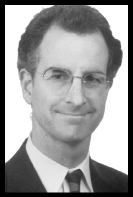
Investigators can’t say who ambushed federal prosecutor and gun-control crusader Tom Wales, and neither could Tom Wales. One of the slugs that ripped through his basement window at 10:30 p.m. on Oct. 11, 2001, hit him in the throat as he tapped away at his computer. The divorced father of two grown kids crumpled at his desk—he was able to grasp a phone and press 911, but he could only mumble. He didn’t leave the name of the person who had stood, perhaps unseen by Wales, in the darkened backyard of his restored 1905 home on Queen Anne Hill. The figure snapped off at least four rapid shots, confident the faithfully unarmed Wales wouldn’t return fire, then slipped away along a narrow side yard. A neighbor peeked out to see someone walk briskly to a car and speed away.
Within minutes, the first of what would become a national task force of cops and federal agents arrived to find Wales, 49, dying on the floor. They quickly realized the degree of difficulty in this homicide. The bespectacled, curly-haired prosecutor had scores of potential enemies after 18 years as an assistant United States attorney, during which he locked away embezzlers, con artists, and corporate swindlers. A political moderate with a yearning for public office, Wales also was a passionate—some say arrogant—anti-gun advocate, a speech maker and money raiser for one of the country’s leading anti-gun groups. He is thought to be the nation’s most prominent gun-control advocate to be murdered in the line of duty. Then there was the timing—one month to the day after 9/11, a chaotic moment in America. Was the shooting terrorist-related? Seattle Police Chief Gil Kerlikowske called it an assassination. Other U.S. attorneys immediately took extra security precautions. At a press conference the next day, Attorney General John Ashcroft opened his regular terrorism briefing with the news of Wales’ extraordinary slaying, but quickly added, “We have no knowledge of motive.” Today, the FBI, which has revealed almost no crime details, including the caliber of the death gun, has nothing new to add officially. The impression is that Wales, who spent most of his adult life prosecuting crime with great success, has become the victim of one nobody can crack. Agents are still tracking down leads of any sort.
In fact, says one U.S. official, the suspect list has grown dramatically thanks to a $1 million reward announced in April (up from the original $25,000). Investigators also are examining Wales’ personal life and conspiracy theories, considering whether the shooter was a friend who knew the home well enough to tiptoe around the security lights in the yard or a hired hit man who studied Wales’ habits and property layout. Led by a top organized-crime specialist, investigators have increasingly pinned their hopes on tipsters, awaiting the person who might successfully drop a dime on the killer. “There is reason to believe that there are people who have knowledge of this homicide,” says Seattle FBI chief Charles Mandigo, who wouldn’t elaborate. “It is time for them to come forward.” A U.S. official says the agency has several prime suspects; officials announced the reward to induce specific witnesses to open up. So far, no luck.
At least one new theory has also surfaced from an unlikely source: some of Wales’ former opponents in the gun-control war. Investigators, they say, have missed the obvious: an inside job. “They needed a martyr, and they got one,” says Alan Gottlieb, director of the Second Amendment Foundation in Bellevue, a national gun-rights group. “My feeling is that he was done in by one of his own.” It’s a bewildering notion in a case that doesn’t necessarily need another one. But at this point, no one has proved Gottlieb wrong.
“What the public doesn’t know,” says Dennis Boyd, “is just how dangerous this work is.” In his offices in Springfield, Va., the executive director of the 10-year-old National Association of Assistant United States Attorneys (NAAUSA) keeps a computer log of threats and violent attacks made on the federal government’s approximately 4,500 deputy prosecutors. He taps a key and brings up a report detailing more than 40 incidents in the past 15 years. “There are lots of cases where assistant U.S. attorneys must be protected by federal marshals,” he says. “It doesn’t get much play in the press, but it’s probably better that way.” Threats are often anonymous phone calls or letters, and a murder such as Wales’ seems an aberration. Yet Boyd’s log shows some prosecutors are lucky to be alive. In Phoenix, an irate man involved in a civil-rights case was nabbed entering the federal courthouse with a shotgun and three shells taped to his legs; he intended to ambush a prosecutor. In San Diego, a prosecutor threatened by a drug gang spent seven months under U.S. Marshals Service protection at a series of safe houses. In memos they’ve sent to Boyd, prosecutors from Alaska to Florida report being stalked by vengeful families and physically attacked in court. Over the years, threats have piled up from outlaw bikers, Chinese tongs, suspected terrorists, narco traffickers, mafioso, and Aryan Nations followers.
Following Wales’ murder (and the random slaying of an Illinois assistant attorney, Michael Messer, 49, who was killed in August 2001 by a robber while visiting South Carolina), Boyd began asking U.S. federal prosecutors for regular threat updates, and he hopes to propose new protective measures. And, in fact, some of Wales’ fellow Seattle prosecutors were put under protective guard after the slaying. But short of moving to a fortified cave, prosecutors are vulnerable targets, and Wales is exhibit one. He was not typically a prosecutor of violent offenders, and his white-collar defendants almost uniformly negotiated pleas. He quietly worked out settlements behind closed doors, and his cases rarely made the newspapers. Fellow prosecutors say he was never seriously threatened and was the least likely of them to have enemies.
But if not an irate defendant, then who? Investigators have searched the home of a former fraud suspect who faced off with Wales in court, and they are checking out other former defendants. But as Boyd notes, “Tom’s gun-control campaigning makes this a much different case.” Like prosecutors, some of Wales’ jittery anti- gun campaigners were also diving for cover last fall. Several leaders of the 3,500-member Washington CeaseFire, of which Wales was president, laid low for a few days. Bruce Gryniewski, at the time CeaseFire’s executive director, suddenly found himself in the odd circumstance of being an anti-gun activist protected by an armed guard. He then got out of Dodge altogether. “Right after the shooting,” he recalls, “the sense of danger was very high for many of us. I was under guard for 24 hours a day at a secure location for a while, then I left town for a few weeks. I traveled around, stayed with friends, and spent time thinking about what had happened. For most of us directly involved [in CeaseFire], there’s still some uneasiness.” Threats were already a routine part of his work, says Gryniewski, who recently left CeaseFire to head up Washington Conservation Voters, an organization that backs environmentalists for public office. “They’re not common, and they tend to be very general, but yes, we receive them.” No one specifically threatened Wales, he says. But after his death came several anonymous good- riddance calls. There was also hate chat posted in cyberspace, such as, “Whoever did this has my congratulations,” and, “Now, if only the same would happen to a few thousand more anti-American, anti-constitutional traitors holding public office.” Wales’ death had some wondering if gun nuts had adopted the violent edge of some anti-abortionists.
His friends asked how anyone could wish Wales dead. “I worked very closely with Tom,” says Gryniewski, “and yet I didn’t know just how much he was involved in the community until after his death. At our memorial, so many came up and said he had touched their lives. Tom was compassionate, caring, a hero to many.” Boston-born Wales had been a gun opponent since his teens—about the time he shared a room at the historic Milton Academy in Massachusetts with a young congressman-to-be, Joseph Kennedy, son of the slain senator, Robert Kennedy. (RFK’s daughter Rory, 33, and Wales’ daughter Amy, 22, met and shared stories of their fathers at a March memorial for Wales.) After graduating from Harvard and Hofstra University School of Law, he joined a Wall Street law firm, then signed on with the U.S. attorney’s office, arriving in Seattle in 1983. He maintained a wiry frame with an athletic regime of running, hiking, and mountain climbing. He was an accomplished chef who often cooked the family meals.
At the time of his death, daughter Amy and son Tom, 24, were living and attending school in Europe. His 27-year marriage to Elizabeth Wales—a literary agent and former Seattle School Board member—had failed two years earlier; they remained close even though Tom was crushed when Elizabeth revealed she was a lesbian. Elizabeth Wales and the family have participated closely in the investigation, and she appeared at a press conference announcing the $1 million reward.
In the year before his death, Tom had taken up with Marlis DeJongh, 51, who runs a court-reporting business in Seattle. A dedicated marathoner, DeJongh also strives to keep Wales’ name alive, most recently organizing the Thomas C. Wales Memorial 5K Run & Walk at Volunteer Park, with proceeds going to the Thomas Wales Foundation, which is dedicated to supporting his causes. Wales continued to live mostly alone in his four-bedroom home, just up the street from Queen Anne’s business strip of popular bars, eateries, and designer coffeehouses (the house was sold by his estate in July for $548,000). A few months back, a new brick-inlaid street crossing, at Queen Anne Avenue and Boston Street, was dedicated in his name.
Wales sat on Queen Anne’s community council, held a seat on the Seattle Planning Commission, and privately confided to friends that if he won an appointment to an open Seattle City Council seat in 1997, he’d leave law for politics full time. (He was a finalist but didn’t get the appointment.) In his council application, he spoke of his itch for community service and said his duties “as a longtime federal prosecutor and as president of Washington CeaseFire have made me understand the need for public safety.” He wasn’t necessarily referring to his own.
But if Tom Wales was a swell guy, someone still hated him enough to want him killed. And what could be more ironic than to do it with a gun? Suspicion would naturally fall on the gun-rights crowd, to whom Wales seemed to be the Antichrist. Wales had worked for 10 years raising money and drafting legislation to control gun use, and he had been modestly successful. His most controversial crusade was a 1997 state ballot initiative to require trigger locks for gun owners and background checks for gun buyers. CeaseFire ultimately was outgunned. The National Rifle Association—which Wales called an anarchist institution—sent Charlton Heston to drum up opposition with some Moses-like sermons about the “evil . . . devilish” initiative and poured more than $2 million into a derailing effort. It worked. But Wales and CeaseFire pushed on. A year later, the group formed the only state-level political action committee in the U.S. devoted to backing candidates based on their views of gun legislation. CeaseFire also began pushing controversial legislation to require criminal and mental-health background checks for gun buyers at state gun shows. Gun lovers were not happy. And wouldn’t their lot improve if, say, late on a frosty night in Seattle, Tom Wales went away?
Never happened, insists Alan Gottlieb. “I know of nobody in the gun-rights movement who would want to harm him. There was no reason,” says Gottlieb, who represents 1 million international gun owners as head of the Second Amendment Foundation. Gottlieb, who made millions as a direct-mail-campaign guru for right-wing causes, is not fainthearted about speaking ill of the dead. He shared many a dyspeptic lunch and dinner with Wales, he said, trying to hammer out agreements on gun legislation or debating gun-rights issues. “Bull in a china shop,” is one of his kinder assessments of Wales. “He’d lose his temper, not just with people on my side but his own side—people who wanted to take a more reasonable approach. I regret he’s not around, in part because he was perfect to have as an opponent. He was an easy debate target.”
That sentiment is shared by other Wales detractors such as Michael Brown, an optometrist and member of Doctors for Sensible Gun Laws, which believes guns are used more often to prevent crime than to commit it (Wales’ ambush excepted). In an article printed in several conservative publications after Wales’ death, Brown—who didn’t respond to interview requests—wrote that, while the prosecutor was likely a caring human being in his private life, “his personality changed when he joined in the emotion-laden gun debate. Those who stood on the opposite side of the issue recall a controversial and polarizing individual . . . hysterical at a public debate, bouncing red-faced in his chair and trying to antagonize his opponents with sneering, insulting statements he knew to be false.”
That sounds like bad blood all around. Isn’t that what leads to murder? Aha, says Gottlieb, that’s what someone wants you to think. “After he lost the [gun-lock] initiative, Wales dropped out of sight. There hasn’t been a flash-point issue since. So if you make a martyr out of him, you’re only helping his cause, not the gun-rights cause. I think he was killed by someone who supports gun control and needed a martyr. Look, it certainly didn’t sound like an experienced gun user— I understand they recovered shell casings at the scene. Someone who knew firearms wouldn’t have used a revolver that would expel shells, leaving them and maybe even fingerprints behind.” The shooter also did not kill Wales instantly; he died from mortal wounds three hours later. “That was no marksman,” said Gottlieb.
The murder of Tom Wales has raised CeaseFire’s public profile and brought in more than $500,000 in contributions. CeaseFire predicts the Wales fund could eventually reach $2 million, his death raising far more money than Wales did alive. The money, given through one of two endowment funds set up in Wales’ name, will also help nonprofit CeaseFire pursue more gun-control legislation. In that regard, Wales’ death—if by a gun nut—did nothing but long-term damage to the pro-gun movement. As for the theory that he was slain by a supporter, could someone really love Tom Wales’ cause enough to kill Tom Wales for it?
CeaseFire’s ex-leader Gryniewski awaits a more rational explanation from investigators—perhaps that it was the work of a vengeful and opportunistic defendant from one of Wales’ prosecutions. Gryniewski thinks the $1 million reward will ultimately bust the case open. “No one’s giving up,” he says, “because we know Tom wouldn’t.”