Seattle’s hottest performer is having a big opening this weekend.
It’s 3,000 miles away. 21 Dog Years: Doing Time @ Amazon.com, a one-man show featuring the sweating, bellowing, musing Mike Daisey, is going up at the Cherry Lane Theatre in New York’s Greenwich Village. What began last year in the Backroom of the Speakeasy Cafe in Belltown is now being staged in a 75-year-old off-Broadway theater where many of Samuel Beckett’s plays had their U.S. premieres. A loose, semi-improvised string of reminiscences has been tightened and refined into a well-paced, slickly lit, and still hilarious monologue about the delusions and excesses of the Internet boom. Daisey’s face currently adorns the sides of New York City pay phones and appears in small New York Times ads. Two and a half weeks of previews are behind him, and the corpulent, Chris Farley-like comic will get his formal notices from New York critics this weekend. A crowd of 90 was laughing to tears on a recent Monday night, suggesting that he will do just fine.
Sipping tea in a West Village cafe and explaining his move to New York, Daisey said, “I knew I could do the show at the Speakeasy indefinitely.” (Well, except for the Speakeasy burning to the ground last May. . . . ) “But that wouldn’t take it to the larger level.”
Many, many songs have been written about New York City, but there’s only one or two about Seattle, and the most famous of them sounds like a bad 1960s jingle. If you’re an artist, it’s easy to feel like this town doesn’t matter and maybe you should go where everyone else goes to make it. In the last few years, plenty of Seattleites in the arts have done just that, and many others wrestle with this dilemma: Do they give up what’s great about Seattle in order to challenge themselves in the cultural center of the nation? Or do they make peace with the joys of the Northwest’s (relatively) thriving arts scene and agreeable quality of life? Or can they somehow combine the two?
Our cultural scene has certainly been getting dissed enough lately. Last week, Jacob Weisberg, the new editor of Slate, Microsoft’s online magazine, said the publication would now be edited from New York rather than Redmond so as to be “a little closer to the action.” The week before, recently departed ACT artistic director Gordon Edelstein was quoted in The New York Times suggesting that Seattle audiences, unlike New Yorkers, have a mostly upbeat and healthy outlook on life that renders them less eager to hear “disturbing news about our psyches” from the stage. (And, sadly, it seems there’s not a lot of critically acclaimed plays offering really good news about our psyches.)
For his part, Daisey, 29, who moved to Brooklyn last June, sees the strengths and limitations of Seattle’s cultural life as equally important to his current success. In Seattle, he says, “there’s a large amount of work going on in a large number of unheated garages. People find interesting things to do with just four lights and a black backdrop. That was really valuable for me.” In the five years he was here (two of which he spent rising through the ranks at Amazon), Daisey was active in the fringe theater scene, producing as well as acting in his own shows, and he started a sketch comedy group, Up in Your Grill, which got airtime on the short-lived local TV show The John Report with Bob. Seattle, says Daisey, “let me get my feet wet in a huge number of areas, more than I can imagine in any other city.” The fact that Seattle is not an entertainment capital leaves its artists unbound, he says. “You’re freed from commercial concerns; there’s no chance that you can sell out. You do what you have to do [to earn money] during the day, then you can follow your vision at night. But it burns you out eventually.” * Therein lies the conflict. Seattle is small enough and culturally lively enough that talented people can find outlets for their aspirations, but it’s too small perhaps to fulfill those aspirations. It’s possible to work, possible even to make a comfortable living, in the arts, but is it possible to reach your full potential? Seattle arts audiences are, for the most part, pleasant and supportive, much like Seattle sports fans (and let’s not get started on that again . . . ), but they may also lack a certain critical gusto, passion in the blood. * “People are so much more likely to go to the theater here [than in Seattle],” Daisey says. “It’s exponentially easier to get people to see a show. People have grown up with the theater and have a habit of going.” * Daisey notes that none of the major Seattle theaters—the Rep, Intiman, ACT, or On the
Boards—took any interest in his little fringe performance at the Speakeasy last year, despite invitations . . . until he moved to New York. Then two of those organizations immediately came calling. Seattle actors have long joked that the best way to find success in their hometown is to move to N.Y.C.
Painter James Jaxxa, 40, lived in Seattle for 17 years before heading East last April. “I had kind of been thinking for a long time that I wanted to move to New York,” he says. “I had been in a number of group shows, I had solo shows, had sold quite a bit of art, but, I don’t know, I just felt like I needed to move my art to the next higher level.”
He’s been happy with the change. “I don’t know how to say it, but art is big business here,” he says. “It really feels that way and seems that way. It’s a true industry here almost—from the publishers that are writing all these art books, all the people that buy art, the huge galleries, the alternative spaces, the massive museums. That’s quite different from Seattle. I’ve been to a number of art openings here—and not necessarily blockbuster big-name artists—where it’s so crowded there’s a line to get in. They’re absolutely jammed. There’s just a lot of people really, really interested in the visual arts. The other thing is, I’ve met a lot of extremely wealthy people that buy a lot of art and really know a lot about art, and I never had that experience in Seattle. I didn’t get exposed to those kind of people, if they exist in Seattle—I’m sure some do—the really serious collectors.”
Jaxxa’s studio is a block and a half from where the World Trade Center stood. While he couldn’t get access to it for two months, in the end, chillingly enough, he came out ahead. “The building had to be professionally cleaned [by the landlord], outside and in,” he says. “I actually think it’s better now.”
For some, going to New York feels almost like an essential part of what it means to be an artist. Dancer and choreographer Heather Kravas, 31, who attended the University of Washington and co-founded the d9 Dance Collective, left for N.Y.C. in 1998 with her husband, a painter. “As artists, we have this New York City kind of looming over us,” she explains. “I didn’t want to regret not having tried it out.” The last weekend of April, she put on her first New York performance, a self-produced and thoroughly engrossing piece for three dancers and three musicians titled “littleWOOD,” in the Merce Cunningham Studio in the West Village.
Standing in the studio after a dress rehearsal, Kravas remarked, “In Seattle you create a lot of opportunities for yourself. But I was ready for some new information.” New York’s given her the chance to be around some high-level, innovative choreographers from whom she can draw inspiration. “You see some of these people [in Seattle] through On the Boards, but you don’t really have the opportunity to study with them. I’ve really enjoyed the [dance] history here that I felt removed from on the West Coast.”
Seattle is smaller, approachable, and open-minded, but its ceiling is comparatively low. “New York offers so many opportunities in whatever you want to do—especially the arts,” says Cece Stelljes, 30, a former publicist for Sub Pop Records who moved to New York in ’99 because she felt she “had done as much as I could” in Seattle. “There’s so many niche jobs that you just don’t have anywhere else,” she says. One acquaintance of hers, she marvels, is fully employed as a “food stylist” for photo shoots.
Seattle’s relaxed and genial atmosphere can have its drawbacks, too. “The quality of life is so much better there in so many different ways,” notes Tricia Romano, 28, of The Village Voice, who spent seven years as a music writer in Seattle. “But the problem with perfection is that it doesn’t inspire you or push you in your personal and career-related endeavors. I felt like I had to leave because I was rotting there creatively, and everyone I knew was in this really stagnant place, and I could see myself easily falling into the same trap.
“But it’s a trade-off, that’s for sure,” she adds. “I miss how beautiful and clean the city is, how calm life is, the small-townish aspect of Capitol Hill/downtown. Even the nightlife in some ways is better and more fun than in New York, where everyone is jaded and everything is crowded and overpriced.”
Of course, the traffic doesn’t only go one way. Two of the most prominent rock writers in the country, Ann Powers, 38, and Eric Weisbard, 36, who both put in time at the Voice, among other publications, recently ditched their high-profile positions and 14-foot-wide Brooklyn rowhouse for a Fremont bungalow and jobs at EMP. In New York, “you spend a fair amount of time using your intelligence just trying to overcome your surroundings,” says Weisbard. “I think that takes a toll. And there’s so many qualified people fighting for a scrap of something.”
When Seattle actress Lauren Weedman, 33, wanted to tour the country with her one-woman show Homecoming, which had been commissioned by the Seattle Rep, her local booking agent told her it would be very hard to do without New York reviews. “She said, ‘You really need to go to New York,'” Weedman recalls, “‘even if you don’t want to live there.'” So Weedman went. And while her show, which opened in January and closed last month, wasn’t quite a breakout hit, Weedman did get a huge break when scouts from Comedy Central’s The Daily Show saw her perform at a showcase last year and hired her on as a “correspondent.” She’s been appearing about once a week ever since.
Weedman says she never would have had the self-assurance necessary for the New York grind had it not been for the opportunities—and respect—afforded her during four years doing theater in Seattle. “Talk about a town that endowed me with a career,” she says over coffee near her Greenwich Village apartment. In Seattle, she says, “you do one ’12 Minutes Max'”—the entry-level performer’s showcase at On the Boards—and people start calling you “a playwright.”
Chris Clay, 28, spent five years performing in Seattle musicals, then scored a chorus line job last year for the show 42nd Street. Seated upstairs at Sardi’s, the legendary theater district restaurant, on a recent Wednesday, beneath rows and rows of portraits of Broadway stars through the decades and enjoying the special half-price Actor’s Menu that’s offered on matinee day, Clay is not exactly starry-eyed about his experience: “I don’t enjoy New York that much. Lots of noise, crazy people. I miss having a car.” And after a year of doing the same routine, eight times a week, 400 shows in all, he says “it’s getting to that monotonous point.” He’s hoping to move into movies or TV. “I still get haunted by Microsoft,” says Clay, referring to his old employer. “Every so often, I think maybe I should go back there.”
For jazz musicians, of course, New York has long been the mecca, the proving ground, “‘the temple in the East’ in the Rilke poem,” as John Gilbreath, head of Earshot Jazz in Seattle, puts it. “It’s part of the mythology of jazz, that whole New York thing,” he says.
Two of Seattle’s most promising young jazz talents, brothers David and Thomas Marriott, headed East a couple years ago and found that it’s actually tougher to make money in the jazz corner of the world than it was in their hometown. “The gigs pay better in Seattle,” says David, 28, a trombonist who is finishing up his master’s degree in music. “I can’t make more than 10 or 15 bucks on a gig.” (He moonlights programming the ring tones for a Seattle cell phone company.)
And the atmosphere is not exactly congenial. “In Seattle,” David observes, “you have groups of musicians who’ve played together for years. You know what to expect. There’s a high comfort level, no worries. Seattle has such open, caring musicians.” By contrast, he says, “there’s an animal, primitive thing in New York. You get to a gig, and everyone’s auditioning for each other; you have to prove you can hang. It becomes very anti-musical at times.” Instead of a local feeling, he says, “Everyone’s aspiration is to be the next sideman for Elvin [Jones, the legendary drummer] or whoever and go out and play gigs somewhere else.”
Nonetheless, David says, “I’m a thousand times happier here. The level of playing is so high. People are in tune with where I’m coming from.”
Yet many artists find Seattle the perfect place to ply their craft, especially those who’ve embraced the city’s domestic pleasures. R. Hamilton Wright, 49, a Seattle native and Redmond High graduate, works pretty much constantly in the major Seattle theaters; he recently starred in the one- person show Fully Committed, at ACT. “I’ve thought about going to New York quite frequently,” he says. “But at this point in my life, my wife and I own a home; like a lot of people in this town, we’re establishing a traditional life.” He and other actors “often joke that we find ourselves talking in the Green Room about roses rather than head shots.” In Seattle, he says, “I’ve got a tremendous amount of work; it’s a great situation to be in. I know a lot of people in this town. If I write a play, I can get someone to read it. I still feel like there’s a lot of possibilities and opportunities in Seattle that haven’t even been tapped yet.”
Wright allows that “No matter how good you are, you always wonder [about New York]. There’s this sense of testing yourself. At the same time, if you’ve been to New York, you know there’s good actors and bad actors. It’s not as if there’s suddenly an elevation in the art there.”
In fact, there’s a kind of purity of focus to the Seattle arts scene that some say contrasts mightily with the Apple. “In Seattle, theater’s OK as theater,” says Lauren Weedman. “Seattle’s not into commercial cashability. They’re not interested in pleasing Middle America or wealthy investors. [In New York] they’ll say, ‘Yeah, it’s great. . . . But it’ll never be a movie.’ All they want to know is what they can get from it.”
The theater people Chris Clay worked with in Seattle were mostly hobbyists, he says. They didn’t have that desperate “this is what I need to survive” vibe. “There’s less to aspire to,” says Weedman. “Nobody’s that fucking fancy in Seattle.” Whereas in New York, she says, people are “starving” for any crumb of career advancement. “The self-absorption thing is out of control here,” she says. “In Seattle, I had a real community of people. Here, I’ve had days where I found myself checking my cell phone messages, and if it’s not career related, I’m just like [as she presses the delete key], ‘don’t have time for that, don’t have time for that. . . . ‘ Some days I feel like I need more balance. But generally I love it. It’s exactly what I came out here to do.”
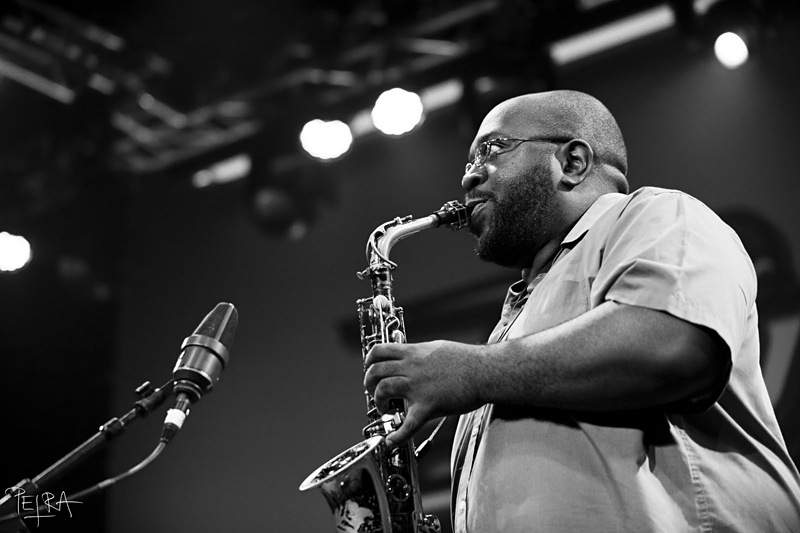
For those interested in pursuing a quiet vision, Seattle can be awfully accommodating. “I’ve decided, after moving around this country for the better part of 45 years, that for what I do and what I’m attempting to accomplish as an artist, Seattle is as good as any place,” says 58-year-old saxophonist Wally Shoup, a leader in Seattle’s free improvisation scene. “Seattle makes room for iconoclasts,” he says. “Artists can find enough support, if they’re diligent, and can do what they need to do. Given [Seattle’s] other qualities, the natural beauty and general cultural climate—that, for me, makes it not only doable but an ideal situation. Depending on your own needs for fame and fortune, you can be satisfied.”
“If you’re serious about creating, you couldn’t pick a better city,” argues Greg Lundgren, 32, who runs Vital 5 Productions, a gallery space on Westlake Avenue that puts on some of the most compelling art shows in town. “Here, if you’re smart, and willing to take chances, you can do a lot. I’d never have my own gallery in Manhattan. The cost alone would make it impossible, let alone the existing structures and hierarchies.” Lundgren’s landlord is Paul Allen, who has made it a point to rent his downtown buildings to arts groups while his redevelopment plans take shape.
“It’s easy to get depressed here,” Lundgren concedes. “It’s too easy to look into the future and say, ‘There’s nothing here.’ In the ’50s, people thought they could only be in Paris. Then you got Rauschenberg and the whole New York school, then Warhol, Haring. Seattle affords artists opportunity—it’s still a pioneer town. Ten years from now, if we stick to the grindstone, people will be moving here because of the artists.”
Dancer and choreographer Gaelen Hanson, 34, arrived in Seattle in 1993 after a year in New York; and she has no intention of moving back. “The energy of things took it out of me on a daily basis,” she says. “I tend to be sort of a neurotic, highly focused, individual so it wasn’t a good combination for me; it’s better for me to be someplace that’s trying to slow me down.”
The company she co-directs, 33 Fainting Spells, gets to New York regularly and has performed all its pieces there, including its most recent show, Dirty Work, which the group is bringing to Soho for two weekends in July. “It’s the best of both worlds,” says Hanson. She and her co-director spent over a year on Dirty Work, whereas in New York, she maintains, “there are very few choreographers who take that much time. You’re making work, you’re producing work. Here, there’s more of a contemplative approach to art making. Maybe it’s the weather, I don’t know.”
Graham Haynes, 41, a New York-based musician who’s made frequent visits to Seattle, agrees. “The thing I really like about Seattle is it’s a very creative scene. New York forces you to produce but not necessarily to create. And what people produce is not that great because of the pressure. Out here, people take their time on projects; they work through their ideas. In New York, I see a lot of ideas that are half-baked.”
Maybe that’s why people like to come here, to misty, womblike Seattle, to gestate projects and talents that they then unveil to the rest of the world. “It’s a great town for premiering things,” says Mike Daisey. Lauren Weedman is already scheduled for a homecoming this October, when she’ll perform a new one-woman show at the Empty Space . . . and then, of course, take it back to New York.
Her East Coast managers are already urging her to do something with more commercial potential, Weedman says, something “sitcom-y.” “And the Empty Space people are horrified,” she says. “They’re like, ‘You didn’t agree to that, did you?'”