Batman
Published 7:00 am Monday, October 9, 2006
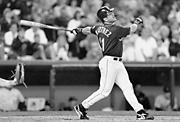
WHEN SEATTLE ANOINTS a monument, the city’s collective conscience judges not by historical importance or sweeping elegance, but by our ability to connect with it. Washington, DC, can have its Smithsonian and Capitol rotunda, New York its Statue of Liberty and Empire State Building. We’re quite content with our symbols, quirky as they may seem to others: our Space Needle and its connection to our aerospace industry, our Pike Place Market and its connection to the salmon that used to swim in our waters. I’d argue that two of our newest and most stately structures, the acoustically and architecturally pristine Benaroya Hall and Safeco Field—which is uniformly described, as if it’s in the script,
as a “beautiful ballpark”—will never fully win us over. But one man who happens to play in Safeco has this year ascended the ranks to become one of Seattle’s favorite monuments. You can almost see his statue out in front of the Safe, his muscular legs and powerful forearms cast in bronze. And you can sense fans’ devotion every time he steps to the plate, in the palpable hope that his workmanlike swing will produce another spectacular hit, in the crowd’s mumbled chanting—sometimes harmoniously, but mostly in trance-like monotone— of his name: ED-GAR! ED-GAR!
Now in his 13th season with the Mariners and his 17th with the M’s organization, Edgar Martinez ranks fourth among active players in longest tenure with one team, behind only Cal Ripken Jr. of the Orioles, the Padres’ Tony Gwynn, and Barry Larkin of the Reds (Edgar’s tied with the Braves’ Tom Glavine). Lofty company, and in itself enough to earn Edgar the distinction of franchise player. It helps that his .320 lifetime average places him fifth among active players and his .426 on-base percentage—meaning that he reaches base nearly 50 percent of the times he steps to the plate, walks included—puts him second behind White Sox slugger Frank Thomas. More remarkable still is that at age 37, Edgar has begun the 2000 season with a bang, batting above .350 and ranking among major-league leaders in home runs and RBIs as baseball takes its midyear break for the All-Star game (July 11 in Atlanta).
And yet Seattle connects to Edgar not so much for his numbers or even for his hitting heroics, as when he drove in a postseason record seven runs to almost single-handedly lift the Mariners over the mighty New York Yankees in the 1995 Division Series. We see his loyalty, his studiousness, and his long, methodical path to success as emblematic of the Pacific Northwest spirit. He’s quiet, less an overt team leader than his teammate and friend, 24-year-old rising superstar Alex Rodriguez. He’s a designated hitter who takes his designation seriously. Like the masterminds behind Boeing, Starbucks, Microsoft, and Seattle’s brand-name music scene, Edgar exudes a mystique: He’s made the rest of the world shine a spotlight on him rather than sending a beacon out himself.
Why I hate(d) the designated-hitter rule
As a boy growing up in the New York suburbs during the late ’70s, I became an avid Mets fan, which meant rooting for a team that lost nearly two-thirds of its games while crosstown rivals the Yankees marched toward the World Series year after year. My love of the Mets, and of National League baseball, was righteous; I acquired a Topps baseball card of Ron Bloomberg—the Yankee player credited with becoming the first to bat as a DH after the American League instituted the rule in 1973—just so I could scorn it.
I also experienced my first bout of disillusionment with the national pastime in 1977, to be exact, when the Mets traded away an unhappy Tom Seaver to the Reds in a foreshadowing of the situation that occurred here with Ken Griffey Jr. during this past off-season. Baseball is a funny game, as Joe Garagiola said, but the designated- hitter rule—which ended a nearly 100-year tradition of pitchers having to represent at the plate—and the shedding of franchise players for contractual reasons were hardly laughing matters.
Edgar has jolted me from my high horse, for the simple reason that he’s a designated hitter who has remained with the same team despite opportunities to earn more money and fame in a bigger market or with a better team. Like this city’s plethora of fatalistic yet blindly hopeful Mariners fans, I’ve watched in awe as he’s stroked doubles to the left-field gap, RBI singles up the middle, home runs to the opposite field— especially this year, when he’s put his head down and led the charge to the top of the American League West, a position the M’s are juggling with the Oakland A’s.
Still, questions linger. How does a guy who’s 37 and an unusually consistent player suddenly take it to the next level? How can he shrug off the disappointment of losing a teammate known as baseball’s greatest living player and replace him as the club’s most fearsome power hitter? And how does Edgar, an obviously shy and reserved man, cope with his status not only as a local hero but as a player who’s increasingly scrutinized as the majors’ best right-handed hitter?
The house that Edgar built
On a sunny Wednesday afternoon in early June, three hours before an interleague game against the Colorado Rockies, the Mariners players emerge from the clubhouse at Safeco Field, some individually, some in the small cliques that inevitably develop on baseball teams. Gloves in hand, they jog toward the right field grass and begin their stretching exercises. Among the last to make the trip up the dugout steps and out onto the field is Edgar, who trots and joins his teammates, twirling his arms and loosening up next to A-Rod.
After 15 minutes, they begin to drift. John Olerud, Mark McLemore, and Stan Javier toss the ball around against the backdrop of the outfield bleachers and the city skyline beyond them. Rickey Henderson wanders back to the dugout and relaxes alone on the bench. Jose Paniagua, the relief pitcher and team clown, frolics about in foul territory. Soon, balls are flying everywhere: from the batting cage at home plate, from the bats of coaches hitting ground balls to infielders. Edgar stops to grant an interview to a TV reporter, then joins A-Rod at short, fielding grounders and joking around, flashing the subdued grin that most fans see only on television broadcasts after he’s rounded the bases following one of his home runs.
When he approaches the dugout again, I ask Edgar if he’ll take a few minutes to speak with me. “Maybe in a while,” he shoots back. “I have to get loose, maybe take some swings.”
Soon he’s in the batting cage, rocking back and forth and coolly stroking line drives. In groups of four, the players take turns swatting pitches from a coach, who throws from behind the protection of a net. When he’s not in the cage, Edgar, wearing black and white Reebok cross-trainers, rubs his bat with a rag, working pine tar into the wood. He caresses the handle, adjusts his black batting gloves and wristbands emblazoned with his number, 11. His turns in the cage yield clues to his technique: Five pitches, five different types of hits. One to left, one up the middle, one to right. A line drive. A swing for the fences.
At five o’clock, the stadium gates swing open and a few thousand fans flow in to catch the tail end of this warm-up. Two dozen children rush around to the Mariners dugout on the first base line and howl the names of their favorite players, hoping for eye contact and the chance to get an autograph. Jay Buhner, the right fielder and the man who shares elder-statesman status on the M’s with Edgar, obliges, reaching with his 6 feet 3 inches from the wooden dugout steps to snag items from the fans’ small hands; he scribbles his name and lobs the items back to the crowd. Then a few overzealous kids toss baseballs at him in hopes that he’ll catch them and sign, but they hit him on the chest and legs, and he throws down the pen, mutters “Forget this,” and retreats to the infield.
Edgar, meanwhile, causes a stir as he approaches. Hardly finished with his pregame routine, he motions for me to join him in a dash for the clubhouse. Underneath the stands, he explains that he’s going for more hitting practice, and he leads me down a hallway to a room covered in netting, with two separate subterranean batting cages. A man in a Mariners polo shirt tells Edgar the machine’s loaded up, and he feels his way through the nets and assumes his stance.
During this stellar season, writers and broadcasters have harped on Edgar’s meticulous training, his weight lifting and exercises, his endless pursuit to master the art of hitting. It’s evident in his chiseled physique; he comes off as stocky and solid on TV, but up close he’s a mass of muscle. Still, I’m not prepared for what happens when the first ball flung from the mechanical arm hurtles toward us (I, of course, am behind the net), for it isn’t a baseball, but a fuzzy green tennis ball.
What are you doing? I ask as the buzzing machine hurls balls in rapid succession. “Training my eyes,” he shouts back. Holding a plank in his right hand, he bunts every other ball; the rest he watches as they travels from the machine to the netting behind him. It’s the oldest rule in the book: Keep your eye on the ball.
After the first load runs out, he and the other man collect the balls, rearm the machine, and Edgar repeats the routine. I ask about his fanatical weight training, a pre- and postgame regimen that has caused him to miss the team bus back to the hotel during Mariners’ away games. “It helps to be stronger, to be in good shape,” he yells over the whir of the machine. “When you’re in good shape, and your body is strong, now what you have to train yourself to do is to let your abilities take over. If you have ability and your body’s not ready for this game, then you’re not going to have good years. So you have a combination of good conditioning and also the ability.”
His brilliant career
Unlike his most well-known current and former teammates, Edgar wasn’t born with natural ability or graced with overwhelming power. He’s not dominant like pitcher Randy Johnson, who left the Mariners in 1998 and has become a Cy Young Award winner with the Arizona Diamondbacks. He’s never been a highlight-reel defensive player—even before his move from third base to DH—or a record-shattering home-run hitter like Griffey. And he can’t match A-Rod’s fluidity in the batter’s box or the base paths.
But when the 5-foot 11-inch, 210-pound slugger comes to the plate, his fists clenched around a bat that hovers and twitches over his batting helmet, opposing pitchers get nervous. It’s a hard-fought respect, something he’s worked toward since signing with the Mariners organization in December 1982, a month prior to his 20th birthday.
Edgar spent his first five years in the Mariners minor league system, shuttling between teams in such unglorious locales as Bellingham, Wausau, and Chattanooga. As a triple-A player in Calgary in the late ’80s, he began to exhibit signs of his hitting prowess to come, batting .329 or higher for three years. During that period, he had several tours of duty with the Mariners, but team management didn’t think he had enough power to secure a spot in the lineup as a third baseman—traditionally a position that contributes 20 home runs or more in a season.
When he finally took over the starting role from Jim Presley in 1990, Edgar ended his first full season in a Mariner uniform with a .302 batting average and a semirespectable 11 home runs. Two years later, he won the American League batting title, with a .343 average; he’d accomplish the feat again in 1995, batting .356, with career highs in home runs (29) and RBIs (113), helping the M’s to their first Division title in a stunning upset of the Yankees. Since that amazing year, Edgar’s remained an anchor in one of baseball’s most potent middle-of-the-order offenses; hitting alongside Griffey and A-Rod, his numbers remained steady, with averages of .327 or higher, at least 24 home runs, and RBI totals around or above 100.
Then came 2000, which started shakily. With Griffey gone, the M’s hoped that another former AL batting champ, John Olerud—acquired as a free agent from the Mets in the off-season—would take up some of the hit production. What they couldn’t have expected was that Edgar, typically a slow starter, would break out of a slump in the opening month of April, work through leg injuries, and explode into May. During the first full month of the season, he hit .441, with 10 home runs and 32 RBIs.
At the game in early June, just before the Mariners take the field, Edgar is called to home plate and presented with an engraved trophy signifying that he’s been named the AL Player of the Month, the fourth time in his career he’s received the honor and the first time since June 1995. He accepts the reward, jogs back to the dugout, waves to fans, and goes back to his business.
I stand face to face with Edgar, peer into his blue eyes, and wonder aloud what the heck is going on with him. “I’m having a great year, and a great year for home runs,” he says nonchalantly, perhaps unaware that he’s on a pace to hit more than 40; he’s never hit more than 30. “For some reason I’m getting more power. In the past I’ve had some power but not like I’m doing right now. In ’96 I had a similar [start to] my year. But this year has been one of the best. You go up and down and sometimes have career years, and it looks like this could be my career year.”
We’re satisfied and he can’t deny it
Though it’s tempting to think of Edgar as a homegrown hero, his true history begins in New York. Born January 2, 1963, to Puerto Rican parents, he moved back to his family’s native home when his mother and father divorced in 1965. Raised by his grandparents in Dorado, Puerto Rico, he played baseball with his brother and neighborhood friends, and was eventually discovered by the Mariners during a tryout on the island in 1982.
Throughout his career, Edgar’s spent many an off-season traveling back to Dorado, playing in summer leagues and tutoring young baseball hopefuls. During the ’90s, he became increasingly settled in Seattle, where he met his wife, Holli; the couple live in Sammamish with their young son Alexander.
Reluctantly, Edgar’s become a presence off the field. Mariner announcer Dave Niehaus regularly refers to the designated hitter as “the nicest guy in baseball,” but Edgar’s not exactly gregarious—that would imply seeking fame. Though it’s an unspoken acknowledgement, this personality trait has contributed to his status as a Seattle institution. Edgar fulfills his part as a role model—in the midst of his monstrous May, he signed autographs for fans at Bellevue Square for two hours—but he’s clearly more comfortable with his role on the field.
“He’s a quiet leader,” Jay Buhner recently told writer Rick Alvord of Mariners Magazine. “He has the utmost respect from everyone here and everyone in baseball.”
Indeed, Edgar’s hitting and demeanor have made him a hero not only in Seattle but across the country. Announcers for other teams regularly credit their best right-handed hitters as being reminiscent of Edgar, as a Fox broadcaster recently said of the Mets’ star second baseman Edgardo Alfonzo during a broadcast. And he’s clearly an inspiration to the many Puerto Ricans and Latin American players who’ve surfaced in the majors over the past decade—like avowed Edgar fan and Texas Rangers catcher extraordinaire Ivan Rodriguez—many of whom call Edgar “Papa” as they approach and pay homage to him during pregame visits while preparing to play against the Mariners.
Typically humble, Edgar tells me that he’s flattered by the attention, but shrugs it off as no big deal. “It makes me feel very good to be able to do well enough so people look up to how I hit and how I play the game.” He’s equally nonplussed by his role as a Seattle landmark of sorts and by his teammates’ glowing respect. “It is special [to me] for fans to admire what I do, and players too.”
During another of my pregame visits, first baseman Olerud, a former Washington State University standout who opted to come back to his home region this year after a career spent in Toronto and New York, tells me that Edgar’s downplaying his importance to the community and to his team. “He’s been with this organization his whole career,” Olerud says. “That says an awful lot about his ability.”
Buhner and center fielder Mike Cameron, who came from the Reds in the Griffey deal and replaced Junior in center field, have both credited Edgar with getting their bats on track; the DH is also emerging as a second batting coach to Gerald Perry. This and his league-leading RBI total have helped lead the Mariners to their best first-half record in the club’s 24 seasons.
“It’s great to have the opportunity to play with somebody like Edgar,” says Olerud, who also stars opposite his teammate in a hilarious mock laundry detergent commercial, counseling Edgar on removing grass stains from his uniform. “He’s a great guy.”
It’s nice to play for a wie-ner
As if it wasn’t bad enough that the Yankees dominated the majors during my youth (um, and my adulthood), they acquired a colorful Cuban fireballer during the late ’70s, Luis Tiant, who joined the Bronx Bombers after spending most of his career in Cleveland and Boston. Decked out in pinstripes, Tiant appeared in a TV commercial for Yankee Franks hot dogs, delivering the line, “It’s nice to play for a wie-ner.” As much as it stung me, I’m sure it cut deeper into the psyches of any Mets who happened to be watching television after another brutal loss. Baseball players want to win, and as disingenuous as it may sound when they say that the money doesn’t matter as much as getting a World Series ring, most really would prefer the thrill of victory over the addition of another few zeroes to their paycheck.
The Mariners came close to the title in 1995, eventually losing the AL championship series to the Indians. They again made the playoffs in 1997, losing to the Orioles. After a 79-83 finish last year, and with Junior demanding a trade, the organization brought in retired Blue Jays general manager Pat Gillick. Gillick, Lou Piniella, and the front office rebuilt the team around Edgar’s bat, a much-improved pitching staff featuring former Texas Ranger and WSU Cougar Aaron Sele, and, of course, A-Rod. Unfortunately, their star shortstop may be in his final year here, as his contract only runs through the 2000 season; speculation is that he’ll seek out big bucks on the free-agent market and move to a flashier team, with the Mets and the Atlanta Braves emerging as early contenders in the A-Rod sweepstakes.
When I broach the subject of player departures with Edgar, citing Griffey and Randy Johnson as examples, he avoids sounding critical. “It’s part of the game, when it doesn’t work out between an organization and a player,” he explains. “It happens all the time, and it’s not necessarily about loyalty. It’s not like it was 20 years ago. For some players and management, it’s good that things change for the parties, and it happens. I think it’s gonna happen more.” As if pleased with his response, he smiles.
Part of his smile implicates that he’s above all this. He’s making more than $4 million this year, which isn’t bad, but his numbers could probably earn him more elsewhere; George Steinbrenner would likely shell out $10 million to beef up the Yankees lineup with a hitter of his stature. But Edgar’s never been lured away from Seattle. If anything, he’s becoming more and more entrenched. He owns the Caribbean Embroidery Company in Redmond and a few months ago invested in an emerging Belltown restaurant—Fandango, started by Flying Fish owner/chef Christine Keff—with former Mariners catcher Dave Valle. Serving high-end Latin American fusion cuisine, Fandango’s already a hit. A recent Monday night found the sprawling bistro abuzz with customers.
Then there’s the part about Edgar being a local folk hero, a steady inspiration to a city that likes its baseball team unconditionally, but truly loves the M’s when they’re winning. He’s leading the way, and he’s not going anywhere.
“I’ve always been treated good here,” he says. “I have my family here. My wife is from here. I have a lot of things going on for me here. I think the main reason is we have always been able to work things out. I’ve been treated good.”
And if you ask just about anyone in town, they’ll tell you that we’re happy with how he’s treated Seattle in return.