For going on two years now, the most intriguing new evidence for the early history of humankind in the Americas has been lying in a box behind a locked storeroom door in Building Sigma V of the Pacific Northwest Laboratories Battelle runs for the Energy Department in North Richland, Washington: lying unexamined by science—but not undisturbed (see chronology below).
This week, a federal judge in Portland, Oregon, may finally cut through 18 months of recrimination, obfuscation, and litigation, and bring to a close one of the most ludicrous—but instructive—episodes in the history of science since the state of Tennessee put the theory of evolution on trial. Only in America would anthropologists have to go to court to try to protect vital scientific evidence from a bunch of uniformed bulldozer jockeys determined to yield it up to religious fundamentalists to bury it in the earth it came from.
See end of article for related links.
“Kennewick man”—the more or less complete skeleton of a fiftyish male inhabitant of the Columbia River basin of 9,000 years ago—is far from the only find shaking up the long-logy field of North American archeology these days, but he’s the one who’s most caught the attention of the media and the general public. It’s not every day a major scientific discovery is made in the middle of a hydroplane race; nor every collection of ancient bones that precipitates a battle royal between Odin worshippers and Native Americans, federal bureaucrats and federal politicians, scientist and scientist, all against all and devil take the hindmost.
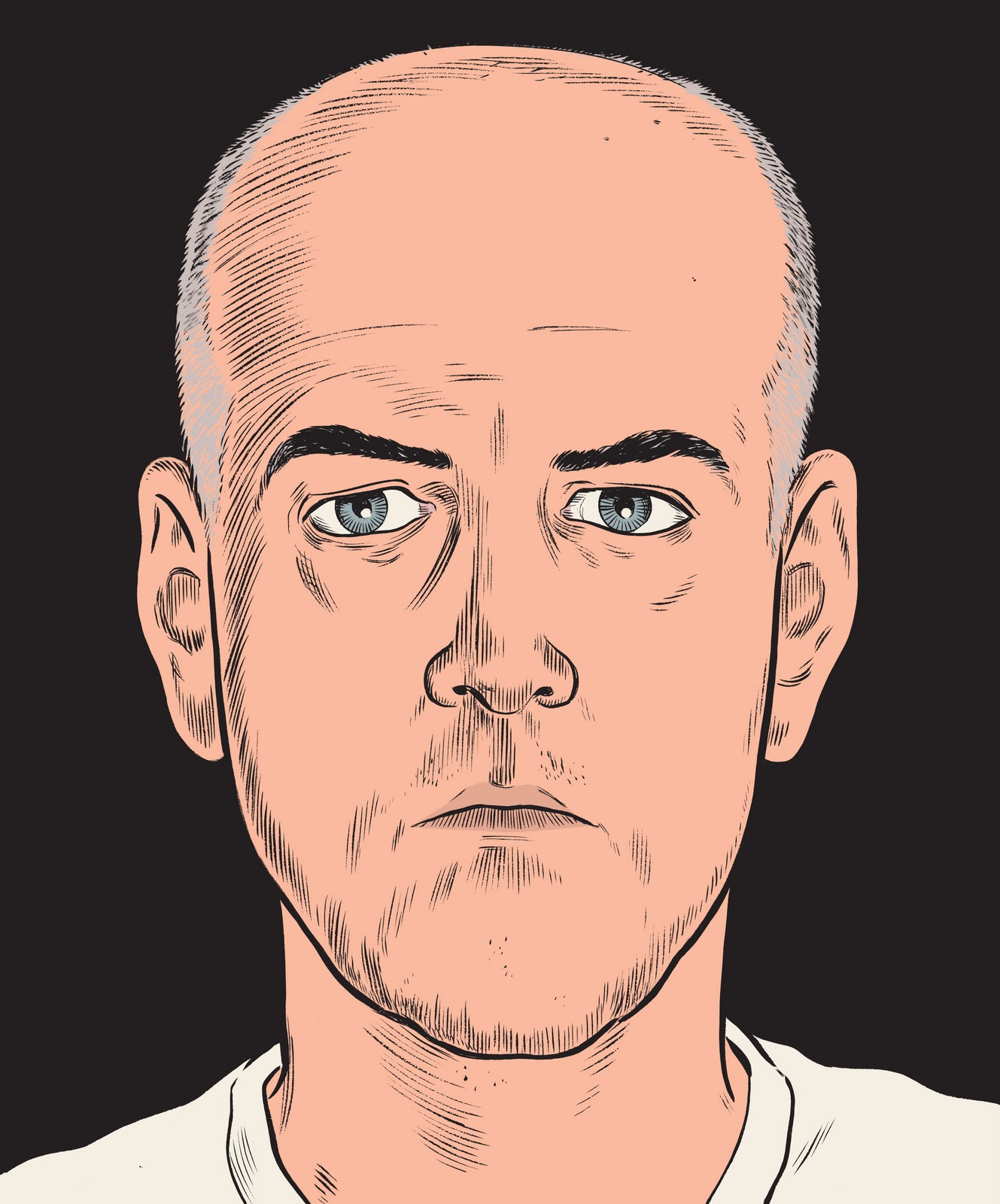
The fight over Kennewick man began the day his discovery was announced; the day that Richland anthropologist James C. Chatters told the Tri-Cities media that the remains turned over to him a month before for forensic examination were not only ancient but also exhibited distinct “Caucasoid characteristics.”
These days cautious anthropologists avoid terms like “Caucasoid,” with their overtones of classification (and ranking) by race. Students of North American prehistory have to be particularly cautious. The peoples European explorers and settlers found in residence when they arrived were and are a biometrically diverse lot, but “Caucasoid” they certainly were not. Suggesting that one of the oldest human specimens ever found in North America was significantly different from Native American norms was also to suggest, in the crudest possible terms, that Whitey got here first.
“For a scientist, this is the most counterproductive kind of language imaginable,” says anthropology prof Laurence Straus of the University of New Mexico. “Instead of trying to forge a mutual interest with Native Americans in discovering who these ancestors of us all were, we throw it in their faces that they are not the original Americans after all, when that is the one thing they have in their cultures to hang onto in the face of the overwhelming dominance of ours.”
Whatever Chatters meant by the term in question (as recently as this March addressing a scientific body he disclaimed it, then immediately used it again), it had the predictable effect. Members of five tribes of Northwest Native Americans immediately demanded that the remains be turned over to them for reburial according to their custom. And for once they had the law on their side: The Native American Graves Protection and Repatriation Act (NAGPRA), passed by Congress and signed by President George Bush in 1990, makes it clear that Native American remains and artifacts “belong” to the tribe that can demonstrate the closest affiliation to them (in this case, presumably the Umatilla nation, though the neighboring Yakama, Nez Perce, Colville, and Wanapum have also shown an interest).
Of course, having the law on their side has often done Native Americans little good when their interests turn out to conflict with the white man’s. But in this particular case they had one powerful ally: the United States Army Corps of Engineers. Because it’s in charge of the great majority of the federal government’s public works, the Army Corps administers a great deal of federal property, including dams, levees, and the riverbanks adjoining them. Columbia Park in Kennewick, where the bones in question turned up, is such a site.
When the five Native American tribes demanded repatriation of the bones in late August 1996, it was the corps that asked the Benton County coroner for them, who in turn took possession back from Chatters, who’d had them stored in the basement of his split-level North Richland home—all, that is, but some tiny fragments he’d sent with the coroner’s permission for radiocarbon and DNA analysis to specialists in Southern California. (Chatters had also, apparently without the coroner’s permission, made meticulous casts of the most significant bones, but that fact didn’t emerge until Eastsideweek broke the story last March.)
Tiny as the bones were that Chatters sent for analysis—about a gram and a half of material from a finger joint—they were essential for scientific study because they held both the secret of the date when Kennewick man roamed the earth and his most likely genetic affiliation to other humans, of his own day and ours. They were also the main cause of Native American concern, because both radiocarbon and DNA analysis are “destructive,” requiring the breaking down of the tissue in question by heat or chemical action to release the essential contents for measurement. According to contemporary Native American conservatives, doing anything with ancestral remains but putting them in the ground is sacrilegious. As for the genetic affiliation of the remains, the Native Americans were not just indifferent but actively hostile: They already “knew” the bones’ affiliation, just as they “knew” that the ancestors of Native Americans, far from being Johnny-come-latelies to the American scene, sprang fully formed from Mother Earth at the beginning of time.
Had the corps acted merely as custodian of the bones while the courts decided whether NAGPRA applied to their disposition or not, their fate would probably have been determined long ago. Instead, from the first statements on the subject by the commander of the corps’ Walla Walla district, it was obvious that the sooner the bones were turned over to the Indians and reburied, the happier the corps would be.
Profound sensitivity on the part of the corps to Native American spiritual values? Hardly. Through NAGPRA, Native Americans were empowered to raise hell with any corp project that might potentially disturb Native American remains—with virtually any engineering project on federal land. If the corps can’t dig, dredge, and dam undisturbed, its very reason for existence is threatened. Against the chance of getting Native Americans worked up against it, what matter to the corps that some of the most intriguing human remains ever found would disappear into the earth again unstudied?
In the early stages of the controversy, cooler (or at least more politically savvy) heads at the corps’ Washington, DC, headquarters could have overruled its Walla Walla division, or at least tried to give the impression that the anguished outcries of scientists and politicians were being listened to. Instead they reacted in classic bureaucrat fashion: refusing to acknowledge that a mistake might have been made, circling wagons, dragging heels, shifting responsibilities, saying one thing while doing another, even when faced with explicit instructions and deadlines by an exasperated federal judge.
The climax came this spring with a bit of literal stonewalling. On April 6 of this year, in direct defiance of a resolution of the United States Senate, construction crews hired by the corps went to work burying the site where K-Man’s remains had been discovered under tons of broken rock and dirt. Archeology had nothing to do with the action, insisted corps spokespersons; it was merely intended to prevent riverbank erosion. If it also prevented the appearance of any more pesky bits of archeological evidence to trouble the corps’ sunny relationship with the Umatilla Indian tribe, well, so much the better.
Unfortunately, the corps couldn’t just bury Judge John Jeldercks’ Portland courtroom as easily as it riprapped the Columbia Park riverbank. There, little by little, the corps and its allies (the Department of Justice, the Department of the Interior, the National Park Service, the National Council for Historic Preservation) have been forced to deal with the claims of science as well as those of Native Americans (themselves not parties to the lawsuit). Jeldercks has indicated that if the government doesn’t show itself ready for a negotiated settlement this week, he is likely to declare a settlement of his own: one that will permit at least limited scientific examination of the Kennewick remains to proceed. At the very least, Jeldercks is expected to force a determination about a more appropriate home for the bones: quite possibly the UW’s Burke Museum, where one of America’s foremost authorities on early man in the western US, anthropologist Donald Grayson, is an adjunct curator.
Many outsiders may wonder why it’s such a big deal; why eight of America’s most prominent, reputable students of the human past have run up a legal bill in the hundreds of thousands of dollars fighting the whole federal legal machine to a standstill over a few lithified bones. How much can one damn skeleton matter in the great scheme of things?
The answer to that question emerged loud and clear right here in Seattle this March, when the annual meeting of the Society for American Archeology brought together most of the world’s top experts in the field, among them parties to the federal suit to release the Kennewick bones for study such as Oregon State’s Robson Bonnichsen, the Smithsonian’s Dennis Stanford, and Vance Haynes of the University of Arizona. Every day of the five-day get-together brought at least one seminar dealing one way or another with the question of how human beings came to the Americas.
Until just last year the inner circle that rules archeology’s roost thought it already knew the answer to that question. And since their version of what happened is the one that the rest of us have been taught from diapers up, there’s a big hole in our world picture too if it’s wrong.
According to the established mythology, humankind came to North America in a rush 11,000 years ago, invading a virgin continent just emerging from beneath a 3-mile-high mound of ancient ice. Crossing from Asia over what’s now the Bering Strait (left dry while the seas fell to feed the monstrous continental ice cap) they forced their intrepid way south from the cold Alaskan tundra through a narrow cranny between towering walls of ice into a land teeming with game that had never known the culling hand of the hunter. . . .
It’s easy to understand why the tale of Man the Mighty Mammoth Hunter possessed the imaginations of several generations of Americans. It is such a good story, and its uncanny resemblance to the other great American myth—Manifest Destiny sweeping a great people across a pristine continent—only reinforced its appeal.
The root discovery from which the myth sprang was made in 1927 in a gravel pit near Clovis, New Mexico, by diggers who turned up carefully crafted stone spear points among the bones of slaughtered buffalo. That may not sound like a big deal: but the buffalo remains in question were not those of today’s buffalo species, Bison bison, but Bison antiquus, which has been extinct for more than 10,000 years.
Clovis hunters, it seemed, were not only intrepid, taking on the biggest critters around as their favored prey: They were major movers as well, spreading from the edge of the retreating ice sheet in what is now central Canada to the California deserts and the Gulf of Mexico and on to the Isthmus of Panama in less than half a millennium.
The continental-conquest story that evolved in the wake of the Clovis discoveries dominated discourse among archeologists for half a century, in turn spreading into popular myth through museum dioramas seen on a million school field trips and illustrations in a million fraying school texts. There were always naysayers willing to point out inconvenient facts that didn’t fit into the grand panorama, but proponents had both repute and institutional clout on their side. And one indisputable factual advantage: Nobody who suggested that the story of the populating of the Americas might turn out to be different, or at least more complicated, than the canonical version, could point to definitive evidence supporting their view. Clovis came first; if people were here before Clovis, why was there no evidence of their presence? Q.E.D: Case dismissed.
Still, some archeologists tried to buck the orthodoxy in digs from windswept barrens in central Alaska to the woodsy gulches of Pennsylvania’s coal country. Some produced radiocarbon dates considerably earlier than Clovis’; but none offered Clovis’ cast-iron juxtaposition of early date and tools unmistakably shaped by human hands.
Until Monte Verde. In 1976, a young American archeologist teaching in Chile was shown some mastodon bones discovered along a logging road in Chile’s temperate rain forests. The scholar, Tom Dillehay, saw enough evidence of human agency on the bones—scrape marks where meat was removed, splitting to extract marrow—to make investigation of the place where the bones had been found worthwhile.
Had he known what was in store for him, Dillehay might have stayed home. An internationally famous scientist (since deceased) did drop in early on at the behest of National Geographic, who was paying for the dig. He stayed two days, left before the excavators began digging in the pertinent strata, and told the world he’d seen nothing to indicate the site worth investigating.
Dillehay, with a stubbornness and spunk worthy of the great 19th-century obsessives who founded the science of archeology, persisted, through 10 years of study and seven summers of excavation in which not one Chilean colleague visited the Monte Verde site to observe the work-in-progress, in which colleagues at professional conferences refused to shake his hand, and openly encouraged their students to sneer at him as a lunatic or charlatan.
Funding his research with monies he was able to raise in his post at the University of Kentucky, Dillehay plugged on, persuading geologist, microbiologist, pathologist, and agronomist colleagues there and elsewhere to put their expertise to work with him in the Chilean bush. His stubbornness, and his fanatical determination to put his discoveries beyond question, paid off at last in February 1996, when a blue-ribbon panel of expert scientific witnesses returned from a visit to Monte Verde to confirm what Dillehay had been certain of for more than a decade. Human beings, and highly sophisticated ones at that, had been camping by Monte Verde Creek a good 2,000 years before—and a good 5,000 miles to the south of—Clovis man’s abrupt appearance on the American scene.
In one respect the folk who camped at Monte Verde fit the prevailing mythology of early human societies in the Americas: They were transients—Dillehay believes the site may have been occupied for only a season or so. But in other ways they stubbornly refused to live up to the real-guy, red-meat Clovis image. True, they ate big game. But they also hunted small game (perhaps with bolas, the stone-and-thong tanglefoot weapons used by South Americans in historic times). They made tools out of stone but also bone and half a dozen different kinds of wood. They ate frogs, gathered mussels, ground seeds into flour, harvested greens and roots in season, collected medicinal plants from locations more than a hundred miles away, and laid out their camp with distinct work and dwelling areas.
They behaved, in other words, as our omnivorous, restless species has always behaved, very much as you or I would have behaved under the circumstances (though far more efficiently and wisely, one suspects): They ate and used every damn thing around them worth eating or using, and picked their teeth with the leftovers.
A discovery like Monte Verde doesn’t just set a new investigative agenda for the future; it gives new value to less spectacular discoveries undervalued in the past. In its wake, it seems a lot more significant that excavators in a high Rocky Mountain cave found ancient remains of a tough net woven from grass just the right mesh size to entangle the mountain sheep that still inhabit the area; that cave excavations in the Great Basin have turned up stones dating back to the time when the Bonneville Salt Flats was still a freshwater ocean, stones that show unmistakable signs of being used as tools for grinding dried seeds not all that different from those Central American women used until recently to grind the corn for their family’s daily tortillas.
In the kind of domestic economy suggested by these traces, women (and even children) aren’t condemned to sit at home waiting for the hunters to bring home the bacon. They’re part of the action. The cover story in the April issue of Discover showing a club-wielding cave mama closing in for the kill is just one of a spate of recent publications professional and popular that reject old-fashioned cave-man macho for a newly feminized interpretation of prehistory.
But wait a minute: Isn’t this story starting to sound awfully familiar? The epic, continent-conquering Clovis suited the unexamined subscientific world view of the scientific storytellers of post-frontier, imperial America. Is the new, downscaled, less macho, more domestic conception of early humankind in the Americas just a projection of the prejudices of the educated classes of our own day? A nonviolent, granola-fied, feminized world view just as blinkered and misleading as what preceded it?
Well, up to a point, yes. What happened in the past happened, all right, but “The Past” as we humans conceive it is a human invention to serve human needs, constantly subject to revision as those needs change. In the words of Norman O. Brown, one of the great shamans of our tribe, “Everything is only a metaphor; there is only poetry.”
But the genre of poetry we call science lays down a few rules for its practitioners that help ensure against metaphors that mislead, poetry that prevaricates. If the old Clovis paradigm was way too confining and blinkered, it at least covered the facts as they were known at the time. Any new paradigm, if it’s to qualify as science at all, has to explain those facts as well as new information acquired later. Scientists, unlike poets and preachers, aren’t allowed to ignore the factual bits and pieces that don’t fit their rhyme scheme or scheme for salvation. Speculation’s fine, so long as you recognize that it’s worthless until you find a fact to back it up.
Whatever justification in morality or law there may be for the Corps of Engineers’ stubborn refusal to let scientists have a look at K-Man’s remains, its stonewalling has encouraged exactly the same kind of inflamed and irresponsible speculation that our media-saturated society seems to thrive on. In that context, a discovery like “Kennewick man” can be as much a curse as blessing for the science of archeology if the evidence it offers is not interpreted cautiously and responsibly. A skeleton as old and just as significant, Nevada’s “Spirit Cave Mummy,” has been submitted to thorough study without generating a fraction of the heat surrounding the Kennewick remains. The reason is simple: In Nevada, lawmakers, scientists, and Native Americans worked together to find ways of satisfying all their needs.
One reason it’s important—imperative in fact—that K-Man get a thorough scientific going-over is to dispose of all the racialist and racist nonsense that polluted the cheaper press and the crannies of the Internet since Chatters’ unfortunate use of the archaic and misleading term “Caucasoid” to describe him. Whatever human strain he ultimately proves to be related to, he didn’t come from the Caucasus Mountains, or from anywhere in Europe, not a “white man” in the modern sense at all, though possibly remotely related to the Ainu people of Japan, remains of the people who inhabited the archipelago before being conquered by invaders from Korea.
East Asia was home to as many strains of humankind 15,000 years ago as it is today. Anthropologists, with the blinkers of Clovis taken from their eyes, are beginning to suspect that human history in the Americas may go back not just 10,000 or 12,000 years but 30,000 or 40,000: to the ice age before last, in fact. (Dillehay’s digs at Monte Verde turned up tantalizing traces of 30,000-year-old charcoal deep below the occupation layer, but with nothing to prove they came from a human fire pit.)
In that vast span of time there has been opportunity for not just one or three but an indefinite number of “invasions” of North America, by an indeterminate number of people of different genetic makeup and cultural affiliation. But all over the Americas, on Aleutian beaches, in the tundras of the oil-rich North Slope, in freeway road cuts in the US Southwest, in the Amazon jungles, diggers are on the trail of early humankind. No longer need you be Don Quixote to believe there’s something to find. We were there: and almost certainly as various, as cranky, as full of trouble and conflict and passion as we are today.
Related Links and information:
Letter- questions of science and empiricism, racism and archaeology, court documents relating to case
http://www.quilters.com/science/
kennewic/floyd.htm
http://www.watersupply.com/
science/kennewic.htm
Archaeology on the web – links and articles
http://www.archaeology.org/wwwarky/
wwwarky.html
Monte Verde/Tom Dillehay
http://intarch.ac.uk/
antiquity/adovasio.html
Clovis/Folsom Points